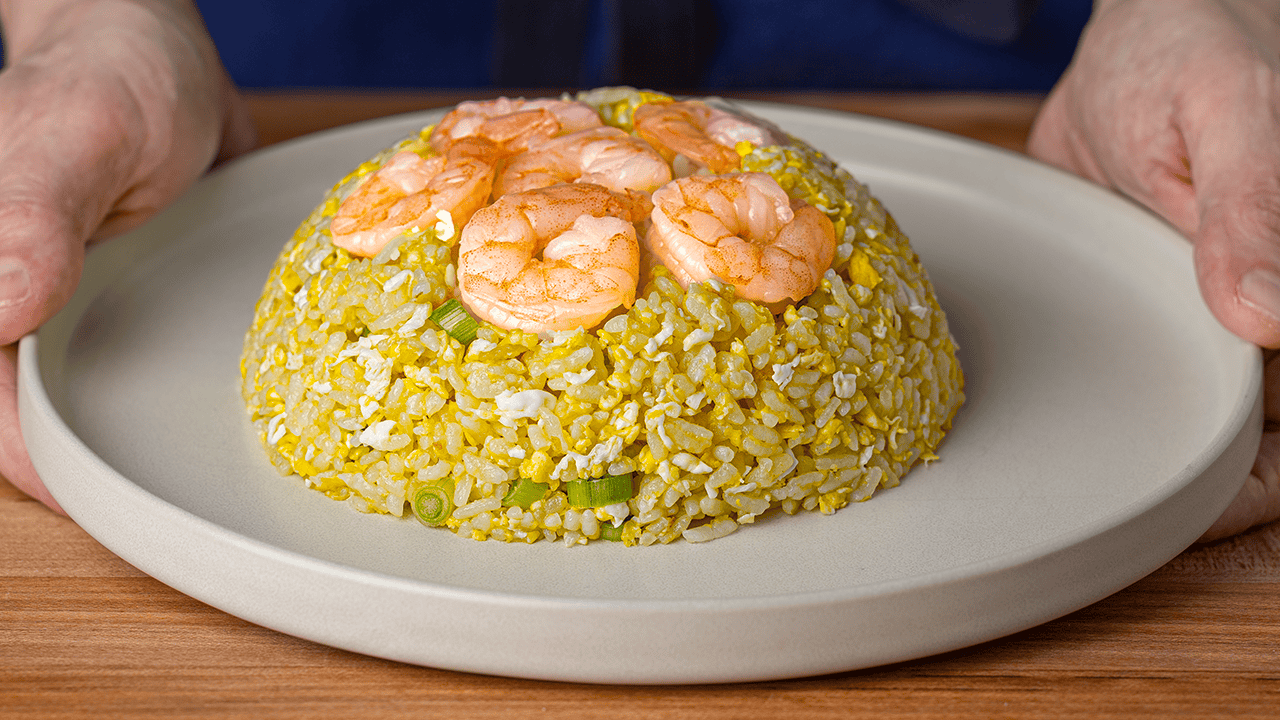
Din Tai Fung Shrimp Fried Rice (5-Ingredient Recipe)
Din Tai Fung makes one of the most popular fried rice dishes in the world with five ingredients. No soy sauce. No day-old rice. No butter. No sesame oil. Just eggs, rice, shrimp, scallions, and a three-part seasoning blend they call House Seasoning.
I spent weeks pulling apart this recipe, tracking down the exact rice variety Din Tai Fung uses in Taiwan versus their US locations, and testing every variable that affects the final texture. If you've tried making fried rice at home and it keeps turning out mushy or bland, you're probably following conventional advice that actively works against this style of rice. Day-old rice, high heat, lots of soy sauce. All wrong here.
This post contains affiliate links, which means I may earn a small commission if you make a purchase. It doesn't cost you anything extra. Full disclosure.
Why This Shrimp Fried Rice Recipe Works
- Fresh rice, not day-old. Refrigerating rice causes the starch to retrograde and harden. With a sticky medium-grain like Nishiki, that kills the bouncy texture Din Tai Fung is known for. Freshly cooked rice, spread on a sheet pan and fanned until the surface dries, gives you the right balance: dry outside, chewy inside.
- No soy sauce, and there's a reason. Nishiki is a high-amylopectin rice that clumps when it touches liquid. Soy sauce adds moisture that undoes all the surface-drying work you just did. Din Tai Fung replaces it with a dry seasoning blend they call House Seasoning: chicken bouillon powder, salt, and MSG. All the savory depth with zero added liquid.
- The House Seasoning does more than you think. Chicken bouillon powder contains both glutamates and nucleotides, which multiply umami intensity by up to eight times compared to MSG alone. The natural sweetness people taste in this dish isn't from added sugar. It comes from the rice itself and the umami synergy in the seasoning.
- Alkaline-treated shrimp for restaurant-level snap. A quick baking soda wash raises the pH of the shrimp, which loosens the protein structure so the muscles hold water instead of squeezing it out during cooking. That's the difference between rubbery and the translucent, snappy shrimp you get at Din Tai Fung. Rinse thoroughly afterward or you'll taste soap.
Ingredients You'll Need
Nishiki medium-grain rice. Din Tai Fung uses Taikeng No. 9 in Taiwan. In the US, they use Nishiki, a California medium-grain closely related to Calrose. Botan and Kokuho Rose also work. Skip jasmine and long-grain varieties entirely. They have a different starch profile and won't give you the bouncy, chewy texture this dish depends on.
Eggs. Two large eggs cracked directly into hot oil, not beaten beforehand. You break the yolks with the back of your spatula in the wok. This is called Silver over Gold in Chinese cooking, and it's how you get the distinct marbled ribbons of white and gold instead of a uniform yellow scramble.
Shrimp. Raw, peeled, and deveined. A quick soak in baking soda and water changes the protein structure so the shrimp stay firm and snappy instead of turning rubbery. This is the same alkaline treatment Chinese restaurants use on almost every protein.
The House Seasoning. Three things mixed in a small bowl before you start cooking: chicken bouillon powder (Lee Kum Kee red tin is the best available substitute for the Knorr Hong Kong formula Din Tai Fung uses), table salt, and MSG. No sugar, no soy sauce, no sesame oil. The chicken powder provides most of the savory flavor and the nucleotides that amplify the MSG. Do not substitute Western bouillon pastes like Better Than Bouillon. They contain moisture and Western aromatics (carrot, celery, thyme) that will change the flavor completely.
Scallions. White and light green parts only, finely chopped. The dark green tops add too much moisture for this style of fried rice.
How to Make Din Tai Fung Shrimp Fried Rice
1. Cook the rice. Use a 1:1 to 1.1:1 water-to-rice ratio by volume. If your rice cooker has a "harder" setting, use it. If not, reduce the water by a millimeter or two below the line. You want grains that are fully cooked but slightly underhydrated so they hold up in the wok.
2. Cool the rice. Spread the freshly cooked rice on a baking sheet and fan it until it reaches room temperature, turning it a few times so moisture doesn't pool underneath. This takes 20 to 30 minutes. Do not refrigerate.
3. Prep the shrimp. Toss the shrimp with a quarter teaspoon of baking soda and a tablespoon of water. Massage for about a minute, then refrigerate for 15 minutes. Rinse under cold running water for a full two minutes to remove every trace of baking soda. Pat dry and season with a pinch of salt.
4. Blanch the shrimp. Bring a small pot of water to a simmer and pass the shrimp through for about 30 seconds to a minute, until they turn pink and are roughly 80% cooked. Remove and set aside. They'll finish cooking in the wok.
5. Mix the House Seasoning. Combine one teaspoon of chicken bouillon powder, a quarter teaspoon of MSG, and a quarter teaspoon of table salt in a small bowl. Set it next to the stove.
6. Heat the wok. Get a dry wok smoking over medium-high heat. Turn off the burner, add two tablespoons of oil, and swirl to coat. This is long yao, hot wok cold oil. Turn the heat back to medium.
7. Cook the eggs. Crack two eggs directly into the oil. Break the yolks with the back of your spatula and loosely scramble, keeping distinct ribbons of white and gold. No browning. When the eggs are about 60-70% done and still runny, add the rice immediately.
8. Fry the rice. Fold the rice into the eggs using a cutting motion to separate the grains. Keep it moving constantly on medium to medium-low heat. No browning on the rice or eggs. When the grains are separated and glossy, sprinkle in the House Seasoning and work it through.
9. Finish. Add the blanched shrimp and chopped scallions. Toss until the shrimp are heated through and the scallions have wilted slightly. Kill the heat. To plate Din Tai Fung style, place the shrimp in the bottom of a bowl, pack the rice on top, set your plate over the bowl, and flip.
Tips for the Best Din Tai Fung Fried Rice
Cook one to two servings at a time, maximum. A home burner can't generate enough heat for a larger batch. If you overload the wok, the temperature drops and you'll steam the rice instead of frying it. If you need to feed more people, do it in quick successive batches.
Don't skip the baking soda rinse. The alkaline wash gives the shrimp their texture, but if you don't rinse for a full two minutes under running water, you'll get a metallic, soapy taste that ruins the dish. This is the most common failure point.
Use medium to medium-low heat during the stir-fry. This isn't a high-heat char like Cantonese fried rice. Din Tai Fung's version stays golden, not browned. If you see browning on the rice or eggs, your heat is too high.
Switch to a silicone spatula for separating the grains. Medium-grain rice is stickier than jasmine or long-grain. A smaller silicone spatula lets you use a precise cutting motion to break up clumps without smearing, which a wide wok spatula can't do as well.
Frequently Asked Questions
Does Din Tai Fung use butter in their fried rice?
No. The golden color and rich mouthfeel come from egg yolk and oil coating every grain, not butter. Generous oil plus egg lipids creates a richness that people consistently mistake for butter.
Can I use jasmine rice instead of Nishiki?
You can, but you'll get a different dish. Jasmine is an Indica variety with higher amylose content, which means it dries out and hardens when cooled. It won't give you the bouncy Q texture that defines Din Tai Fung's fried rice. If jasmine is all you have, use day-old rice (the opposite of what we do here), since retrogradation actually helps Indica varieties hold up in the wok.
Why no soy sauce?
Soy sauce would mask the subtle flavors this dish depends on: the natural sweetness of the rice, the oceanic sweetness of the shrimp, and the clean umami from the House Seasoning. Beyond flavor, there's a structural reason. Nishiki is a high-amylopectin rice that clumps when liquid is added. Soy sauce introduces moisture that works against the dry, separated grains you want. The saltiness and depth come from the chicken bouillon powder and MSG instead.
What's the difference between Knorr Hong Kong chicken powder and Lee Kum Kee?
Din Tai Fung uses Knorr's Hong Kong formula (yellow tin, green lid), which isn't available in most US stores. Lee Kum Kee chicken powder in the red tin is the closest substitute. Both are dry, Asian-style chicken powders with glutamates and nucleotides. Do not substitute Western bouillon pastes like Better Than Bouillon. They contain moisture and Western aromatics (carrot, celery, thyme) that change the flavor completely.
Do I really need the MSG?
The House Seasoning relies on the synergy between glutamates (from both the chicken powder and the added MSG) and nucleotides (from the chicken powder). Together they multiply umami intensity by up to eight times. Without the MSG, the dish will taste flatter. You only need a quarter teaspoon.
More Din Tai Fung Recipes
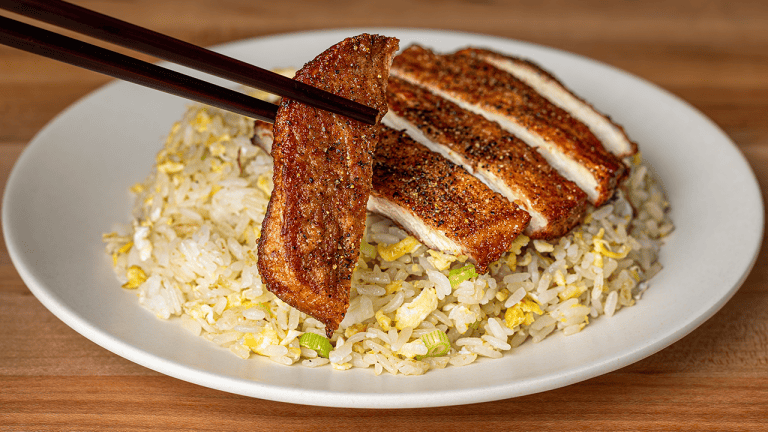
- Din Tai Fung Pork Chop Fried Rice Recipe
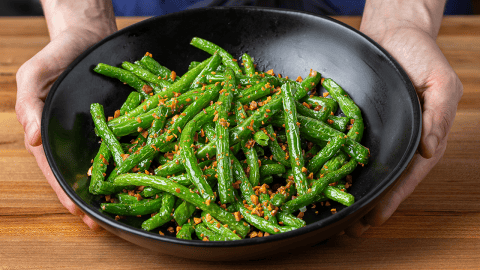
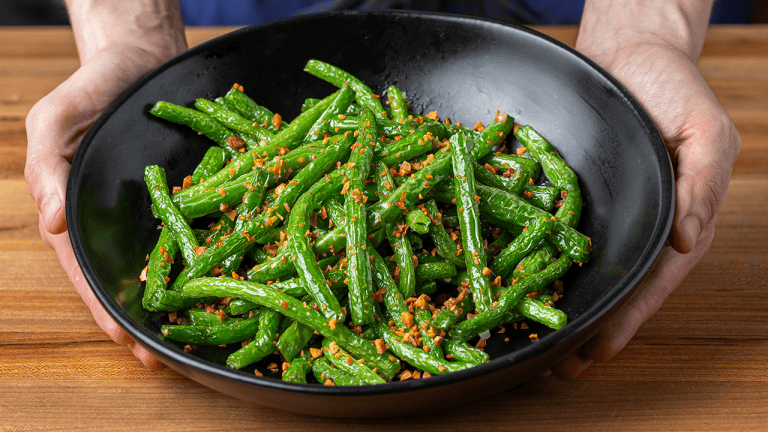
- Din Tai Fung Green Beans with Garlic
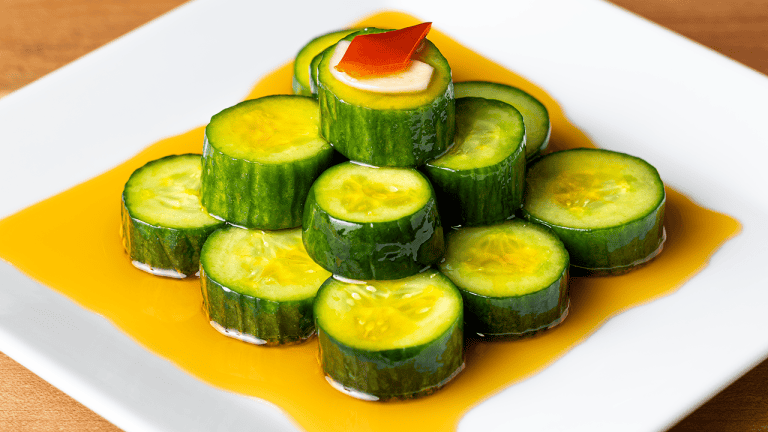
- Din Tai Fung Cucumber Salad
More Chinese Takeout Recipes
- Chinese Takeout Crab Rangoon
- Chinese Takeout Egg Foo Young
- Chinese Takeout Egg Rolls
- Chinese Takeout Orange Chicken
- Chinese Takeout Kung Pao Chicken
- Chinese Takeout General Tso's Chicken
- Chinese Takeout Wonton Soup
- Chinese Takeout Hot and Sour Soup
- Chinese Takeout Egg Drop Soup
- Chinese Takeout Chow Mein
- Chinese Takeout Lo Mein
- Chinese Takeout Fried Rice
More P.F. Chang's Recipes
- P.F. Chang's Mongolian Beef
- P.F. Chang's Lettuce Wraps
- P.F. Chang's Beef with Broccoli
- P.F. Chang's Dynamite Shrimp
- P.F. Chang's Singapore Street Noodles
- P.F. Chang's Stir-Fried Eggplant
- P.F. Chang's Fried Rice
- P.F. Chang's Kung Pao Chicken
- P.F. Chang's Spicy Chicken
- P.F. Chang's Crispy Honey Chicken
More Panda Express Recipes
More Fried Rice Recipes
Recipe
Din Tai Fung Shrimp Fried Rice
Equipment
- 1 Made-In Saucier (saucepan) for blanching shrimp
- 1 Anchor Glass Ramekins for House Seasoning
- 1 Kitchen Scale for rice-to-water ratio
- 1 Silicone Spatula for separating rice grains
- 1 Baking Sheet for cooling rice
Ingredients
The Protein
- 6-8 pieces raw shrimp peeled and deveined
- ¼ teaspoon baking soda for alkaline wash
- 1 tablespoon water for alkaline wash
- 1 pinch table salt for seasoning shrimp
The Base
- 1 ¼ cups cooked Nishiki medium-grain rice cooked at 1:1 to 1.1:1 water ratio
- 2 large eggs do not beat
- 2 tablespoon vegetable oil or any high-smoke-point neutral oil
- 2-3 stalks green onion white and light green parts only, finely chopped
House Seasoning (mix in a small bowl before cooking)
- 1 teaspoon chicken bouillon powder Lee Kum Kee red tin
- ¼ teaspoon MSG
- ¼ teaspoon table salt
Instructions
Prep the Shrimp
- Alkalize the shrimp. In a small bowl, combine the shrimp, baking soda, and 1 tablespoon of water. Toss to coat and massage for about a minute. Refrigerate for 15 minutes.
- Rinse the shrimp thoroughly under cold running water for 2 full minutes to remove any soapy taste from the baking soda. Pat dry with paper towels and season with a pinch of salt.
- Blanch the shrimp. Bring a small pot of water to a simmer and add the shrimp. Cook for about 1-2 minutes, just until they turn pink and are about 80-90% done. Remove and set aside.
Prep the rice
- Cook the rice using a 1:1 to 1.1:1 water-to-rice ratio. If your rice cooker has a "harder" setting, use it. Spread the freshly cooked rice on a baking sheet and fan it until it reaches room temperature, turning it a few times so moisture doesn't pool at the bottom. Do not refrigerate. You want fresh rice, not day-old.
Stir-Fry (5 Minutes)
- Heat a dry wok over medium-high heat until it just begins to smoke. Turn off the burner, add 2 tablespoons of oil, and swirl to coat the surface. This is the "long yao" (hot wok, cold oil) technique. It creates a temporary non-stick layer.
- Turn the heat back to medium. Immediately crack in the 2 eggs (unbeaten). Break the yolks with the back of your spatula and loosely scramble. You want ribbons of white and gold, not a uniform color. No browning. When the eggs are about 60-70% done and still runny, add the rice.
- Fold the rice into the eggs. Once roughly incorporated, switch to a smaller spatula and use a cutting motion to separate the grains. Keep the rice moving constantly and stay at medium to medium-low heat. No browning on the rice or the egg.
- Once the grains are separated and the rice looks glossy and golden, sprinkle the House Seasoning evenly over the rice. Stir-fry until fully incorporated and no dry seasoning is visible.
- Add the blanched shrimp and chopped scallions (white and light green parts). Toss until the shrimp are heated through and the scallions have wilted slightly. Remove from heat immediately. Do not add sesame oil.
Plating
- Place the shrimp at the bottom of a small bowl. Pack the fried rice tightly on top. Place your serving plate on top of the bowl, flip it over, and remove the bowl to reveal a dome shape.
Every day is a new beginning