

This post contains affiliate links, which means I may earn a small commission if you make a purchase. It doesn't cost you anything extra. Full disclosure.
In this post
Why Hot and Sour Soup Goes Wrong
Hot and sour soup is sort of the acid test of a Chinese restaurant. A buddy of mine told me that about 25 years ago, and it's never failed me: if the hot and sour soup is legit, the rest of the food is usually good too.
The problem is how often it's a gloopy, bland mess. My guess is that a lot of places make a big pot early in the day and keep it hot for hours, and the vinegar and white pepper fade the whole time it sits.
If your homemade version doesn't taste like your favorite restaurant's either, the broth is one of the main reasons. I've spoken to a lot of takeout restaurants, and most of them make this soup with Asian chicken bouillon powder.
An Asian chicken broth is typically just chicken simmered with ginger and scallions. A Western broth is usually based on the French method, with vegetables like onion and celery plus herbs and spices like parsley and peppercorns, so it tastes like a different soup.
The other reason is the order. Hot and sour is a pretty finicky soup, and there's an order the ingredients should go in.
The two mistakes I saw in a ton of recipes online were adding the egg before the soup is thickened, and adding the vinegar and white pepper too early, while the soup is still cooking.
The Recipes I Started From
I went through about 25 versions of this soup before I wrote mine, from YouTube cooks and food blogs to six of my cookbooks.
The two published recipes I leaned on most were Maggie Zhu's authentic hot and sour soup at Omnivore's Cookbook and Wei Guo's hot and sour soup at Red House Spice. Both add the vinegar and white pepper after the heat is off, which is the order I ended up using.
I also tasted the hot and sour soup at restaurants around town while I was testing.
Six restaurant dishes that taste exactly like the original.
My free recipe pack: fried rice, lo mein, orange chicken, lettuce wraps, yum yum sauce and the chicken sandwich.
Straight to your inbox. No spam, unsubscribe whenever.
What I Tested
Updated October 2026: new step photos, a rewritten method and answers to readers' questions. The amounts and steps are unchanged, and the recipe card now names the salt (Morton table salt) and gives the USDA's storage times: 3 to 4 days in the fridge, and 3 to 4 months in the freezer for the broth.
My first test batch used a quarter cup of black vinegar for 6 cups of broth. I like mine a little milder, so I brought it down to 3 tablespoons, and you can always add more at the end.
The ginger started out as 2 teaspoons, finely minced. I noticed the taste of ginger in a lot of the soups I tried around town, but I hardly ever saw actual pieces of it, and little diced pieces tend to take over the other flavors.
So I went down to 1 teaspoon and grated it, which gives you the ginger flavor without the chunks.
The first two batches had only 2 or 3 pieces each of the wood ear and shiitake mushrooms. The final recipe uses 4 to 6 of each.
I also added julienned carrots after the second batch and went from 4 tablespoons of cornstarch to 5 in the slurry. The early batches also had a little MSG, and the final recipe doesn't.
Why This Hot and Sour Soup Works
- Asian chicken bouillon for the broth. It's what most takeout kitchens use, so the soup tastes like the restaurant version.
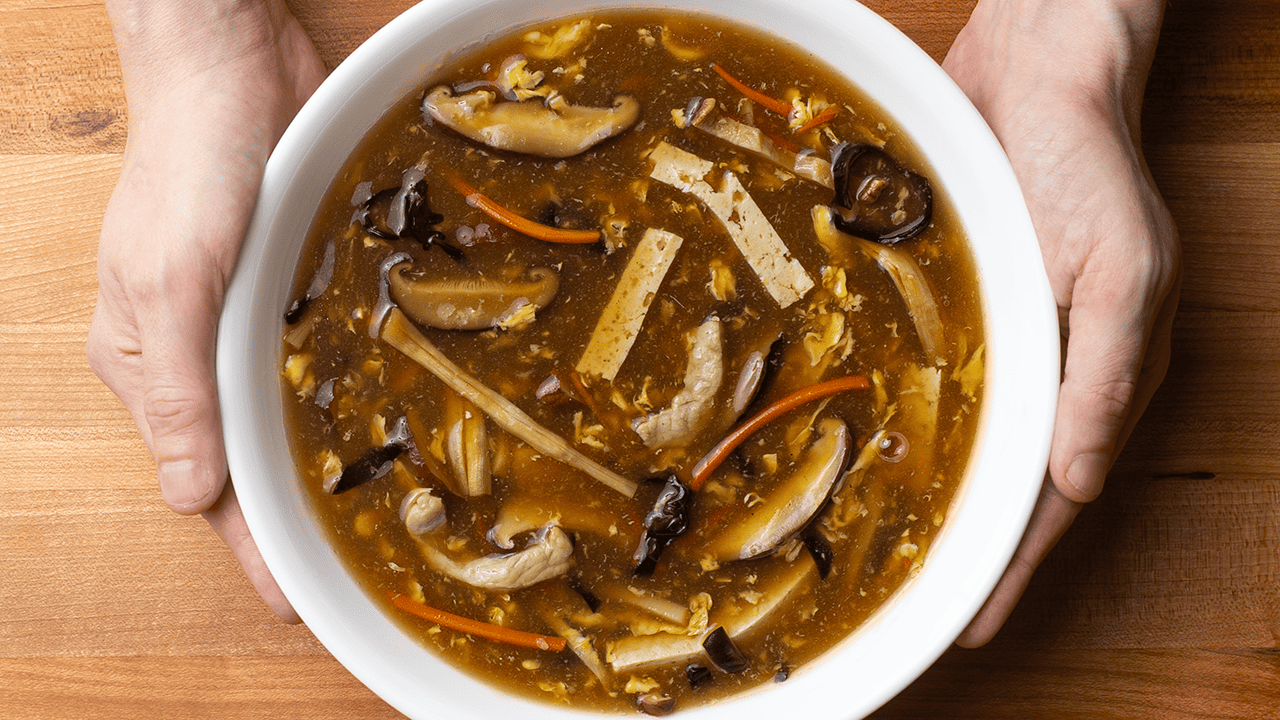
- You add the cornstarch before the egg. In a thickened broth, the egg stays up near the top while it sets, so you get thin, wispy strands, and the egg doesn't break up and cloud the soup.
- You add the vinegar and white pepper after the heat is off. Both lose a lot of their flavor when they're cooked, so they're treated as a final seasoning. The toasted sesame oil is added with them for the same reason.
- The meat is cooked in a separate pot of water. You never have to skim scum off the soup, so the broth comes out cleaner and clearer.
- The shiitake soaking water goes into the broth. Shiitake mushrooms are high in glutamates, so the soaking water adds a lot of natural savoriness.
What Is Hot and Sour Soup?
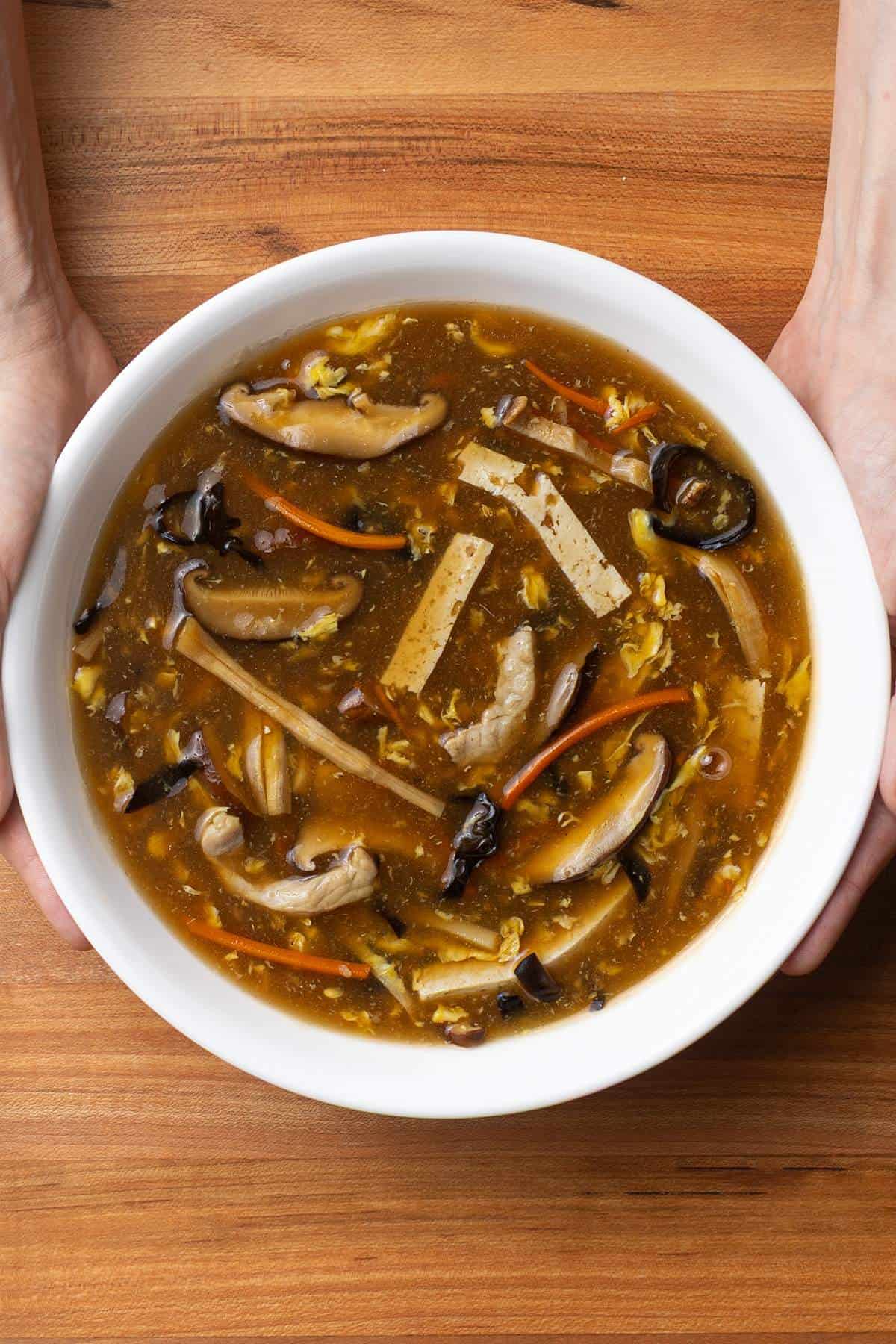
Hot and sour soup is a Chinese soup thickened with cornstarch, with its heat coming from white pepper and its sour from vinegar. It's full of thin strips of mushrooms, tofu, bamboo shoots and usually pork or chicken, with ribbons of egg running through it.
The traditional version uses Chinese black vinegar, wood ear mushrooms and dried daylilies. Most takeout places use regular distilled white vinegar and firm tofu, and a lot of them leave out the daylilies.
Hot and Sour Soup Ingredients
The full list with amounts is in the recipe card below. These are the ones worth knowing about before you go shopping, and most of them are on the dried food aisle or the sauce aisle at an Asian grocery store.
Asian chicken bouillon powder makes the broth. The two brands I've seen in most takeout kitchens are Knorr and Lee Kum Kee, the same kind I use in my egg drop soup.
You'll see several versions at most grocery stores, but you know you've got the right one if there are Chinese characters on the can or the box. It's typically about 1 teaspoon of powder to 1 cup of water. Homemade chicken broth works too, but it won't taste quite like takeout.
Chinese light soy sauce is the Chinese version of regular soy sauce, and "light" doesn't mean low-sodium. The two brands I've seen used most in restaurants are Lee Kum Kee and Pearl River Bridge. Kikkoman is a Japanese soy sauce and tastes different, so it's worth getting a Chinese one.
Chinese dark soy sauce is mostly there for color, and it gives the broth its dark brown shade. Any kind works, but I like mushroom-flavored dark soy sauce in this soup, since it already has so many mushrooms in it. Lee Kum Kee and Pearl River Bridge both make one.
Dried shiitake mushrooms are what most takeout kitchens use, and a lot of people have asked me what the difference is between fresh and dried. The answer is about six bucks. Dried ones keep for a year or more in a sealed bag and have a more concentrated flavor.
Dried black fungus, also called wood ear or cloud ear, is a mushroom that grows on the side of trees. It's usually labeled "Black Fungus" on the dried food aisle.
Dried daylilies come in big bags, usually near the dried mushrooms. You don't see them in many takeout restaurants, since they're more of a traditional ingredient, but they add a floral taste that's worth tracking down.
Bamboo shoots come in cans on the canned aisle. I get the strips rather than the slices, because there's less cutting. They're added for their mild crunch.
Chinese black vinegar is the traditional vinegar for this soup, labeled Chinkiang or Zhenjiang vinegar. It tastes milder than white vinegar and has a sweet, malty flavor. The only two brands I've personally seen in kitchens around me are Jin Shan and Gold Plum.
If you're using regular white vinegar, start with about half as much and add more to taste, because it tastes a lot sharper. If you can't find black vinegar, J. Kenji López-Alt suggests a mix of red wine vinegar and apple cider vinegar in his hot and sour soup at Serious Eats. I use equal parts of each.
Ground white pepper gives the soup its heat. It comes on much more slowly than black pepper or cayenne, which is why I describe it the same way I'd describe my girlfriend's ex-boyfriend: total creeper. It also smells a lot like a barnyard when you open the jar, which is normal.
Firm tofu is what most takeout kitchens use. More traditional versions often use soft or silken tofu for its custardy texture, but firm tofu holds its shape better in a big batch, so that's what this recipe uses.
Pork loin or chicken breast are the only two meats I've seen in hot and sour soup. Pork loin usually comes as a gigantic piece, so I buy small center-cut pork chops instead, since they come from the loin and you can buy a much smaller amount.
How to Make Hot and Sour Soup
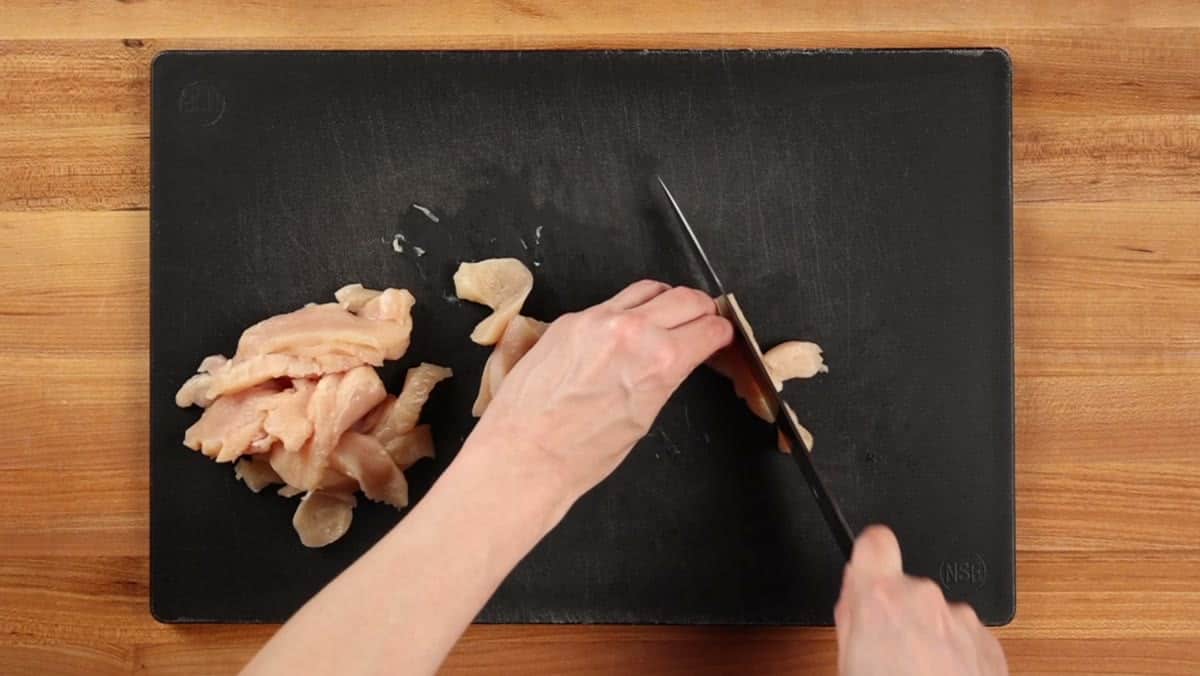
1. Cut the meat into slivers
For pork chops, trim off the fat, cut each chop in half, then slice each half into about ¼-inch slivers. For chicken breast, cut it across the grain into ¼-inch slices first, then stack the slices and cut them into ¼-inch slivers.
Cutting across the grain shortens the fibers, so the chicken comes out more tender.
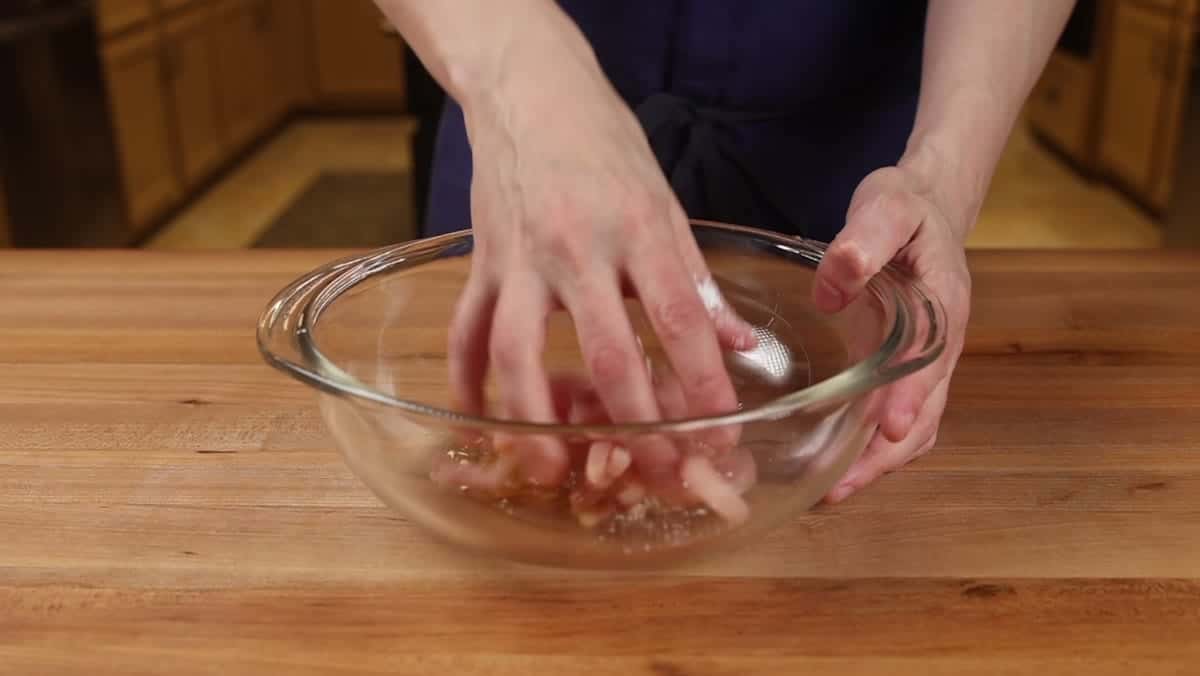
2. Marinate the meat
Mix the marinade ingredients from the card into the meat and put it in the fridge for at least 20 minutes, or up to overnight. While it marinates, you've got time to rehydrate everything that's dried.
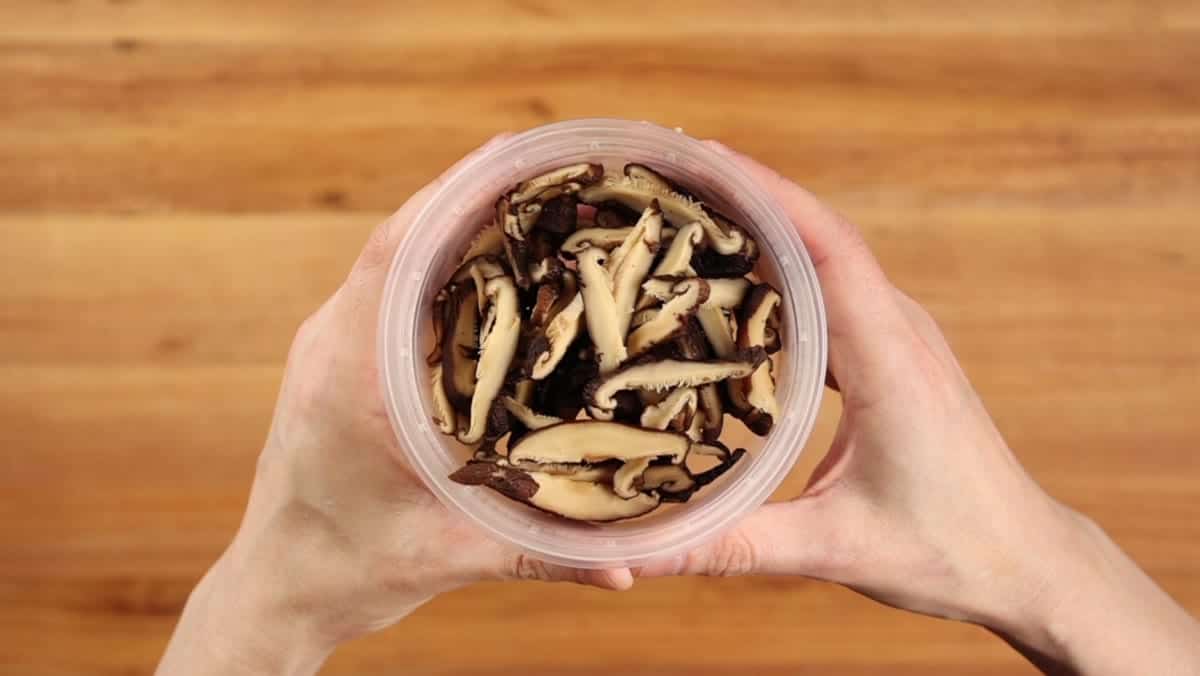
3. Soak and slice the mushrooms
Rinse the dried shiitake mushrooms under cold running water to get any dirt off, then pour boiling water over them and let them soak for 30 minutes to an hour. Do the same with the black fungus in a separate bowl. Save the shiitake soaking water for the broth and pour out the black fungus water.
Squeeze the shiitakes lightly, then slice off the stems and throw them away, since they don't soften properly. Cut the caps into thin ⅛-inch strips.
For the black fungus, slice off the small tough piece where it was attached to the tree, roll each piece up like a little cigar and cut it into ¼-inch slivers.
4. Soak and tear the daylilies
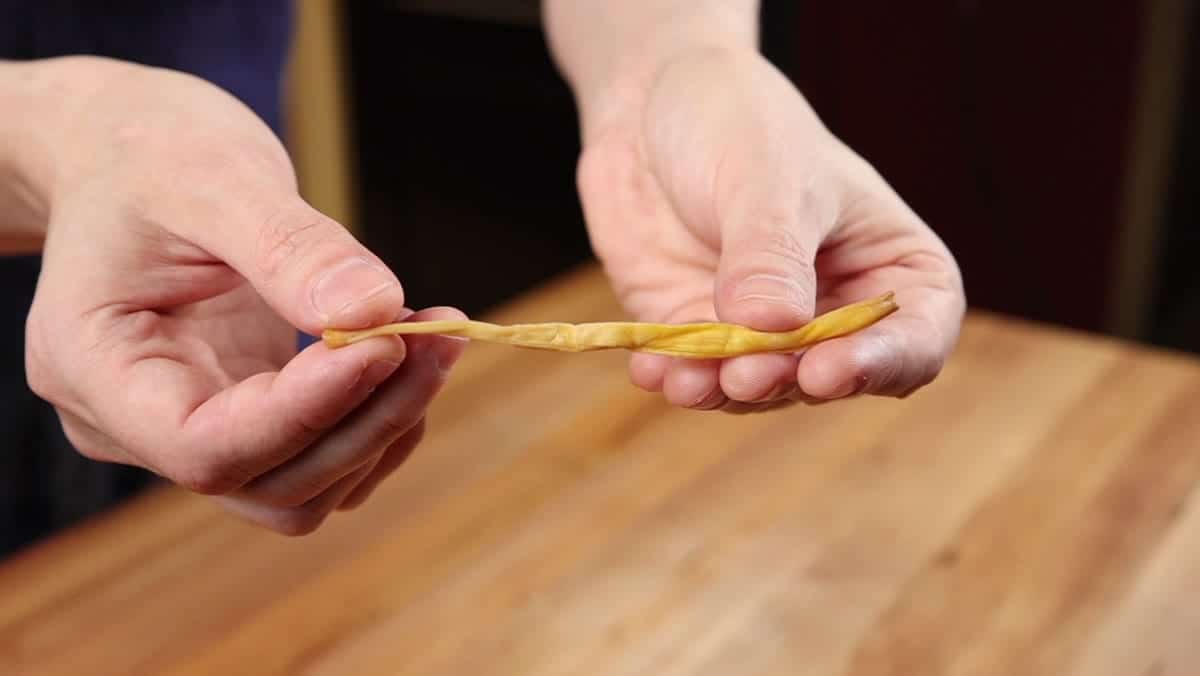
Cover the daylilies with cool water for 20 to 30 minutes, then drain them. Slice the tough end off both sides and tear or cut each one in half lengthwise.
They're kind of chewy and very floral-tasting, so it's better to halve them before they go in the soup.
5. Poach the meat
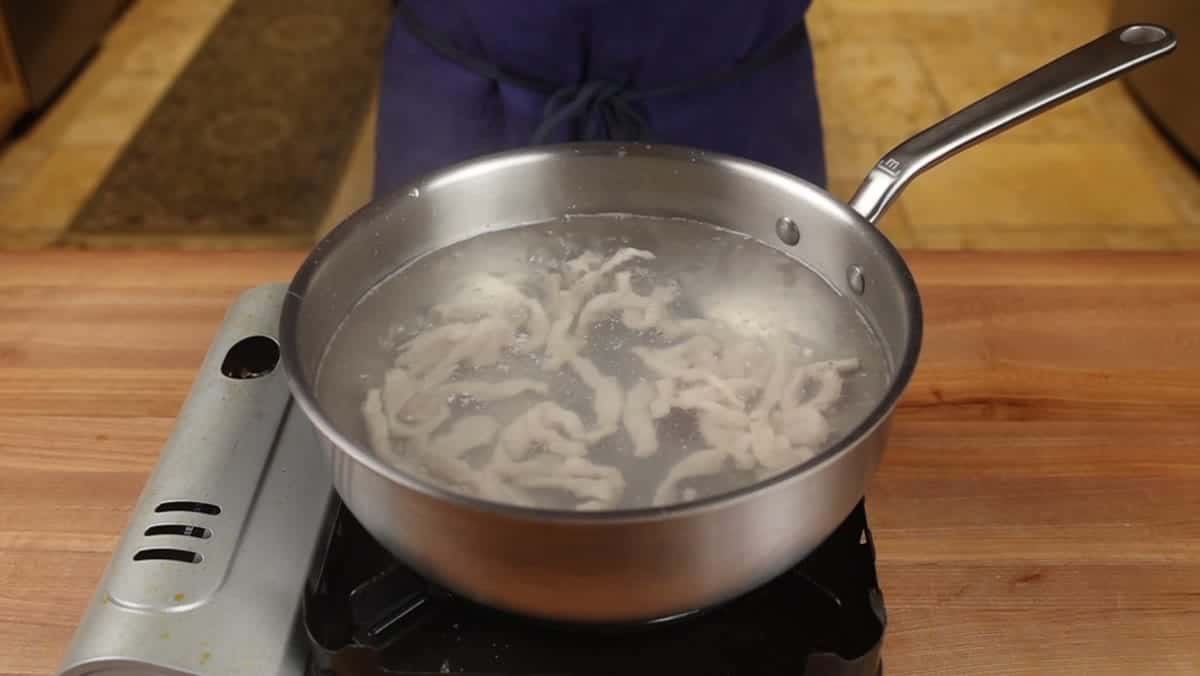
Bring a large pot or wok of lightly salted water to a simmer, add the marinated meat and cook it for 2 to 3 minutes, until it's just cooked through. Lift it out with a spider and set it aside.
6. Blanch the bamboo shoots
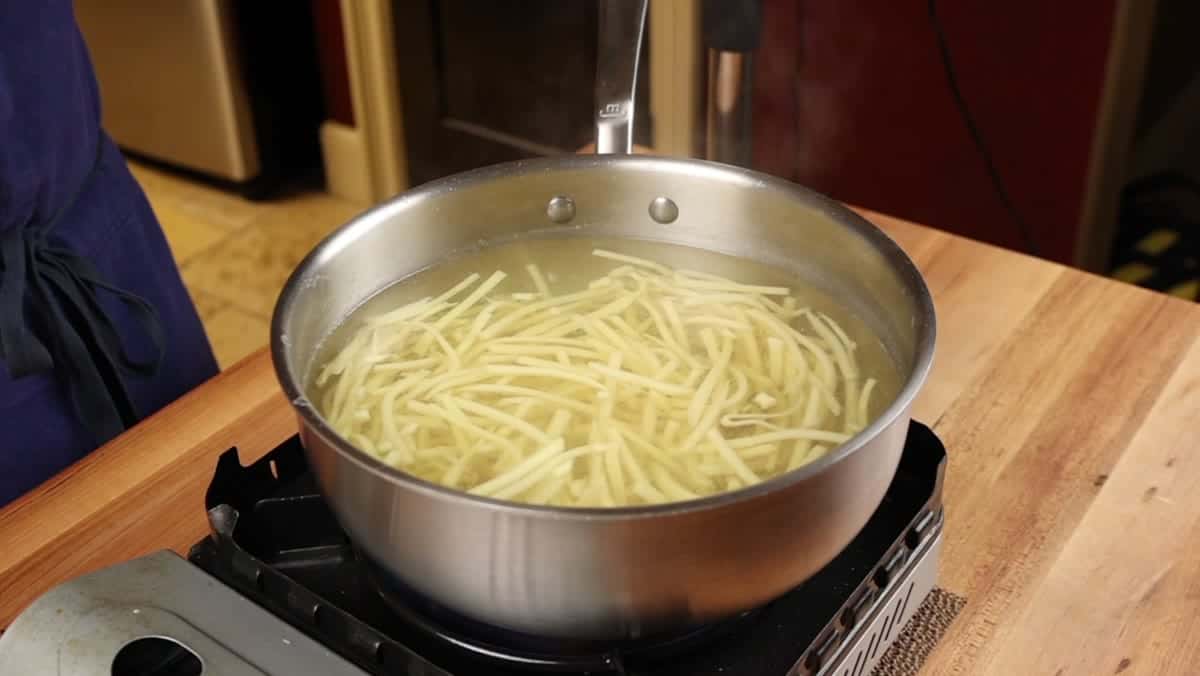
Drain the bamboo shoots and drop them into the same simmering water for 30 to 60 seconds. Canned bamboo shoots can have a tinny, metallic taste, and a quick blanch gets rid of it and firms them up a little.
Some people are a lot more sensitive to that taste than others, but it only takes a minute.
7. Season the broth
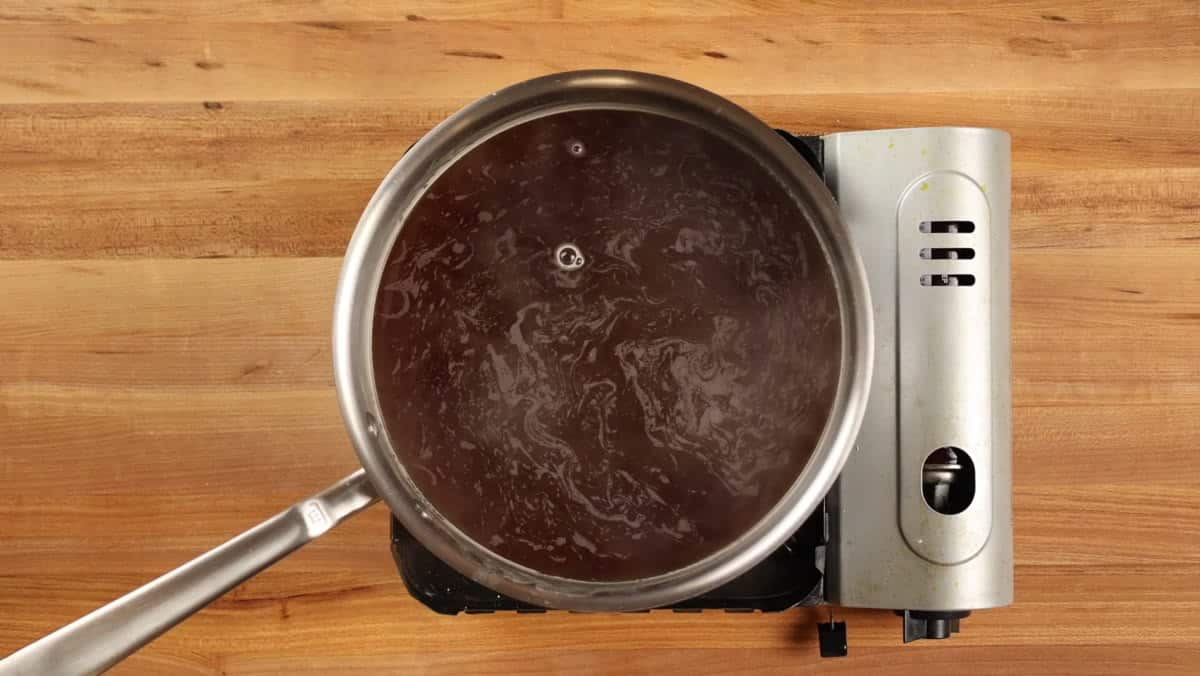
Heat the 6 cups of broth over medium heat until it's hot, using some of the shiitake soaking water in place of plain water if you have it. Stir in the salt, sugar, light soy sauce and dark soy sauce until they dissolve, then taste it.
It should taste well seasoned on its own, so adjust it now. Then whisk in the grated ginger.
8. Add everything to the broth
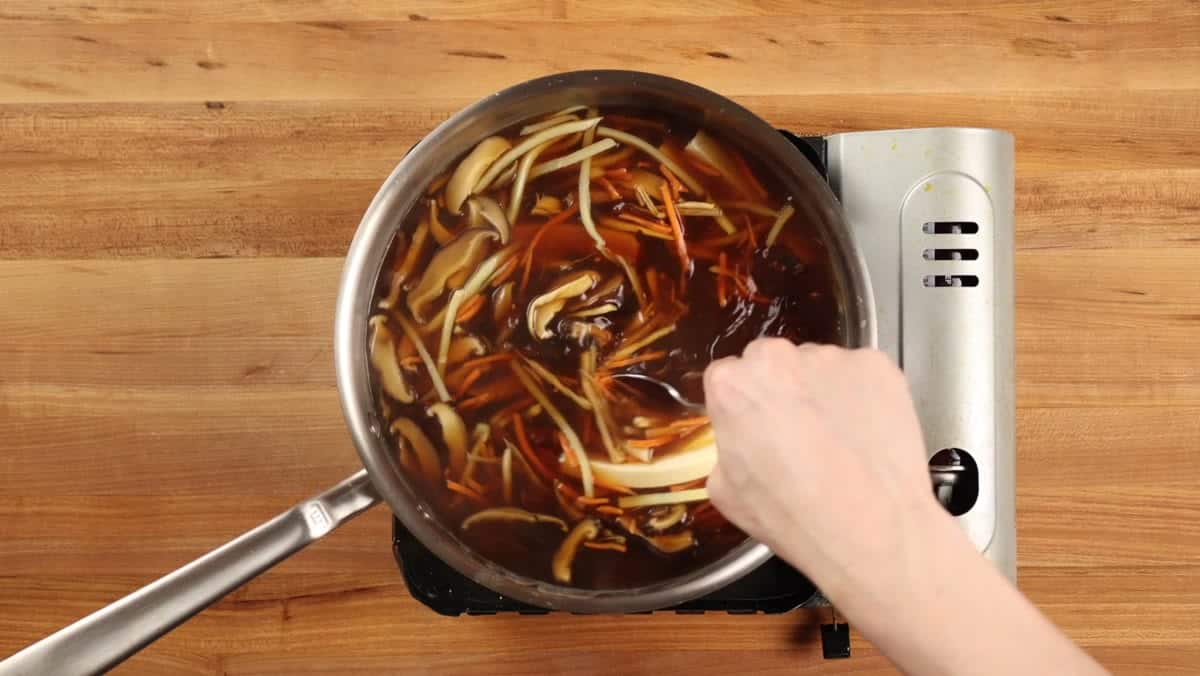
Cut the tofu into ½-inch matchsticks. Add the meat, both mushrooms, the daylilies, the carrots, the bamboo shoots and the tofu to the broth, and let everything heat through for 3 to 5 minutes.
Nothing really needs cooking except the carrots, but it gives the mushrooms time to take in some of the seasoning.
9. Thicken it with the slurry
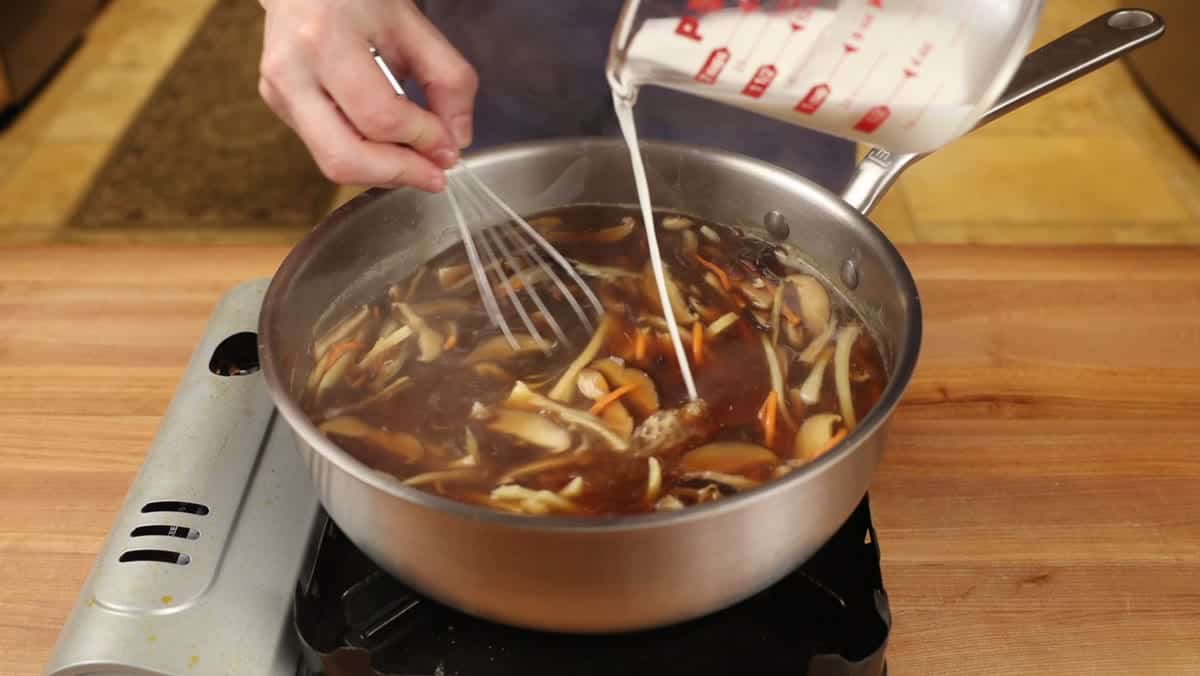
Raise the heat until the soup is at a gentle simmer. Stir the slurry again right before you use it, since cornstarch settles to the bottom of the water pretty quickly. Pour it in slowly while you stir, because it can clump up if the soup isn't moving.
Give it a minute or two to thicken. It should coat the back of a spoon, and it'll look a little thicker than you might expect, but the vinegar loosens it up slightly at the end.
10. Pour in the egg
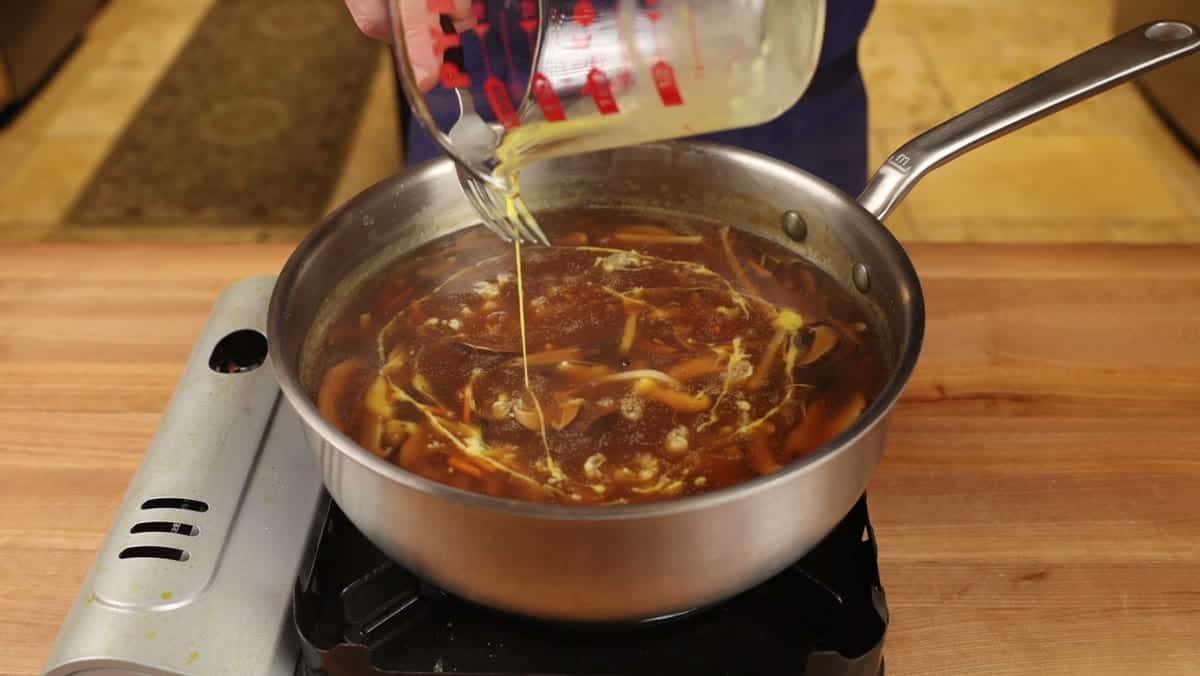
Lower the heat until the soup is just under a simmer. Beat the egg with the teaspoon of water, which loosens it up so it pours in finer threads, then pour it in as thin a stream as you can.
Don't stir while you pour. Let the egg set for about a minute, then stir it gently through the soup.
11. Finish it off the heat
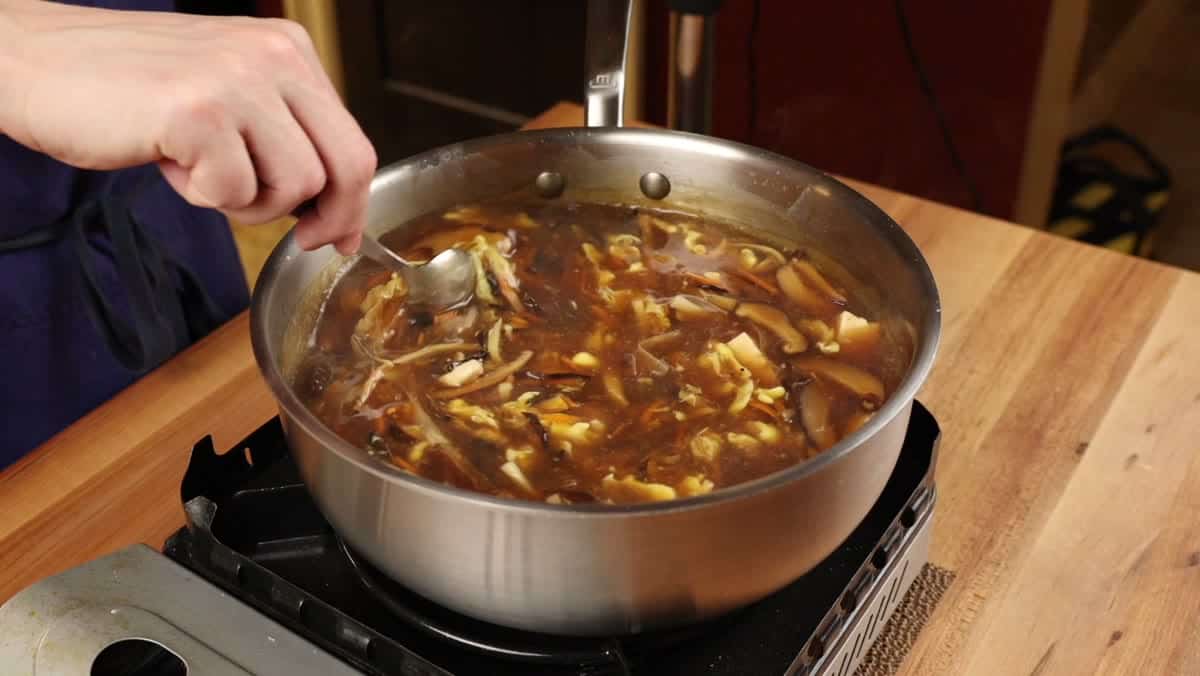
Kill the heat and let the soup cool for about 30 seconds. Stir the white pepper into the black vinegar in a small bowl first, along with the sesame oil, which keeps the white pepper from clumping in the thick soup.
Then stir it all into the pot. Taste it and add more vinegar or white pepper if you like it more hot or more sour.
Storing and Reheating the Soup
Leftovers keep in the fridge for 3 to 4 days, which is the USDA's guideline for leftovers. Reheat it to 165°F, or bring it to a rolling boil, which the same USDA page advises for soups.
The vinegar and white pepper fade pretty quickly once the soup sits, so add a splash more vinegar and a pinch of white pepper to each bowl when you reheat it. The soup also thickens as it cools, so you may need a little water or broth to loosen it.
If you want to freeze it, freeze just the seasoned broth, and use it within 3 to 4 months. I don't think the finished soup freezes well, since the texture of everything in it gets weird. Bring the broth back to a simmer and start again from step 8.
There's one ingredient almost every home recipe for orange chicken gets wrong. The right one is in my free recipe pack, along with five more restaurant recipes. You can get it here.
Hot and Sour Soup Questions
Why isn't my soup spicy enough?
All of the heat in this recipe comes from the white pepper, so add more at the end if you want it hotter. If the soup at your local place tastes like it has red chilies in it, I bet they're using doubanjiang, a Chinese chili bean paste.
Some restaurants add chili oil instead. Both are the exception, though, and not the rule.
Can I use balsamic vinegar instead?
I'd use equal parts red wine vinegar and apple cider vinegar instead. I've never tried balsamic in this soup, but I think it would be too sweet.
Can I make it vegetarian?
Yes. Leave out the meat and add more mushrooms in its place, and use a mushroom bouillon in place of the chicken bouillon.
Can I leave out the wood ears?
Yes. Wood ears don't really have much flavor, and they're added more for texture. If you don't like them, just leave them out.
If you make this, leave a star rating in the recipe card below. It helps other people find the recipe.
More Soup and Takeout Recipes
- Wonton Soup Recipe
- World-Class Beef Pho
- Chinese Egg Rolls
- Chinese Takeout Crab Rangoon
- Chicken Fried Rice
Chinese Takeout Hot and Sour Soup
Ingredients
Pork Marinade
- 4 oz pork loin or chicken breast cut into ¼-inch slivers
- ⅛ teaspoon Morton table salt
- ⅛ teaspoon sugar
- ¼ teaspoon soy sauce Chinese light soy sauce
- ½ teaspoon Shaoxing cooking wine
- ¼ teaspoon cornstarch
- ½ teaspoon vegetable oil
Soup Broth
- 6 cups Asian chicken broth made from Chinese chicken bouillon powder (about 1 teaspoon per cup of water); replace some water with shiitake soaking liquid
- 2 teaspoon Morton table salt
- ½ teaspoon sugar
- 1 tablespoon soy sauce Chinese light soy sauce
- 1 teaspoon mushroom dark soy sauce Chinese mushroom-flavored dark soy sauce
Dried Ingredients (Rehydrated)
- 4-6 pieces dried black fungus rehydrated in boiling water 30-60 min
- 4-6 dried shiitake mushrooms rehydrated in boiling water 30-60 min; reserve soaking liquid
- 20 dried daylily buds rehydrated in cool water 20-30 min
Soup Additions
- 1 teaspoon ginger freshly grated
- ½ cup bamboo shoot strips blanched 30-60 seconds
- 4 oz firm tofu cut into ½-inch matchsticks
- ½ cup carrots julienned
Cornstarch Slurry
- 5 tablespoon cornstarch
- 5 tablespoon water
Egg Drop
- 1 large egg
- 1 teaspoon water loosens egg for finer threads
Final Seasoning (Added Off Heat)
- 3 tablespoon Chinese black vinegar Chinkiang/Zhenjiang; halve amount if using white vinegar
- 1 teaspoon white pepper
- 1 teaspoon toasted sesame oil
Instructions
Marinate the Protein
- Cut 4 ounces of pork loin or chicken breast into thin ¼-inch slivers. For chicken breast, cut across the grain for the most tender result. Add the salt, sugar, light soy sauce, Shaoxing cooking wine, cornstarch, and vegetable oil. Mix well and refrigerate for at least 20 minutes, or up to overnight.
Rehydrate the Dried Ingredients
- Wash the dried shiitake mushrooms under cold running water to remove any dirt. Place them in a bowl and pour boiling water over them. Soak for 30 to 60 minutes. Reserve the soaking liquid for the broth.
- Place the dried black fungus in a separate bowl and pour boiling water over them. Soak for 30 to 60 minutes. Discard the soaking liquid.
- Place the dried daylily buds in a bowl and cover with cool water. Soak for 20 to 30 minutes. Discard the soaking liquid.
- After soaking, lightly squeeze the shiitake mushrooms to remove excess water. Slice off the tough stems and discard them. Cut the caps into thin ⅛-inch strips.
- For the black fungus, find the small tough section where it was attached to the tree and slice it off. Roll each piece into a cigar shape and cut into ¼-inch slivers.
- For the daylilies, trim the tough ends from both sides and cut each one in half lengthwise.
Prepare the Protein and Bamboo Shoots
- Bring a large pot of lightly salted water to a simmer. Add the marinated pork or chicken and cook for 2 to 3 minutes until just cooked through. Remove with a spider strainer and set aside. Cooking the protein separately keeps the broth clean and clear.
- Add the bamboo shoots to the same simmering water and blanch for 30 to 60 seconds to remove any metallic, tinny flavor. Remove and set aside.
Prepare the Slurry and Egg
- In a small bowl, mix 5 tablespoons of cornstarch with 5 tablespoons of water and stir until completely smooth. Set aside.
- In a separate small bowl, beat 1 egg with 1 teaspoon of water until homogeneous. Set aside.
Prepare the Final Seasoning
- In a small bowl or measuring cup, combine 3 tablespoons of Chinese black vinegar, 1 teaspoon of ground white pepper, and 1 teaspoon of toasted sesame oil. Stir and set aside. These go in at the very end, off the heat.
Build the Soup
- Add 6 cups of prepared Asian chicken broth to a large pot. Replace some of the water with reserved shiitake mushroom soaking liquid for extra savoriness. Heat over medium heat until hot.
- Season the broth with 2 teaspoons of salt, ½ teaspoon of sugar, 1 tablespoon of Chinese light soy sauce, and 1 teaspoon of Chinese dark soy sauce. Stir until dissolved and taste for seasoning. The broth should taste well seasoned on its own.
- Whisk in 1 teaspoon of freshly grated ginger. Grating rather than dicing gives you the flavor without chunky pieces.
- Add the poached protein, shiitake mushrooms, black fungus, daylilies, julienned carrots, blanched bamboo shoots, and sliced firm tofu to the broth. Heat everything through for 3 to 5 minutes.
Thicken and Finish
- Slowly raise the heat until the broth reaches a gentle simmer. Stir the cornstarch slurry again (it will have settled) and slowly pour it into the broth while stirring constantly. Let the slurry thicken the broth for 1 to 2 minutes. It will seem thicker than you expect, but the vinegar will loosen it slightly later. Test by dipping a spoon in. The broth should coat the back of the spoon.
- Lower the heat to just below a simmer. Slowly drizzle in the beaten egg in as thin a stream as possible. Do not stir the soup while adding the egg. Let the egg set for about 1 minute in the thickened broth. The viscosity of the thickened broth acts as a raft, suspending the egg so it forms wispy ribbon strands. After the egg has set, gently stir to distribute it evenly.
- Turn off the heat and let the soup cool very slightly for about 30 seconds. Pour in the prepared vinegar, white pepper, and sesame oil mixture and stir it through the soup. Taste and adjust with extra vinegar or white pepper to your preference.

Made this Hot and Sour soup yesterday, followed the recipe and it was the best Hot and Sour soup I've ever had, Thank you.
I'm glad you like it!