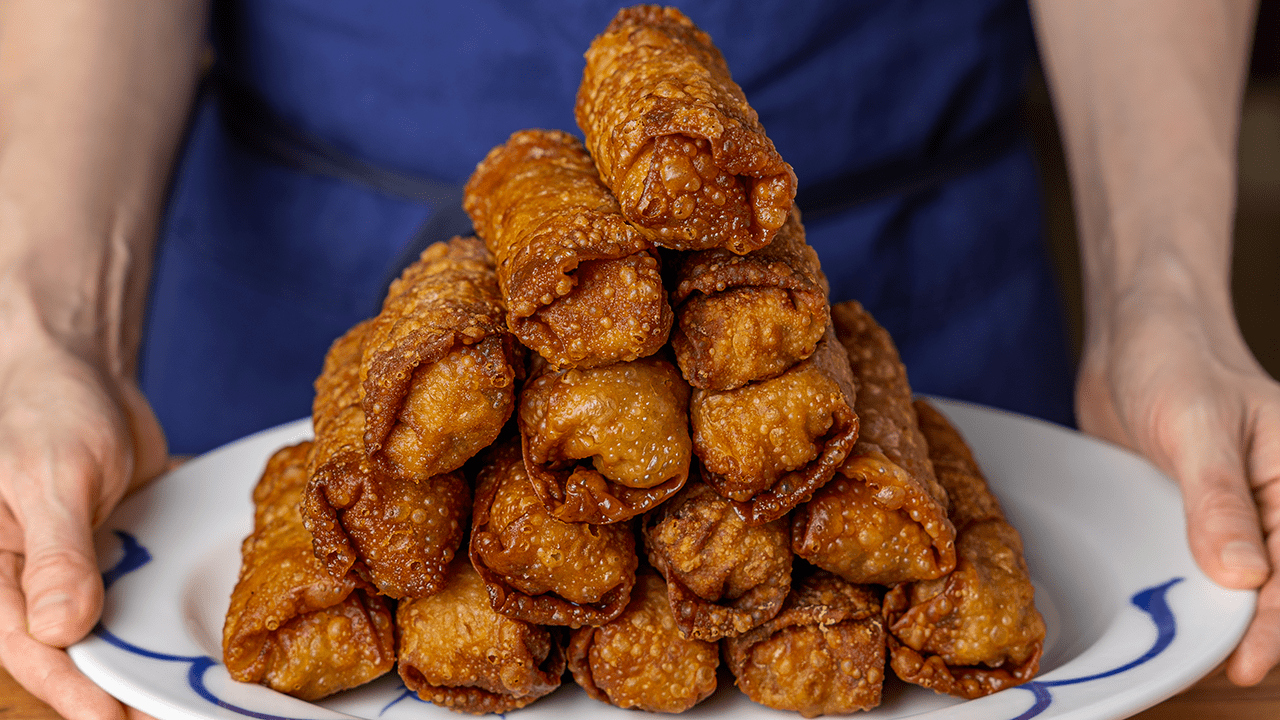
Chinese Takeout Egg Rolls Recipe
The number one reason homemade egg rolls turn out soggy has nothing to do with the wrapper, the oil temperature, or the filling. It's the water that's still trapped inside the vegetables. I went through every popular egg roll recipe I could find online, and almost none of them address this step properly. The ones that mention it treat it like an afterthought. It's not. Getting the water out of the vegetables is the single most important thing you can do to make better egg rolls at home.
If you've tried making egg rolls at home and ended up with a soft, greasy shell instead of that blistered, crunchy exterior you get from a good takeout spot, you probably didn't get enough water out of the vegetables before you rolled them. I'll walk you through exactly how to fix that, plus the secret seasoning blend that the best takeout kitchens use and most home cooks have never heard of.
This post contains affiliate links, which means I may earn a small commission if you make a purchase. It doesn't cost you anything extra. Full disclosure.
Why This Chinese Takeout Egg Rolls Recipe Works
- Chicken bouillon powder is the secret seasoning. The takeout restaurants with the best egg rolls season their vegetable filling with Lee Kum Kee chicken bouillon powder. It adds a layer of umami that salt alone can't get you. Most home recipes skip this entirely.
- Potato ricer removes more water than any other method. Blanching the cabbage, celery, and carrot softens them, but it also introduces a lot of moisture. Pressing the vegetables through a potato ricer gets out significantly more water than wringing them in a towel or pressing them in a colander.
- Double-frying creates the blistered crust. The first fry at 350°F cooks everything through. The second fry at 375°F for just 2 minutes is what gives you that crunchy, bubbly exterior that separates a great egg roll from a mediocre one.
- The ground pork is seasoned to taste like char siu. Instead of plain ground pork or the labor-intensive process of making actual Chinese BBQ pork, the pork is seasoned with hoisin, oyster sauce, five spice, and Shaoxing wine. You get the same sweet, savory flavor without spending all day making actual char siu.
- Egg wash, not cornstarch slurry, for the seal. About half the takeout kitchens I talked to use egg and the other half use a cornstarch slurry. The egg creates a slightly better seal and doesn't leave a raw starchy taste.
Ingredients You'll Need
Egg roll wrappers are not the same thing as spring roll wrappers. This is the most common mistake people make. Egg roll wrappers are a wheat-based pastry sheet that often contains egg. They're thicker than spring roll wrappers and they produce that characteristic blistered, bubbly, chewy exterior when fried. Spring roll wrappers give you a smooth, thin, crispy shell. Both are fine, but they'll give you very different results. Look for egg roll wrappers (sometimes labeled "egg roll skins") in the refrigerated or freezer section. Golden Dragon and Twin Dragon are both solid brands, but most commercially available wrappers are basically interchangeable.
Green cabbage makes up the bulk of the filling. Standard cheap green cabbage from any grocery store. You'll need 8 cups finely shredded, which sounds like a lot but it cooks down considerably after blanching and pressing.
Chinese celery is worth tracking down if you can find it. It has a more concentrated celery flavor than the regular stuff. Regular celery works fine though.
Lee Kum Kee chicken bouillon powder is the ingredient that will set your egg rolls apart. You'll typically find two versions at Asian grocery stores: green label (no MSG) and red label (with MSG). The red one is better, but either works.
Hoisin sauce is sometimes described as a sweet Chinese BBQ sauce. It lasts basically forever in the fridge. You can pass it down to your grandchildren as a family heirloom.
Shaoxing wine is a Chinese cooking wine. Don't substitute with regular wine or mirin. They taste nothing alike and you'll end up with a completely different filling.
How to Make Chinese Takeout Egg Rolls
1. Blanch and dry the vegetables. Bring a large pot of lightly salted water to a simmer. Adding a bit of salt helps the vegetables maintain their color and improves the seasoning. Add the shredded cabbage, julienned celery, and julienned carrot. Simmer for about 1 minute, just until the vegetables have slightly softened. Move them to an ice bath or run cold water over them in a colander.
2. Remove the moisture. This is the most important step in the entire recipe. This is the number one reason home cooks have problems making proper egg rolls, and this is why they keep turning out soggy. If you have a potato ricer, use it. Load a handful of blanched vegetables into the ricer and clamp down as hard as you can. Pour out the water that collects at the top of the barrel. A potato ricer removes more water with less effort than any other method. If you don't have one, wrap the vegetables in a kitchen towel and twist until your arms give out. After pressing, spread the vegetables on a baking sheet and let them sit for about an hour so even more moisture can evaporate. You can make the vegetables up to a few days ahead and keep them in the fridge.
3. Cook the seasoned pork. Mix the spice blend: sugar, kosher salt, Chinese five spice, white pepper, Shaoxing wine, light soy sauce, hoisin, and oyster sauce. Heat a bit of oil in a nonstick pan over medium-high heat. Add the ground pork and break it up, then leave it alone for several minutes. You want to take the pork as far as possible without burning it. The charred bits you get from leaving it alone are going to provide little bursts of flavor throughout the egg rolls. About 2-3 minutes before the pork is done, add the minced garlic and cook until fragrant. Pour in the sauce mixture and simmer until it reduces to basically nothing. This concentrates the flavor and gives you that Chinese BBQ pork taste without the all-day preparation. Drain the pork on paper towels to remove as much fat as possible.
4. Make the seasoning blend. Combine kosher salt, chicken bouillon powder, sugar, Chinese five spice, white pepper, and black pepper. This is the seasoning you'll toss with the vegetables right before rolling.
5. Assemble the filling. Right before you're ready to roll and fry, toss the vegetables with the seasoning blend, green onions, sesame oil, and the cooked pork. Do this as close to rolling time as possible because the salt in the seasoning will start drawing moisture out of the vegetables.
6. Roll the egg rolls. Lay a wrapper flour-side down with one corner pointing toward you like a diamond. Place about ½ cup of filling slightly below center. Lift the bottom corner over the filling and tuck it under. Push down on both sides, fold the left and right flaps in, then continue rolling forward. When you have about 1.5-2 inches left, brush the remaining wrapper with beaten egg and finish rolling to seal.
7. First fry at 350°F for 7 minutes. Drop the egg rolls into the oil and turn them about every 30-60 seconds. One side will always float to the top. Do your best, but don't try to fully submerge them with the frying basket. The little bubbles forming at the surface of the oil are what create the blisters on the skin. Drain them standing up in a pot lined with paper towels. Setting them upright keeps oil from pooling inside the egg rolls.
8. Second fry at 375°F for 2 minutes. Increase the oil temperature and fry the egg rolls again. This is the step that gives you that earth-shattering crust that is the mark of a well-made egg roll. Drain and serve immediately.
Tips for the Best Egg Rolls
Don't freeze before the first fry. A lot of recipes say you can freeze egg rolls before cooking, but the skins tend to dry out and crack in the freezer. Fry them first (the full 7-minute cook), let them cool completely, then freeze on a baking sheet in a single layer before transferring to freezer bags. You can drop them back in the fryer to reheat straight from the freezer.
Keep the wrappers covered. Egg roll skins dry out fast. Keep them under a damp paper towel while you're working.
Don't overstuff. About ½ cup of filling per egg roll. More than that and you'll have a hard time getting a tight roll, and the wrapper is more likely to tear during frying.
Flour side out, smooth side in. The wrappers have two sides: one with a light coating of flour and one smooth. The flour side faces down when you roll, which means it ends up on the outside of the finished egg roll. This is what gives you those characteristic bubbles.
Pre-made coleslaw mix works in a pinch. If you don't want to shred everything by hand, a bag of coleslaw mix is a reasonable shortcut. You'll still need to blanch and press it.
Storage and Reheating
Cooked egg rolls keep in the fridge for 3-4 days. To freeze, let them cool completely after the first fry (before the double-fry step), freeze on a sheet pan in a single layer, then transfer to freezer bags. They'll keep for up to 3 months. Reheat from frozen by frying at 375°F for 2-3 minutes, or in an air fryer at 375°F for about 5 minutes. The oven works too (400°F, 10-12 minutes), but you won't get the same crunch as refrying.
Frequently Asked Questions
What's the difference between egg rolls and spring rolls?
Mainly the wrapper. Egg roll wrappers are made with wheat flour and egg, which makes them thicker. When fried, they get that bubbly, blistered, chewy texture. Spring roll wrappers are thinner, made without egg, and fry up smooth and crispy. If you've had fried rolls at a more traditional Chinese restaurant with a smooth exterior, those were spring rolls.
What is duck sauce?
Despite the name, duck sauce contains no duck. It's actually an apricot-based sweet condiment. The recipe in the card below uses apricot preserves, a bit of sugar, soy sauce, rice vinegar, and applesauce. Let it set in the fridge for about an hour so the pectin firms it up.
Can I use a different protein?
Ground pork is the most common, but you can use whatever you want. Chinese BBQ pork (char siu) is traditional in many styles. Ground chicken or shrimp both work. Just make sure any cooked protein is drained well and cooled before adding it to the filling.
Why do my egg rolls come out greasy?
Two likely causes. Either the oil temperature was too low (the wrapper absorbs oil instead of crisping up), or there was too much moisture in the vegetable filling. The potato ricer step and the hour of air-drying on a baking sheet are there to prevent exactly this.
More Chinese Takeout Recipes
- Chinese Takeout Crab Rangoon
- Chinese Takeout Egg Foo Young
- Chinese Takeout Orange Chicken
- Chinese Takeout Kung Pao Chicken
- Chinese Takeout General Tso's Chicken
- Chinese Takeout Wonton Soup
- Chinese Takeout Hot and Sour Soup
- Chinese Takeout Egg Drop Soup
- Chinese Takeout Chow Mein
- Chinese Takeout Lo Mein
- Chinese Takeout Fried Rice
- Char Siu (Chinese BBQ Pork)
More P.F. Chang's Recipes
- P.F. Chang's Mongolian Beef
- P.F. Chang's Lettuce Wraps
- P.F. Chang's Beef with Broccoli
- P.F. Chang's Dynamite Shrimp
- P.F. Chang's Singapore Street Noodles
- P.F. Chang's Stir-Fried Eggplant
- P.F. Chang's Fried Rice
- P.F. Chang's Kung Pao Chicken
- P.F. Chang's Spicy Chicken
- P.F. Chang's Crispy Honey Chicken
More Panda Express Recipes
More Din Tai Fung Recipes
Recipe
Chinese Takeout Egg Rolls
Equipment
Ingredients
Chinese Ground Pork
- ¼ lb ground pork
- 1 teaspoon garlic minced
Pork Spice Mix
- ¼ teaspoon granulated sugar
- ¼ teaspoon kosher salt
- ⅛ teaspoon Chinese five spice
- ⅛ teaspoon white pepper
- 1 tablespoon Shaoxing cooking wine
- ¾ teaspoon soy sauce
- ½ teaspoon hoisin sauce
- ½ teaspoon oyster sauce
Egg Roll Vegetables
- 8 cups green cabbage finely shredded
- 1 cup celery julienned
- 1 cup carrot julienned
- ¼ cup green onions thinly sliced
- 1 ½ teaspoon toasted sesame oil
Vegetable Seasoning
- 2 teaspoon kosher salt
- 2 ½ teaspoon chicken bouillon powder
- 1 ½ teaspoon granulated sugar
- ⅛ teaspoon Chinese five spice
- ⅛ teaspoon white pepper
- ⅛ teaspoon black pepper
For Assembly and Frying
- 8 egg roll wrappers
- 1 egg beaten
- vegetable oil for deep frying
Duck Sauce
- 2 tablespoon water
- 1 tablespoon granulated sugar
- ¼ teaspoon kosher salt
- ¼ cup apricot preserves
- ¼ teaspoon soy sauce
- ½ teaspoon unseasoned rice vinegar
- 1 teaspoon applesauce
Mustard Sauce
- 1 part hot mustard powder
- 1 part water
- toasted sesame oil to taste
- unseasoned rice vinegar to taste
- white pepper to taste
Instructions
Blanch the Vegetables
- Fill a large pot with lightly salted water and bring it to a simmer. Adding salt helps the vegetables maintain their color and improves the seasoning.
- Add 8 cups of finely shredded cabbage, 1 cup of julienned celery, and 1 cup of julienned carrot. Simmer for about 1 minute or just until the vegetables have slightly softened.
- Remove the vegetables to an ice bath, or drain into a colander and run cold water over them until completely cool.
Remove the Moisture
- Press as much moisture as possible out of the vegetables. A potato ricer is the most effective method. Load a handful of blanched vegetables into the ricer and clamp down as hard as you can. Pour out the water that collects at the top of the barrel. If you don't have a potato ricer, wrap the vegetables in a kitchen towel and twist to wring out the water.
- Spread the pressed vegetables on a baking sheet and let them sit for about an hour so additional moisture can evaporate. The vegetables can be made up to a few days ahead and stored in the fridge.
Cook the Pork
- Combine the pork spice mix ingredients in a small bowl and whisk thoroughly.
- Heat a bit of oil in a nonstick pan over medium-high heat. Add the ground pork and break it up, then leave it alone for several minutes. You want to take the pork as far as possible without burning it. The charred bits will provide bursts of flavor in the finished egg rolls.
- About 2-3 minutes before the pork is done, add the minced garlic and cook until fragrant, about 20-30 seconds.
- Pour in the pork spice mix and simmer until the sauce has reduced to basically nothing. This concentrates the flavor and gives you a Chinese BBQ pork taste. Drain the pork on paper towels to remove excess fat.
Season and Assemble the Filling
- Combine all vegetable seasoning ingredients in a small bowl and mix thoroughly.
- Shortly before frying, toss the pressed vegetables with the seasoning mixture, green onions, toasted sesame oil, and the reserved pork. Mix until evenly coated. Do this as close to rolling time as possible because the salt will draw moisture out of the vegetables.
Roll the Egg Rolls
- Lay an egg roll wrapper flour-side down with one corner pointing toward you like a diamond.
- Place approximately ½ cup of the vegetable mixture in the center of the wrapper, slightly closer to you.
- Lift the bottom corner over the filling and tuck it under. Push down on both sides of the filling, then fold the left and right flaps into the center. Continue rolling forward.
- When you have about 1.5-2 inches left, brush the remaining wrapper with beaten egg. Continue rolling forward until the egg roll is completely sealed. Repeat with the remaining wrappers.
Fry the Egg Rolls
- Preheat oil to 350°F (175°C). Use a deep fryer or a large Dutch oven with a thermometer to maintain temperature. Use enough oil to completely cover the egg rolls.
- Fry the egg rolls for approximately 7 minutes, turning every 30-60 seconds to ensure all sides cook evenly. Do not fully submerge them with the basket. The bubbles at the surface create the characteristic blisters on the skin.
- Drain the egg rolls standing upright in a pot lined with paper towels. This prevents oil from pooling inside.
- For extra-crispy egg rolls, increase the oil temperature to 375°F (190°C) and fry for an additional 2 minutes. Drain and serve immediately.
Make the Duck Sauce
- Combine water, sugar, and kosher salt in a bowl. Stir until the sugar and salt have dissolved.
- Add the apricot preserves, soy sauce, rice vinegar, and applesauce. Mix well. Refrigerate for at least 1 hour to allow the pectin to set and thicken the sauce.
Make the Mustard Sauce
- Mix equal parts hot mustard powder and cold water. Stir in a splash of toasted sesame oil, a splash of unseasoned rice vinegar, and a pinch of white pepper.
- Allow the mustard to sit for at least 30 minutes to 1 hour before serving. The longer it sits, the hotter it gets. The mustard sauce can be refrigerated for up to 1 month.

I am making the Char Siu right now, how do I adjust for using that pork? Do I just omit the pork spice mix?
Hi, Joanne. Yes, you'll just remove the spices for the pork and use the char siu instead.
I have made these multiple times and love them. I would love to use the recipe to make egg roll "bowls" when I want a quicker dinner that doesn't involve having to spend time deep frying (and the ensuing clean up).
I was thinking blanching and pressing out a lot of the moisture would still be a good idea but then I'd sautee the vegetable mix with a bit of oil. And maybe add a bit of liquid to the chicken bouillon with corn starch to lightly coat everything.
Would that make sense? Or am I way off base on wanting to tweak this into a bowl? I have tried other online recipes that are specifically for egg roll bowls but they don't taste like your filling.