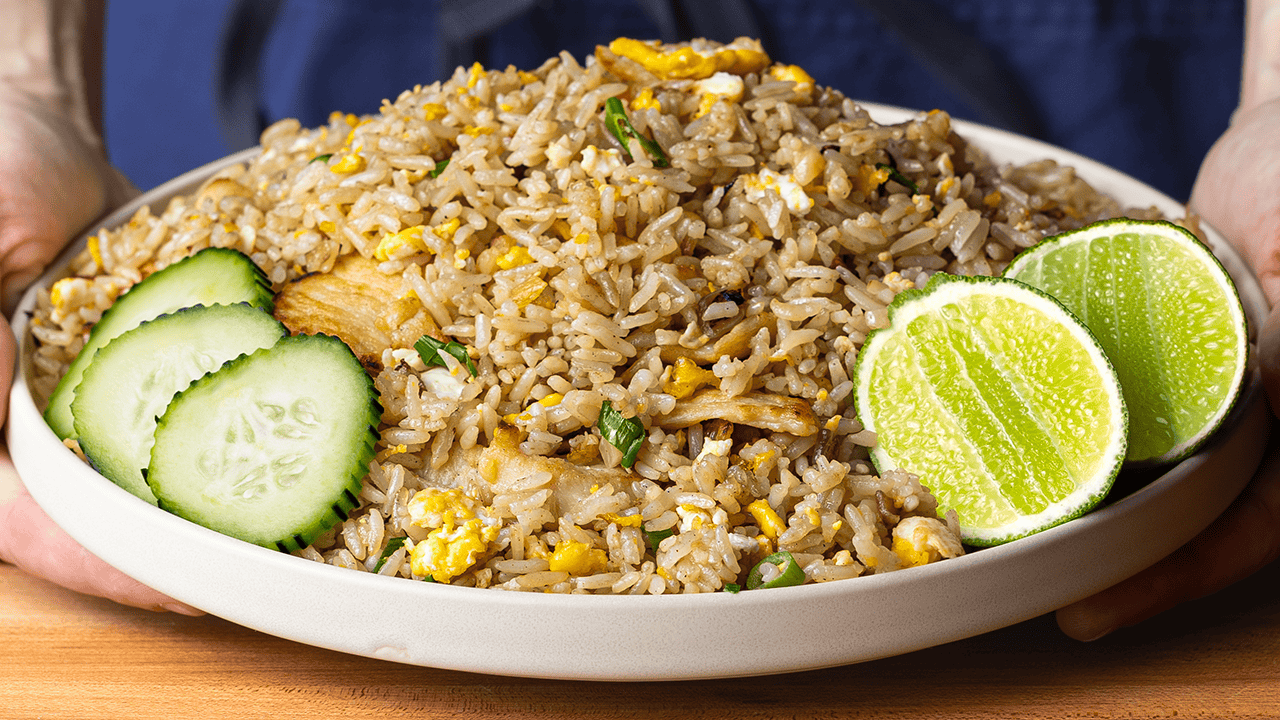
Thai Takeout Fried Rice Recipe
Most Thai takeout fried rice recipes online call for jasmine rice and regular soy sauce. Jasmine makes a fine fried rice, but the best versions I've had used a 2:1 blend of long-grain white rice and jasmine. And the ingredient most of those recipes leave out, Golden Mountain seasoning sauce, isn't sold at most American grocery stores.
I learned this from a buddy who used to own a Thai restaurant near me. In Thailand, the rice they use for fried rice is typically a heartier variety called Sao Hai, but it's not available in the US. His restaurant blended two parts standard long-grain white rice with one part jasmine. The long-grain holds up to high-heat wok cooking, and the jasmine adds the fragrance.
This post contains affiliate links, which means I may earn a small commission if you make a purchase. It doesn't cost you anything extra. Full disclosure.
Why This Thai Takeout Fried Rice Recipe Works
- 2:1 long-grain to jasmine rice blend mimics the Sao Hai rice used at Thai restaurants in Thailand, giving you grains that stay separate in the wok instead of clumping together
- Thai soy sauce (Healthy Boy brand) is milder and less salty than Chinese or Japanese soy sauce, so the finished rice tastes lighter and more aromatic instead of heavy and overly salted
- Golden Mountain seasoning sauce is the ingredient most home cooks are missing. It's sweeter and saltier than regular soy sauce, and it's the standard at almost every Thai restaurant
- Steaming the rice instead of using the absorption method cooks grains evenly from all directions, so you don't end up with mushy rice at the bottom and overcooked rice on top
- Frying the rice in oil for 2-3 minutes before adding sauce drives off remaining moisture so you get individual grains instead of wet clumps
Ingredients You'll Need
The rice blend. Two parts standard American long-grain white rice mixed with one part Thai jasmine rice. The long-grain gives you the structural integrity for high-heat wok cooking. The jasmine brings the fragrance. Wash the blend under several changes of water until it runs clear to remove surface starch that causes clumping. If you can find Green Elephant brand jasmine rice, that's the one I've seen at most Thai restaurants.
Thai soy sauce. This is not the same thing as Kikkoman or Pearl River Bridge. Thai soy sauce, sometimes called "thin soy sauce" or "white soy sauce," is milder and less salty than Chinese or Japanese varieties. The most popular brand at Thai restaurants is Healthy Boy. You can use a light Chinese soy sauce, but the flavor won't be quite the same.
Fish sauce. This is the most important ingredient in Thai cooking. It's made from salted, fermented anchovies, and it's extremely high in natural glutamates, the flavor molecules that make food taste savory. The smell is intense when it's raw, but that mostly dissipates with cooking. Squid Brand and Tiparos are the two most common brands at Thai restaurants. Both are inexpensive and available at most Asian grocery stores.
Golden Mountain seasoning sauce. If your Thai fried rice at home has never quite tasted like the restaurant version, this is probably why. It's a soy-based sauce with extra seasoning, but it's much sweeter and saltier than regular soy sauce. You can find it on Amazon. If you see Maggi seasoning liquid at your grocery store, that works as a close substitute. Once they're cooked into the rice, the two taste almost identical.
Baking soda for the chicken. A half teaspoon of baking soda massaged into the sliced chicken breast and left to sit for 15 minutes keeps the meat from drying out or toughening up, even with the high heat of wok cooking. This is a technique a lot of Asian restaurants use.
How to Make Thai Takeout Fried Rice
Prepare the rice. Mix your 2:1 long-grain to jasmine blend and wash it several times until the water runs clear. If you have a rice cooker with a "harder rice" setting, use that. Otherwise, steam the rice: place a bowl with equal parts rice and water inside a large pot with 1-2 inches of simmering water, cover, and steam for 20 minutes. Kill the heat and let it rest for 10 more minutes with the lid on. Spread the cooked rice on a baking sheet and cool it completely to room temperature. If you try to stir-fry warm rice, the moisture turns it to mush.
Prep and marinate the chicken. Remove the tenderloin from a boneless, skinless breast. Slice the breast lengthwise into roughly 1-inch strips, then turn each strip perpendicular and cut at a 30-40 degree angle into about ⅛-inch slivers. Toss with baking soda and let sit for 15 minutes. Then add the marinade ingredients (soy sauce, fish sauce, sugar, salt, MSG, cornstarch, and oil) and massage everything in. You'll only use 2-4 ounces of marinated chicken per serving of fried rice. The rest keeps in the fridge for 3-5 days.
Mix the sauce and seasonings. Combine 1 tablespoon fish sauce, 1 teaspoon Thai soy sauce, and 1 teaspoon seasoning sauce in a small bowl. In a separate bowl, mix the sugar, salt, MSG, and white pepper. Set both aside. Once you start cooking, everything moves fast.
Cook the chicken. Heat your wok over medium heat until you see light wisps of smoke. Add 1-2 tablespoons of neutral oil and swirl to coat. Add 2-4 ounces of marinated chicken in a single layer. Don't crowd the wok. If you add too much protein at once, it lowers the cooking surface temperature and the chicken starts steaming in its own liquid instead of getting a proper stir-fry. Cook until done, then remove to a bowl.
Cook the eggs. Return the wok to medium heat with another 1-2 tablespoons of oil. Crack in 2 eggs and let the white set at the bottom. If your wok is hot enough, they won't stick. Stir and chop the eggs with your ladle until the yolks are set. Add them to the bowl with the chicken.
Fry the rice. Return the wok to medium heat with 2-3 tablespoons of oil. Toss in the chopped shallot and cook for a minute or two until the edges start to brown. Add the garlic and cook for just a few seconds. Garlic burns fast and goes bitter if it starts to blacken. Then add 2 cups of the cooked rice blend. Press it flat with the back of your ladle and break up any large clumps. Now let the rice fry in the oil for 2-3 minutes. This is the step most people skip. You need to cook off the remaining moisture so you get separated grains. Don't just dump everything in and stir.
Add the sauce. Push the rice to one side of the wok and pour the soy sauce mixture directly onto the hot wok surface, not onto the rice. This slightly caramelizes the sauce and concentrates the flavor. Then stir the rice into the sauce and work it through until no white rice remains.
Bring it together. Sprinkle in the seasoning mixture and stir to distribute evenly. Add the reserved chicken and egg along with the sliced green onion. Toss everything until it's evenly mixed. Turn off the heat.
Plate and serve. Serve with a few slices of cucumber on the side, a couple wedges of lime for fresh acidity, and Thai crushed red chili flakes for heat if you want them. You should be able to find these chilis at most Asian grocery stores in small bottles.
Tips for the Best Thai Takeout Fried Rice
Use your rice cooker's "harder rice" setting if it has one. A slightly dehydrated grain makes a better fried rice than a fully hydrated one. If you don't have a rice cooker, steam the rice. The absorption method (rice in a pot with water, lid on, simmer) cooks unevenly because the heat only comes from the bottom. The rice at the bottom always turns out overdone.
Cook everything in separate small batches. Home burners don't generate the same heat as restaurant stoves. If you add too much chicken or too much rice at once, the temperature drops and everything starts steaming instead of frying. Cook the protein, remove it. Cook the eggs, remove them. Cook the rice. Combine everything at the end.
Cool the rice completely before stir-frying. Freshly cooked rice releases a lot of steam as it cools, and that steam is moisture leaving the grains. If you stir-fry before it's fully cooled, the extra moisture keeps the grains from separating. Spread it on a baking sheet and let it reach room temperature. Overnight in the fridge works too, but isn't required with steamed rice.
Fry the rice in oil before adding the sauce. Press it down with the back of your ladle and listen for the sizzle. Two to three minutes of frying in the oil cooks off residual moisture and lets each grain heat through individually instead of in clumps.
Maggi works as a Golden Mountain substitute. If you can find Maggi seasoning liquid at your local grocery store but not Golden Mountain, use it. Once they're cooked into the rice, the two taste almost identical.
Storage and Reheating
Thai fried rice stores well in the fridge for 3-4 days in an airtight container. Reheat in a wok or skillet over medium-high heat with a small splash of oil. The microwave works in a pinch, but you'll lose some of the texture. Fried rice does not freeze particularly well because the rice grains break down during thawing.
Frequently Asked Questions
Can I use all jasmine rice instead of the blend?
You can, but the results won't be as good. Jasmine rice (Hom Mali) is softer and stickier than regular long-grain because it has higher levels of amylopectin, the starch component that causes rice to clump. The 2:1 blend gives you the jasmine fragrance without sacrificing the grain separation you want in fried rice.
Do I need to use day-old rice?
Not if you steam it. Day-old rice works because the fridge dehydrates the grains overnight. Steaming already produces drier, firmer grains than the absorption method. Just cool the steamed rice to room temperature on a baking sheet before stir-frying. Overnight in the fridge is fine but not required.
What's the difference between Thai soy sauce and Chinese soy sauce?
Thai soy sauce (sometimes called thin soy sauce or white soy sauce) is milder and less salty than Chinese light soy sauce. They come from different brewing traditions and produce different flavors. Using Chinese or Japanese soy sauce in Thai fried rice gives it a heavier, saltier taste that doesn't match what you get at a Thai restaurant.
Can I make this without a wok?
A large, flat-bottomed skillet or sauté pan works. The key is high heat and small batches. You won't get the same smoky flavor you'd get from a seasoned wok over a high-powered burner, but the seasoning and technique still make a good fried rice.
More Thai Recipes
More Fried Rice Recipes
- Chinese Takeout Fried Rice
- P.F. Chang's Fried Rice
- Benihana Fried Rice
- Din Tai Fung Shrimp Fried Rice
Recipe
Thai Takeout Fried Rice
Equipment
- 1 Wok Ladle For pressing and stirring rice
- 1 Rice Cooker Use "harder rice" setting if available
- 1 Baking Sheet For cooling cooked rice
- 1 Fine Mesh Strainer For washing rice
- 1 Glass Ramekins For sauce and seasoning mixtures
- 1 Squeeze Bottles For oil
Ingredients
Sauce Mixture
- 1 tablespoon fish sauce
- 1 teaspoon Thai thin soy sauce
- 1 teaspoon Thai seasoning sauce Golden Mountain or Maggi
Seasoning Mixture
- ½ teaspoon sugar
- ⅛ teaspoon salt
- ⅛ teaspoon MSG
- ¼ teaspoon white pepper
The Fried Rice
- 2 tablespoon neutral oil plus additional for chicken and eggs (5-7 tablespoon total across all steps)
- 2 oz Thai marinated chicken 2-4 oz per serving, see sub-recipe below
- 2 eggs
- ¼ cup shallot roughly chopped
- 2 teaspoon garlic roughly chopped
- 2 cups cooked rice 2 parts long-grain white, 1 part jasmine blend
- 2 tablespoon scallion thinly sliced
Thai Marinated Chicken
- 1 chicken breast boneless, skinless, 12-16 oz, sliced into ⅛-inch slivers
- ½ teaspoon baking soda massage into chicken, let sit 15 minutes before adding marinade
Chicken Marinade
- ½ teaspoon Thai thin soy sauce
- 1 teaspoon fish sauce
- ½ teaspoon sugar
- ⅛ teaspoon salt
- ⅛ teaspoon MSG
- ½ teaspoon cornstarch
- 1 teaspoon neutral oil
Garnish
- 4 slices cucumber
- 2 wedges lime
- 1 teaspoon Thai crushed chili flakes to taste; available at Asian grocery stores in small bottles
Instructions
Prepare the Rice
- Mix 2 parts long-grain white rice with 1 part Thai jasmine rice. Wash the blend under several changes of water until the water runs clear. This removes surface starch that causes clumping.
- Cook the rice using a rice cooker (use the "harder rice" setting if available) or steam it: place a bowl with equal parts rice and water inside a large pot with 1-2 inches of simmering water. Cover and steam for 20 minutes, then kill the heat and let the rice rest for 10 more minutes with the lid on.
- Spread the cooked rice on a baking sheet and cool it completely to room temperature before using. Warm rice releases moisture that makes fried rice mushy.
Prep and Marinate the Chicken
- Remove the tenderloin from a boneless, skinless chicken breast. Slice the breast lengthwise into roughly 1-inch strips.
- Turn each strip perpendicular and cut at a 30-40 degree angle into about ⅛-inch slivers. This gives you the thin cut found in most fried rice dishes.
- Add the baking soda to the chicken slivers and massage it into the meat. Let the chicken sit for 15 minutes.
- Add all the marinade ingredients (Thai thin soy sauce, fish sauce, sugar, salt, MSG, cornstarch, and neutral oil) and massage into the chicken until everything is evenly coated. Marinate for at least 15 minutes, or refrigerate for up to overnight.
Mix the Sauce and Seasonings
- Combine the fish sauce, Thai thin soy sauce, and Thai seasoning sauce in a small bowl. Set aside.
- Combine the sugar, salt, MSG, and white pepper in a separate small bowl. Set aside.
- Have all your prepped ingredients (shallot, garlic, green onion, rice, chicken, eggs) ready before you start cooking. Everything comes together in a few minutes.
Cook the Chicken
- Heat the wok over medium heat until you see light wisps of smoke. Add 1-2 tablespoons of neutral oil and swirl to coat.
- Add 2-4 ounces of marinated chicken in a single even layer. Do not overcrowd the wok. Too much protein at once lowers the cooking surface temperature and the chicken starts steaming instead of stir-frying.
- Cook the chicken until done, then remove it to a bowl and set aside.
Cook the Eggs
- Return the wok to medium heat and add another 1-2 tablespoons of oil. Swirl to coat.
- Crack in 2 eggs and let the white set at the bottom. If the wok and oil are hot enough, the eggs won't stick to the surface.
- Stir and chop the eggs with your ladle until the yolks are set. Add the eggs to the bowl with the chicken.
Fry the Rice and Finish
- Return the wok to medium heat and add 2-3 tablespoons of oil. Swirl to coat completely.
- Add the chopped shallot and stir-fry for 1-2 minutes until the edges start to brown. Add the garlic and cook for just a few seconds. Garlic burns quickly and turns bitter if it starts to blacken.
- Add the cooked rice blend. Press it flat with the back of your ladle and break up any large clumps. Fry the rice in the oil for 2-3 minutes. This step cooks off remaining moisture so you get separated grains instead of wet clumps.
- Push the rice to one side of the wok and pour the sauce mixture directly onto the hot wok surface, not onto the rice. This slightly caramelizes the sauce and concentrates the flavor. Stir the rice into the sauce and work it through until no white rice remains.
- Sprinkle in the seasoning mixture and stir to distribute evenly. Add the reserved chicken and egg along with the sliced green onion. Toss everything until evenly combined. Turn off the heat.
- Serve with cucumber slices, lime wedges, and Thai crushed red chili flakes on the side.