P.F. Chang's Kung Pao Chicken (Copycat Recipe)
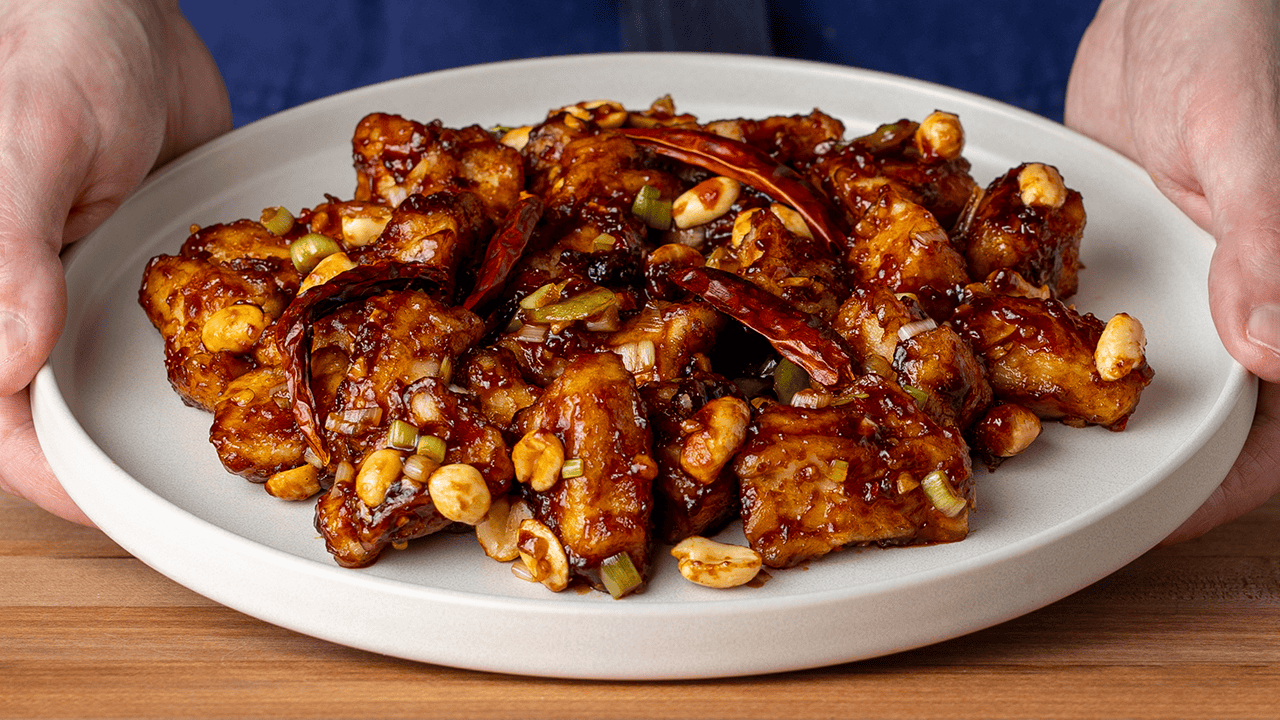
Every P.F. Chang's Kung Pao Chicken recipe I've found online is missing two things: the right Kung Pao sauce and the two-step chicken preparation. The sauce is its own recipe, seven ingredients including mushroom dark soy sauce, rice wine, and white vinegar. The chicken gets a 24-hour alkaline soy brine and a potato starch dredge before it's deep-fried, and only then does it go into the wok for the final stir-fry.
Of everything I've deconstructed off the P.F. Chang's menu, this one was the hardest to dial in. It has the most ingredients and the most demanding technique of anything I pulled off their lineup. If the sauce doesn't boil, it won't thicken properly. If the chilis and aromatics aren't toasted in oil first, the flavors come out muted.
This post contains affiliate links, which means I may earn a small commission if you make a purchase. It doesn't cost you anything extra. Full disclosure.
Why This Kung Pao Chicken Recipe Works
- 24-hour alkaline soy brine, the same one I use across the P.F. Chang's proteins, keeps the chicken juicy and tender even after deep-frying
- Potato starch dredge for a lighter, crispier coating that holds up once the sauce goes on
- From-scratch Kung Pao sauce with mushroom dark soy sauce, rice wine, oyster sauce, and five other ingredients, not a bottled stir-fry sauce
- Sambal Oelek chili paste from Huy Fong, the brand that won out in testing, for the right balance of heat and chili flavor
- Dehydrated minced garlic instead of fresh, which won't burn on the high-heat wok and gives a smoother, more concentrated garlic flavor
Ingredients You'll Need
Chicken breast. Regular boneless, skinless chicken breast, cubed into 1-inch pieces. The cutting technique matters: split the breast horizontally first, then cut lengthwise into strips, then crosswise into cubes. Most people cut the pieces too large, and they don't cook evenly during the deep fry.
Baking soda. Dissolved in water with soy sauce, baking soda raises the pH on the surface of the meat and prevents the protein strands from tightening during high-heat cooking. If you've added baking soda directly to chicken before and noticed a soapy or metallic aftertaste, the diluted brine solves that problem entirely.
Potato starch. Potato starch, not cornstarch, is what got the coating right in my tests. You can find it at most Asian grocery stores or on Amazon in small bags. It produces a lighter, crispier coating than cornstarch, and it holds its texture better once the sauce is added.
Minor's Original Chicken Base. This is the chicken bouillon I landed on for the sauce base. It comes as a paste in a tub. If you can't find it, both Knorr and Lee Kum Kee chicken bouillon powder will work for this recipe.
Mushroom dark soy sauce. For this I go with the Lee Kum Kee mushroom version. Dark soy sauce is added more for color than for flavor, but the mushroom version has extra savoriness from mushroom seasoning. Any dark soy sauce will work as a substitute.
Sambal Oelek. This is an Indonesian chili paste made with chilis, salt, and vinegar. The Huy Fong brand, from the same company that makes Sriracha, is the one that got me closest. You'll often find Sambal Oelek and Huy Fong's Chili Garlic Sauce right next to each other on the shelf. Either one works for this dish. The only difference is the Chili Garlic Sauce has garlic in it.
Dehydrated minced garlic. You can find this at most grocery stores in the spice aisle. I use it instead of fresh garlic for two reasons: it doesn't burn and stick to the hot wok as easily, and it has a smoother, more concentrated garlic flavor. To prepare it, soak in hot water for 20-30 minutes, then drain completely before using. Once rehydrated, it keeps in the fridge for about a week.
Dried red chilis. When buying these, make sure they're flexible and don't snap when you bend them. Brittle chilis are old and won't give you the right flavor or color. You can find them at most Asian grocery stores, and many Western grocery stores carry them too.
Sesame oil. I finish with Lee Kum Kee pure sesame oil for its rich, nutty flavor. If you can only find toasted sesame oil, that will also work.
Celery. The only vegetable in this dish. Celery has long fibers that can get stuck in your teeth during a stir-fry, so proper prep makes a real difference. I'll cover the technique in the tips section below.
How to Make P.F. Chang's Kung Pao Chicken
1. Cut the chicken. Remove the tenderloin from the breast and set it aside (you can include it in this recipe or save it). Trim any fat or tendon, then place your hand flat on the breast and make a horizontal cut to split it into two thinner pieces. Cut each piece lengthwise into 1-inch strips, then crosswise into 1-inch cubes.
2. Make the alkaline soy marinade and brine the chicken. Combine 1 cup of water with ½ teaspoon of baking soda and stir until dissolved. Add 1 tablespoon of soy sauce. Pour the brine over the cubed chicken and refrigerate for at least 2 hours. A full 24-hour brine gives the best results, and longer marination does improve both texture and flavor.
3. Make the Kung Pao sauce. Add ¼ cup of water, ¼ teaspoon of chicken bouillon base, and 6½ tablespoons of sugar to a small pot over medium heat. Whisk until the sugar is completely dissolved. Then add ¾ cup plus 1 tablespoon of light soy sauce, 2 tablespoons plus 1 teaspoon of mushroom dark soy sauce, 3 tablespoons of white vinegar, 3 tablespoons of rice wine, and 1 teaspoon of oyster sauce. Whisk until everything is incorporated and turn off the heat. Stir in 1 teaspoon of finely minced green onion. This recipe makes 8 servings of sauce because the small amounts of some ingredients make it difficult to scale down. The extra stores well in the fridge for a few weeks.
4. Prep the remaining ingredients. Rehydrate the minced garlic in hot water for 20-30 minutes, then drain completely. Prep the celery using the technique in the tips section below. Chop the scallion whites. Measure out the peanuts, Sambal Oelek, dried chilis, and sesame oil so everything is ready before you start the final cook.
5. Deep-fry the chicken. Heat neutral oil to 350°F. Remove the chicken from the brine and pat dry with paper towels. Dredge each piece in potato starch, pressing it in and shaking off the excess. Make sure every piece is completely covered. Fry for 3-4 minutes or until the chicken is cooked through. Agitate the pieces immediately after dropping them in, because they tend to clump together. Drain on a wire rack or paper towels and set aside.
6. Final stir-fry. Heat oil in a wok over medium heat. Add the dried red chilis and stir-fry until they've darkened in color, about 1-2 minutes. Then add the rehydrated garlic, Sambal Oelek, and scallion whites. Cook for 10-20 seconds until the aromatics are fragrant. Add ¼ cup of the Kung Pao sauce and bring it to a boil. Let it reduce very slightly, but don't overdo it because the sauce can get too thick. Add the peanuts, deep-fried chicken, and sliced celery. Toss everything together for 20-30 seconds until the chicken is completely coated and there are no dry spots. Drizzle in ½ teaspoon of sesame oil, toss once more, and turn off the heat.
Tips for the Best Kung Pao Chicken
Prep the celery properly for stir-fry. Celery has long fibers that get stuck in your teeth if you don't remove them first. Take a vegetable peeler and peel down the outer surface of each stalk on both sides to remove the tough outer layer and all the fibrous bits. Then cut each stalk in half lengthwise and slice on the bias about ⅛ inch wide.
Open a window when toasting the dried chilis. The peppers release strong fumes when they hit the hot oil. It's not dangerous, but it will clear the room if you don't have ventilation.
The sauce recipe makes 8 servings on purpose. The small amounts of some ingredients make it difficult to accurately scale this sauce down. Make the full batch and store the extra in the fridge. You'll have enough for three more servings of Kung Pao Chicken, and the sauce keeps well for a few weeks.
If you don't want to make the sauce from scratch, P.F. Chang's sells a premade Kung Pao sauce at most grocery stores. It's not as good as the homemade version, but it will work as a shortcut.
Storage and Reheating
The Kung Pao sauce keeps in a covered container in the fridge for a few weeks. The assembled dish is best eaten fresh because the potato starch coating on the chicken softens over time. If you have leftovers, store them in the fridge for up to 3-4 days. Reheat in a hot wok or skillet to bring back some of the texture on the chicken. The microwave works, but the coating won't crisp back up.
Frequently Asked Questions
Is this traditional Sichuan Kung Pao Chicken?
No. P.F. Chang's Kung Pao Chicken is a Western adaptation that's sweeter and milder than the traditional Sichuan version. Traditional Kung Pao uses Sichuan peppercorns and is a much spicier dish. The origins come from Sichuan province, which is known for its intensely spicy cuisine. P.F. Chang's toned down the heat and added more sweetness for American palates. If you want more spice, add extra Sambal Oelek to the stir-fry.
Can I use fresh garlic instead of dehydrated?
You can, but the result will be a bit different. Fresh garlic burns faster on a hot wok and has a sharper, more pungent flavor. Dehydrated minced garlic gives a smoother garlic taste and is less likely to scorch during the quick stir-fry. If you do use fresh, mince it very finely and add it just before the sauce so it doesn't burn.
Can I use chicken thighs instead of breast?
This recipe uses breast, but thighs will work. They have more fat, so the flavor will be richer and the texture more tender. The alkaline soy marinade and potato starch dredge process is the same for either cut. Keep the pieces at 1-inch cubes so they cook evenly during the deep fry.
How do I adjust the heat level?
Add more Sambal Oelek chili paste during the final stir-fry. You can also leave more of the dried red chilis in the finished dish instead of picking them out. The dish as written is mild to medium heat. If you want something closer to traditional Sichuan Kung Pao, you'd need to add Sichuan peppercorns and significantly more chili paste.
More P.F. Chang's Recipes
- P.F. Chang's Mongolian Beef
- P.F. Chang's Lettuce Wraps
- P.F. Chang's Beef with Broccoli
- P.F. Chang's Dynamite Shrimp
- P.F. Chang's Singapore Street Noodles
- P.F. Chang's Stir-Fried Eggplant
- P.F. Chang's Fried Rice
- P.F. Chang's Spicy Chicken
- P.F. Chang's Crispy Honey Chicken
More Chinese Takeout Recipes
- Chinese Takeout Crab Rangoon
- Chinese Takeout Egg Foo Young
- Chinese Takeout Egg Rolls
- Chinese Takeout Orange Chicken
- Chinese Takeout Kung Pao Chicken
- Chinese Takeout General Tso's Chicken
- Chinese Takeout Wonton Soup
- Chinese Takeout Hot and Sour Soup
- Chinese Takeout Egg Drop Soup
- Chinese Takeout Chow Mein
- Chinese Takeout Lo Mein
- Chinese Takeout Fried Rice
More Panda Express Recipes
More Din Tai Fung Recipes
Recipe
P.F. Chang's Kung Pao Chicken
Equipment
- 1 Made-In Carbon Steel Wok For deep-frying the chicken
- 1 Made-In Saucier For making the Kung Pao sauce
- 1 14-inch Mandarin Wok For the final stir-fry
- 1 Wok Spider/Strainer For removing chicken from oil
- 1 Anchor Glass Ramekins For mise en place
- 1 Wusthof Utility Knife For trimming the chicken
- 1 Rubbermaid Storage Containers For storing the sauce
- 1 Ladle
- 1 Deli Containers For mise en place
- 1 Whisk For the Kung Pao sauce
- 1 Infrared Thermometer For checking oil temperature
- 1 Wire Cooling Rack For draining fried chicken
- 1 Vegetable Peeler For peeling celery fibers
Ingredients
Alkaline Soy Marinade
- 1 cup water
- ½ teaspoon baking soda
- 1 tablespoon low sodium soy sauce
Kung Pao Sauce (Full Batch - 8 Servings)
- ¼ cup water
- ¼ teaspoon Minor's original chicken base
- 6 ½ tablespoon sugar
- 13 tablespoon low sodium soy sauce
- 2 ⅓ tablespoon mushroom dark soy sauce
- 3 tablespoon distilled white vinegar
- 3 tablespoon Michiu rice cooking wine or Shaoxing
- 1 teaspoon oyster sauce Lee Kum Kee Panda Brand or Premium
- 1 teaspoon green onions finely minced
The Chicken
- 9 oz chicken breast cubed into 1-inch pieces
- potato starch for dredging
- neutral oil vegetable, canola, or peanut oil, for deep-frying
Final Stir-Fry
- neutral oil for the wok
- 8 dried red chili peppers
- 1 teaspoon dehydrated minced garlic rehydrated in hot water for 20-30 minutes, drained
- 2 teaspoon sambal oelek chili paste Huy Fong brand; Chili Garlic Sauce also works
- ¼ cup scallions finely chopped, whites only
- ¼ cup kung pao sauce from the sauce recipe above
- ¼ cup peanuts
- ¼ cup celery peeled, halved lengthwise, sliced on bias ⅛ inch
- ½ teaspoon toasted sesame oil
Instructions
Make the Alkaline Soy Marinade
- Combine 1 cup of water with ½ teaspoon of baking soda in a container and stir until the baking soda is dissolved.
- Add 1 tablespoon of soy sauce and stir to combine.
Cut and Brine the Chicken
- Remove the tenderloin from the chicken breast and set aside. Trim any fat or tendon.
- Place your hand flat on top of the breast and make a horizontal cut to split it into two thinner pieces. Cut each piece lengthwise into 1-inch strips, then crosswise into 1-inch cubes.
- Place the cubed chicken in the alkaline soy marinade and refrigerate for at least 2 hours, or up to 24 hours.
Make the Kung Pao Sauce
- Add ¼ cup of water, ¼ teaspoon of chicken bouillon base, and 6½ tablespoons of sugar to a small pot over medium heat. Whisk until the sugar is completely dissolved.
- Add ¾ cup plus 1 tablespoon of light soy sauce, 2 tablespoons plus 1 teaspoon of mushroom dark soy sauce, 3 tablespoons of white vinegar, 3 tablespoons of rice wine, and 1 teaspoon of oyster sauce. Whisk until everything is incorporated and turn off the heat.
- Stir in 1 teaspoon of finely minced green onion. Allow the sauce to cool before storing.
Prep the Remaining Ingredients
- Rehydrate the dehydrated minced garlic in hot water for 20-30 minutes. Drain completely before using.
- Peel the celery stalks with a vegetable peeler to remove the fibers. Cut each stalk in half lengthwise, then slice on the bias about ⅛ inch wide.
- Finely chop ¼ cup of scallion whites. Measure out the peanuts, Sambal Oelek, dried chilis, and sesame oil.
Dredge and Deep-Fry the Chicken
- Heat neutral oil to 350°F (175°C).
- Remove the chicken from the brine and pat dry with paper towels.
- Dredge each piece of chicken in potato starch, pressing it in and shaking off the excess. Make sure each piece is completely covered.
- Add the chicken to the oil and immediately agitate so the pieces don't clump together. Cook for 3-4 minutes, or until cooked through.
- Remove the chicken to a wire rack or paper towel-lined plate and set aside.
Final Stir-Fry
- Heat oil in a wok over medium heat. Add the dried red chilis and stir-fry until darkened in color, about 1-2 minutes.
- Add 1 teaspoon of rehydrated minced garlic, 2 teaspoons of Sambal Oelek, and ¼ cup of scallion whites. Cook for 10-20 seconds until fragrant.
- Add ¼ cup of the Kung Pao sauce and bring to a boil. Let it reduce very slightly.
- Add ¼ cup of peanuts, the prepared chicken, and ¼ cup of sliced celery. Toss everything together for 20-30 seconds until the chicken is completely coated and there are no dry spots.
- Drizzle in ½ teaspoon of sesame oil, toss once more, and turn off the heat. Serve immediately.