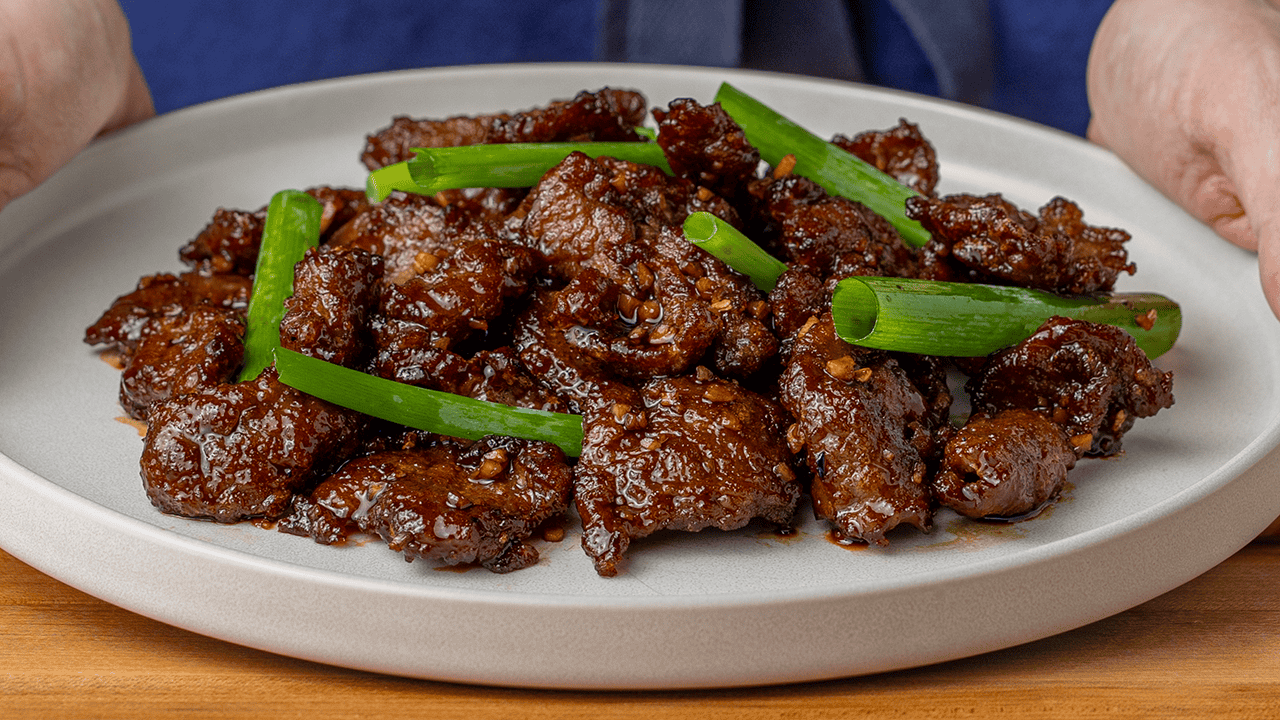
P.F. Chang's Mongolian Beef (Copycat Recipe)
Most P.F. Chang's Mongolian beef recipes online follow the same formula: soy sauce, brown sugar, garlic, flank steak. They get the general direction right but miss the technique that matters. When I tore the dish apart, two things showed up that almost no home recipe includes: a two-step meat preparation process, and a dark sauce that has nothing in common with the soy-and-brown-sugar mixtures you'll find on other blogs.
If you've tried making Mongolian beef at home and the meat came out tough or chewy, the recipe you used was probably missing two steps. The version that finally matched the restaurant uses an alkaline soy marinade, up to 24 hours of it, then an egg white velveting batter before cooking. I'm convinced those two steps are the whole reason the beef comes out fork-tender in a way regular stir-fry methods can't replicate.
This post contains affiliate links, which means I may earn a small commission if you make a purchase. It doesn't cost you anything extra. Full disclosure.
Why This Mongolian Beef Recipe Works
- 24-hour alkaline soy marinade for tenderness and flavor. Dissolving baking soda in the brine raises the pH, which prevents the protein from seizing up during high-heat cooking. It's the same technique that turned up across their other protein dishes when I worked through them.
- Egg white velveting with potato starch, not just a quick cornstarch toss. The velveting creates a thin protective layer between the meat and the cooking surface, so the beef retains its moisture instead of drying out. Most online recipes either skip this entirely or reduce it to a basic cornstarch dusting.
- Passing through the oil before the final stir-fry. The beef gets cooked in 350°F oil first, drained, then tossed in the sauce for about 60 seconds. Without this step, you lose the crispy-edged, tender-centered texture that defines the dish.
- Dark sauce made with chicken base, mushroom soy, and rice wine. You won't find a bottled stir-fry sauce or a brown sugar shortcut anywhere in this recipe. The sauce has five components that each contribute something specific, and it stores in the fridge for up to a month.
- Dehydrated minced garlic instead of fresh. It doesn't burn as easily as fresh garlic and has a smoother, more concentrated garlic flavor without the sharpness you get from fresh.
Ingredients You'll Need
Flank steak is the cut for this dish. It has a strong beefy flavor and works well in stir-fry, but the long muscle fibers can turn chewy if you slice it wrong. You'll cut with the grain first to get manageable sections, then slice each section against the grain at a 30-40 degree angle into pieces about ⅛ inch thick. If you're having trouble getting thin, even slices, put the steak in the freezer for 20-30 minutes first. It firms up the meat and makes it much easier to work with.
Lee Kum Kee low-sodium soy sauce is the one that got me closest for both the marinade and the dark sauce. Kikkoman works just as well, and I tested both. Lee Kum Kee has a saltier, more layered flavor despite being labeled low-sodium. Kikkoman is a bit sweeter and more straightforward. I preferred Kikkoman for the alkaline marinade and Lee Kum Kee for the dark sauce when I tested them head to head, but the differences are small enough that either brand works across the board.
Mushroom dark soy sauce goes into the dark sauce primarily for color. Regular dark soy sauce will work, but the mushroom version adds an extra layer of savoriness that you'd otherwise miss. Lee Kum Kee makes a good one, and you should be able to find some version of mushroom soy sauce at most Asian grocery stores.
Oyster sauce here is Lee Kum Kee Panda brand (green bottle, gluten-free, no added MSG), what I landed on for the sauce. If you can find Lee Kum Kee's premium oyster sauce, I'd recommend using that instead. It has a richer, more full-bodied oyster flavor. Look for the one with the scene of a mother and son harvesting gargantuan oysters on the label.
Minor's Original Chicken Base is a concentrated chicken paste that comes in a tub, not a powder. You dissolve a small amount in water to start the dark sauce. I tested it against Knorr and Lee Kum Kee broth powders, and the paste made a noticeably deeper sauce. If you can't find Minor's, the powders will get you close, but they're a step down.
Michiu rice cooking wine is what I reach for here. It's popular in Cantonese and Taiwanese kitchens and very similar to the more common Shaoxing wine. For this recipe, they're interchangeable. You should be able to find Michiu at most Asian grocery stores or on Amazon. If you can't locate it, Shaoxing is a good substitute. Avoid Western "cooking wines" sold in the vinegar aisle. Those are loaded with salt and additives that will throw off the flavor of the sauce.
Baking soda goes into the alkaline marinade as a dissolved brine, not directly onto the meat. If you've ever rubbed baking soda straight onto a protein and gotten an off-flavor, this method avoids that problem entirely. Dissolving a small amount in water gives you all the tenderizing effect without affecting the flavor.
Potato starch is what I use for the velveting step. I tested potato starch, cornstarch, and egg-only velveting side by side. The potato starch and cornstarch versions were indistinguishable from each other. The egg-only version produced considerably tougher meat. Use whichever starch you can find, but I'd strongly recommend including one.
Dehydrated minced garlic is worth tracking down for this recipe. Check the spice aisle at your local grocery store. I use it instead of fresh because fresh garlic scorches and sticks to the pan at wok temperatures, and dried garlic does neither. The flavor is more even and mellow too. To prepare it, cover the amount you need with hot water for 20-30 minutes, then drain and press out the excess water before using.
Sesame oil is the finishing oil for this dish. I use Lee Kum Kee pure sesame oil, which is a toasted sesame oil, but any toasted sesame oil will work here. A little goes a long way, so you only need about half a teaspoon to finish the dish.
How to Make P.F. Chang's Mongolian Beef
This recipe has five phases: making the dark sauce, preparing and marinating the beef, velveting, passing through the oil, and the final stir-fry. Most of the time is hands-off (marinating and reconstituting garlic), and the actual cooking takes about 5 minutes.
Step 1: Make the dark sauce. Add ¼ cup of water to a small pot with ½ teaspoon of Minor's chicken base and ¼ cup of sugar. Bring it to a simmer over medium heat and whisk until everything is dissolved. Kill the heat, then add ¼ cup plus 2 tablespoons of soy sauce, 1 tablespoon of mushroom soy sauce, 1 tablespoon of oyster sauce, and 2 tablespoons of Michiu or Shaoxing wine. Whisk until incorporated. This sauce keeps covered in the fridge for up to a month, so you can make it well ahead of time.
Step 2: Slice the flank steak. Start with a 12 oz flank steak. Look for the long muscle fibers running along the surface. Cut with the grain into 1.5-inch sections first. Then turn each section perpendicular and slice against the grain at a 30-40 degree angle into pieces about ⅛ inch thick. If the grain veers diagonally in spots, portion those pieces off and handle them individually.
Step 3: Prepare the alkaline soy marinade and brine the beef. Combine 1 cup of water with ½ teaspoon of baking soda and stir until dissolved. Add ⅓ cup of soy sauce and stir to incorporate. Submerge the sliced flank steak in the marinade and refrigerate for at least 2 hours. P.F. Chang's brines their protein for a full 24 hours, and the longer you go, the more tender and flavorful the beef gets. Keep it refrigerated the entire time.
Step 4: Velvet the beef. Remove the beef from the marinade and pat dry with paper towels. Drying the surface helps the velveting batter adhere properly. Add ½ egg white and ⅛ teaspoon of white pepper and stir until the meat is evenly coated. Add 1 tablespoon of potato starch and gently massage it into the beef slices until they're all covered. Finish with ½ teaspoon of neutral oil and give it a final stir. Refrigerate for at least 30 minutes or up to overnight before cooking.
Step 5: Pass the beef through the oil. Heat frying oil to 350°F. Working in batches, add the beef and immediately agitate it so the slices don't clump together. Fry for 60-90 seconds, until the edges are browned but the centers are still tender. This step is called "passing through the oil," and it's how the beef gets cooked before the final stir-fry so the finishing process only takes a couple of minutes. Drain on a wire rack or paper towels and set aside.
Step 6: Final stir-fry. Have all your finishing ingredients measured and within reach before you start. This entire step takes about 2 minutes. Heat 1 teaspoon of neutral oil in a wok over medium-high heat. Add 2 teaspoon of reconstituted garlic and fry for 10-15 seconds. Do not let it brown. Add ¼ cup of dark sauce and 1 tablespoon of white sugar. Stir until the sugar dissolves and bring the sauce to a boil. Let it reduce and thicken for about 30 seconds. Add the fried flank steak and toss in the sauce for 30-60 seconds, allowing the sauce to coat the beef and reduce slightly further. Add ½ teaspoon of sesame oil and 1-2 ounces of green onion tops cut into 2-inch pieces. Toss everything together for 15-20 seconds, then kill the heat and serve.
Tips for the Best Mongolian Beef
Give the marinade as much time as you can. Two hours is the minimum for the alkaline soy brine, but 24 hours produces a real improvement in both tenderness and flavor. If you can plan a day ahead, it's worth it. The beef needs to stay refrigerated the entire time.
Pat the beef completely dry before velveting. Any moisture left on the surface will prevent the egg white coating from adhering properly. Take the extra minute with paper towels before adding the velveting ingredients.
Include a starch in the velveting. I tested potato starch, cornstarch, and egg-only side by side. Both starch versions produced significantly more tender beef than egg white alone. Use whichever starch you have on hand.
Fry the beef in batches. Overcrowding the oil drops the temperature and steams the meat instead of frying it. You want those crispy, slightly caramelized edges. Work in 2-3 batches depending on the size of your pot or wok.
Have everything ready before the final stir-fry. The dark sauce, sugar, reconstituted garlic, sesame oil, and green onions all need to be measured and within arm's reach. Once the wok is hot, the whole finishing process is about 2 minutes and there's no time to stop and measure.
What to Serve With Mongolian Beef
Mongolian beef pairs naturally with steamed white rice, or you can go with Chinese Takeout Fried Rice for a more complete plate. For noodles, Chinese Takeout Lo Mein or Chinese Takeout Chow Mein both work well alongside it. If you want a starter, Chinese Takeout Egg Drop Soup or Chinese Takeout Wonton Soup complete the meal.
Storage and Reheating
The dark sauce keeps covered in the refrigerator for up to one month. It's worth making a double batch so you have it on hand for other dishes.
The finished Mongolian beef stores in an airtight container in the fridge for 3-4 days. The texture of the beef is best within the first day or two, before the sauce fully softens the fried exterior.
For reheating, use a wok or skillet over high heat. You want to re-crisp the edges of the beef without overcooking the center. A microwave works in a pinch, but you'll lose the contrast between the crispy outside and the tender inside. If the dish looks dry when reheating, add a splash of the reserved dark sauce.
Frequently Asked Questions
Can I use a different cut of beef?
Flank steak is the best option for this dish. If you can't find it, skirt steak is the closest substitute, though the texture will be slightly different. Avoid using ribeye or chuck here. Ribeye's fat marbling doesn't interact with the velveting process the same way, and chuck is too tough for a quick-cook stir-fry method.
Do I have to use potato starch for the velveting?
No. Cornstarch works just as well. In my side-by-side testing, the results were indistinguishable. The only version I'd steer away from is skipping the starch entirely and using just egg white, which produced considerably tougher meat.
Why dehydrated garlic instead of fresh?
It holds up better at high wok temperatures without scorching, and the flavor comes out more uniform throughout the finished dish. You can find dehydrated minced garlic in the spice aisle at most grocery stores. Cover it with hot water for 20-30 minutes, then drain well before using.
Can I skip the passing-through-the-oil step?
You can, but the dish will taste and feel different. Passing through the oil is what gives the beef those crispy, slightly caramelized edges while keeping the inside tender. If you skip it and stir-fry the velveted beef directly in the sauce, the meat will still be tender from the marinade, but you'll lose the textural contrast that defines the restaurant version.
What's the difference between Michiu and Shaoxing wine?
Both are Chinese rice cooking wines with very similar flavor profiles. Michiu is more common in Cantonese and Taiwanese cooking, while Shaoxing is the more widely available variety. For this recipe, they're interchangeable. Use whichever one you can find. Just avoid Western "cooking wines" from the vinegar aisle, which contain added salt and preservatives that will throw off the sauce.
More P.F. Chang's Recipes
- P.F. Chang's Lettuce Wraps
- P.F. Chang's Beef with Broccoli
- P.F. Chang's Dynamite Shrimp
- P.F. Chang's Singapore Street Noodles
- P.F. Chang's Stir-Fried Eggplant
- P.F. Chang's Fried Rice
- P.F. Chang's Kung Pao Chicken
- P.F. Chang's Spicy Chicken
- P.F. Chang's Crispy Honey Chicken
More Chinese Takeout Recipes
- Chinese Takeout Crab Rangoon
- Chinese Takeout Egg Foo Young
- Chinese Takeout Egg Rolls
- Chinese Takeout Orange Chicken
- Chinese Takeout Kung Pao Chicken
- Chinese Takeout General Tso's Chicken
- Chinese Takeout Wonton Soup
- Chinese Takeout Hot and Sour Soup
- Chinese Takeout Egg Drop Soup
- Chinese Takeout Chow Mein
- Chinese Takeout Lo Mein
- Chinese Takeout Fried Rice
More Panda Express Recipes
More Din Tai Fung Recipes
Recipe
P.F. Chang's Mongolian Beef
Equipment
- 1 14-inch Mandarin Wok for final stir-fry and optional oil-pass
- 1 Butane Burner for wok cooking
- 1 All-Clad Saucepan for dark sauce
- 1 Dutch Oven for passing through the oil (deep frying)
- 1 Deep Fry / Candy Thermometer for oil temperature
- 1 Wok Spider/Strainer for removing beef from oil
- 1 Wire Cooling Rack for draining fried beef
- 1 Baking Sheet under wire rack for draining
- 1 Misono Chef's Knife for slicing flank steak
- 1 Whisk for dark sauce
- 2 Mixing Bowls for marinating and velveting
- 3 Deli Containers for prepped ingredients
Ingredients
Dark Sauce
- ½ teaspoon Minor's Original Chicken Base
- ¼ cup white sugar
- ¼ cup water
- 6 tablespoon Lee Kum Kee Low Sodium Soy Sauce or Kikkoman
- 1 tablespoon Lee Kum Kee Mushroom Soy Sauce
- 1 tablespoon Lee Kum Kee Panda Brand Oyster Sauce or Lee Kum Kee premium
- 2 tablespoon Michiu rice cooking wine or Shaoxing
Alkaline Soy Marinade
- 1 cup water
- ½ teaspoon baking soda
- ⅓ cup Lee Kum Kee Low Sodium Soy Sauce Lee Kum Kee (green bottle) or Kikkoman
Flank Steak
- 12 oz flank steak sliced against the grain into ⅛-inch pieces
Egg White Velveting
- ½ egg white
- ⅛ teaspoon white pepper
- 1 tablespoon potato starch or cornstarch
- ½ teaspoon neutral oil vegetable canola or peanut
Passing Through the Oil
- neutral oil vegetable canola or peanut (enough to submerge beef)
Final Stir-Fry
- 1 teaspoon neutral oil
- 2 teaspoon dehydrated minced garlic reconstituted in hot water 20-30 min and drained
- ¼ cup dark sauce from above
- 1 tablespoon white sugar
- ½ teaspoon sesame oil toasted
- 1-2 oz green onion tops cut into 2-inch pieces
Instructions
Make the Dark Sauce
- Add ¼ cup of water, ½ teaspoon of Minor's Original Chicken Base, and ¼ cup of white sugar to a small saucepan.
- Bring to a simmer over medium heat and whisk until the sugar and chicken base are fully dissolved.
- Remove from heat. Add ¼ cup plus 2 tablespoons of soy sauce, 1 tablespoon of mushroom dark soy sauce, 1 tablespoon of oyster sauce, and 2 tablespoons of Michiu or Shaoxing rice cooking wine. Whisk until incorporated.
- Let the sauce cool. This can be stored covered in the refrigerator for up to 1 month.
Prepare and Slice the Flank Steak
- Identify the long muscle fibers running along the surface of the flank steak. Cut with the grain into 1.5-inch sections.
- Turn each section perpendicular to you. Angle your knife at about 30-40 degrees and slice against the grain into pieces about ⅛ inch thick. If the steak is difficult to slice thinly, freeze it for 20-30 minutes first.
Brine the Beef
- Combine 1 cup of water with ½ teaspoon of baking soda and stir until dissolved. Add ⅓ cup of soy sauce and stir to incorporate.
- Submerge the sliced flank steak in the alkaline soy marinade. A full 24 hours is the target, and the longer you go, the more tender and flavorful the beef gets. Keep it refrigerated the entire time.
Velvet the Beef
- Remove the beef from the marinade and pat dry thoroughly with paper towels. Drying the meat helps the velveting batter adhere properly.
- Add ½ egg white and ⅛ teaspoon of white pepper to the beef. Stir until evenly coated. Add 1 tablespoon of potato starch and gently massage it into the slices until all the beef is covered.
- Add ½ teaspoon of neutral oil and stir to distribute. Refrigerate for at least 30 minutes or up to overnight before cooking.
Pass Through the Oil
- Heat neutral frying oil to 350°F (175°C) in a Dutch oven or deep pot.
- Working in batches, add the velveted beef slices and immediately agitate so they don't clump together. Fry for 60-90 seconds, until the edges are browned but the centers remain tender.
- Remove the beef to a wire rack set over a baking sheet to drain. Set aside until ready for the final stir-fry.
Final Stir-Fry
- Heat 1 teaspoon of neutral oil in a wok over medium-high heat. Add 2 teaspoon of reconstituted dehydrated garlic and fry for 10-15 seconds. Do not let the garlic brown.
- Add ¼ cup of the prepared dark sauce and 1 tablespoon of white sugar. Stir until the sugar dissolves and bring to a boil. Let the sauce reduce and thicken slightly, about 30 seconds.
- Add the fried flank steak and toss in the sauce for 30-60 seconds, allowing the sauce to coat the beef and reduce further.
- Add ½ teaspoon of sesame oil and 1-2 ounces of green onion tops cut into 2-inch pieces. Toss everything together for 15-20 seconds, then remove from heat and serve immediately.
This was dead on for PF Chang’s Mongolian beef! It was absolutely delicious! A few more steps then I usually want to go through for dinner, but it will absolutely be added to our regular dinner rotation.
I'm glad you liked it!
Thank you for this. Made it according to the recipe. We love it. The only thing I will change is making more sauce for the wok because we enjoy putting some on our rice to compliment the meal. We are saving this!