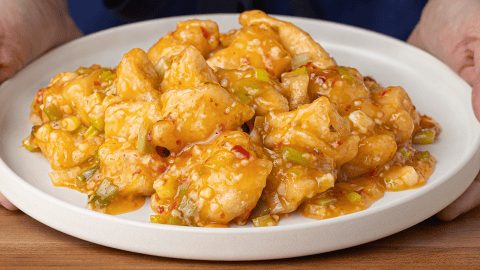
P.F. Chang's Crispy Honey Chicken (Copycat Recipe)
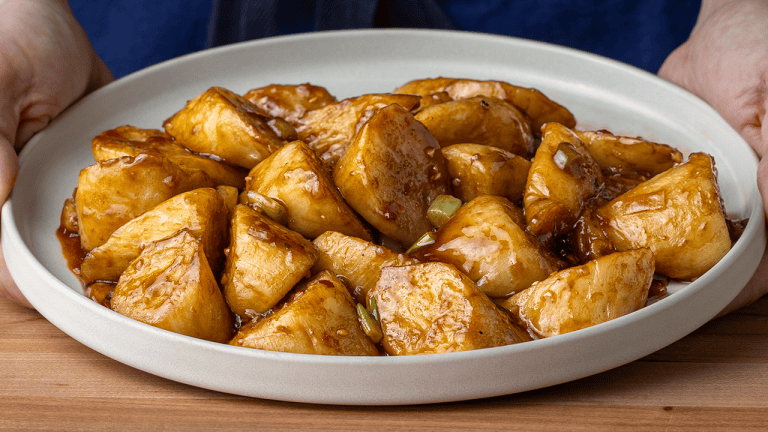
P.F. Chang's calls this honey chicken, but I'm convinced there's no honey in it. When I tore the sauce apart, the sweetness traced back to white sugar dissolved into Michiu cooking wine and white vinegar, with dried chilis and rehydrated garlic for aromatics. Every recipe I've found online uses actual honey, and that's why none of them taste like the restaurant version.
Sugar and vinegar together give you a sweet-and-sour flavor that's tangier and less cloying than a honey glaze, and the Michiu cooking wine gives the sauce a savory quality that honey doesn't have. This dish also uses the same alkaline soy brine I use across the P.F. Chang's proteins, which keeps the chicken tender even after deep-frying. If you've made this at home and the chicken was dry or the sauce tasted like a straight honey glaze, your homemade version was likely missing both of these techniques.
This post contains affiliate links, which means I may earn a small commission if you make a purchase. It doesn't cost you anything extra. Full disclosure.
Why This Recipe Works
- No honey in the honey sauce. The version that finally matched is white sugar, white vinegar, and Michiu cooking wine. The result is a tangy sweet-and-sour glaze that coats the chicken evenly without making the crust soggy.
- Alkaline soy brine for tender chicken. The same baking soda and soy sauce marinade I use across the P.F. Chang's proteins. It prevents the chicken from drying out during deep-frying, so the meat stays juicy inside the crust.
- A flour-and-cornstarch batter with leavening. The batter includes baking soda, baking powder, egg, and oil alongside the flour and cornstarch. The leavening agents create gas bubbles that make the crust lighter and crispier after frying.
- Double-fry technique for home cooks. A restaurant kitchen fries this once and serves it right away. At home, the second fry at 375°F seals the crust so it holds up in the sauce instead of going soft.
- Dehydrated garlic instead of fresh garlic. Fresh garlic burns in hot oil and the rehydrated kind doesn't. The flavor also comes out smoother and more concentrated, so that's what I use here.
Ingredients You'll Need
Chicken breast. Regular boneless, skinless chicken breast, cut into 1-inch cubes. The protein itself isn't anything special. The alkaline soy brine is what makes it tender.
Baking soda (for the brine). A half teaspoon dissolved in one cup of water creates the alkaline brine. This raises the pH on the surface of the meat, which prevents the protein strands from drying out during deep-frying. If you've ever added baking soda directly to chicken and noticed a soapy or metallic taste, the water in this brine dilutes it enough that you get the tenderizing effect without affecting the flavor.
Lee Kum Kee Low Sodium Soy Sauce. This is the one that got me closest, the soy sauce in the green bottle. Any soy sauce will work for the brine, but if you want to match the restaurant version, this is the one to get.
All-purpose flour and cornstarch (for the batter). The batter has both in roughly equal amounts. Flour gives the crust structure and cornstarch gives it crunch.
Baking soda and baking powder (in the batter). Small amounts of both go into the batter. They create gas bubbles during frying that make the crust lighter and crispier than a straight flour-and-cornstarch dredge.
Michiu cooking wine. A Cantonese and Taiwanese cooking wine that's very similar to Shaoxing wine. It's what got the sauce closest in testing. You can find it at most Asian grocery stores, and it's available on Amazon. If you can't find Michiu, Shaoxing wine works as a substitute.
White sugar. One full cup for four servings of sauce. This is the sweetener, not honey. The sugar dissolves completely into the liquid, creating a smooth sauce that coats the chicken evenly.
White vinegar. The sour half of the sweet-and-sour balance. White vinegar is more potent than rice vinegar, which is why the sauce has that distinct tang instead of a muted sweetness.
Dried chilis. You'll saute these in oil at the very beginning of the sauce, then strain them out later. They give the sauce a mild background heat and a bit of color, but you won't actually eat them in the finished dish.
Dehydrated minced garlic. You can find this on the spice aisle at most grocery stores. Rehydrate it in hot water for 20-30 minutes before using. I use it instead of fresh garlic because fresh garlic scorches the moment it hits hot oil and dried garlic doesn't, and the flavor comes out cleaner and more concentrated. You can keep rehydrated garlic in the fridge for about a week.
Potato starch. Used to coat the chicken before dipping it in the batter. Potato starch gives a lighter, crispier initial coating than cornstarch. Look for it at Asian grocery stores in small bags. If you can't find it, cornstarch works for this step.
Chili oil. Used to coat the wok before adding the sauce during the final stir-fry. I use a house chili oil here (the full recipe is in the Lettuce Wraps video), but Lee Kum Kee's bottled chili oil is a good substitute if you don't want to make it from scratch.
Rice sticks (rice vermicelli). For the fried rice stick garnish that the chicken sits on. These are thin rice noodles that puff up instantly when dropped into hot oil.
How to Make P.F. Chang's Crispy Honey Chicken
1. Make the alkaline soy brine. Dissolve half a teaspoon of baking soda in one cup of water, then stir in one tablespoon of soy sauce. Pour this over your cubed chicken breast and refrigerate for at least two hours. I push it to a full 24 hours when I have the time, and longer marination does improve both texture and flavor, so go as long as you can.
2. Make the batter. Whisk together the flour, cornstarch, baking soda, and baking powder in a large bowl. Add one cup of ice-cold water and whisk until there are no dry clumps. Add the egg and whisk until smooth, then add the oil and whisk until incorporated. Store this in the fridge until you're ready to fry. The batter keeps for several hours and needs to be ice-cold when it hits the oil.
3. Make the honey sauce. Heat a couple teaspoons of neutral oil in a small pot over medium heat. Saute 10-15 dried chilis until they darken in color, about 1-2 minutes. Add one tablespoon of rehydrated garlic and saute for 20-30 seconds until it releases some aroma. Add the soy sauce, Michiu, and sugar, then whisk until the sugar is completely dissolved. Bring it to a light simmer, turn off the heat, and let the aromatics infuse for 10-15 minutes. Add the white vinegar, whisk everything together, and strain out the solids. The sauce makes about 4 servings and keeps in the fridge for about a month.
4. Coat and first-fry the chicken. Remove the chicken from the brine and pat dry with paper towels. Toss the chicken in potato starch until every piece is coated, then dip each piece into the cold batter. Lower the chicken into 350°F oil one piece at a time, agitating gently so the pieces don't clump together. Fry for 3-4 minutes or until the chicken reaches 165°F internally. Drain on a wire rack or a baking sheet lined with paper towels.
5. Second fry. Raise the oil temperature to 375°F. Fry the chicken a second time for 1-2 minutes until the pieces are slightly darker in color. This second fry is what gives you a crust that holds up in the sauce instead of going soft within a few minutes. Drain on a wire rack.
6. Final stir-fry. Heat a large wok over medium heat until you see light wisps of smoke. Drizzle in a couple teaspoons of chili oil and swirl it around to coat the bottom. Add half a cup plus two tablespoons of the honey sauce and stir it until it starts to simmer. While stirring, slowly drizzle in the cornstarch slurry (one tablespoon cornstarch mixed with one tablespoon water). Simmer until the sauce thickens to your desired consistency, usually about 1-2 minutes. Add the fried chicken and toss until every piece is coated.
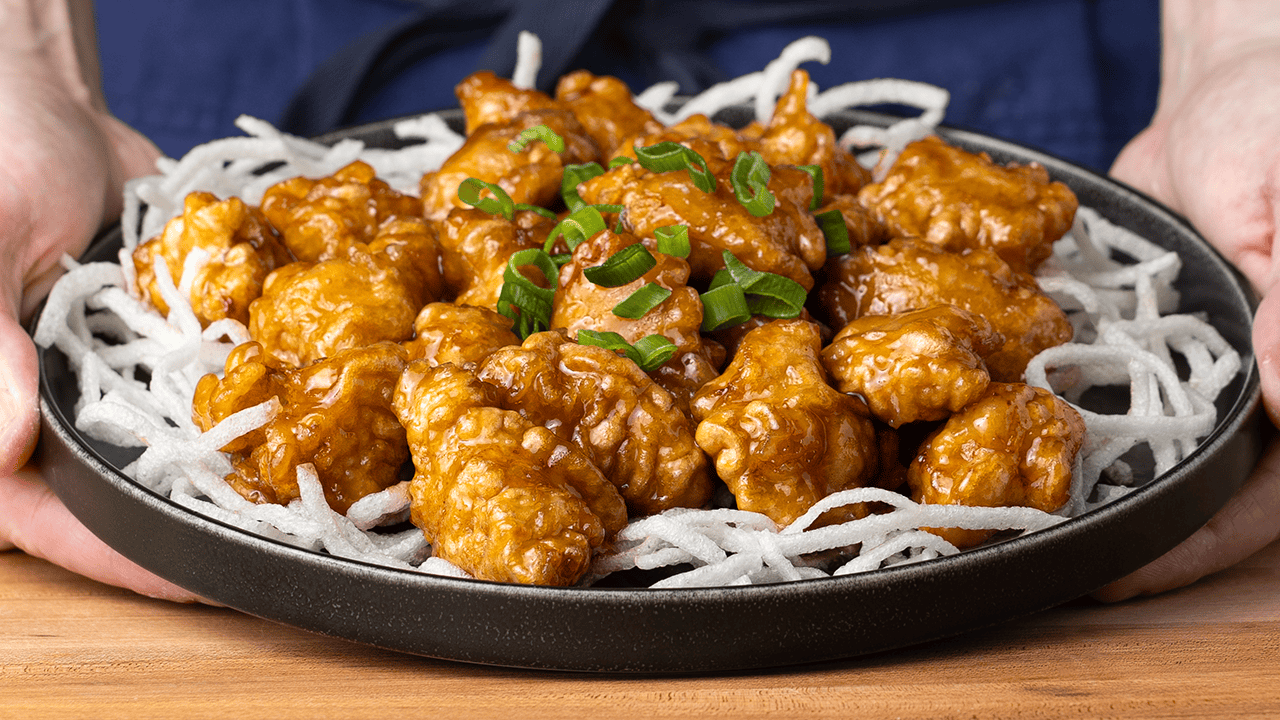
7. Serve. Line a plate with fried rice sticks. Place the honey chicken on top and garnish with sliced green onion.
Tips for the Best Crispy Honey Chicken
Keep the batter ice-cold. Cold batter fries crispier because the temperature difference between the batter and the oil creates more steam, which puffs up the crust. Make the batter ahead of time and refrigerate it. It keeps for several hours.
Lower each piece of chicken individually. If you dump all the battered chicken into the oil at once, the pieces will stick together and fry unevenly. Add them one at a time and move them around gently during the first 30 seconds.
The second fry makes a real difference at home. A restaurant serves the chicken immediately after one fry, so the crust doesn't have time to absorb moisture. At home, even a few extra minutes between frying and saucing is enough for the crust to start softening. The second fry at 375°F expels that moisture and re-crisps the exterior.
The sauce recipe is difficult to scale down. The honey sauce makes enough for about 4 servings. Smaller amounts are hard to measure accurately because the ratios involve tablespoons and fractions of cups. The sauce keeps in the fridge for about a month, so I recommend making the full batch and saving whatever you don't use.
Rehydrate the garlic completely before using. Soak the dehydrated minced garlic in hot water for 20-30 minutes, then drain all the water before adding it to the pot. If you add it dry, it will burn almost immediately in the hot oil.
Storage and Reheating
The honey sauce stores well in an airtight container in the fridge for about a month. Make the full batch even if you're only cooking for one or two servings.
The fried chicken is best eaten the day it's made. If you have leftovers, store them in the fridge for up to 3 days. Reheat in a 400°F oven for 8-10 minutes to re-crisp the coating. Microwaving will make the crust soft. Toss reheated chicken in freshly warmed sauce right before serving.
Fried rice sticks can be stored in a covered container for about a week.
Frequently Asked Questions
Why is it called honey chicken if there's no honey?
It's a menu name, not a description of the ingredients. The sugar, vinegar, and cooking wine combination produces a glaze that looks and behaves like a honey-based sauce, but the flavor is tangier and less one-dimensional than actual honey. In my testing the sweetness comes from white sugar, and the dish is named for what it resembles, not what it contains.
Can I use honey instead of sugar?
You can, but the sauce will taste noticeably different. Honey has its own distinct floral flavor and doesn't dissolve into liquid the same way granulated sugar does. I use sugar because it gives a cleaner, more neutral sweetness that lets the vinegar and cooking wine come through.
What's the difference between Michiu and Shaoxing wine?
Both are Chinese rice wines used for cooking. Michiu is more common in Cantonese and Taiwanese kitchens, and Shaoxing is more associated with Shanghainese and northern Chinese cooking. The flavor differences are subtle enough that they're interchangeable in this recipe. If you can find Michiu, use it. If not, Shaoxing works.
Can I use cornstarch instead of potato starch for the coating?
Yes. Potato starch gives a slightly lighter, crispier initial layer, but cornstarch works well for this step. The batter is doing most of the work for the final crunch, so the difference between potato starch and cornstarch in the initial coating is fairly minor.
Do I have to double-fry the chicken?
A restaurant only fries this once, so technically the single fry is the more "authentic" method. But the double-fry is worth doing at home, because your chicken sits longer between frying and saucing than it would in a restaurant kitchen. The second fry at 375°F re-crisps the exterior so the crust stays crunchy after you toss it in the sauce.
More P.F. Chang's Recipes
- P.F. Chang's Mongolian Beef
- P.F. Chang's Lettuce Wraps
- P.F. Chang's Beef with Broccoli
- P.F. Chang's Dynamite Shrimp
- P.F. Chang's Singapore Street Noodles
- P.F. Chang's Stir-Fried Eggplant
- P.F. Chang's Fried Rice
- P.F. Chang's Kung Pao Chicken
- P.F. Chang's Spicy Chicken
More Chinese Takeout Recipes
- Chinese Takeout Crab Rangoon
- Chinese Takeout Egg Foo Young
- Chinese Takeout Egg Rolls
- Chinese Takeout Orange Chicken
- Chinese Takeout Kung Pao Chicken
- Chinese Takeout General Tso's Chicken
- Chinese Takeout Wonton Soup
- Chinese Takeout Hot and Sour Soup
- Chinese Takeout Egg Drop Soup
- Chinese Takeout Chow Mein
- Chinese Takeout Lo Mein
- Chinese Takeout Fried Rice
More Panda Express Recipes
More Din Tai Fung Recipes
Recipe
P.F. Chang's Crispy Honey Chicken
Equipment
- 1 14-inch Mandarin Wok For the final stir-fry
- 1 Made-In Carbon Steel Wok For deep-frying
- 1 Made-In Saucier For making the honey sauce
- 1 Anchor Glass Ramekins For mise en place
- 1 Wok Spider/Strainer For removing chicken from oil
- 1 Deli Containers For mise en place and storage
- 1 Wire Cooling Rack For draining fried chicken
- 1 Whisk For the batter and sauce
- 1 Fine Mesh Strainer For straining the honey sauce
- 1 Colander
- 1 Infrared Thermometer For checking oil temperature
Ingredients
Alkaline Soy Marinade
- 1 cup water
- ½ teaspoon baking soda dissolved in water to create alkaline brine
- 1 tablespoon low sodium soy sauce
Crispy Honey Chicken Batter
- ¼ teaspoon baking soda
- ½ teaspoon baking powder
- 1 cup ice cold water keep batter cold until ready to fry
- 1 large egg
- 2 tablespoon neutral oil
Honey Sauce
- 1-2 teaspoon neutral oil
- 10-15 dried red chilis saute until darkened, then strain out
- 1 tablespoon dehydrated minced garlic rehydrated in hot water 20-30 minutes, drained
- 3 ⅓ tablespoon low sodium soy sauce
- 1 cup Michiu cooking wine + 2 tablespoon
- 1 cup sugar
- ¾ cup distilled white vinegar + 2 tablespoon
The Chicken
- 8 oz chicken breast boneless skinless, cut into 1-inch cubes
- potato starch or cornstarch for this step
Final Stir-Fry
- 2 teaspoon chili oil
- ½ cup honey sauce + 2 tablespoon
- 1 tablespoon cornstarch mixed with water for thickening
- 1 tablespoon water
- sliced green onion
- fried rice sticks
Instructions
Make the Alkaline Soy Marinade
- Combine 1 cup of water with ½ teaspoon of baking soda in a bowl or container and stir until the baking soda is dissolved.
- Add 1 tablespoon of soy sauce and stir to mix it into the brine.
Brine the Chicken
- Cut the chicken breast into roughly 1-inch cubes. Remove the tenderloin and trim any fat or tendon.
- Place the cubed chicken in the alkaline soy marinade, making sure all pieces are submerged.
- Refrigerate for at least 2 hours, or up to 24 hours for best results. I do the full 24 hours when I can.
Make the Batter
- Combine 1 cup plus 2 tablespoons of all-purpose flour, ¾ cup plus 2 ½ tablespoons of cornstarch, ¼ teaspoon of baking soda, and ½ teaspoon of baking powder in a large bowl. Whisk the dry ingredients together.
- Pour in 1 cup of ice-cold water and whisk until there are no dry clumps of flour remaining.
- Crack in 1 large egg and whisk until the batter is completely smooth.
- Add 2 tablespoons of neutral oil and whisk until incorporated. Keep the batter cold in the fridge until ready to use.
Make the Honey Sauce
- Heat 1-2 teaspoons of neutral oil in a small pot over medium heat.
- Add 10-15 dried chilis and saute until they darken in color, about 1-2 minutes.
- Add 1 tablespoon of rehydrated minced garlic and saute for 20-30 seconds, just until it releases some aroma. Do not burn it.
- Add 3 tablespoons plus 1 teaspoon of light soy sauce, 1 cup plus 2 tablespoons of Michiu cooking wine, and 1 cup of sugar. Whisk until the sugar is completely dissolved.
- Bring the mixture to a light simmer, then turn off the heat and let the aromatics infuse for 10-15 minutes.
- Add ¾ cup plus 2 tablespoons of white vinegar and whisk until everything is incorporated.
- Strain the sauce through a fine mesh strainer to remove the chilis and garlic. The sauce can be stored in the fridge for up to 1 month.
Dredge and Deep-Fry the Chicken
- Remove the chicken from the brine and pat dry with paper towels.
- Toss the chicken pieces in potato starch until every piece is evenly coated.
- Dip each piece of chicken into the cold batter, making sure each piece is fully coated.
- Heat neutral oil to 350°F (175°C) in a large pot or wok. Lower each piece of battered chicken into the oil individually, agitating gently to prevent clumping.
- Fry for 3-4 minutes or until the chicken reaches an internal temperature of 165°F. Drain on a wire rack or baking sheet lined with paper towels.
- Raise the oil temperature to 375°F (190°C). Fry the chicken a second time for 1-2 minutes until slightly darkened in color. Drain on a wire rack.
Final Stir-Fry
- Heat a large wok over medium heat until you see light wisps of smoke. Drizzle in about 2 teaspoons of chili oil and swirl to coat the bottom of the wok.
- Pour in ½ cup plus 2 tablespoons of the honey sauce and stir until it comes to a simmer.
- While stirring the sauce continuously, slowly drizzle in the cornstarch slurry (1 tablespoon cornstarch mixed with 1 tablespoon water) to thicken the sauce. Simmer for 1-2 minutes or until you reach your desired consistency.
- Add the double-fried chicken to the sauce and toss until every piece is evenly coated. Turn off the heat.
- Line a plate with fried rice sticks, place the honey chicken on top, and garnish with sliced green onion.