P.F. Chang's Dynamite Shrimp (Copycat Recipe)
Dynamite shrimp is P.F. Chang's most popular appetizer. They sell about a million orders of it every year. Every recipe online trying to replicate it calls for Kewpie mayonnaise, and every one of them gets it wrong. After enough test batches, I'm convinced the base was never Kewpie. It's regular Hellman's mayo seasoned into a Japanese-style mayo with soy sauce, rice vinegar, celery salt, and turmeric.
That seasoned Hellman's mayo is step one of three. From there, you whisk in sriracha, garlic, and green onions, and now it's the Crispy Green Bean sauce. The same one that shows up on their crispy green beans appetizer. Add chipotle powder and honey to that, and it's the dynamite sauce. It sounds complicated, but you're really just whisking a few spices and seasonings into a bowl of mayonnaise, one stage at a time. The whole thing takes about five minutes, and the recipe below walks through all three stages in order.
This post contains affiliate links, which means I may earn a small commission if you make a purchase. It doesn't cost you anything extra. Full disclosure.
Why This Dynamite Shrimp Recipe Works
- House-made Japanese mayo from Hellman's mayonnaise, not Kewpie. The base that matched in my testing isn't Kewpie. It's regular Western-style mayo seasoned with soy sauce, rice vinegar, celery salt, and turmeric. It tastes close to Kewpie, but the seasoning profile is its own thing.
- Three-step sauce that layers instead of starting over each time. Japanese-style mayo, then Crispy Green Bean sauce, then Dynamite sauce. Each stage just adds to the one before it, which is how the closest version came together in testing.
- Alkaline soy marinade for the shrimp. It's the same baking soda and soy sauce brine I use on all my P.F. Chang's proteins. It seasons the shrimp all the way through and gives them the bouncy texture you get from the best takeout places.
- Double-frying for a crust that stays crispy after saucing. Traditional flour-and-cornstarch batter like this goes soggy fast once it's sauced. A second fry at a higher temperature expels the residual moisture that causes that problem.
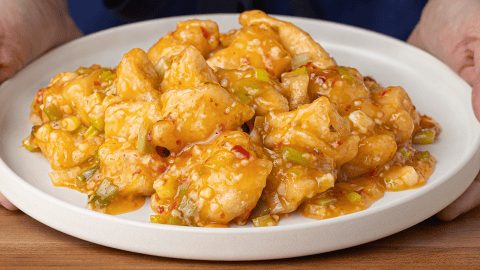
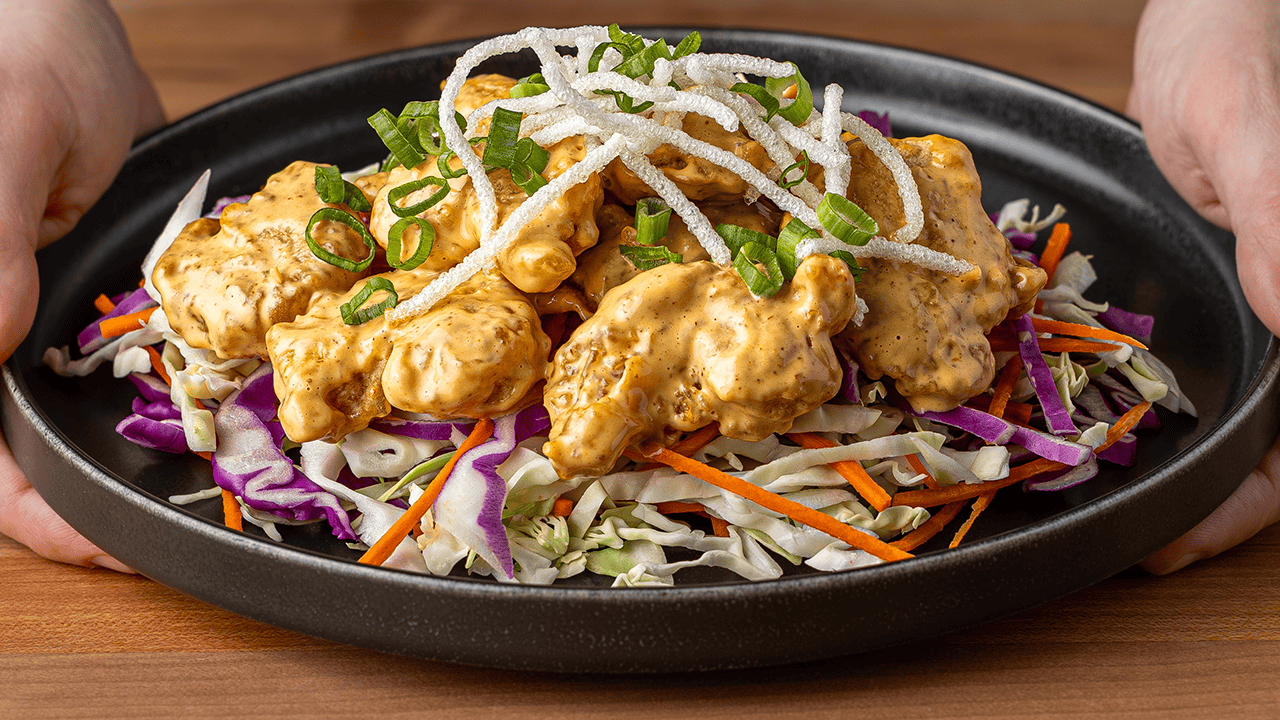
- Plated the way it comes at the restaurant. 10 shrimp to an order, on a bed of shredded cabbage with fried rice sticks on top.
Ingredients You'll Need
Soy sauce. Lee Kum Kee low sodium in the green bottle is the one that got me closest. It shows up twice in this recipe: once in the alkaline soy marinade for the shrimp and again in the dynamite sauce itself. Any brand of soy sauce will work, but LKK low sodium is the closest match.
Hellman's mayonnaise. This is the base of the dynamite sauce, and it's what every other recipe online gets wrong. Kewpie isn't the answer. What matched was regular Hellman's seasoned into a Japanese-style mayo. Any Western-style mayo works if you can't find Hellman's, but avoid anything with added sugar or extra flavorings.
Celery salt. You'll find this on the spice aisle at most grocery stores. It's different from celery seed, so check the label before you buy. You only need an eighth of a teaspoon.
Chipotle powder. This is what gives the dynamite sauce its smoky, slightly sweet heat. A half teaspoon goes into the full batch of sauce. If your chipotle powder has been sitting in the cabinet for over a year, it might be worth replacing. The flavor fades over time.
Sriracha. Two tablespoons go into the Crispy Green Bean sauce step. Huy Fong is the standard brand, but any sriracha will work here.
Potato starch. The shrimp get dredged in potato starch before they are battered. It creates a lighter, crispier initial coating than flour would. If you can't find it, cornstarch works as a substitute. Potato starch is different from potato flour, so make sure you're grabbing the right one.
3 Ladies Brand rice vermicelli. These are the thin, dried rice noodles that puff up when you drop them into hot oil. They turn into the crispy rice stick garnish. The 3 Ladies medium size has consistently given me the best results. Look for them labeled as rice vermicelli, rice sticks, or mei fun at Asian grocery stores.
How to Make P.F. Chang's Dynamite Shrimp
1. Marinate the shrimp. Whisk together water, soy sauce, and baking soda to make the alkaline soy marinade. Pour it over the frozen shrimp and let them thaw directly in the brine, about an hour at room temperature or a few hours in the fridge. When they're fully thawed, strain and pat dry with paper towels. This is the same marinade used in P.F. Chang's Mongolian Beef and Beef with Broccoli, and it does two things: the soy sauce seasons the shrimp all the way through, and the baking soda changes the protein structure so they stay juicy and have that bouncy texture. If you're using a 12-ounce bag, double the marinade recipe so all the shrimp are submerged. You can prep these up to 2 days ahead and store them in the fridge.
2. Make the dynamite sauce. Start by whisking the mayonnaise with soy sauce, rice vinegar, celery salt, salt, and turmeric. That's the Japanese-style mayo. Then add sriracha, another half teaspoon of rice vinegar, sliced green onions, and minced garlic. That's the Crispy Green Bean sauce. Then whisk in chipotle powder and honey, and you have the finished dynamite sauce. The whole process takes about five minutes. For the best flavor, refrigerate the sauce for several hours before using it. This makes enough sauce for 2-3 orders of shrimp, and it keeps in the fridge for about a week.
3. Make the fry batter. Whisk flour, cornstarch, baking soda, and baking powder together in a large bowl. Add ice cold water, crack in an egg, and pour in neutral oil. Whisk until smooth with no visible streaks of egg or oil. Keep this in the fridge until you're ready to fry. You want the batter as cold as possible when it hits the oil. This batch makes enough batter for 4-6 orders of shrimp.
4. Fry the rice sticks. Heat oil to 425-450°F. Pull apart the rice noodle bunches and tear them into roughly 1-inch pieces. Drop a small handful into the hot oil. They should puff up within a few seconds. If they don't puff immediately, the oil isn't hot enough. Remove them as soon as they're puffed and drain on a paper towel-lined baking sheet. Work in very small batches because they expand a lot. These store at room temperature in a covered container for 2-3 days.
5. Prep the cabbage mix. Toss together finely shredded green cabbage, red cabbage, and carrots at a 4:4:1 ratio. This is just for plating and it stores in the fridge for about a week.
6. First fry. Heat oil to 350°F. Take 10 of the marinated shrimp and toss them in potato starch until they're completely coated, then shake off the excess. Dip each shrimp into the cold fry batter, let the excess drip off, and lower them individually into the oil. Fry for 2-3 minutes until cooked through, agitating them so both sides fry evenly. Remove to a wire rack set over a baking sheet. At this point, the shrimp are ready to sauce and serve. This is actually how the restaurant handles it: the shrimp are pre-fried and held, then get a quick second fry when someone places an order.
7. Double-fry for extra crispiness. Raise the oil temperature to 375°F. Drop the shrimp back in for 1-2 more minutes. This second fry at a higher temperature expels the moisture trapped in the batter, and that moisture is the main reason a crispy coating goes soggy after it's sauced. Remove to the wire rack.
8. Sauce and serve. Place a small bed of the cabbage mix on a plate. Toss the hot shrimp with several tablespoons of the dynamite sauce until they're completely coated. Arrange the sauced shrimp over the cabbage, then top with fried rice sticks and thinly sliced green onion tops.
Tips for the Best Dynamite Shrimp
Keep the fry batter ice cold. Cold batter hitting hot oil creates a bigger temperature difference, which produces more steam and a crispier crust. If the batter warms up while sitting on the counter, the coating ends up more dense and less crispy. Make the batter ahead and keep it refrigerated until the moment you need it.
The double fry makes the shrimp noticeably crispier. Fry once, pull the shrimp and let them rest, then drop them back in at 375°F for a quick second fry right before serving. That second fry drives out the moisture trapped in the batter, which is what keeps the coating crispy even after it's sauced. A lot of Chinese and Korean restaurants fry their chicken the same way. Skip it and fry once, and the crust starts going soft within a minute or two of the sauce going on.
Rice sticks need very hot oil. If your oil is below 425°F, the noodles absorb oil instead of puffing, and they turn brown and greasy instead of white and airy. Test with one or two strands first. If they puff within a few seconds, you're good. If they sink and slowly expand, the oil isn't hot enough.
Potato starch gives a lighter crust than cornstarch. Both work for the pre-batter dredge, but potato starch produces a noticeably lighter, more delicate texture. You can find it at most grocery stores near the cornstarch. Make sure you're grabbing potato starch, not potato flour. They're different products.
The frozen shrimp shortcut. If you don't want to deal with marinating, battering, and deep-frying at home, you can use frozen pre-fried shrimp (popcorn shrimp or tempura shrimp from the freezer aisle) and just toss them in the dynamite sauce. It won't taste exactly the same, but it gets you about 75% of the way there and takes about 15 minutes.
Storage and Reheating
Dynamite sauce keeps in the fridge for about a week in a sealed container. Give it a stir before using since the ingredients can separate slightly.
Fry batter can be made several hours ahead and stored in the fridge. Keep it cold until you're ready to fry.
Marinated shrimp store in the fridge for up to 2 days after marinating. Pat dry again before dredging.
Fried rice sticks store in a covered container at room temperature for 2-3 days. Don't refrigerate them or they'll lose their crunch.
Fried shrimp are best eaten right after cooking. If you need to hold them, use the restaurant approach: do the first fry, hold the shrimp at room temperature for up to several hours, then do the second fry right before serving.
Frequently Asked Questions
What's the difference between dynamite shrimp and bang bang shrimp?
Different restaurants, different sauces. Bang bang shrimp is Bonefish Grill's, based on a sweet chili sauce. The dynamite sauce here is a seasoned mayonnaise spiked with sriracha, chipotle powder, and a touch of honey. The shrimp prep (battered and fried) is similar in both, but the two sauces taste clearly different.
Can I use frozen fried shrimp instead of making them from scratch?
Yes. Frozen popcorn shrimp or tempura shrimp work fine as a shortcut. Cook them according to the package directions (oven or air fryer), then toss with the dynamite sauce. The texture and coating won't be exactly like what you get at P.F. Chang's, but the sauce is what most people want to replicate anyway, and the sauce recipe here is the same regardless of which shrimp you use.
What's the difference between potato starch and cornstarch for the dredge?
Potato starch creates a lighter, more delicate coating. Cornstarch works well but tends to produce a slightly denser, crunchier texture. Either one will work in this recipe. The main thing is to shake off the excess starch before dipping in the batter so you don't end up with thick, gummy spots on the finished shrimp.
More P.F. Chang's Recipes
- P.F. Chang's Mongolian Beef
- P.F. Chang's Lettuce Wraps
- P.F. Chang's Beef with Broccoli
- P.F. Chang's Singapore Street Noodles
- P.F. Chang's Stir-Fried Eggplant
- P.F. Chang's Fried Rice
- P.F. Chang's Kung Pao Chicken
- P.F. Chang's Spicy Chicken
- P.F. Chang's Crispy Honey Chicken
More Chinese Takeout Recipes
- Chinese Takeout Crab Rangoon
- Chinese Takeout Egg Foo Young
- Chinese Takeout Egg Rolls
- Chinese Takeout Orange Chicken
- Chinese Takeout Kung Pao Chicken
- Chinese Takeout General Tso's Chicken
- Chinese Takeout Wonton Soup
- Chinese Takeout Hot and Sour Soup
- Chinese Takeout Egg Drop Soup
- Chinese Takeout Chow Mein
- Chinese Takeout Lo Mein
- Chinese Takeout Fried Rice
More Panda Express Recipes
More Din Tai Fung Recipes
Recipe
P.F. Chang's Dynamite Shrimp
Equipment
- 1 Made-In Carbon Steel Wok for deep-frying shrimp and rice sticks
- 1 Whisk for batter and sauce
- 1 Wire Cooling Rack for draining fried shrimp
- 1 Wok Spider/Strainer for removing shrimp and rice sticks from oil
- 1 Colander for straining shrimp from marinade
- 1 Infrared Thermometer for monitoring oil temperature
Ingredients
Alkaline Soy Marinade
- 1 cup water
- ⅓ cup soy sauce
- ½ teaspoon baking soda
The Shrimp
- 10 shrimp 71/90 count, peeled and deveined, frozen or fresh
- potato starch or dredging; cornstarch may be substituted
Dynamite Sauce
- ½ cup mayonnaise Hellman's or any Western-style mayo
- 1 ¾ teaspoon soy sauce
- 2 ¼ teaspoon unseasoned rice vinegar total across both sauce steps
- ⅛ teaspoon celery salt
- ⅛ teaspoon salt
- 1/16 teaspoon turmeric
- 2 tablespoon sriracha
- 1 teaspoon green onion tops finely sliced
- ½ teaspoon fresh garlic minced
- ½ teaspoon chipotle powder
- 1 teaspoon honey
Fry Batter
- 1 cup all-purpose flour plus 2 tbsp
- ¾ cup cornstarch plus 2.5 tbsp
- ¼ teaspoon baking soda
- ½ teaspoon baking powder
- 1 cup water ice cold
- 1 large egg
- 2 tablespoon vegetable oil
Cabbage Mix
- 4 parts green cabbage finely shredded
- 4 parts red cabbage finely shredded
- 1 part carrots finely shredded
Crispy Rice Sticks
- rice vermicelli 3 Ladies Brand medium size recommended; also labeled rice sticks or mei fun
- vegetable oil or any high smoke point oil; heated to 425-450°F
For Serving
- green onion tops finely sliced, for garnish
Instructions
Prepare the Alkaline Soy Marinade
- Add water, soy sauce, and baking soda to a large bowl and whisk until the baking soda is dissolved.
- Pour the marinade over the frozen shrimp. Make sure all shrimp are submerged. Double the marinade recipe if using a 12-ounce bag.
- Let the shrimp thaw completely in the marinade, about 1 hour at room temperature or several hours in the fridge.
- When thawed, strain the shrimp from the marinade and pat dry with paper towels. Discard the marinade.
Make the Dynamite Sauce
- Add mayonnaise, soy sauce, rice vinegar, celery salt, salt, and turmeric to a bowl. Whisk until all spices are evenly distributed. This is the Japanese-style mayo.
- Add sriracha, an additional ½ teaspoon of rice vinegar, sliced green onion tops, and minced garlic. Whisk until combined. This is the Crispy Green Bean sauce.
- Add chipotle powder and honey. Whisk until combined. This is the finished dynamite sauce.
- Refrigerate for several hours before using for the best flavor. Makes enough for 2-3 orders.
Make the Fry Batter
- Add flour, cornstarch, baking soda, and baking powder to a large bowl. Whisk until combined.
- Add ice cold water, egg, and oil. Whisk until smooth with no visible streaks of egg or oil.
- Refrigerate until ready to use. Keep the batter as cold as possible.
Fry the Rice Sticks
- Heat oil to 425-450°F in a large pot or wok.
- Pull apart rice noodle bunches and tear into roughly 1-inch pieces.
- Drop a small handful of rice noodle pieces into the hot oil. They should puff up within a few seconds.
- Remove immediately and drain on a paper towel-lined baking sheet. Repeat with remaining noodles in small batches.
Prep the Cabbage Mix
- Combine finely shredded green cabbage, red cabbage, and carrots in a large bowl at a 4:4:1 ratio. Toss until mixed.
Fry the Shrimp
- Heat oil to 350°F in a large pot or wok.
- Toss 10 marinated shrimp in potato starch until completely coated. Shake off excess starch.
- Dip each shrimp into the cold fry batter, allow excess to drip off, and slowly lower into the hot oil.
- Fry for 2-3 minutes until cooked through, agitating so both sides fry evenly. Remove to a wire rack set over a baking sheet.
- Raise the oil temperature to 375°F.
- Fry the shrimp a second time for 1-2 minutes to expel moisture and recrisp the coating. Remove to the wire rack.
Sauce and Serve
- Place about 2 ounces of the cabbage mix on a plate.
- Add the fried shrimp to a bowl and toss with several tablespoons of the dynamite sauce until completely coated.
- Arrange the sauced shrimp over the cabbage mix.
- Garnish with fried rice sticks and thinly sliced green onion tops.