P.F. Chang's Beef with Broccoli (Copycat Recipe)
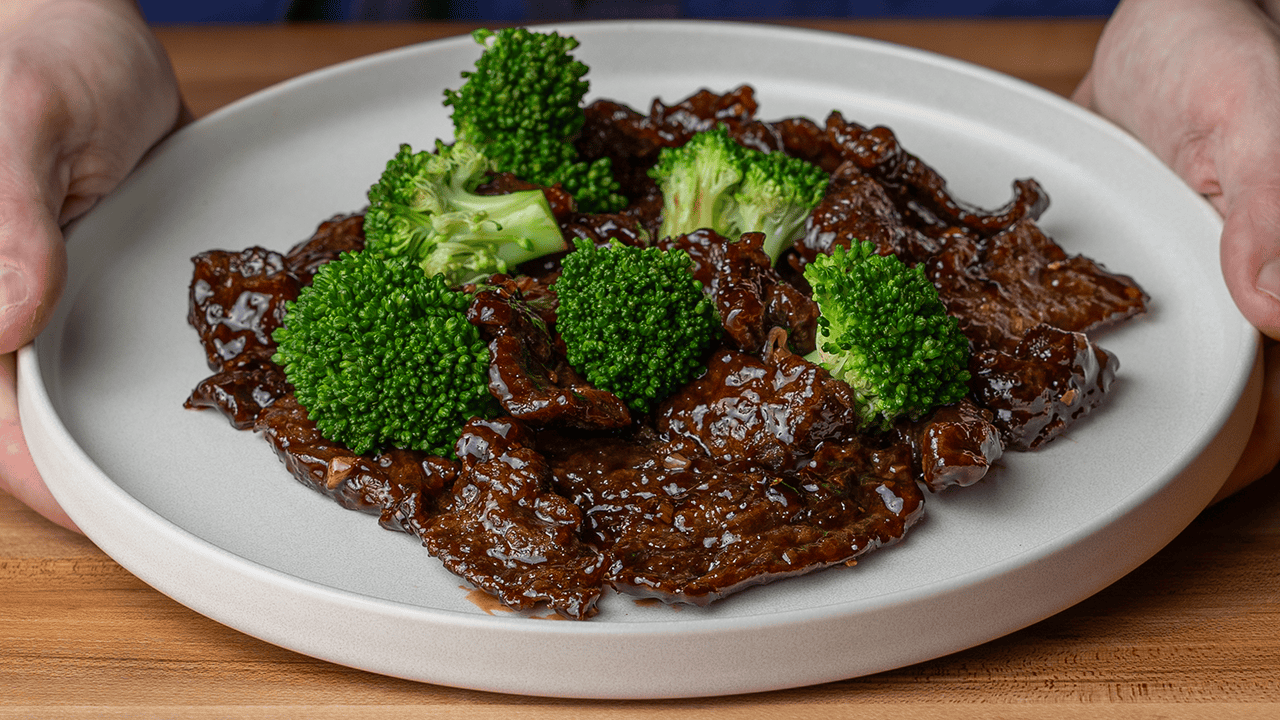
If you've already made my P.F. Chang's Mongolian Beef recipe, you're most of the way to the Beef with Broccoli. The dark sauce, the alkaline soy marinade, and the egg white velveting are all identical. Beef with Broccoli adds ginger and scallions to the aromatics, blanched broccoli at the end, and a cornstarch slurry that thickens the Mongolian sauce enough to coat everything evenly.
If you haven't made the Mongolian Beef yet, this post covers every step from scratch. The dark sauce both dishes share is chicken base, soy sauce, mushroom dark soy, oyster sauce, and rice wine. Add extra sugar, and it becomes the sweeter Mongolian sauce. It keeps in the fridge for up to a month.
This post contains affiliate links, which means I may earn a small commission if you make a purchase. It doesn't cost you anything extra. Full disclosure.
Why This Beef with Broccoli Recipe Works
- The Mongolian sauce, five distinct ingredients. It starts with the dark sauce (chicken base, soy sauce, mushroom dark soy, oyster sauce, rice wine) and gets sweetened with extra sugar. No combination of soy sauce and brown sugar can replicate these layers.
- Alkaline soy marinade for fork-tender beef. Dissolving baking soda in the brine raises the pH, which keeps the protein from tightening during high-heat cooking. I brine for up to 24 hours; the longer it goes, the more tender the beef gets.
- Egg white velveting with potato starch before par-frying. The velveting creates a thin protective barrier between the meat and the cooking oil, so the beef stays juicy inside while the edges get slightly crispy. Most online recipes skip proper velveting entirely or mistake a dry cornstarch dredge for the real thing.
- Broccoli blanched and shocked separately for even cooking. Blanching gives you broccoli that's tender but still slightly crunchy in 1-2 minutes. Stir-frying raw broccoli in a home wok takes longer and releases water into the sauce, thinning it out.
- Cornstarch slurry so the sauce coats the beef evenly. A teaspoon of cornstarch mixed with water, drizzled into the wok during the final stir-fry, thickens the Mongolian sauce just enough to coat the beef and broccoli. Without it, the sauce is still watery and pools at the bottom of the plate.
Ingredients You'll Need
Flank steak is the cut I use for this dish. It has a pronounced beefy flavor that balances against the sweetness of the Mongolian sauce, and the long muscle fibers absorb the alkaline soy marinade well. Slice it with the grain first into 1.5-inch sections, then cut each section against the grain at a 30-40 degree angle into pieces about ⅛ inch thick. If the steak is hard to slice thinly, toss it in the freezer for 20-30 minutes to firm it up. For a detailed breakdown of the slicing technique, see the P.F. Chang's Mongolian Beef post.
Broccoli gets blanched in boiling water for 1-2 minutes, then shocked in ice water to stop the cooking. The critical step after blanching is draining it thoroughly. Broccoli florets trap water between the buds, and if that water ends up in the wok, it dilutes the sauce. I use a salad spinner after shocking. Any method that gets the broccoli dry works, but you want to be thorough about it.
Fresh ginger is one of the things that separates Beef with Broccoli from Mongolian Beef. Mince it fine so it cooks quickly with the other aromatics. You want the ginger flavor spread throughout the sauce, not concentrated in large chunks.
Scallions go in with the aromatics at the very start of the stir-fry, not as a garnish at the end (which is how Mongolian Beef uses green onions). Slice them thin. They cook in about 10-20 seconds alongside the garlic and ginger.
The dark sauce and Mongolian sauce are the base for several of the P.F. Chang's recipes on this site. The dark sauce is chicken base, sugar, soy sauce, mushroom dark soy, oyster sauce, and rice wine. The Mongolian sauce is the dark sauce with an additional 5 tablespoons of white sugar stirred in. Both store in the fridge for up to a month, so you can make them well ahead of time. If you've already made a batch for P.F. Chang's Mongolian Beef, you're already halfway there.
Dehydrated minced garlic is what I use here instead of fresh. You can find it on the spice aisle at most grocery stores. Cover the amount you need with warm water for 20-30 minutes, then drain and squeeze out the excess liquid before using. Fresh garlic burns at wok temperatures and the reconstituted kind doesn't, and the flavor is more even and mellow.
The alkaline soy marinade, egg white velveting, and par-frying step are the same process used in the P.F. Chang's Mongolian Beef. Baking soda dissolved in water creates an alkaline brine that tenderizes the meat without off-flavors. The egg white and potato starch coat the beef to protect it during frying. Then the velveted beef gets fried in 350°F oil before the final stir-fry, a technique called "passing through the oil," so the finishing process only takes a couple of minutes. If you want the full breakdown on why each step matters, the Mongolian Beef post covers it in detail.
Lee Kum Kee low-sodium soy sauce (green bottle) is what I use for both the marinade and the dark sauce. Kikkoman works too. For the full comparison between the two, see the Mongolian Beef ingredient section.
Sesame oil finishes the dish. Add it after the heat is off. A teaspoon is enough. Any toasted sesame oil works here.
How to Make P.F. Chang's Beef with Broccoli
This recipe has seven phases: making the dark sauce, converting it to Mongolian sauce, preparing and marinating the beef, velveting, passing through the oil, blanching the broccoli, and the final stir-fry. Most of the time is passive (marinating and garlic reconstitution), and the actual cooking takes about 10 minutes total.
Step 1: Make the dark sauce. Add ¼ cup of water to a small pot with ½ teaspoon of Minor's Original Chicken Base and ¼ cup of sugar. Bring to a simmer over medium heat and whisk until dissolved. Kill the heat, then add ¼ cup plus 2 tablespoons of soy sauce, 1 tablespoon of mushroom dark soy sauce, 1 tablespoon of oyster sauce, and 2 tablespoons of Michiu or Shaoxing wine. Whisk until incorporated. This sauce stores covered in the fridge for up to a month.
Step 2: Make the Mongolian sauce. Pour the dark sauce back into the pot and bring to a light simmer. Add 5 tablespoons of white sugar and whisk until completely dissolved. Remove from heat and let it cool before using. The Mongolian sauce also stores in the fridge for up to a month.
Step 3: Slice and brine the beef. Cut a 9 oz flank steak with the grain into 1.5-inch sections, then slice each section against the grain at a 30-40 degree angle into pieces about ⅛ inch thick. Combine 1 cup of water with ½ teaspoon of baking soda and stir until dissolved, then add ⅓ cup of soy sauce. Submerge the sliced beef in the marinade and refrigerate for at least 2 hours. A full 24 hours is the target, and the longer you go, the more tender and flavorful the beef gets. Keep it refrigerated the entire time.
Step 4: Velvet the beef. Remove the beef from the marinade and pat dry with paper towels. Drying the surface helps the velveting adhere properly. Add ½ egg white and ⅛ teaspoon of white pepper and stir until the meat is evenly coated. Add 1 tablespoon of potato starch and massage it into the beef until all the slices are covered. Finish with 1 teaspoon of neutral oil and stir to distribute. Refrigerate for at least 30 minutes before cooking.
Step 5: Pass the beef through the oil. Heat neutral frying oil to 350°F. Working in batches, add the velveted beef and immediately agitate so the slices don't clump together. Fry for 2-3 minutes until the edges have browned. Drain on a wire rack set over a baking sheet and set aside.
Step 6: Blanch the broccoli. Bring a large pot of water to a boil. Add 8 oz of broccoli florets and cook for 1-2 minutes until tender but still slightly crunchy. Shock in ice water for about a minute to stop the cooking. Drain thoroughly using a salad spinner or towels. Getting the water out of the broccoli is important here. Any water left in the florets will thin out the sauce in the wok.
Step 7: Final stir-fry. Have everything measured and within reach before you start. This step takes about 2 minutes. Heat 1 teaspoon of neutral oil in a wok over medium to medium-high heat. Add 1 teaspoon of reconstituted garlic, 2 teaspoon of minced ginger, and 1 tablespoon of sliced scallions. Cook for 10-20 seconds until fragrant. Pour in 5 tablespoons of the Mongolian sauce and bring to a light simmer. Add the fried beef and toss in the sauce. Stir the cornstarch slurry (1 teaspoon cornstarch mixed with 2 teaspoon water) and drizzle it over the beef. Stir until the sauce thickens and sticks to the meat. Add the blanched broccoli and toss everything together. Kill the heat, drizzle in 1 teaspoon of toasted sesame oil, and give it a final toss. Serve immediately.
Tips for the Best Beef with Broccoli
Drain the broccoli well after blanching. Broccoli florets trap water in the gaps between the buds. If that water gets into the wok, it thins out the Mongolian sauce and you end up with a watery dish instead of a glazed one. A salad spinner is the fastest way to get them dry. If you don't have one, dry them with a kitchen towel.
Give the alkaline soy marinade as much time as you can. Two hours is the minimum. I brine for 24 hours, and the longer you go, the more tender and flavorful the beef gets. If you can plan a day ahead, it's worth it.
Stir the cornstarch slurry right before you pour it. Cornstarch settles to the bottom of the bowl fairly quickly once you stop stirring. If you pour it in without mixing it again first, you're adding mostly water from the top while the starch stays stuck at the bottom. Give it a stir immediately before drizzling it into the wok.
If you can't find flank steak, other long-grained cuts work well. Hanger steak, skirt steak, flap meat, and even chuck all produce good results as long as you slice them thin against the grain and give them the full alkaline soy marinade treatment.
The dark sauce and Mongolian sauce are worth making ahead of time. Both store in the fridge for up to a month. If you're planning to make multiple P.F. Chang's recipes from this site, a single batch of dark sauce covers you for several dishes.
What to Serve With Beef with Broccoli
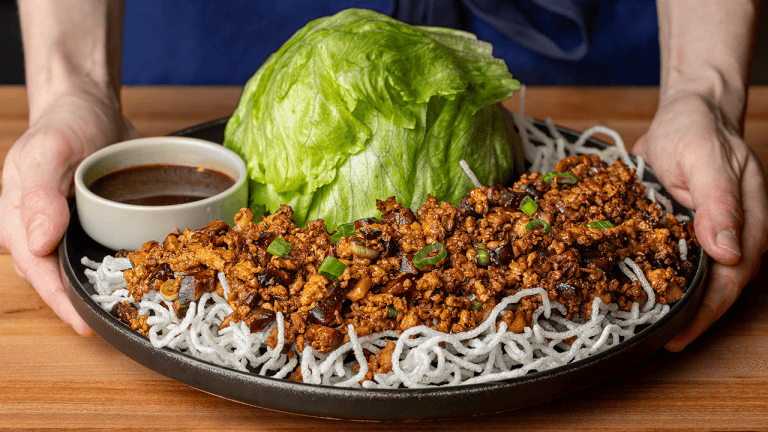
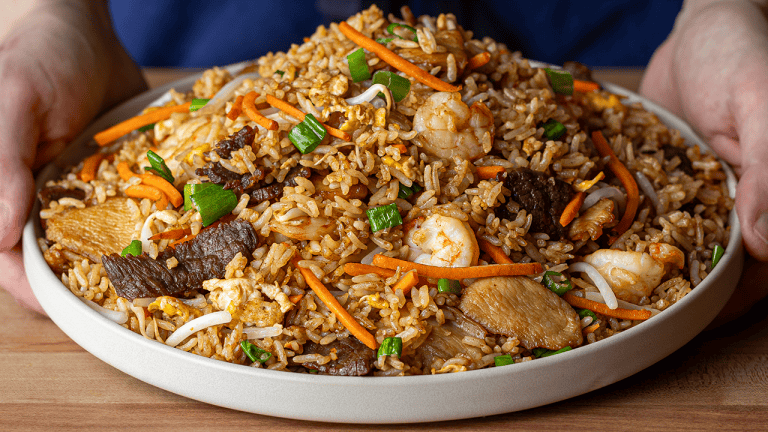
P.F. Chang's serves their Beef with Broccoli with a choice of rice or noodles. Steamed white rice is the most common pairing, or you can try Chinese Takeout Fried Rice for a more complete plate. For noodles, Chinese Takeout Lo Mein or Chinese Takeout Chow Mein both work well alongside it. If you want to put together a full P.F. Chang's dinner at home, start with P.F. Chang's Lettuce Wraps as an appetizer. For soup, Chinese Takeout Egg Drop Soup or Chinese Takeout Wonton Soup are light starters.
Storage and Reheating
The dark sauce and Mongolian sauce both keep covered in the refrigerator for up to one month. Making a double batch of the dark sauce gives you a head start on other P.F. Chang's recipes like Mongolian Beef.
The finished Beef with Broccoli stores in an airtight container in the fridge for 3-4 days. But it is best eaten within a day or two.
For reheating, use a wok or skillet over high heat. You want to bring the sauce back up to temperature quickly without overcooking the broccoli further. A microwave works if you're short on time, but you'll lose the crispy edges on the beef. If the dish looks dry when reheating, add a splash of reserved Mongolian sauce.
Frequently Asked Questions
Can I use a different cut of beef instead of flank steak?
Flank steak is the best choice for this dish, but hanger steak, skirt steak, and flap meat all work as substitutes. The important thing is a visible grain structure that you can slice across for tender pieces. I'd pass on tenderloin and ribeye for this recipe. Both are more expensive than flank steak and neither one takes to the alkaline soy marinade and velveting process as well.
Can I stir-fry the broccoli instead of blanching it?
You can, but the dish will turn out differently. Stir-frying raw broccoli in a home wok takes longer than blanching, and during that extra time the broccoli releases water that thins out the sauce. Blanching gives you consistent tenderness in 1-2 minutes, and shocking in ice water locks in the bright green color. It's an extra pot to wash, but the sauce stays thicker and the broccoli keeps its color.
What's the difference between the Dark Sauce and the Mongolian Sauce?
The dark sauce is the base. It's made with chicken base, sugar, soy sauce, mushroom dark soy, oyster sauce, and rice cooking wine. The Mongolian sauce is the dark sauce with an additional 5 tablespoons of white sugar stirred in. The dark sauce shows up across a lot of these recipes; add the extra sugar and it becomes the Mongolian sauce that specific dishes like Beef with Broccoli and Mongolian Beef.
Can I make the sauces ahead of time?
Both the dark sauce and Mongolian sauce store covered in the fridge for up to a month. Making them ahead of time actually makes dinner-night cooking faster, since the final stir-fry only takes about 2 minutes once everything is prepped and the beef is already fried.
More P.F. Chang's Recipes
- P.F. Chang's Mongolian Beef
- P.F. Chang's Lettuce Wraps
- P.F. Chang's Dynamite Shrimp
- P.F. Chang's Singapore Street Noodles
- P.F. Chang's Stir-Fried Eggplant
- P.F. Chang's Fried Rice
- P.F. Chang's Kung Pao Chicken
- P.F. Chang's Spicy Chicken
- P.F. Chang's Crispy Honey Chicken
More Chinese Takeout Recipes
- Chinese Takeout Crab Rangoon
- Chinese Takeout Egg Foo Young
- Chinese Takeout Egg Rolls
- Chinese Takeout Orange Chicken
- Chinese Takeout Kung Pao Chicken
- Chinese Takeout General Tso's Chicken
- Chinese Takeout Wonton Soup
- Chinese Takeout Hot and Sour Soup
- Chinese Takeout Egg Drop Soup
- Chinese Takeout Chow Mein
- Chinese Takeout Lo Mein
- Chinese Takeout Fried Rice
More Panda Express Recipes
More Din Tai Fung Recipes
Recipe
P.F. Chang's Beef with Broccoli
Equipment
- 1 Made-In Carbon Steel Wok For passing beef through the oil
- 1 14-inch Mandarin Wok For the final stir-fry
- 1 Wok Spider/Strainer For removing beef from oil
- 1 Wire Cooling Rack For draining fried beef
- 1 Whisk For making the sauces
- 1 Colander For draining broccoli
- 1 Salad Spinner For drying broccoli after blanching
- 1 Infrared Thermometer For checking oil temperature
Ingredients
The Dark Sauce
- ¼ cup water
- ½ teaspoon Minor's Original Chicken Base Minor's Original Chicken Base or Knorr/Lee Kum Kee Asian chicken bouillon powder
- ¼ cup white sugar
- 6 tablespoon soy sauce Lee Kum Kee Low Sodium (green bottle) or Kikkoman
- 1 tablespoon mushroom dark soy sauce Lee Kum Kee
- 1 tablespoon oyster sauce Lee Kum Kee Panda Brand (green bottle) or Premium
- 2 tablespoon cooking michiu or Shaoxing cooking wine
The Mongolian Sauce
- 1 batch dark sauce approximately 260 ml (see above)
- 5 tablespoon sugar
The Alkaline Soy Marinade
- 1 cup water
- ⅓ cup soy sauce Lee Kum Kee Low Sodium (green bottle) or Kikkoman
- ½ teaspoon baking soda
The Flank Steak
- 9 oz flank steak sliced against the grain into ⅛-inch pieces
Egg White Velveting
- ½ egg white
- ⅛ teaspoon white pepper
- 1 tablespoon potato starch or cornstarch
- 1 teaspoon vegetable oil or any neutral oil
The Broccoli
- 8 oz broccoli florets
Final Stir-Fry
- 1 teaspoon vegetable oil or any neutral oil
- 1 teaspoon dehydrated minced garlic reconstituted in warm water for 20-30 minutes, drained
- 2 teaspoon ginger fresh, minced
- 1 tablespoon scallions sliced thin
- 5 tablespoon Mongolian sauce see above
- 1 teaspoon cornstarch mix with 2 teaspoon water into slurry before adding
- 2 teaspoon water for cornstarch slurry
- 1 teaspoon toasted sesame oil added after heat is off
Instructions
Make the Dark Sauce
- Add ¼ cup of water to a small pot with ½ teaspoon of Minor's Original Chicken Base and ¼ cup of sugar. Bring to a simmer over medium heat and whisk until the sugar and chicken base are dissolved.
- Remove from heat. Add 6 tablespoon of soy sauce, 1 tablespoon of mushroom dark soy sauce, 1 tablespoon of oyster sauce, and 2 tablespoon of cooking michiu. Whisk until incorporated. The dark sauce stores covered in the fridge for up to a month.
Make the Mongolian Sauce
- Pour the dark sauce into a small pot and bring to a light simmer. Add 5 tablespoon of white sugar and whisk until completely dissolved. Remove from heat and let cool before using. The Mongolian sauce also stores covered in the fridge for up to a month.
Brine the Beef
- Slice a 9 oz flank steak with the grain into 1.5-inch sections. Turn each section perpendicular and slice against the grain at a 30-40 degree angle into pieces about ⅛ inch thick. If the steak is hard to slice, freeze it for 20-30 minutes to firm it up.
- Combine 1 cup of water with ½ teaspoon of baking soda and stir until dissolved. Add ⅓ cup of soy sauce.
- Submerge the sliced beef in the marinade and refrigerate for at least 2 hours, or up to 24 hours for the best results. Longer marination times improve both tenderness and flavor.
Velvet the Beef
- Remove the beef from the marinade and pat dry with paper towels. Drying the surface helps the velveting adhere.
- Add ½ egg white and ⅛ teaspoon of white pepper. Mix until all the pieces are evenly coated. Add 1 tablespoon of potato starch and massage it into the beef until all slices are covered. Stir in 1 teaspoon of neutral oil to finish.
- Refrigerate for at least 30 minutes before cooking.
Pass the Beef Through the Oil
- Heat several inches of neutral frying oil to 350°F.
- Working in batches, add the velveted beef and immediately agitate so the slices don't clump together. Fry for 2-3 minutes until the edges have browned.
- Remove the beef to a wire rack set over a baking sheet and drain. Set aside.
Blanch the Broccoli
- Bring a large pot of water to a boil. Add 8 oz of broccoli florets and cook for 1-2 minutes until tender but still slightly crunchy.
- Shock in a bowl of ice water for about 1 minute to stop the cooking. Drain thoroughly using a salad spinner or towels. Getting the water out is important because wet broccoli will thin out the sauce.
Final Stir-Fry
- Have everything measured and within reach before starting. This step takes about 2 minutes.
- Heat 1 teaspoon of neutral oil in a wok over medium to medium-high heat. Add 1 teaspoon of reconstituted garlic, 2 teaspoon of minced ginger, and 1 tablespoon of sliced scallions. Cook for 10-20 seconds until fragrant.
- Pour in 5 tablespoon of the Mongolian sauce and bring to a light simmer. Add the fried beef and toss in the sauce.
- Stir the cornstarch slurry (1 teaspoon cornstarch + 2 teaspoon water) and drizzle it over the beef. Stir until the sauce thickens and coats the meat. Add the blanched broccoli and toss everything together.
- Kill the heat and drizzle in 1 teaspoon of toasted sesame oil. Toss to distribute and serve immediately.