Din Tai Fung Green Beans with Garlic (6-Ingredient Recipe)
Every Din Tai Fung green bean recipe online is missing at least four of the six ingredients they actually use at the restaurant. I tracked down the ingredient lists DTF uses to train their kitchen staff, and most recipes only get two of them right. That's why your version at home never tastes like the restaurant.
If you've tried making these at home and they didn't taste anything like Din Tai Fung's, the recipes you were following were the problem. They're all working with about a third of the actual ingredient list. This post covers every ingredient DTF actually uses and exactly how they put the dish together.
This post contains affiliate links, which means I may earn a small commission if you make a purchase. It doesn't cost you anything extra. Full disclosure.
Why This Din Tai Fung Green Beans Recipe Works
- Garlic oil and fresh garlic are two separate ingredients. DTF's training materials list them independently. The oil gives you garlic flavor through the whole dish without raw garlic pieces everywhere. A small amount of fresh garlic goes in right at the end so you still get that bright, fresh garlic flavor when you take a bite. Every other recipe online treats garlic as a single step.
- Mushroom bouillon, not just salt. The bouillon they use contains MSG, which is a big part of why the dish tastes more complex than you'd expect from six ingredients. Lee Kum Kee's mushroom bouillon doesn't have any MSG, so it won't taste the same.
- Zha cai gives the dish a salty, slightly fermented flavor. Those pale bits you see mixed into DTF's version are Szechuan preserved mustard stems. No recipe online includes this ingredient. Take it out and the dish just tastes like garlic and salt.
- Cooking michiu, not Shaoxing wine. Din Tai Fung is a Taiwanese restaurant. Michiu is a clear Taiwanese rice wine with a cleaner, slightly sweeter flavor than Chinese Shaoxing wine. They're different ingredients from different traditions.
- Flash-frying blisters the beans without overcooking them. A quick 45 to 60 seconds in 375°F oil gives you that wrinkled, blistered skin while keeping the inside crisp and bright green. No home burner gets hot enough to do this with a sauté pan, so the deep-fry is how you get around it.
Ingredients You'll Need
Garlic oil. You only need a tablespoon or two per serving, but it's worth making a full batch. Combine about a cup and a half of neutral oil (soybean, vegetable, or canola) with eight to ten minced garlic cloves in a cold saucepan. Heat them together on low for ten to fifteen minutes until the garlic turns pale gold. Starting with cold oil lets the garlic release its flavor evenly instead of burning on the outside. Strain it through a fine mesh strainer as soon as it comes off heat. The strained oil keeps in the fridge for up to 4 days (or frozen) and works as a drop-in replacement for neutral oil in any stir-fry.
Totole mushroom bouillon. This is the brand that matches DTF's specs. Their training materials confirm the bouillon "contains MSG as an additive," and Totole lists MSG as its fourth ingredient. Lee Kum Kee's version uses nucleotide enhancers instead of MSG, so it won't taste the same. If you can't find Totole, any mushroom bouillon with MSG on the label will work. If you're using an MSG-free brand, add a quarter teaspoon of MSG separately. Look for the yellow-and-green package with the mushroom on it.
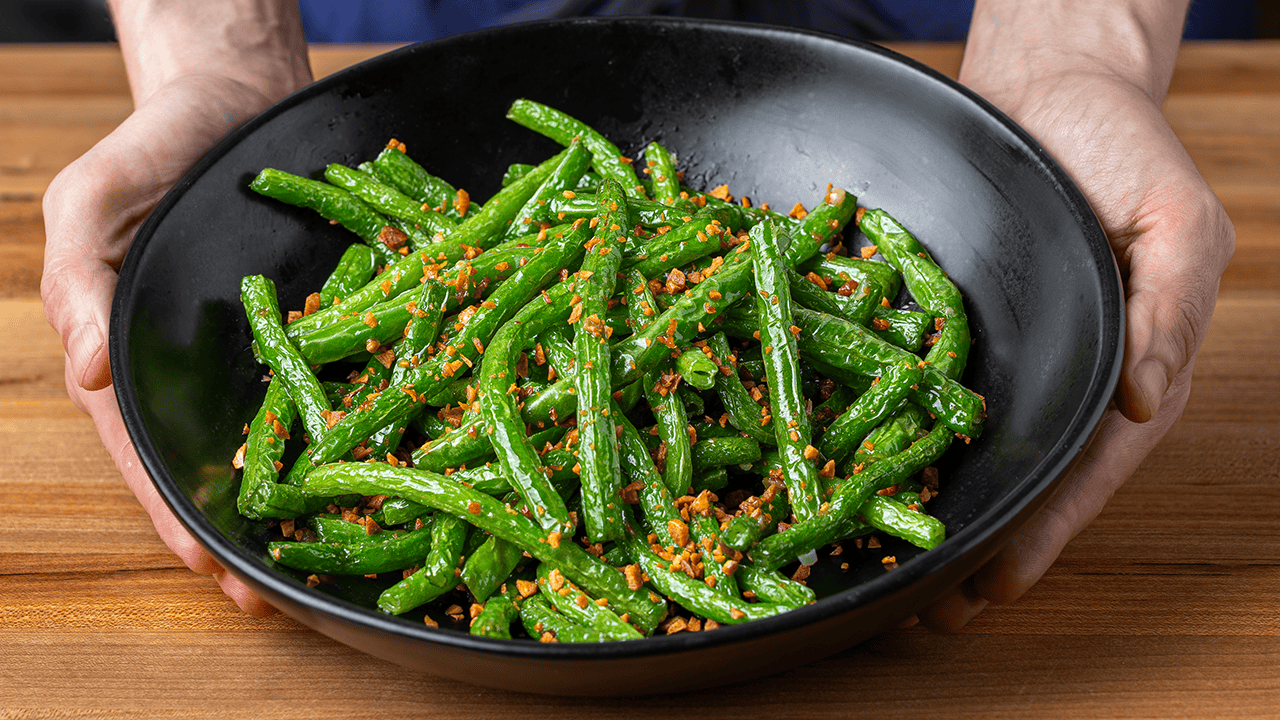
Zha cai (Szechuan preserved mustard stems). These are the pale, translucent bits you can see in photos of DTF's dish. Look for a red-and-yellow can labeled "Szechuen Preserved Vegetable" with shredded mustard stems inside. Wujiang brand foil packets from the refrigerated section of any Asian grocery store also work well. Check the ingredients on whatever brand you buy, because some cans labeled "Szechuan preserved vegetable" are actually radish, not mustard stems.
Cooking michiu (Taiwanese rice wine). This is widely available at Asian grocery stores. Michiu is lighter and cleaner than Shaoxing wine, and that's what DTF uses. Dry sherry is closer to Shaoxing than to michiu, so it's not a great substitute here, but it'll do in a pinch.
Fresh green beans. About 12 ounces, trimmed and cut into 3-inch pieces. Pat them completely dry after washing. Any surface moisture will cause violent spattering when they hit the hot oil.
How to Make Din Tai Fung Green Beans
1. Make the garlic oil ahead of time. Combine the oil and minced garlic in a cold saucepan and bring them up to temperature together on low heat. Cook for 10 to 15 minutes, stirring occasionally, until the garlic is pale gold. Pull it off heat a shade before it looks done to you, because the residual heat in the oil will keep cooking it. Strain immediately through a fine mesh strainer. Save the crispy garlic bits separately. DTF doesn't use them in the dish, but they're a great topping for rice or noodles.
2. Set up for deep-frying. Place a wire rack over a rimmed baking sheet near the stove. Do not use paper towels. Most oil absorption happens after food leaves the fryer, so you want oil dripping away from the beans, not pooling against them.
3. Flash-fry the green beans. Heat 3 to 4 cups of neutral oil to 375°F in a wok, Dutch oven, or heavy pot. Use a thermometer. Drop the beans in and fry for 45 to 60 seconds. You want blistered, wrinkled skins and bright green color. They should snap when you bite one, not bend. Transfer to the wire rack.
4. Heat the garlic oil in a clean wok. Add 1 to 2 tablespoons of garlic oil over medium heat. Swirl to coat the surface.
5. Cook the aromatics fast. Add the fresh garlic and minced zha cai at the same time. Stir-fry for 10 to 15 seconds, just until fragrant. The garlic should stay white to barely translucent. Then splash in the michiu. It'll sizzle and mostly evaporate on contact.
6. Toss the beans with the seasoning. Turn the heat to high. Add the flash-fried beans and immediately sprinkle the mushroom bouillon and salt directly over them. Toss everything together for 15 to 30 seconds until the seasoning dissolves and coats every bean evenly. If you can still see granules, keep tossing. Serve immediately.
Tips for the Best Din Tai Fung Green Beans
Don't skip the deep-fry. Home burners put out 6,000 to 15,000 BTU. Commercial wok burners run 100,000 to 150,000 BTU. That's a 7 to 10x gap, and it means your stove can't vaporize moisture fast enough to blister the bean's surface before the inside overcooks. The flash-fry at 375°F solves this completely. The beans actually absorb less oil this way than if you stir-fried them. The high heat turns the moisture inside the beans to steam, which pushes outward and creates a barrier that keeps oil from soaking in.
Pull the garlic oil early. The garlic will go from golden to burnt in seconds. If it looks done to you in the pan, it's probably already a little past where you want it. Pull it when it's still pale gold and let the residual heat in the oil do the rest.
Use a wire rack, not paper towels. About 64% of oil absorption happens after food comes out of the fryer. As the internal steam cools and condenses, it creates a vacuum that pulls surface oil inward. A wire rack lets oil drip away from all sides. Paper towels trap oil against one side of the bean.
The sauté is thirty seconds, not three minutes. Once the beans go back in the wok, you're just dissolving the seasoning and coating them. The beans are already cooked from the fry. Anything more than 30 seconds and they start going limp.
Save the crispy garlic bits. DTF strains them out and doesn't use them in the finished dish. Sprinkle them over rice, noodles, or back on top of the green beans.
Storage and Reheating
These are best eaten immediately. The blistered texture starts to soften within about 20 minutes at room temperature.
If you have leftovers, store them in an airtight container in the fridge for up to 2 days. Reheat in a dry skillet or wok over high heat for about 60 to 90 seconds. The microwave works but you'll lose the crisp skin. The texture changes either way, so don't expect reheated beans to match the fresh version.
Keep the garlic oil in the fridge and use it within 4 days, or freeze it in small portions.
Frequently Asked Questions
Can I use an air fryer instead of deep-frying?
You can try, but it won't produce the same result. Air fryers circulate hot air, which dries the surface of the bean rather than blistering it. The rapid moisture-to-steam conversion that happens in 375°F oil is what creates that specific wrinkled, puckered texture. An air fryer will give you roasted green beans, which taste fine but aren't the same dish.
Why no soy sauce?
DTF's confirmed ingredient list doesn't include soy sauce. The training materials describe the garlic oil as "garlic oil (soy base)," which refers to soybean oil as the carrier fat, not soy sauce cooked into the oil. The same phrasing appears in other DTF dishes like "green onion oil (soy base)." The soy allergen flag on DTF's allergen guide traces to the mushroom bouillon, which contains soy protein as a sub-ingredient.
Can I use long beans or French beans instead?
Long beans (yard-long beans) work well and are a common substitution in Chinese cooking. French beans (haricots verts) are thinner and more delicate, so you'd need to reduce the fry time to about 30 seconds to keep them from going limp. Frozen beans don't work. The excess moisture causes dangerous spattering in hot oil and the texture will be mushy.
What's the difference between this and traditional Sichuan dry-fried green beans?
The traditional Sichuan version uses ground pork and a different preserved vegetable called ya cai. Din Tai Fung stripped the pork out and swapped in zha cai for their version. If you want the traditional Sichuan take, look for Yibin Suimi Yacai brand ya cai in foil packets.
More Din Tai Fung Recipes
More Chinese Takeout Recipes
- Chinese Takeout Crab Rangoon
- Chinese Takeout Egg Foo Young
- Chinese Takeout Egg Rolls
- Chinese Takeout Orange Chicken
- Chinese Takeout Kung Pao Chicken
- Chinese Takeout General Tso's Chicken
- Chinese Takeout Wonton Soup
- Chinese Takeout Hot and Sour Soup
- Chinese Takeout Egg Drop Soup
- Chinese Takeout Chow Mein
- Chinese Takeout Lo Mein
- Chinese Takeout Fried Rice
More P.F. Chang's Recipes
- P.F. Chang's Mongolian Beef
- P.F. Chang's Lettuce Wraps
- P.F. Chang's Beef with Broccoli
- P.F. Chang's Dynamite Shrimp
- P.F. Chang's Singapore Street Noodles
- P.F. Chang's Stir-Fried Eggplant
- P.F. Chang's Fried Rice
- P.F. Chang's Kung Pao Chicken
- P.F. Chang's Spicy Chicken
- P.F. Chang's Crispy Honey Chicken
More Panda Express Recipes
More Asian Vegetable Sides
Recipe
Din Tai Fung Green Beans with Garlic
Equipment
- 1 Made-In Carbon Steel Wok For deep-frying and stir-fry
- 1 All-Clad Saucepan For making garlic oil
- 1 Fine Mesh Strainer For straining garlic oil
- 1 Wire Cooling Rack For draining flash-fried beans
- 1 Deli Containers For storing garlic oil and crispy bits
Ingredients
Garlic Oil (Make Ahead)
- 1 ½ cups vegetable oil or any neutral high-smoke-point oil (soybean, canola, avocado)
- 8 cloves garlic peeled and minced (about 1 full head)
The Beans
- 12 oz green beans trimmed and cut into 3-inch segments, patted completely dry
The Stir-Fry
- 1-2 tablespoon garlic oil from above
- ¼ teaspoon garlic minced fine
- 1 teaspoon zha cai finely minced (Szechuan preserved mustard stems)
- 1 tablespoon cooking michiu Taiwanese rice wine
- 1 teaspoon mushroom bouillon Totole brand recommended
- ¼ teaspoon table salt
Deep Frying
- 3-4 cups vegetable oil or any neutral high-smoke-point oil
Instructions
Garlic Oil (Make Ahead)
- Add 1 ½ cups neutral oil and the minced garlic to a cold saucepan. Do not preheat the oil. Starting cold lets the garlic release its flavor evenly instead of burning on the outside.
- Turn the heat to low. Cook for 10 to 15 minutes, stirring occasionally, until the garlic turns pale gold. Pull it off heat before the garlic looks fully done. The residual heat in the oil will continue cooking it.
- Strain immediately through a fine mesh strainer into a clean heatproof container. Transfer the crispy garlic bits to a separate container. The oil is the recipe ingredient. The garlic bits are a bonus topping for rice, noodles, or these green beans.
Flash-Fry the Green Beans
- Place a wire cooling rack over a rimmed baking sheet near the stove. Do not use paper towels. Oil drips away from the beans on a rack instead of pooling against them.
- Pour 3 to 4 cups of neutral oil into a wok, Dutch oven, or heavy pot. Heat to 375°F. Use a deep fry thermometer.
- Add the green beans to the hot oil. Fry for 45 to 60 seconds until the skins blister and wrinkle but the beans are still bright green with a firm snap. They should look puckered, not limp.
- Transfer the beans to the wire rack using a wok spider. Let them drain while you prepare the wok for the sauté.
The Stir-Fry
- In a clean wok or large skillet, add 1 to 2 tablespoons of garlic oil over medium heat. Swirl to coat the surface.
- Add the minced fresh garlic and minced zha cai at the same time. Stir-fry for 10 to 15 seconds, just until fragrant. The garlic should stay white to barely translucent. Do not let it color.
- Splash in the cooking michiu. It will sizzle and mostly evaporate on contact.
- Turn heat to high. Add the flash-fried green beans and immediately sprinkle the mushroom bouillon and salt directly over them. Toss vigorously for 15 to 30 seconds until the dry seasoning dissolves and every bean is evenly coated. If you see visible granules, keep tossing.
- Transfer to a serving plate immediately. Do not let the beans sit in the wok.