P.F. Chang's Fried Rice (Copycat Recipe)
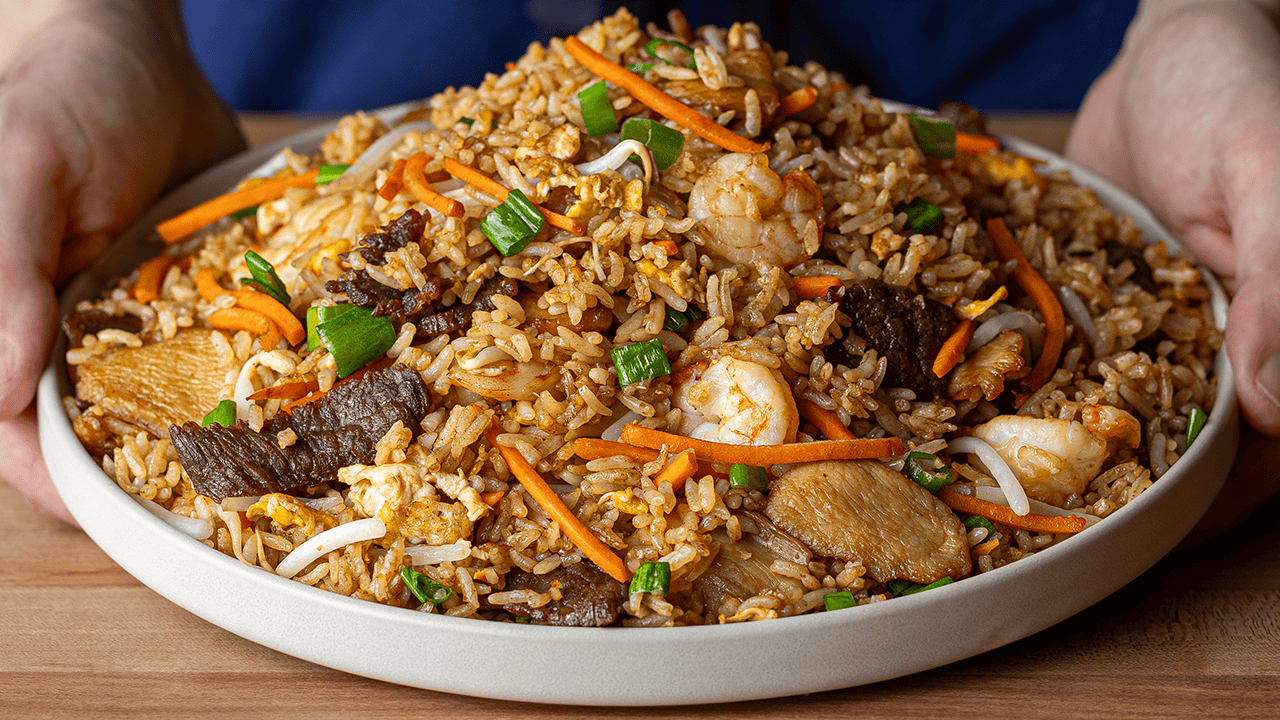
Most of the flavor in P.F. Chang's fried rice comes from one sauce, and it doesn't show up in any of the online copycat recipes I've found. I took the dish apart and kept testing until a batch came out tasting exactly like the restaurant version. This is the full recipe for every variation on the menu: chicken, beef, pork, shrimp, and vegetarian.
That sauce is a blend of chicken broth, sugar, soy sauce, mushroom dark soy, oyster sauce, and rice wine. The same one kept turning up every time I tore apart another dish on the menu, including the P.F. Chang's Mongolian Beef, so a batch in the fridge does double duty. Once you have it, the fried rice comes together in about three minutes. The part most home cooks skip is the protein prep. I run every meat through an alkaline soy marinade for up to 24 hours, then par-cook it with the Chinese restaurant technique of passing through the oil before the final stir-fry.
This post contains affiliate links, which means I may earn a small commission if you make a purchase. It doesn't cost you anything extra. Full disclosure.
Why This P.F. Chang's Fried Rice Recipe Works
- Alkaline soy marinade for fork-tender protein. Baking soda dissolved in water raises the pH of the marinade, which prevents the protein bands in the meat from tightening during high-heat cooking. This is the same technique most Chinese restaurants use for that soft, takeout-style texture.
- Proteins par-cooked by passing through the oil. Every meat gets deep-fried at 350°F before it goes into the rice. It's a standard Chinese restaurant technique: the protein cooks through, with lightly browned edges, before the final stir-fry.
- A dark sauce instead of straight soy sauce. The dark sauce combines chicken broth, sugar, soy sauce, mushroom dark soy, oyster sauce, and rice wine. It gives you the seasoning, color, and a touch of sweetness in a single sauce, so you don't need to add six different things to the wok separately.
- Mushroom dark soy sauce for color without extra salt. Dark soy sauce is used more for color than flavor. The mushroom version adds savoriness that regular dark soy doesn't have, and you only need a tablespoon.
- Fresh rice from the cooker. Most Chinese restaurants use rice straight from the cooker, not day-old. The only thing that matters is letting the rice cool to room temperature so the steam doesn't make the finished fried rice mushy.
Ingredients You'll Need
Long-grain white rice. It's long-grain white rice, the same type I use in my Chinese Takeout Fried Rice. When I asked around at a few locations, Riceland was the only brand name that came up more than once, but any American long-grain white rice works.
Lee Kum Kee Low Sodium Soy Sauce. The green-bottle low sodium is what got me closest in testing. It goes in both the alkaline marinade and the dark sauce. If you can't find the low sodium version, regular Lee Kum Kee or Kikkoman will work.
Lee Kum Kee Mushroom Dark Soy Sauce. This is added for color more than flavor. Regular dark soy sauce will work, but the mushroom version adds more savoriness. You can find it at most Asian grocery stores.
Lee Kum Kee Panda Brand Oyster Sauce. Panda Brand (the green bottle with no added MSG) is the one I landed on. All of Lee Kum Kee's oyster sauces are good, but if you can find their premium oyster sauce, the one with the bucolic scene of a mother and son harvesting gigantic oysters on the label, that's the one I'd go with.
Minor's Original Chicken Base. This paste is what I use for the chicken broth in the dark sauce. If you can't find Minor's, both Knorr and Lee Kum Kee Asian-style chicken bouillon powder will also work.
Michiu rice cooking wine. This is a Taiwanese-style rice wine that's very popular in Cantonese and Taiwanese kitchens. It's similar to the more common Shaoxing wine, and while there are subtle flavor differences, they're interchangeable for this recipe.
Baking soda. A small amount dissolved in water creates the alkaline environment for the protein marinade. The raised pH prevents proteins from tightening during high-heat cooking. If you've tried adding baking soda directly to meat and noticed an off-flavor, this brine method gives you the tenderizing effect without affecting the taste.
How to Make P.F. Chang's Fried Rice
This recipe has a few components that you'll want to prepare ahead of time. The dark sauce and alkaline soy marinade can both be made in advance and stored. The proteins need at least 2 hours in the marinade (I go the full 24), and they get deep-fried before the fried rice is assembled. Once everything is prepped, the actual stir-fry comes together in about 2-3 minutes.
Make the alkaline soy marinade. Add 1 cup of water to a large bowl, whisk in ½ teaspoon of baking soda until dissolved, then add ⅓ cup of soy sauce. You can store this covered in the fridge indefinitely.
Prep your protein. For chicken, beef, or pork, slice the meat into thin strips about ⅛ inch thick, cutting against the grain. For flank steak specifically, cut 1-inch strips with the grain first, then turn each strip perpendicular and slice across the grain at about a 30-40 degree angle. If you're having trouble getting thin slices, put the meat in the freezer for 20-30 minutes to firm it up. Soak the sliced meat in the alkaline soy marinade for at least 2 hours and up to 24 hours, refrigerated the entire time. For shrimp, pour the marinade over frozen peeled and deveined shrimp (41-50 count) and let them thaw in it, which takes about 30 minutes.
Cook the protein. For chicken, beef, or pork: remove the meat from the marinade and pat it dry with paper towels. Heat neutral oil to 350°F and deep-fry in small batches for about 2 minutes, agitating so the pieces don't clump together. You'll know it's ready when you see the edges start to brown. Remove to a paper towel-lined baking sheet. For shrimp: remove from the marinade, pat dry, then simmer in water (not deep-fry) for 1-2 minutes until cooked through. Let cool on paper towels. Cooked proteins can be stored in a covered container in the fridge for 2-3 days.
Make the dark sauce. Add ¼ cup of water and ½ teaspoon of chicken bouillon powder (or Minor's chicken base) to a small pot along with ¼ cup of sugar. Bring to a simmer over medium heat and whisk until the sugar and bouillon have dissolved. Kill the heat and add ¼ cup plus 2 tablespoons of soy sauce, 1 tablespoon of mushroom dark soy sauce, 1 tablespoon of oyster sauce, and 2 tablespoons of Michiu or Shaoxing wine. Whisk until combined. This stores in a covered container in the fridge for about a month.
Cook the fried rice. Heat neutral oil in a wok over medium-high heat. Crack in 1 egg and let the whites set around the edges, then stir until the egg is almost cooked through. Add 6 ounces of your prepared protein and stir until it's up to temp. If you're making a combination fried rice with all the meats, use about 2.5 ounces of each instead. Toss in 16 ounces of cooked rice and press it down with the back of your spatula, breaking up any large chunks while mixing in the egg and protein. Add ½ cup of bean sprouts, ½ cup of julienned carrots, and ⅓ cup of sliced green onions. Stir until the vegetables start to soften. Add ¼ teaspoon of white pepper and stir it in, then pour ¼ cup of the dark sauce around the edges of the wok. This lets the sauce hit the hot metal first, which caramelizes it slightly and gives the rice a toasty flavor. Work the sauce into the rice until you see no white chunks left, then kill the heat and adjust the final seasoning with salt.
For the vegetarian version: Follow the same process, but replace the protein and egg with rehydrated dried shiitake mushrooms (steep in boiling water for 30 minutes, then drain and slice), blanched broccoli florets, and snap peas (blanch both in boiling water for about 1 minute). For the dark sauce, swap the chicken bouillon for a vegetarian mushroom bouillon and use a vegetarian oyster sauce, which is typically mushroom-based. You can find both at most Asian grocery stores.
Tips for the Best P.F. Chang's Fried Rice
Cool your rice before stir-frying. If you're using a rice cooker, you can use rice straight from the cooker, but let it cool to room temperature first. Hot rice releases steam into the wok and makes the finished fried rice mushy. If you're cooking on the stovetop, spread the rice on a baking sheet after cooking, let it cool completely, then cover and refrigerate overnight. Either method works.
Pat your proteins dry after marinating. Excess marinade on the surface of the meat will cause the oil to splatter during deep-frying. A few pats with paper towels before frying makes a real difference.
Work in small batches when deep-frying. Adding too much meat to the oil at once drops the temperature, so the meat takes longer to cook and absorbs more oil. Small batches keep the oil at 350°F and cook more evenly.
Pour the dark sauce around the edges, not on top. Pouring the sauce along the rim of the wok lets it hit the hot metal and caramelize slightly before it mixes into the rice. You get a toasty flavor that you won't get from pouring it straight onto the rice.
Adjust the salt at the end. The dark sauce already has soy sauce, oyster sauce, and chicken broth in it, all of which are salty. But you'll almost always need about a teaspoon of extra salt to get the seasoning right.
Storage and Reheating
Fried rice keeps well in a covered container in the fridge for 3-4 days. The best reheating method is a hot wok or skillet with a small splash of oil. Microwave works in a pinch, but the texture won't be the same. The dark sauce stores in the fridge for about a month, and the alkaline soy marinade keeps in the fridge indefinitely.
Frequently Asked Questions
Can I use day-old rice for P.F. Chang's fried rice?
You can, but you don't need to. Most Chinese restaurants use fresh rice straight from the cooker. The important thing is letting the rice cool to room temperature before you stir-fry it. Day-old rice from the fridge works fine and some people prefer it because it's a bit drier, but it's not a requirement.
What's the difference between the dark sauce and regular soy sauce?
The dark sauce is a blend of chicken broth, sugar, soy sauce, mushroom dark soy sauce, oyster sauce, and rice wine. It gives you the seasoning, color, and sweetness in a single sauce. Straight soy sauce alone would only give you salt and color, and the finished rice would taste one-dimensional.
Can I skip the deep-frying step for the proteins?
You can stir-fry the marinated meat in a hot wok instead, but the texture will be different. Deep-frying at 350°F gives you lightly browned edges and the meat will cook more evenly. If you stir-fry, make sure the wok is very hot and work in small batches so the meat sears instead of steaming.
What can I substitute for Michiu rice wine?
Shaoxing cooking wine is the closest substitute and is more widely available. The flavor differences between the two are subtle, and you won't notice them in the finished dark sauce.
Is P.F. Chang's fried rice gluten-free?
The standard recipe uses soy sauce and oyster sauce, both of which typically contain wheat. Panda Brand oyster sauce (the green bottle) is the gluten-free one, but the soy sauce still contains wheat. For a fully gluten-free version, you would need to use tamari instead of soy sauce.
More P.F. Chang's Recipes
- P.F. Chang's Mongolian Beef
- P.F. Chang's Lettuce Wraps
- P.F. Chang's Beef with Broccoli
- P.F. Chang's Dynamite Shrimp
- P.F. Chang's Singapore Street Noodles
- P.F. Chang's Stir-Fried Eggplant
- P.F. Chang's Kung Pao Chicken
- P.F. Chang's Spicy Chicken
- P.F. Chang's Crispy Honey Chicken
More Chinese Takeout Recipes
- Chinese Takeout Crab Rangoon
- Chinese Takeout Egg Foo Young
- Chinese Takeout Egg Rolls
- Chinese Takeout Orange Chicken
- Chinese Takeout Kung Pao Chicken
- Chinese Takeout General Tso's Chicken
- Chinese Takeout Wonton Soup
- Chinese Takeout Hot and Sour Soup
- Chinese Takeout Egg Drop Soup
- Chinese Takeout Chow Mein
- Chinese Takeout Lo Mein
- Chinese Takeout Fried Rice
More Panda Express Recipes
More Din Tai Fung Recipes
More Fried Rice Recipes
Recipe
P.F. Chang's Fried Rice
Equipment
- 1 14-inch Mandarin Wok For stir-frying the fried rice
- 1 Made-In Carbon Steel Wok For deep-frying proteins
- 1 Made-In Saucier For making dark sauce
- 1 Wok Spider/Strainer For removing proteins from oil
- 1 Baking Sheet For cooling fried proteins
- 1 Wusthof Utility Knife For slicing proteins
- 1 Whisk For dark sauce
- 1 Mixing Bowls For marinade
- 1 Deli Containers For storing prepped components
Ingredients
Alkaline Soy Marinade
- 1 cup water
- ⅓ cup low sodium soy sauce
- ½ teaspoon baking soda
Dark Sauce
- ¼ cup water
- ½ teaspoon Minor's original chicken base Knorr or Lee Kum Kee Asian-style chicken bouillon also works
- ¼ cup white sugar
- 6 tablespoon low sodium soy sauce
- 1 tablespoon mushroom dark soy sauce
- 1 tablespoon oyster sauce
- 2 tablespoon cooking michiu
Passing Through the Oil
- 6 oz protein of choice chicken breast, flank steak, pork loin, or shrimp (41-50 count); see Instructions for prep. For 2 proteins use 3 oz each; for combination (3+) use 2.5 oz each.
- neutral oil
Fried Rice
- 1 tablespoon neutral oil
- 1 large egg
- 16 oz riceland long-grain white rice Riceland brand recommended; any American long-grain white rice works
- ½ cup mung bean sprouts
- ½ cup carrots julienne cut
- ⅓ cup scallions sliced
- ¼ teaspoon white pepper
- ¼ cup dark sauce see recipe above
- 1 teaspoon table salt to taste
Vegetarian Fried Rice (additional ingredients)
- 1 ½ tablespoon dried shiitake mushrooms steep in boiling water for 30 minutes, drain, and slice
- ½ cup broccoli florets remove thread; blanch with broccoli for 1 minute
- ½ cup snap peas use mushroom bouillon and vegetarian mushroom oyster sauce
Instructions
Make the Alkaline Soy Marinade
- Add 1 cup of water to a large bowl and whisk in ½ teaspoon of baking soda until dissolved.
- Add ⅓ cup of soy sauce and whisk to combine. The marinade can be stored covered in the fridge indefinitely.
Prep and Marinate the Protein
- For chicken, remove the tenderloin from a boneless, skinless breast. Cut the breast lengthwise into 1-inch strips, then make ⅛-inch cuts across the grain.
- For beef (flank steak), cut 1-inch strips with the grain first. Turn each strip perpendicular and slice at a 30-40 degree angle into ⅛-inch slices against the grain. If the beef is hard to slice thinly, freeze it for 20-30 minutes to firm it up.
- For pork, cut into 1-inch strips, then slice into ⅛-inch pieces against the grain, following the same process as the chicken.
- For shrimp (41-50 count, peeled and deveined), pour the alkaline soy marinade over the frozen shrimp and let them thaw in the marinade, about 30 minutes.
- Place the sliced chicken, beef, or pork in the alkaline soy marinade for at least 2 hours and up to 24 hours; I go the full 24. Refrigerate the entire time. Refrigerate the entire time.
Cook the Protein (Passing Through the Oil)
- Remove the marinated chicken, beef, or pork from the marinade and pat dry with paper towels.
- Heat several inches of neutral oil in a wok or deep fryer to 350°F. Working in small batches, add the meat to the oil and agitate so the pieces don't clump together. Fry for about 2 minutes, or until the edges start to brown.
- Remove the meat to a baking sheet lined with paper towels to drain. Cooked meat can be stored in a covered container in the fridge for 2-3 days.
- For shrimp: remove from the marinade and pat dry. Bring a large pot of water to a boil, lower to a simmer, and cook the shrimp for 1-2 minutes until done. Remove to paper towels and let cool completely.
Make the Dark Sauce
- Add ¼ cup of water and ½ teaspoon of chicken bouillon powder (or Minor's Chicken Base) to a small pot, along with ¼ cup of white sugar.
- Bring to a simmer over medium heat and whisk until the sugar and bouillon are dissolved.
- Remove from heat. Add 6 tablespoons of soy sauce, 1 tablespoon of mushroom dark soy sauce, 1 tablespoon of oyster sauce, and 2 tablespoons of Michiu or Shaoxing cooking wine. Whisk until combined.
- Let cool. The dark sauce can be stored in a covered container in the fridge for about 1 month.
Cook the Fried Rice
- Heat 1 tablespoon of neutral oil in a wok over medium-high heat.
- Crack in 1 egg and let the whites set around the edges, then stir until the egg is almost cooked through.
- Add 6 ounces of your prepared protein (or 2.5 ounces of each for combination fried rice) and stir until up to temp.
- Add 16 ounces of cooked rice. Press the rice down with the back of your spatula, breaking up any large chunks while mixing in the egg and protein.
- Toss in ½ cup of bean sprouts, ½ cup of julienned carrots, and ⅓ cup of sliced green onions. Stir until the vegetables start to soften.
- Add ¼ teaspoon of white pepper and stir into the rice. Pour ¼ cup of the dark sauce around the edges of the wok and work it into the rice until you see no white chunks left.
- Turn off the heat and adjust the final seasoning with salt, about 1 teaspoon.
Vegetarian Version
- Pour boiling water over 1½ tablespoons of dried shiitake mushrooms and steep for 30 minutes. Drain, squeeze out excess moisture, and slice.
- Bring a large pot of water to a boil. Add ½ cup of broccoli florets and ½ cup of snap peas (threads removed) and blanch for about 1 minute. Drain and set aside.
- Heat oil in a wok over medium-high heat. Add 16 ounces of cooked rice, ½ cup of bean sprouts, ½ cup of julienned carrots, and ⅓ cup of sliced green onions. Stir the rice, breaking up any large chunks.
- Add the shiitake mushrooms, broccoli, and snap peas. Stir them into the rice.
- Add ¼ teaspoon of white pepper and stir in. Pour ¼ cup of vegetarian dark sauce (made with mushroom bouillon and vegetarian oyster sauce) around the edges of the wok. Stir until no white chunks remain.
- Turn off the heat and adjust seasoning with salt.