P.F. Chang's Chicken Lettuce Wraps Recipe (No Hoisin)
If you've looked up a P.F. Chang's lettuce wraps recipe online, almost every version you'll find uses hoisin sauce. After enough test batches, I'm convinced the restaurant version has no hoisin in it at all. The flavor comes from a completely different sauce, and that one wrong ingredient is why most copycat recipes don't taste like the restaurant.
If you've tried making lettuce wraps at home and they tasted more like a stir-fry in a leaf than anything from the restaurant, the recipe you were following probably had the wrong sauce. The real flavor comes from a simple umami sauce made with oyster sauce, mushroom dark soy sauce, and Michiu cooking wine. Once you get that sauce right, the rest of the dish comes together in about two minutes.
This post contains affiliate links, which means I may earn a small commission if you make a purchase. It doesn't cost you anything extra. Full disclosure.
Why This Lettuce Wraps Recipe Works
- Umami sauce with oyster sauce and mushroom dark soy sauce, not hoisin. TThe savoriness comes from a sauce most online recipes get completely wrong. Hoisin is sweeter, thicker, and a totally different flavor.
- Rehydrated shiitake mushrooms in the chicken mixture. Almost every recipe online skips them, probably because the dark umami sauce makes them nearly invisible. Pull a finished wrap apart, though, and they're in there. They add a savoriness you can't replicate without them.
- Dehydrated minced garlic instead of fresh. I use it because it doesn't burn and stick in a hot wok the way fresh does, and it gives a smoother, more concentrated garlic flavor.
- Crispy rice sticks fried at 425-450°F for instant puffing. Lower temperatures cause the noodles to absorb oil and turn brown instead of puffing up white and crispy in just a few seconds.
- Every sauce and condiment from scratch. The special dipping sauce, house chili oil, and hot mustard sauce are all included so you can customize your lettuce wraps at home exactly like they do at the restaurant.
Ingredients You'll Need
This recipe has several components, but each one is straightforward on its own. Think of it as an assembly project where most of the prep work happens ahead of time and the actual cooking takes about two minutes.
Lee Kum Kee Panda Brand Oyster Sauce is the oyster sauce I use for the umami sauce that is closest to the restaurant version. It comes in a green bottle and is the gluten-free version with no added MSG. If you can find Lee Kum Kee's premium oyster sauce, the one with the mother-and-son serenely harvesting gargantuan oysters on the label, that's what I recommend for the best flavor.
Mushroom dark soy sauce adds the dark color to the chicken and contributes extra savoriness from the mushroom seasoning. You can use regular dark soy sauce as a substitute, but the mushroom version gives you an extra layer of flavor that regular dark soy doesn't have.
Michiu cooking wine is a Cantonese and Taiwanese style of rice wine, and it's the one I use for this recipe. You should be able to find it at most Asian grocery stores. If you can't track it down, Shaoxing cooking wine is essentially interchangeable.
Lee Kum Kee low sodium soy sauce in the green bottle is what I use for the special dipping sauce, but any Chinese light soy sauce will work.
Dried shiitake mushrooms need about 20-30 minutes of soaking in hot water before you can use them. After soaking, drain, squeeze out the excess water, cut off the tough stems, and roughly chop into small pieces.
Sliced water chestnuts are what give lettuce wraps their signature crunch. You'll find them in small cans at most grocery stores. Grab the ones labeled "sliced," drain them, and roughly chop into small pieces. If you can't find water chestnuts, cashews or peanuts can give you a similar texture.
Dehydrated minced garlic is the specific form I use. You'll find it in the spice aisle at most grocery stores. It needs 20-30 minutes of soaking in hot water and draining before you can use it. Once reconstituted, it keeps in the fridge for about a week.
Lee Kum Kee pure sesame oil is what I use as a finishing oil for its rich, nutty flavor. It goes in at the very end of cooking, around the rim of the wok, so the heat doesn't cook it out. Any toasted sesame oil will work here.
3 Ladies Brand rice vermicelli in the medium size is what I've consistently gotten the best results with for the crispy rice sticks. At most Asian grocery stores, you'll see these labeled as rice vermicelli, rice sticks, or mei fun. They're all variations of the same thing: thin dried rice noodles.
Ground chicken is the meat I use. You should be able to find it at most grocery stores. If your store doesn't carry it, ground turkey also works well and the flavor difference is minimal once the umami sauce is added.
For the chili oil, you'll need Sichuan chili flakes (sometimes labeled Sichuan chili powder) and dried Chinese black beans. The chili flakes should still have visible pieces of pepper in them, not a fine powder. The black beans are salted and dried black soybeans, not the kind you'd find in a Western grocery store. They should feel slightly soft when you pinch them, and they have a funky umami flavor that's hard to describe. They're the main ingredient in black bean sauce.
How to Make P.F. Chang's Lettuce Wraps
This looks like a lot of components, but the key is that almost everything gets prepped ahead of time. The chili oil needs at least an overnight rest, so start that a day before if you want it. The chicken mixture, sauces, and lettuce can all be prepped hours or even days in advance. When it's time to eat, the actual stir-fry takes about two minutes. If you've made my Chinese Takeout Fried Rice, you already know how much easier wok cooking is when everything is prepped and waiting.
1. Make the umami sauce. Add 1 tablespoon each of oyster sauce, Michiu cooking wine, and mushroom dark soy sauce to a small bowl, along with 1 tablespoon of white sugar and ¼ teaspoon of white pepper. Whisk until the sugar dissolves completely.
2. Make the special dipping sauce. Combine 5 teaspoons of white sugar, ¼ cup water, 3 tablespoons of light soy sauce, 1 tablespoon of unseasoned rice vinegar, 2 teaspoons of chili garlic sauce, and 2 teaspoons of Chinese hot mustard in a small pot over medium heat. Whisk until you reach a light simmer and all the sugar has dissolved. Remove from heat and let it cool completely before serving.
3. Cook the chicken mixture. Heat neutral oil in a large pan over medium heat. Add 8 ounces of ground chicken and break it up with a spatula or potato masher into very small pieces. You want tiny bits, not big chunks. About 2-3 minutes before the chicken is done, add 2 tablespoons of chopped water chestnuts and 2 tablespoons of chopped rehydrated shiitake mushrooms. Finish cooking, then let the mixture cool.
4. Prepare the lettuce. Start with whole iceberg lettuce. Remove the limp outer layers, cut the head in half, then quarter each half lengthwise. Remove the core and peel the outer layers off under cold running water, which makes separating whole leaves much easier. Soak the leaves in ice water for about 30 minutes, then dry them before serving.
5. Fry the crispy rice sticks. Heat frying oil to 425-450°F. Pull the rice noodle bunches apart and tear them into roughly 1-inch pieces. Drop a single noodle in first to test: it should puff up within 3-5 seconds. Fry in very small batches since they expand dramatically. Each batch takes just seconds. Drain on a baking sheet lined with paper towels.
6. The final stir-fry. Make sure everything is assembled and within arm's reach before you start, because this happens fast. Heat neutral oil in a wok over medium-high heat. Toss in 1 teaspoon of rehydrated garlic and cook for 10-15 seconds to flavor the oil. Add 2 tablespoons of chopped scallion whites and the prepared chicken mixture. Cook about 30 seconds until heated through. Add ¼ cup of the umami sauce and stir until the chicken has totally absorbed it, about 30-45 seconds. Add 1 teaspoon of sesame oil around the rim of the wok, stir it into the chicken, and kill the heat.
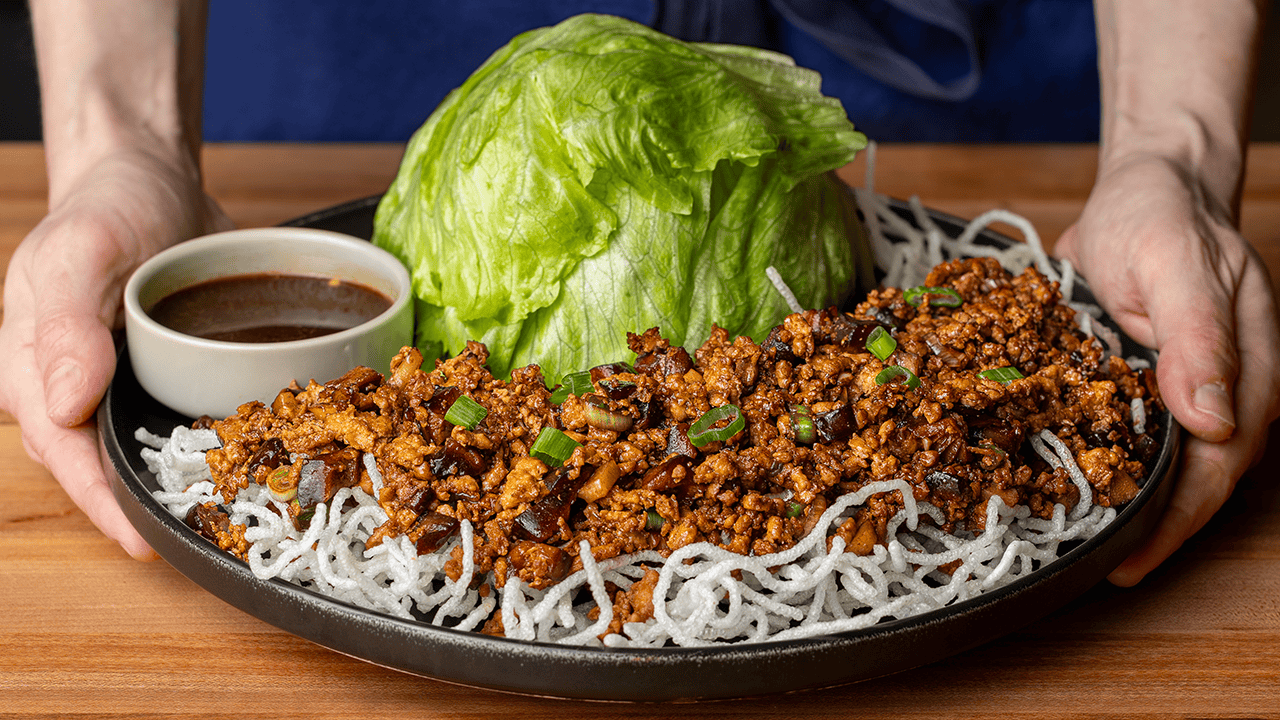
7. Serve. Arrange crispy rice sticks on a plate with iceberg lettuce cups and the special dipping sauce. Spoon the chicken mixture over the rice sticks. The rice sticks, chicken, and lettuce are all meant to be eaten together in each wrap.
Tips for the Best P.F. Chang's Lettuce Wraps
Prep everything in advance. The chicken mixture, umami sauce, special sauce, chili oil, and hot mustard can all be made days before you serve. The final stir-fry takes about two minutes. This is what makes lettuce wraps such a great dinner party appetizer: all the real work happens before anyone arrives. If you're planning a full P.F. Chang's dinner, the lettuce wraps work well as a starter before P.F. Chang's Mongolian Beef as the main course.
Use iceberg lettuce, not butter lettuce. Iceberg holds its shape when you load it up with warm chicken and sauce. Butter lettuce looks nicer, but it goes limp almost immediately once the hot filling hits it. The 30-minute ice water soak will give you much crunchier cups that hold their shape for the entire meal.
The rice sticks aren't optional. They're there for texture, not decoration. The crispy noodles on the bottom of each wrap create a contrast with the warm, savory chicken that makes the whole dish come together. P.F. Chang's specifically intends for all three elements to be eaten in every bite.
Keep the frying oil hot for the rice noodles. Frying at lower temperatures causes the noodles to absorb oil and turn an unappetizing shade of brown instead of puffing up white and crispy. Use a high smoke point oil, keep the temperature between 425-450°F, and use a thermometer to monitor it.
Make the chili oil and hot mustard for the P.F. Chang's tableside experience. At the restaurant, servers customize the special sauce tableside with chili oil or hot mustard depending on how each guest likes it. Having all three sauces available lets everyone adjust to their own heat preference.
Storage and Reheating
Almost every component stores well on its own, which is part of what makes this such a practical dish for entertaining.
The cooked chicken mixture keeps in a covered container in the fridge for 2-3 days. Reheat in a pan or wok with a little neutral oil to keep it from sticking.
The umami sauce and special dipping sauce both keep in covered containers in the fridge for up to a week.
The chili oil needs to sit uncovered at room temperature for at least 8 hours (preferably overnight) after cooking so the flavors can develop. Do not cover it during this resting period, because condensation will introduce moisture and ruin the oil. After straining through cheesecloth, keep it covered in the fridge and use it within 4 days, or freeze it in small portions.
The hot mustard sauce keeps covered in the fridge for up to a week. If you're using the powder version, keep in mind that the longer it sits after reconstituting, the hotter it gets.
The crispy rice sticks store in a covered container at room temperature for 2-3 days. Do not refrigerate them or they'll lose their crunch.
Prepped lettuce cups keep in large zip-top bags lined with paper towels in the fridge for 5-7 days.
The final stir-fry is the one component you should make fresh each time, but it only takes about two minutes.
Frequently Asked Questions
Can I use hoisin sauce instead of the umami sauce?
No, and this is the most common mistake in online lettuce wraps recipes. Nearly every recipe includes hoisin sauce, but the restaurant doesn't use it. Hoisin is sweeter and thicker, and it produces a distinctly different flavor than the combination of oyster sauce, mushroom dark soy, and Michiu cooking wine that makes up the actual umami sauce. If you use hoisin, you'll end up with something that tastes nothing like what you get at P.F. Chang's.
Can I use ground turkey instead of ground chicken?
Yes. Ground turkey works well, and the flavor difference is minimal once the umami sauce is added. Just make sure you break it into very small pieces the same way you would with the chicken.
What can I substitute for water chestnuts?
Cashews or other nuts soaked in water for about an hour can give you a similar crunch. Jicama cut into small dice is another option. The water chestnuts add a fresh, crunchy texture that's worth including if you can find them, but the dish will still work without them.
Why does P.F. Chang's use dehydrated garlic instead of fresh?
Dehydrated garlic doesn't burn and stick to the hot wok the way fresh garlic does, which matters when you're cooking at high heat for just seconds at a time. It also distributes more evenly through the dish once reconstituted, so you get a more consistent garlic flavor in every bite. You soak it in hot water for 20-30 minutes before using, and a prepared batch keeps in the fridge for about a week.
Do I have to make the chili oil and hot mustard sauce?
They're optional, but they're what takes the dish from good to restaurant-accurate. The special dipping sauce works well on its own, but at the restaurant, servers customize it tableside with chili oil or hot mustard depending on each guest's preference. The chili oil does need to rest uncovered overnight before straining, so make it the day before if you want to include it.
More P.F. Chang's Recipes
- P.F. Chang's Mongolian Beef
- P.F. Chang's Beef with Broccoli
- P.F. Chang's Dynamite Shrimp
- P.F. Chang's Singapore Street Noodles
- P.F. Chang's Stir-Fried Eggplant
- P.F. Chang's Fried Rice
- P.F. Chang's Kung Pao Chicken
- P.F. Chang's Spicy Chicken
- P.F. Chang's Crispy Honey Chicken
More Chinese Takeout Recipes
- Chinese Takeout Crab Rangoon
- Chinese Takeout Egg Foo Young
- Chinese Takeout Egg Rolls
- Chinese Takeout Orange Chicken
- Chinese Takeout Kung Pao Chicken
- Chinese Takeout General Tso's Chicken
- Chinese Takeout Wonton Soup
- Chinese Takeout Hot and Sour Soup
- Chinese Takeout Egg Drop Soup
- Chinese Takeout Chow Mein
- Chinese Takeout Lo Mein
- Chinese Takeout Fried Rice
More Panda Express Recipes
More Din Tai Fung Recipes
Recipe
P.F. Chang's Chicken Lettuce Wraps
Equipment
- 1 14-inch Mandarin Wok for the final stir-fry
- 1 Wok Spider/Strainer for removing rice sticks from oil
- 1 Whisk for mixing sauces
- 1 Hefty Storage Gallon Bags for storing prepped lettuce cups
- 1 Mixing Bowls for umami sauce and prep
- 1 Deli Containers for storing prepped components
- 1 Fine Mesh Strainer for straining chili oil
- 1 Baking Sheet for draining fried rice sticks
- 1 Infrared Thermometer for monitoring frying oil temperature
- 1 Potato Masher or breaking up ground chicken
- 1 Cheesecloth for straining chili oil
- 1 All-Clad Saute Pan for cooking the chicken mixture
- 1 All-Clad Sauce Pot for making sauces and chili oil
Ingredients
Umami Sauce
- 1 tablespoon oyster sauce Lee Kum Kee Panda Brand or Premium
- 1 tablespoon Michiu cooking wine
- 1 tablespoon mushroom dark soy sauce Lee Kum Kee
- 1 tablespoon white sugar
- ¼ teaspoon white pepper
Special Dipping Sauce
- 5 teaspoon white sugar
- ¼ cup water
- 3 tablespoon light soy sauce Lee Kum Kee low sodium
- 1 tablespoon unseasoned rice vinegar
- 2 teaspoon chili garlic sauce Huy Fong brand
- 2 teaspoon Chinese hot mustard
Ground Chicken Mix
- 8 oz ground chicken
- 2 tablespoon water chestnuts canned sliced, drained and roughly chopped
- 2 tablespoon rehydrated shiitake mushrooms from dried, soaked 20-30 min, stems removed, roughly chopped
Chili Oil (Optional)
- ½ cup vegetable oil
- 1 tablespoon sesame oil
- 4 teaspoon Sichuan chili flakes
- 1 tablespoon dried Chinese black beans rough chopped
- ½ teaspoon dehydrated minced garlic rehydrated
- 1 teaspoon ginger diced
Hot Mustard Sauce (Optional)
- 4 parts Chinese hot mustard
- 1 part white vinegar
- water to thin to desired consistency
Crispy Rice Sticks
- 1 package thin dried rice noodles 3 Ladies Brand medium rice vermicelli recommended
- vegetable oil high smoke point oil for frying at 425-450°F
Final Stir-Fry
- vegetable oil neutral frying oil
- 1 teaspoon dehydrated minced garlic reconstituted with water, 20-30 min soak
- 2 tablespoon scallion whites chopped
- 8 oz prepared ground chicken mix from recipe above
- ¼ cup umami sauce from recipe above
- 1 teaspoon sesame oil
Serving
- 1 head iceberg lettuce quartered, outer leaves separated, soaked in ice water 30 min
Instructions
Make the Umami Sauce
- Add oyster sauce, Michiu cooking wine, mushroom dark soy sauce, white sugar, and white pepper to a small bowl.
- Whisk until the sugar is totally dissolved. Transfer to a covered container. The umami sauce can be stored in the fridge for up to a week.
Make the Special Dipping Sauce
- Place white sugar, water, light soy sauce, unseasoned rice vinegar, chili garlic sauce, and Chinese hot mustard in a small pot over medium heat.
- Whisk until you reach a light simmer and all the sugar has totally dissolved. Remove from heat.
- Allow the sauce to cool to room temperature before using. The special sauce can be stored in a covered container in the fridge for up to a week.
Cook the Ground Chicken Mix
- Heat neutral oil in a large pan over medium heat.
- Add ground chicken and break it up with a spatula or potato masher. You want very small pieces of chicken, not big chunks.
- About 2-3 minutes before the chicken is done and you see very little liquid in the pan, add the chopped water chestnuts and chopped rehydrated shiitake mushrooms.
- Stir the mushrooms and chestnuts into the chicken and continue cooking until the chicken is done. Remove from pan, cool, and set aside. The chicken mix can be made 2-3 days in advance and kept refrigerated.
Make the Chili Oil (Optional)
- Combine neutral frying oil, sesame oil, Sichuan chili flakes, rough chopped dried Chinese black beans, rehydrated minced garlic, and diced ginger in a small pot over medium-low heat.
- Using a thermometer, bring the temperature to between 200-225°F. Maintain this temperature for 10 minutes, stirring occasionally. Do not allow the temperature to exceed 225°F.
- After 10 minutes, raise heat slightly to 250°F and cook for 5 more minutes, monitoring temperature and stirring occasionally. Do not exceed 250°F.
- Remove from heat and allow the oil to sit UNCOVERED for at least 8 hours, preferably overnight. Do not cover, as condensation can introduce moisture and ruin the oil.
- Strain the oil through a fine mesh strainer lined with cheesecloth. Keep it covered in the fridge and use it within 4 days, or freeze it in small portions.
Make the Hot Mustard Sauce (Optional)
- For prepared mustard: whisk 4 parts Chinese hot mustard with 1 part white vinegar. Thin with water to desired consistency. The sauce should be slightly runny.
- For powdered mustard: combine equal parts mustard powder with cold water and let sit for 15-30 minutes. Then whisk in vinegar (4 parts reconstituted mustard to 1 part vinegar). The longer the powder sits, the hotter it gets. Store covered in the fridge for up to a week.
Prepare the Crispy Rice Sticks
- Remove rice noodles from packaging, pull apart into small bunches, and cut or tear into approximately 1-inch pieces.
- Heat frying oil to 425-450°F. Test with 1-2 rice noodles to confirm they puff up within 3-5 seconds.
- Fry rice sticks in very small batches. They should puff up immediately and cook in just a few seconds. Flip to ensure both sides are cooked. Remove to a baking sheet lined with paper towels. Once cool, rice sticks can be stored covered at room temperature for 2-3 days.
Prepare the Lettuce
- Remove the limp outer layers from whole iceberg lettuce. Cut in half, then quarter each half lengthwise. Remove the core from each quarter.
- Peel the outer layers off under cold running water for easier separation of whole leaves. Only the outer leaves are needed; save the inner core for another use.
- Soak the lettuce cups in ice water for about 30 minutes to crisp them up. Dry before serving. Lettuce can be stored in large zip-top bags lined with paper towels in the fridge for 5-7 days.
Final Stir-Fry and Serving
- Have all components assembled and within reach. Heat neutral oil in a wok over medium-high heat.
- Add rehydrated garlic and sauté for 10-15 seconds to flavor the oil. Do not brown.
- Add chopped scallion whites and prepared chicken mix. Cook for about 30 seconds until heated through.
- Add the umami sauce and stir until the chicken has totally absorbed the sauce, about 30-45 seconds.
- Add sesame oil around the rim of the wok and stir into the chicken. Turn off the heat.
- Serve the chicken on a bed of crispy rice sticks, with iceberg lettuce cups and special dipping sauce. Optional: serve chili oil and hot mustard sauce for tableside customization.