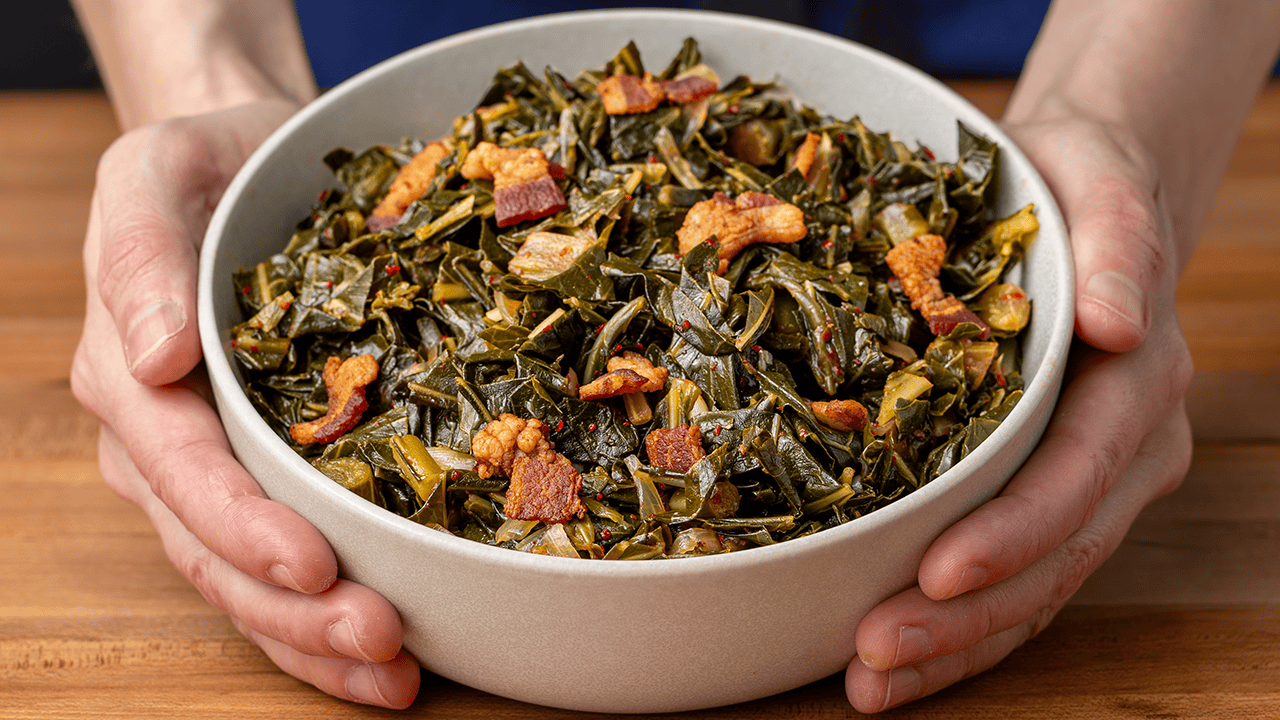
Asian Style Collard Greens Recipe
Most collard greens recipes follow the same formula: toss everything in a pot with some smoked meat, cover it with water, and simmer for a few hours. I wanted to know what would happen if I treated collard greens like an Asian dish and layered the seasoning in stages. So I developed a 3-step process: fry the greens in bacon fat to concentrate their flavor, braise them in Japanese dashi, and finish them with a Korean kimchi seasoning.
The idea started with a simple observation: dashi and traditional Southern pot liquor are trying to solve the same problem. Both are savory, smoky stocks meant to infuse vegetables with flavor. Dashi is made from kombu seaweed and smoked bonito flakes, and it's one of the most naturally umami-rich liquids you can make. Swapping it in as the braising liquid gives you that deep savory quality that normally takes hours of slow-simmering pork to develop, but with a lighter result that doesn't taste like ham hock.
This post contains affiliate links, which means I may earn a small commission if you make a purchase. It doesn't cost you anything extra. Full disclosure.
Why This Collard Greens Recipe Works
- Three-step layering (fry, braise, season) concentrates flavor at every stage instead of depending on a single long braise
- Japanese dashi as the braising liquid adds more natural umami than a traditional pork or ham hock stock, with a lighter result
- Korean kimchi base for the finish provides moderate heat and acidity in place of the crushed red pepper flakes you see in most recipes
- Frying in bacon fat first reduces the liquid in the greens and jump-starts tenderizing, so braising time drops to about an hour
- Pickled stems mean zero waste from a vegetable where most cooks throw away half the plant
Ingredients You'll Need
This recipe has three components: the braising liquid (dashi), the finishing seasoning (kimchi base), and the greens themselves.
Kombu. A type of dried seaweed that is extremely high in naturally occurring glutamates, which are the flavor molecules responsible for making food taste savory. You'll find it in bags at most Asian grocery stores.
Katsuobushi (bonito flakes). Salted and smoked fish flakes that work alongside the kombu to amplify the umami in the dashi. They're usually in the same aisle as the kombu. If you've made my Homemade Ramen from Scratch, you've already worked with both of these ingredients.
Hon-Dashi. If you don't want to make dashi from scratch, Hon-Dashi is a dehydrated version you mix with hot water. It's used in Japanese households far more often than homemade dashi, and it works perfectly here.
Gochugaru (Korean pepper flakes). This is the chili component of the kimchi seasoning. Despite looking like it should be extremely hot, gochugaru is actually quite mild, around a 2 out of 10 on the heat scale. It's the same Korean pepper I use in my Korean Street Toast, and it's a natural replacement for the crushed red pepper flakes in traditional collard green recipes.
Fish sauce. Adds a fermented depth of savoriness to the kimchi base that you can't get any other way. Only 1 tablespoon goes in, but you'll notice if it's missing.
Collard greens. You'll need about 4-5 bunches, or roughly 2 pounds of leaves. That sounds like a lot, but they wilt down dramatically during cooking. If you can find bunches with smaller leaves, those tend to be sweeter and more tender.
Bacon. Six ounces, thinly sliced. The rendered fat is what you'll fry the greens in, so the bacon is doing double duty as both flavoring and cooking fat. If pork isn't an option, start with 3 tablespoons of any neutral oil.
How to Make Asian Style Collard Greens
This recipe has four parts: the dashi (15 minutes), the kimchi base (10 minutes), the greens (about 1.5 hours), and optional pickled stems.
Make the Dashi
Add 6 cups of water and 45 grams of kombu to a pot. Heat on medium-high and bring it just to the point before it starts simmering. You do not want to actually simmer the kombu because it can make the broth bitter and slimy. As soon as you see small bubbles reaching the surface, pull out the kombu and kill the heat.
Add 45 grams of katsuobushi, cover the pot, and let it steep for about 10 minutes. Strain through a fine mesh strainer and set aside.
If you're using Hon-Dashi instead, follow the package directions to reconstitute it with hot water. No shame in it.
Make the Kimchi Base
Blend ½ cup sliced onion, 1 tablespoon chopped jalapeno, ¼ cup green onion whites, 1 tablespoon minced ginger, 5 cloves of garlic, 2 teaspoons of sugar, and 1½ tablespoons of gochugaru in a food processor until you have a fine paste.
Heat 2½ tablespoons of neutral oil in a small non-stick pan over medium heat. Add the paste and cook for a few minutes until everything is cooked through. Deglaze the pan with 1 tablespoon of fish sauce and stir it into the paste. Kill the heat, then add 1½ tablespoons of white vinegar and 1 tablespoon of light soy sauce. Mix until combined.
You can also buy pre-made kimchi base at most Asian grocery stores. It's in the refrigerated section near the other kimchi products, usually in small jars. The pre-made version actually tends to have bolder flavors, which works well with collard greens.
Prep the Greens
Remove the stems from each leaf. You can fold the leaf in half and slice down the stem with a knife, or use the rip-and-pull method: fold the leaves over, grab the bottom of the stem, pinch where the leaves meet the stem, and pull them off like a ripcord. Save the stems if you want to pickle them later.
Cut the leaves in half lengthwise, stack several together, roll them into a cigar shape, and slice crossways into small pieces.
Wash the greens in several changes of water. Collard greens grow close to the ground and tend to be sandy. Fill your sink, toss in the greens with a splash of white vinegar and some coarse salt, and rub the leaves together. Drain, refill, and repeat 2-3 more times. Use straight water for the last wash. Even pre-cut bagged greens labeled "triple washed" still need at least one more rinse.
Dry the greens in a salad spinner or blot on towels. Removing the extra water before cooking keeps the flavor concentrated instead of diluted.
Fry, Braise, and Season
Add 6 ounces of thinly sliced bacon to a cold pot and turn the heat to medium-low. Slowly render the fat out while crisping the bacon. This takes anywhere from 15 to 30 minutes depending on how thin the slices are. When the bacon is done to your liking, remove it with a slotted spoon and save it for garnish.
Turn the heat up to medium and add 1 thinly sliced yellow onion to the bacon fat. Cook until the onion turns translucent.
Add the greens in batches, stirring each handful until it wilts down enough to make room for the next one. Once all the greens are in, keep frying until they've given up most of their liquid. Pull the greens to the side periodically to check if liquid is still pooling at the bottom. When the liquid is mostly gone and you hear sizzling, add 4-5 cloves of thinly sliced garlic and stir them in.
Pour in 4 cups of the prepared dashi, bring to a light simmer, then turn the heat down to low or medium-low and cover. Braise for 1 to 2 hours. I usually go about an hour because the frying step has already started tenderizing the greens. Test a leaf. If it's still tough, put the lid back on and keep cooking.
When the greens are tender, kill the heat. Stir in ¼ cup of the kimchi base (start with less if you want it milder), 2 tablespoons of mirin, and 2 tablespoons of unseasoned rice vinegar. The mirin adds a little sweetness and the rice vinegar brightens everything with a mild acidity.
Taste and adjust with salt, ½ teaspoon at a time. I usually need somewhere between 2 and 4 teaspoons total, but go slowly because the kimchi base is already quite salty. Then add sugar, ¼ teaspoon at a time, until any lingering bitterness from the greens is gone. You won't taste actual sweetness. It just smooths things out.
Serve in a bowl, pour over the pot liquor, and top with the reserved crispy bacon.
Tips for the Best Collard Greens
Freeze your greens overnight before cooking. Some Southern grandmothers clean, wash, and dry their greens, then bag them and freeze them overnight before cooking. The freezing mimics the first frost and crystallizes the moisture inside the leaves, which reportedly makes the greens more tender and sweeter. You cook them right out of the freezer.
Add baking soda if the greens are still tough. If you've been braising for well over an hour and the leaves still have too much resistance, add about ¼ teaspoon of baking soda. It shifts the braising liquid toward alkaline, which helps break down the cell walls faster.
Don't throw away the stems. Slice them into small coins and saute them with the onion at the beginning (they need a head start since they're tougher than the leaves). Or pickle them using the bonus recipe in the card below.
Dry the greens before cooking. Most people overlook this step, but blotting or spinning the greens dry before they hit the pot prevents the concentrated bacon-fat flavor from getting washed out by extra water.
Storage and Reheating
Cooked collard greens store well in the fridge for 4-5 days in a sealed container with the pot liquor. They actually taste better the next day as the flavors continue melding. Reheat on the stovetop over medium-low heat. These also freeze well for up to 3 months. The pickled stems will keep in the fridge for about a month in a covered container.
Frequently Asked Questions
Can I use store-bought kimchi base instead of homemade?
Yes, and you might prefer it. Pre-made kimchi base is available in jars at most Asian grocery stores, in the refrigerated section near the other kimchi products. The flavors tend to be bolder than homemade, which works well with collard greens. Just start with a couple of tablespoons and adjust from there.
Can I make this without bacon?
Yes. Start with 2-3 tablespoons of any neutral oil instead of rendering bacon fat. You'll lose some of the smoky flavor, but the dashi and kimchi base carry enough on their own to make a good pot of greens.
What is dashi, and can I substitute something else?
Dashi is a Japanese stock made from kombu seaweed and smoked bonito flakes. It's lighter than chicken or pork stock but very high in naturally occurring glutamates, which is what makes food taste savory. If you've ever had miso soup, dashi is the base. You could substitute chicken stock, but the result will taste heavier and won't have the same clean umami quality.
How do I know when the greens are done braising?
Test a leaf. If it's still tough or chewy, cover the pot and keep going. The greens should be fully tender but not falling apart into mush. With the frying step before the braise, most batches are ready in about an hour, but older or larger leaves can take up to 2 hours.
More Asian Vegetable Sides
Recipe
Asian Style Collard Greens
Equipment
- 1 Dutch Oven For frying and braising the greens
- 1 All-Clad Sauce Pot For making the dashi
- 1 Small All-Clad Pot For pickling the stems
- 1 Deli Containers For storing pickled stems
- 1 Ladle For serving pot liquor
- 1 Chinois Strainer For straining dashi
- 1 food processor For making kimchi base
- 1 All-Clad Non-Stick Pan For cooking kimchi base
- 1 Vegetable Peelers For peeling stems
- 1 Spider Strainer For removing bacon
- 1 Salad Spinner For drying greens
- 1 Hefty Storage Gallon Bags For freezing greens (optional)
Ingredients
Dashi
- 6 cups water
- 45 g kombu dashi seaweed; available at Asian grocery stores
- 45 g katsuobushi bonito flakes
Kimchi Base
- ½ cup onion sliced
- 1 tablespoon jalapeno chopped
- ¼ cup green onion whites only, sliced
- 1 tablespoon ginger minced
- 5 cloves garlic rough chopped
- 2 teaspoon sugar
- 1 ½ tablespoon gochugaru Korean pepper flakes
- 2 ½ tablespoon vegetable oil
- 1 tablespoon fish sauce
- 1 ½ tablespoon white vinegar
- 1 tablespoon soy sauce light soy sauce
Collard Greens
- 2 lb collard greens 4-5 bunches, about 2 pounds of leaves
- 6 oz bacon thinly sliced
- 1 yellow onion thinly sliced
- 4 cloves garlic thinly sliced
- 4 cups dashi prepared above, or reconstituted Hon-Dashi
- ¼ cup kimchi base prepared above, or store-bought; start with less for milder heat
- 2 tablespoon mirin
- 2 tablespoon unseasoned rice vinegar
- 2 teaspoon kosher salt to taste; start with ½ teaspoon at a time, you may need up to 4 tsp
- ¼ teaspoon sugar to taste; add ¼ teaspoon at a time to counteract bitterness
Instructions
Make the Dashi
- Add 6 cups of water and 45 grams of kombu to a pot. Turn the heat on medium-high and bring it just to the point before simmering. Do not let it fully simmer or the broth can turn bitter and slimy.
- As soon as small bubbles start hitting the surface, remove the kombu and turn off the heat. Add 45 grams of katsuobushi, cover the pot, and allow it to steep for approximately 10 minutes.
- Strain the stock through a fine mesh strainer and set aside. If using Hon-Dashi instead, follow the package directions to reconstitute with hot water.
Make the Kimchi Base
- Add ½ cup sliced onion, 1 tablespoon chopped jalapeno, ¼ cup sliced green onion whites, 1 tablespoon minced ginger, 5 rough-chopped garlic cloves, 2 teaspoons sugar, and 1½ tablespoons gochugaru to a food processor. Blend on high until you have a fine paste.
- Heat 2½ tablespoons of vegetable oil in a small non-stick pan over medium heat. Add the chili paste and saute for a few minutes until cooked through.
- Deglaze the pan with 1 tablespoon of fish sauce and stir it into the paste. Kill the heat and add 1½ tablespoons of white vinegar and 1 tablespoon of soy sauce. Mix until well combined.
Prep the Greens
- Remove the stems from each leaf by folding the leaf in half and slicing down the stem, or by using the rip-and-pull method. Save the stems for pickling if desired.
- Cut the leaves in half lengthwise, stack several together, roll them into a cigar shape, and slice crossways into small pieces.
- Wash the greens in several changes of water. Add a splash of white vinegar and some coarse salt to the first wash and rub the leaves together. Drain, refill, and repeat 2-3 more times. Use straight water for the last wash.
- Dry the greens using a salad spinner or by blotting on towels. Removing excess water before cooking keeps the flavor concentrated.
Fry and Braise the Greens
- Add 6 ounces of thinly sliced bacon to a cold pot. Turn the heat on medium-low and slowly render the fat out while crisping the bacon, about 15-30 minutes. Remove the bacon with a slotted spoon and save for garnish.
- Turn the heat up to medium and add 1 thinly sliced yellow onion to the bacon fat. Sweat the onion until it turns translucent.
- Add the greens in batches, stirring each handful until it wilts down before adding the next. Continue frying until the greens have given up most of their liquid. When the liquid is mostly gone and you hear sizzling, add 4-5 cloves of thinly sliced garlic and stir in.
- Pour in 4 cups of dashi and bring to a light simmer. Turn the heat down to low or medium-low, cover, and braise for 1 to 2 hours. Test a leaf for tenderness. If still tough, continue cooking with the lid on.
Season and Finish
- Kill the heat and stir in ¼ cup of the kimchi base. Start with less if you prefer milder heat. Add 2 tablespoons of mirin and 2 tablespoons of unseasoned rice vinegar.
- Taste and adjust seasoning with kosher salt, ½ teaspoon at a time. You will likely need between 2 and 4 teaspoons total. The kimchi base is already quite salty, so go slowly.
- Add sugar ¼ teaspoon at a time until any lingering bitterness from the greens is gone. Serve in a bowl with the pot liquor poured over the greens and garnish with the reserved crispy bacon.
Pickled Stems (Optional)
- Cut off the thick woody ends of the stems and discard. Trim the tender stalks of any leaf remnants, peel them, and cut into 1-inch pieces.
- In a small pot, combine ½ cup apple cider vinegar, ½ cup water, 1 tablespoon sugar, 2 teaspoons salt, and your preferred aromatics such as garlic and jalapeno. Bring to a simmer.
- Add the stems and cook for about 1 minute. Kill the heat and let it come to room temperature. Transfer to a covered container and refrigerate overnight. Pickled stems will keep for about a month.