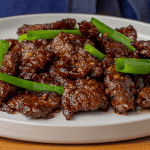
P.F. Chang's Mongolian Beef
A copycat of P.F. Chang's Mongolian Beef, tested until it matched what I got at the restaurant. This version uses a two-step meat preparation process: an alkaline soy marinade with baking soda for tenderizing, followed by egg white velveting with potato starch to keep the beef juicy during high-heat cooking. The beef gets passed through 350°F oil before a quick two-minute finishing stir-fry in the dark sauce. Adapted for a home kitchen wok or large skillet.
Servings 2 servings
Calories 500kcal
Equipment
- 1 14-inch Mandarin Wok for final stir-fry and optional oil-pass
- 1 Butane Burner for wok cooking
- 1 All-Clad Saucepan for dark sauce
- 1 Dutch Oven for passing through the oil (deep frying)
- 1 Deep Fry / Candy Thermometer for oil temperature
- 1 Wok Spider/Strainer for removing beef from oil
- 1 Wire Cooling Rack for draining fried beef
- 1 Baking Sheet under wire rack for draining
- 1 Misono Chef's Knife for slicing flank steak
- 1 Whisk for dark sauce
- 2 Mixing Bowls for marinating and velveting
- 3 Deli Containers for prepped ingredients
Ingredients
Dark Sauce
- ½ teaspoon Minor's Original Chicken Base
- ¼ cup white sugar
- ¼ cup water
- 6 tablespoon Lee Kum Kee Low Sodium Soy Sauce or Kikkoman
- 1 tablespoon Lee Kum Kee Mushroom Soy Sauce
- 1 tablespoon Lee Kum Kee Panda Brand Oyster Sauce or Lee Kum Kee premium
- 2 tablespoon Michiu rice cooking wine or Shaoxing
Alkaline Soy Marinade
- 1 cup water
- ½ teaspoon baking soda
- ⅓ cup Lee Kum Kee Low Sodium Soy Sauce Lee Kum Kee (green bottle) or Kikkoman
Flank Steak
- 12 oz flank steak sliced against the grain into ⅛-inch pieces
Egg White Velveting
- ½ egg white
- ⅛ teaspoon white pepper
- 1 tablespoon potato starch or cornstarch
- ½ teaspoon neutral oil vegetable canola or peanut
Passing Through the Oil
- neutral oil vegetable canola or peanut (enough to submerge beef)
Final Stir-Fry
- 1 teaspoon neutral oil
- 2 teaspoon dehydrated minced garlic reconstituted in hot water 20-30 min and drained
- ¼ cup dark sauce from above
- 1 tablespoon white sugar
- ½ teaspoon sesame oil toasted
- 1-2 oz green onion tops cut into 2-inch pieces
Instructions
Make the Dark Sauce
- Add ¼ cup of water, ½ teaspoon of Minor's Original Chicken Base, and ¼ cup of white sugar to a small saucepan.
- Bring to a simmer over medium heat and whisk until the sugar and chicken base are fully dissolved.
- Remove from heat. Add ¼ cup plus 2 tablespoons of soy sauce, 1 tablespoon of mushroom dark soy sauce, 1 tablespoon of oyster sauce, and 2 tablespoons of Michiu or Shaoxing rice cooking wine. Whisk until incorporated.
- Let the sauce cool. This can be stored covered in the refrigerator for up to 1 month.
Prepare and Slice the Flank Steak
- Identify the long muscle fibers running along the surface of the flank steak. Cut with the grain into 1.5-inch sections.
- Turn each section perpendicular to you. Angle your knife at about 30-40 degrees and slice against the grain into pieces about ⅛ inch thick. If the steak is difficult to slice thinly, freeze it for 20-30 minutes first.
Brine the Beef
- Combine 1 cup of water with ½ teaspoon of baking soda and stir until dissolved. Add ⅓ cup of soy sauce and stir to incorporate.
- Submerge the sliced flank steak in the alkaline soy marinade. A full 24 hours is the target, and the longer you go, the more tender and flavorful the beef gets. Keep it refrigerated the entire time.
Velvet the Beef
- Remove the beef from the marinade and pat dry thoroughly with paper towels. Drying the meat helps the velveting batter adhere properly.
- Add ½ egg white and ⅛ teaspoon of white pepper to the beef. Stir until evenly coated. Add 1 tablespoon of potato starch and gently massage it into the slices until all the beef is covered.
- Add ½ teaspoon of neutral oil and stir to distribute. Refrigerate for at least 30 minutes or up to overnight before cooking.
Pass Through the Oil
- Heat neutral frying oil to 350°F (175°C) in a Dutch oven or deep pot.
- Working in batches, add the velveted beef slices and immediately agitate so they don't clump together. Fry for 60-90 seconds, until the edges are browned but the centers remain tender.
- Remove the beef to a wire rack set over a baking sheet to drain. Set aside until ready for the final stir-fry.
Final Stir-Fry
- Heat 1 teaspoon of neutral oil in a wok over medium-high heat. Add 2 teaspoon of reconstituted dehydrated garlic and fry for 10-15 seconds. Do not let the garlic brown.
- Add ¼ cup of the prepared dark sauce and 1 tablespoon of white sugar. Stir until the sugar dissolves and bring to a boil. Let the sauce reduce and thicken slightly, about 30 seconds.
- Add the fried flank steak and toss in the sauce for 30-60 seconds, allowing the sauce to coat the beef and reduce further.
- Add ½ teaspoon of sesame oil and 1-2 ounces of green onion tops cut into 2-inch pieces. Toss everything together for 15-20 seconds, then remove from heat and serve immediately.
Video
Notes
Soy Sauce: Lee Kum Kee low-sodium soy sauce (green bottle) got me closest. Kikkoman works just as well. Lee Kum Kee has a saltier, more layered flavor. Kikkoman is slightly sweeter and more straightforward. Either works for both the marinade and the dark sauce.
Oyster Sauce: Lee Kum Kee Panda brand (green bottle, gluten-free) is what I use here. Lee Kum Kee's premium oyster sauce has a richer flavor and is the recommended upgrade.
Chicken Base: Minor's Original Chicken Base, a concentrated paste that comes in a tub, made the richest sauce in my testing. If you can't find it, Knorr or Lee Kum Kee chicken broth powder are the closest substitutes..
Rice Wine: Michiu, a Cantonese/Taiwanese rice cooking wine, is what I use. Shaoxing wine is interchangeable. Avoid Western "cooking wines" from the vinegar aisle, which contain added salt and preservatives.
Baking Soda Method: The baking soda is dissolved in water to create an alkaline brine, not rubbed directly on the meat. This method provides the same tenderizing effect without the off-flavors some people experience with direct application.
Starch Choice: Potato starch and cornstarch produce indistinguishable results in the velveting. Egg white alone (no starch) produces considerably tougher meat. Use whichever starch you have available.
Dehydrated Garlic: Reconstitute dehydrated minced garlic by covering with hot water for 20-30 minutes, then drain well. It handles high heat better than fresh garlic and delivers a smoother, more even flavor. Store reconstituted garlic in the fridge for up to 1 week.
Storage: The dark sauce stores covered in the refrigerator for up to 1 month. Finished Mongolian beef stores in an airtight container in the fridge for 3-4 days. Reheat in a wok or skillet over high heat to re-crisp the edges.
Nutrition
Calories: 500kcal