Japanese Curry Fries Recipe
These Japanese curry fries start with the classic English chips and curry sauce, then swap in real Japanese ingredients for the toppings and seasoning. I tested every available brand of frozen fry at my grocery store and four different cooking methods to find what stays crunchiest under a wet curry sauce.
I used to work at a Japanese izakaya in downtown Houston, and we served a version of these fries that was one of the most popular items on the menu. That's where I learned the topping combinations, the sauce ratios, and the one prep step that keeps the curry from turning into a soggy mess.
This post contains affiliate links, which means I may earn a small commission if you make a purchase. It doesn't cost you anything extra. Full disclosure.
Ingredients You'll Need
Frozen French Fries
I tested every available brand of frozen fries at my grocery store for this recipe, and Lamb Weston was the clear winner. They're well seasoned, they have the right amount of crunch, and they stay crispy in the curry sauce longer than any other brand I tried. If you can't find Lamb Weston, grab Ore-Ida. They're almost as good, just not seasoned quite as well.
And if you're wondering why I'm recommending frozen fries over hand-cut: every restaurant I've ever worked in used frozen fries. Thomas Keller uses frozen fries at Bouchon for the same reasons. To make great fries from scratch, you either blanch and cool them or fry them multiple times, and your house ends up smelling like an oil refinery for a week. For a loaded fry dish like this, frozen is the right call.
S&B Golden Curry
S&B is the most widely used brand of Japanese curry and the one I recommend. It comes in blocks of curry roux that you reconstitute with a liquid. There are four heat levels (mild, medium hot, hot, and extra hot), but they're all mild. The heat is almost timid.
If you prefer a sweeter curry sauce, look for Vermont Curry. It's not actually from Vermont. It's Japanese, but it includes sugar and fruit in the ingredients, which gives it a sweeter flavor with a bit of fruitiness.
Bonito Flakes
These are made from salted and smoked bonito or skipjack tuna. They have a delicate, smoky flavor. The best way I can describe it: fish bacon. If you've ever made dashi from scratch (it's one of the base stocks used in homemade ramen), you're familiar with katsuobushi, which is the same thing in larger flakes. Look for the finely shredded variety for this recipe.
Kizami Nori
Finely shredded strips of dried seaweed. Same material they wrap sushi in (nori), just cut into superfine strips. Adds a subtle oceanic quality and some visual contrast.
Shichimi Togarashi (optional, for spicy fries)
Japanese 7-spice blend. It typically includes chili pepper, orange peel, sesame seeds, Japanese sansho pepper, and seaweed. Fairly mild with a subtle citrus heat. You'll often find it labeled as "Japanese 7 Spice" in Western grocery stores. If you want moderately spicy fries, this is what I'd use.
Ichimi Togarashi (optional, for very spicy fries)
Same chili pepper as shichimi, but without any of the other spices. Just straight ground chili. This is about as hot as it gets in Japanese cuisine, and it's a little less intense than cayenne. Use it sparingly because you can overdo it fast.
Aonori (optional, for non-spicy fries)
Ground seaweed used as a seasoning in Japanese cooking. This gives the fries a boost of oceanic umami without adding any heat at all. If you're making these for someone who can't handle spice, this is the move.
How to Make Japanese Curry Fries
1. Cook the fries. Preheat your oven to 425°F. Spread the frozen fries on a wire rack set over a baking sheet in a single layer. This is the most important step for crunch. The wire rack lifts the fries off the pan and lets hot air circulate around them from every side. Bake according to the package instructions, plus an extra 2-4 minutes. That extra time produces a fry that will stay crispy in the sauce instead of going soft in two minutes.
If you have an air fryer, use it. In all my testing, the air fryer produced the crispiest fries outside of deep-frying. Add a few extra minutes past the package instructions and you'll get the crunchiest fries possible without a fryer.
2. Chop the curry roux. While the fries are baking, chop 2 blocks of S&B Golden Curry into small pieces. This is how you avoid the most common problem people have with Japanese curry: chunks of undissolved roux floating around in the sauce. Chopping them first ensures everything dissolves completely.
3. Make the curry sauce. Bring 1½ cups of liquid to a simmer in a saucepan. Stir in the chopped curry roux and keep stirring until the blocks are completely dissolved. Simmer for a couple of minutes until you've reached your desired consistency. For the liquid, you have three options: water gives you the most curry-forward flavor, chicken stock adds a savory quality I think makes it the best version, and beef stock turns it into something closer to a traditional British gravy with curry undertones.
4. Season the fries (optional). As soon as the fries come out of the oven, toss them in your seasoning of choice. Shichimi togarashi for moderate heat, ichimi togarashi if you want real spice, or aonori for a seaweed umami without any heat. Or leave them plain. Before you reach for the salt, try the fries unsalted first. Most frozen fries are already seasoned, and the curry sauce is quite salty on its own. The line between properly seasoned and too salty with this dish is a thin one.
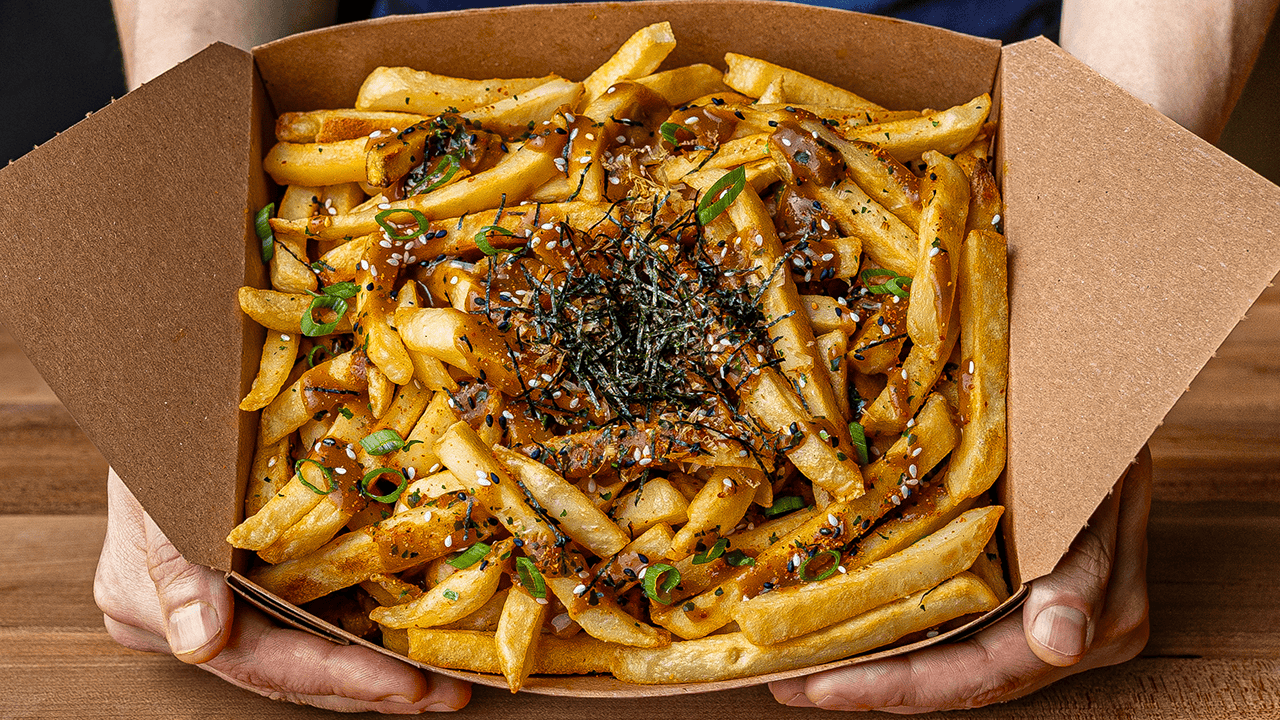
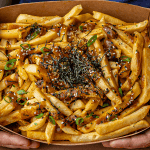
5. Assemble. Pour the curry sauce over the fries, making sure to get decent coverage. Top with white and black sesame seeds, thinly sliced scallion, finely shredded bonito flakes, and kizami nori. Serve immediately.
Tips for the Best Japanese Curry Fries
Don't pile the fries too high. You want the curry sauce to reach most of the fries, not just the top layer. A shallow, even layer works better than a tall pile where the bottom fries end up dry and the top fries are swimming.
The 62-degree egg upgrade. At the izakaya where I worked, we served these with a 62°C sous vide egg. Cook the eggs at 62°C (144°F) for at least an hour, crack them onto a slotted spoon to drain the excess liquid, then drop the soft white and yolk into a ramekin of curry sauce with a sprinkle of shichimi togarashi. It makes a rich dipping sauce that takes this dish up a level. You need a sous vide machine for this, but if you have one, it's worth trying.
The curry sauce keeps well. Make it ahead and store it in the fridge for a few days. It reheats in a saucepan in about two minutes. The fries need to be made fresh, though. Leftover fries don't hold up.
Try different liquids in the curry. The same curry roux tastes different depending on what liquid you use. Water gives the purest curry flavor. Chicken stock makes it more savory and is what I use at home. Beef stock turns it into something closer to a traditional British chips-and-gravy with curry undertones. All three are worth trying to find your preference.
Frequently Asked Questions
Can I use a different brand of curry roux?
S&B Golden Curry is the most widely available and the one I use, but Vermont Curry works just as well if you prefer a sweeter sauce. Most Asian grocery stores carry variety packs that include multiple brands and heat levels, which is a good way to try them all without committing to a full box.
Do I have to use frozen fries?
You don't have to, but I'd recommend it. Making great fries from scratch requires either blanching and cooling or multiple rounds of frying, and for a loaded fry dish where the toppings are the star, the extra effort isn't worth it. Frozen fries have already been par-cooked and crisp up in the oven with no extra work. Every restaurant I've ever worked in used frozen fries for the same reason.
What if I can't find the Japanese toppings?
The curry fries are good with just the sauce and some sliced scallions. The bonito, nori, and sesame seeds add a lot but aren't required. For the togarashi, chili powder is a reasonable substitute. If you're in Texas, Tajin is a decent stand-in for shichimi togarashi since it's also a citrus-chili blend.
Is Japanese curry actually spicy?
Not really. Even the "extra hot" variety of S&B Golden Curry is mild by most standards. If you want heat, add togarashi to the fries themselves rather than relying on the curry sauce.
More Japanese Recipes
More Benihana Recipes
- Benihana Fried Rice
- Benihana Garlic Butter
- Benihana Hibachi Onion Soup
- Benihana Yakisoba
- Benihana Teriyaki Sauce
- Benihana Teriyaki Chicken
- Benihana Teriyaki Steak
- Benihana Spicy Teriyaki
- Hibachi Chicken
- Hibachi Steak
- Hibachi Shrimp
- Hibachi Vegetables
- Benihana Yum Yum Sauce
- Benihana Spicy Sauce
- Benihana Diablo Sauce
- Benihana Ginger Salad Dressing
- Benihana Mustard Dipping Sauce
- Benihana Ginger Dipping Sauce
- Banana Tempura
- Every Benihana Recipe (Complete Guide)
More Teriyaki Recipes
More Asian Street Food
Recipe
Japanese Curry Fries
Equipment
Ingredients
Fries
- 1 bag frozen french fries Lamb Weston recommended; Ore-Ida as backup
Curry Sauce
- 2 blocks Japanese curry roux S&B Golden Curry, any heat level; chop into small pieces before adding to liquid
- 1 ½ cups water chicken stock, or beef stock
Toppings
- 2 scallions Thinly sliced
- 1 teaspoon white sesame seeds
- 1 teaspoon black sesame seeds
- 2 tablespoon bonito flakes Use finely shredded variety
- 1 tablespoon kizami nori
Instructions
Cook the Fries
- Preheat oven to 425°F.
- Place a wire rack on a baking sheet. Spread frozen fries in a single layer on the wire rack.
- Bake according to package instructions, plus an extra 2-4 minutes for extra crispiness.
Make the Curry Sauce
- Finely chop the curry roux blocks into small pieces.
- Bring 1½ cups of liquid to a simmer in a saucepan.
- Stir in the chopped curry roux. Continue stirring until completely dissolved. Simmer for 2-3 minutes until desired consistency is reached.
Assemble
- Transfer fries to a serving bowl or plate.
- Pour curry sauce over the fries, making sure to get even coverage.
- Top with white and black sesame seeds, sliced scallions, bonito flakes, and kizami nori. Serve immediately.