Homemade Ramen from Scratch (Budget Recipe)
You can make a world-class bowl of ramen at home using ingredients from any grocery store. I spent weeks testing this homemade ramen recipe, and the techniques that separated the good batches from the great ones had nothing to do with specialty Japanese imports. They were details that most ramen recipes don't bother explaining.
The biggest one is a concept called peak extraction time. Every ingredient in a broth reaches maximum flavor at a different rate: pork takes about 6 hours, chicken takes 3-4, vegetables take about 1. Throwing everything in the pot at once means your vegetables are mush before the pork is finished. Staggering each ingredient so it finishes at its peak made the single biggest difference in the final broth.
This post contains affiliate links, which means I may earn a small commission if you make a purchase. It doesn't cost you anything extra. Full disclosure.
Why This Homemade Ramen Recipe Works
- Filtered spring water instead of tap water. A broth is 99.9% water. Dissolved minerals in tap water mute the flavors you spent hours extracting. Spring water costs about a dollar a jug and it made a bigger difference than any specialty ingredient.
- Each ingredient added at its peak extraction time. The pork goes in first, the chicken joins 2 hours later, and the aromatics and bacon go in for just the last hour. The whole broth finishes at 6 hours with every ingredient at maximum flavor.
- Bacon as a substitute for katsuobushi. Traditional ramen broths use katsuobushi (smoked dried fish) for smokey, salty umami. Bacon gives you a similar effect using something any grocery store carries.
- Regular pasta turned into ramen noodles with baking soda. Boiling DeCecco thin spaghetti or angel hair with a tablespoon of baking soda per quart of water raises the pH, mimicking the alkaline mineral water that gives ramen noodles their chew and yellow color. Gets you about 80% of the way there with zero specialty ingredients.
- Scallion aroma oil. Fat carries certain aromatic flavors better than broth can on its own, which is why ramen shops add a flavored oil to every bowl. A simple scallion oil takes about 15 minutes, stores for 6 months, and adds a layer of flavor (plus a glossy look) that the broth alone can't deliver.
Ingredients You'll Need
This recipe has several components: the broth, the tare (seasoning), the noodles, the aroma oil, and the toppings. Each one is straightforward on its own, and most can be made days ahead of time.
For the broth: You need pork bones, chicken wings, and chicken feet. Chicken feet are what give the broth its rich, silky texture because they're loaded with collagen. If your store doesn't carry them, the broth will still taste good, it just won't have the same mouthfeel. The aromatics are standard: onion, carrot, scallions, mushrooms, garlic, and ginger. Mushrooms and bacon (4 slices) are both there for umami. The bacon specifically is our workaround for katsuobushi, giving the broth a similar smokey, salty quality.
For the tare: Kikkoman soy sauce is the base. If you can find the Shoyu version at your grocery store, even better, but regular Kikkoman soy sauce works well. The rest is sake, rice vinegar, a small amount of sugar, kosher salt, and MSG. If you're not comfortable with MSG, just increase the salt slightly. Most ramen shops use it, for what it's worth. Accent brand seasoning salt is MSG.
For the noodles: Grab a box of DeCecco thin spaghetti or angel hair pasta and some baking soda. That's it. The baking soda makes your boiling water alkaline, which transforms regular wheat pasta into something close to actual ramen noodles.
For the aroma oil: Neutral vegetable oil and the white parts from two bunches of green onions. The green parts become your curly scallion topping, so nothing goes to waste.
For the egg marinade: Soy sauce, sake, water, and a little sugar. The eggs are just standard large eggs from any grocery store.
For the pork: A 3-pound pork shoulder, kosher salt, and sugar. Pork belly is the traditional cut for ramen, but pork shoulder makes a really good carnitas-style shredded pork that works well as a topping. It gets a simple salt-sugar cure, then roasts low and slow for 6 hours until it shreds apart with a fork.
How to Make Homemade Ramen
This is a multi-day project. The broth takes about 6 hours of simmering, the pork shoulder needs an overnight cure plus 6 hours of roasting, and the eggs need at least 6 hours in the marinade. Plan for 2-3 days of prep before your first bowl. Once all the components are ready, assembly takes about 10 minutes.
Make the broth. Start by blanching the pork bones in boiling water for 10 minutes, skimming the scum as it rises. Drain, rinse the bones under cold water, and set aside. Do the same with the chicken wings and feet, but only for 5 minutes. After blanching, tear each wing at the joint into 2-3 pieces. Clip the toenails off the chicken feet and cut an X into the palm of each foot. This exposes more surface area so more collagen gets into the broth.
Place the pork bones in a large pot with 6 liters of filtered spring water. Bring it up to about 190°F and hold it there for 2 hours. You want just a random bubble popping up here and there. Never a rolling boil, or the broth goes cloudy. After 2 hours, add the chicken wings and feet, bring it back to 190°F, and set a timer for 3 more hours. Keep skimming any scum that rises to the surface.
In the last hour (6 hours total), add the roughly chopped onion, carrot, scallions, mushrooms, garlic, ginger, and bacon. After that final hour, strain through a chinois or cheesecloth-lined strainer. Cool the broth as quickly as possible. I set the pot in a large bowl filled with ice and stir until it's cool, then refrigerate overnight.
The next day, scrape the solidified fat off the top. If the broth underneath looks like jello, you nailed it. That's all the gelatin from the collagen, and it gives the final soup a rich, silky texture.
Make the tare. Combine soy sauce, sake, rice vinegar, sugar, kosher salt, and MSG in a small pot. Bring to a boil, immediately kill the heat, and whisk until everything dissolves. Taste it. You want it to be very salty, almost aggressively so, but to still taste good. The tare is the only seasoning for the broth and noodles, so it needs to be concentrated. Adjust salt to your preference. Stores in the fridge indefinitely.
Make the noodles. Bring a few quarts of water to a boil. Add salt for seasoning, then about 1 tablespoon of baking soda per quart of water. Drop in the pasta and cook for about 2 minutes longer than the package directions. Fair warning: the water will foam up from the baking soda and you'll quickly have a situation on your hands. Lower the heat and stir the foam back down. The result is a noodle that's chewier than regular pasta with a slight yellow tint. Better than any dried ramen noodle on the shelf.
Make the aroma oil. Add 1 cup of vegetable oil and the white sections from 2 bunches of scallions to a small pot. Cook over medium heat until the scallions turn golden brown, about 10-20 minutes. Strain into a container. Keeps in the fridge for about 6 months.
Make the soy-marinated eggs. Mix 1 cup soy sauce, 1 cup sake, 1 cup water, and 1 tablespoon plus 1 teaspoon sugar in a small pot. Boil for 30 seconds, kill the heat, stir to dissolve the sugar, and cool completely. For the eggs, bring water to a boil and prepare an ice bath. Use a bent paperclip to poke a small hole in the bottom of each egg. This lets air escape so the egg holds a more uniform shape and peels easier. Lower eggs into boiling water for exactly 7 minutes, stirring gently for the first minute to center the yolks. Transfer to the ice bath, then peel under water. Submerge the peeled eggs in the cooled marinade for 6-24 hours. After 24 hours they start getting too salty.
Make the pork. Mix 2 tablespoons each of kosher salt and sugar. Rub all over a 3-pound pork shoulder, cover, and refrigerate for 6-18 hours. Discard the accumulated liquid, place on a baking sheet, and roast uncovered at 250°F for 6 hours, basting with rendered fat every 2 hours. Shred with two forks when done.
Make the curly scallions. Slice the reserved green parts of the scallions in half lengthwise, then slice as thin as you can. Drop into a bowl of ice water for 10-15 minutes and they'll curl up. Dry on a paper towel before storing in a container in the fridge for up to 3 days.
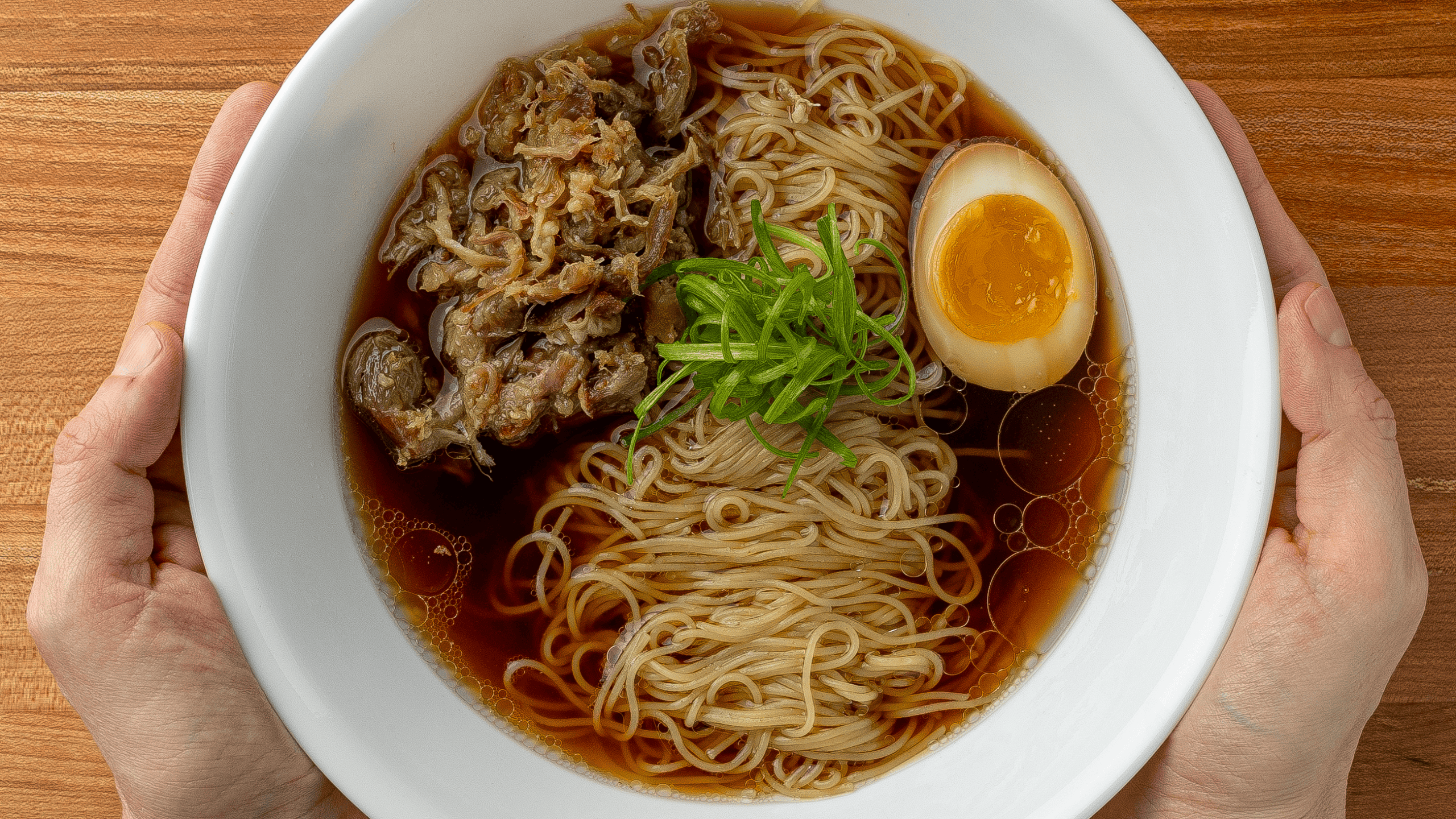
Assemble the bowl. Warm a bowl in the oven on the lowest setting. Boil your noodles and heat your broth. In the warm bowl: 2 tablespoons tare, 1 tablespoon scallion aroma oil, 1 ¼ cups hot chintan broth. Add about 5 ½ ounces of alkaline noodles, a handful of shredded pork, one halved soy-marinated egg, and a small bunch of curly scallions.
Tips for the Best Homemade Ramen
Start with filtered spring water. It costs about a dollar a jug at most grocery stores. Tap water works, but dissolved minerals mute the flavors you spent 6 hours extracting. For the price of three jugs, it's the biggest improvement for the least money in the whole recipe.
Keep the broth below a boil the entire time. Around 190°F is the target. A few lazy bubbles rising to the surface every few seconds is what you're looking for. If the broth hits a rolling boil, the fats emulsify into the liquid and your clear chintan broth goes cloudy. No thermometer? Just keep the heat low enough that you only see a random bubble pop up here and there.
Blanch and rinse the bones before starting the broth. This removes myoglobin, the red protein in blood, that would otherwise cloud the broth and leave a slightly metallic taste. Ten minutes for pork, five for chicken.
Tear the wings apart and cut the chicken feet. More exposed surface area means more collagen gets into the broth. That collagen converts to gelatin, which is what gives the finished soup its silky texture. If the broth sets up like jello when you refrigerate it, you got the most out of your bones.
Always make more eggs than you need. There's always going to be one that comes out looking terrible. Make 2-3 extra and keep the best ones for the bowl.
Store leftover broth as a concentrate. If you don't have freezer space for a full batch, boil the strained broth until it reduces by half. Freeze the concentrate in smaller containers. When you want ramen, heat up equal parts concentrate and water. Same flavor, half the storage space.
Storage and Reheating
Broth: 3-5 days in the fridge, up to 3 months in the freezer. For the concentrate method, reduce by half before freezing and reconstitute with equal parts water. The same broth-making principles here work for other soups, too, like wonton soup.
Tare: Stores indefinitely in the fridge. The high salt content preserves it.
Aroma oil: About 6 months in the fridge.
Soy-marinated eggs: Up to a week in the fridge after removing from the marinade (3-5 days is ideal). Don't leave them in the marinade past 24 hours.
Shredded pork: Up to 3 days in the fridge. Mix in some of the rendered fat before storing to keep the meat from drying out.
Noodles: Cook fresh each time. Leftover cooked noodles absorb liquid and lose their texture.
Frequently Asked Questions
Can you make ramen noodles from regular pasta?
You can get about 80% of the way there. Adding baking soda to the boiling water raises the pH, which mimics the alkaline mineral water (kansui) used in traditional ramen noodle dough. The pasta comes out chewier than normal and takes on a slight yellow color. DeCecco brand thin spaghetti or angel hair works well for this. It won't be identical to fresh ramen noodles, but it's better than any dried ramen noodle you'll find at the grocery store.
What is tare and why do I need it?
Tare is a concentrated seasoning liquid that ramen shops use to flavor the broth. Instead of salting the broth directly during cooking, you add tare to each individual bowl. This lets you control the seasoning per serving and keeps your base broth neutral so you can take it in different directions (shoyu, shio, miso). A shoyu (soy sauce) tare is the most traditional starting point.
Is MSG necessary for the tare?
No. Increase the kosher salt by about half a teaspoon if you leave it out. Most ramen shops use MSG because it adds umami that salt alone doesn't provide, but the tare will still taste good without it. Accent brand seasoning salt is MSG, if you're looking for it on the shelf.
How far ahead can I make the components?
The broth, tare, aroma oil, and shredded pork can all be made days in advance. The eggs need 6-24 hours in the marinade. Noodles should be cooked fresh each time. This recipe is ideal for weekend meal prep: make everything on Saturday, eat ramen through the week.
Do I need chicken feet?
They're not mandatory, but they're the best source of collagen for the broth. That collagen converts to gelatin, which is what gives ramen broth its silky, coating texture. Without them, the broth will taste good but feel thinner. Most grocery stores carry them in the meat section near the wings.
More Japanese Recipes
More Benihana Recipes
- Benihana Fried Rice
- Benihana Garlic Butter
- Benihana Hibachi Onion Soup
- Benihana Yakisoba
- Benihana Teriyaki Sauce
- Benihana Teriyaki Chicken
- Benihana Teriyaki Steak
- Benihana Spicy Teriyaki
- Hibachi Chicken
- Hibachi Steak
- Hibachi Shrimp
- Hibachi Vegetables
- Benihana Yum Yum Sauce
- Benihana Spicy Sauce
- Benihana Diablo Sauce
- Benihana Ginger Salad Dressing
- Benihana Mustard Dipping Sauce
- Benihana Ginger Dipping Sauce
- Banana Tempura
- Every Benihana Recipe (Complete Guide)
More Teriyaki Recipes
More Noodle Recipes
- Chinese Takeout Chow Mein
- Chinese Takeout Lo Mein
- P.F. Chang's Singapore Street Noodles
- Thailand Street Food Pad Thai
- 15 Minute Chili Garlic Noodles
More Soup Recipes
- Chinese Takeout Wonton Soup
- Chinese Takeout Hot and Sour Soup
- Chinese Takeout Egg Drop Soup
- World-Class Beef Pho
More All-Day Recipes
Recipe
Homemade Ramen from Scratch
Equipment
- 1 Induction Burner Optional; any stovetop works
- 1 stock pot For the broth; at least 8 quart capacity
- 1 All-Clad Saucepan For tare, aroma oil, egg marinade
- 1 Deep Fry / Candy Thermometer For monitoring broth temperature
- 1 Kitchen Scissors For clipping chicken feet
- 1 Chinois Strainer Or cheesecloth-lined regular strainer
- 1 Wok Spider/Strainer For skimming scum
- 1 Baking Sheet For the pork shoulder
- 1 Fine Mesh Strainer Alternative to chinois
- 1 Mixing Bowls For ice bath, marinating
- 1 Deli Containers For storing components
Ingredients
The Broth
- 4 lbs pork bones Pork neck bones work well; blanch for 10 minutes before using
- 4 lbs chicken wings
- 1 lb chicken feet Clip toenails, cut X into palm; main collagen source for mouthfeel
- 4 slices bacon Substitute for katsuobushi; adds smokey, salty umami
- 6 liters filtered spring water About $1/jug; makes a noticeable difference vs tap water
Broth Aromatics
- 1 onion
- 1 carrot
- 4 oz mushrooms Any variety; adds natural umami
- 1 bunch scallions White and green parts, trimmed
- 5 cloves garlic
- 1 inch ginger
Shoyu Tare
- ½ cup Japanese soy sauce Kikkoman Shoyu version preferred; regular Kikkoman works well
- 1 tablespoon sake
- 1 teaspoon unseasoned rice vinegar
- ¼ teaspoon sugar
- ½ teaspoon MSG Accent brand; optional, increase salt if omitting
- ¾ teaspoon kosher salt Morton's Kosher; if using table salt, reduce to ½ tsp; if Diamond, increase to 1 tsp
Alkaline Noodles
- 1 lb thin spaghetti or angel hair pasta DeCecco brand recommended; cook 2 minutes longer than package directions
- 1 tablespoon baking soda Makes the water alkaline for chewy, ramen-like noodles
- salt
Scallion Aroma Oil
- 1 cup vegetable oil
- 2 bunches scallions White parts for the oil; save green parts for curly scallion topping
The Eggs
- 8 large eggs Make 2-3 extra; marinate 6-24 hours, not longer
Roasted Pork Shoulder
- 3 lbs pork shoulder
- 2 tablespoon kosher salt
- 2 tablespoon sugar
Bowl Assembly (per serving)
- 2 tablespoon shoyu tare
- 1 tablespoon scallion aroma oil
- 1 ¼ cups chintan broth
- 5 ½ oz alkaline noodles
- shredded pork
- 1 soy-marinated egg halved
- curly scallions
Instructions
Blanch the Bones
- Bring a large pot of tap water to a boil. Add the pork bones, set a timer for 10 minutes, and skim the scum as it rises. After 10 minutes, drain and rinse the bones under cold running water. Set aside.
- Bring the pot of water back to a boil. Add the chicken wings and feet, set a timer for 5 minutes, and skim the scum. After 5 minutes, drain and rinse under cold running water.
- Tear each chicken wing at the joint into 2-3 pieces. Clip the toenails off each chicken foot and cut an X into the palm. Set aside.
Make the Broth
- Place the blanched pork bones in a large pot and add 6 liters of filtered spring water. Bring to 190°F and maintain that temperature for 2 hours. Skim any scum that rises to the surface.
- After 2 hours, add the chicken wings and feet to the pot. Bring back to 190°F and set a timer for 3 hours. Monitor the temperature and skim any scum during this time.
- After 3 hours (5 hours total), add the roughly chopped onion, carrot, scallions, mushrooms, garlic, ginger, and bacon. Set a timer for 1 hour.
- After 1 hour (6 hours total), strain the broth through a chinois or cheesecloth-lined strainer. Cool the broth as quickly as possible by placing the pot in a large bowl of ice and stirring. Refrigerate overnight.
- The next day, scrape the solidified fat off the top of the broth. The broth should be set like jello from the extracted gelatin. Use immediately or freeze for future use.
Make the Shoyu Tare
- Combine soy sauce, sake, rice vinegar, sugar, MSG, and kosher salt in a small pot.
- Bring to a boil and immediately kill the heat. Whisk to dissolve the sugar, MSG, and salt.
- Taste and adjust salt to preference. The tare should be very salty but still taste good. Set aside to cool. Store in the fridge indefinitely.
Make the Alkaline Noodles
- Bring several quarts of water to a boil. Add salt for seasoning and approximately 1 tablespoon of baking soda per quart of water.
- Add the pasta and cook for approximately 2 minutes longer than the package directions. The water will foam up from the baking soda. Lower the heat and stir to control the foam.
- Drain and use immediately.
Make the Scallion Aroma Oil
- Add 1 cup of vegetable oil and the white sections from 2 bunches of scallions to a small pot.
- Cook over medium heat until the scallions turn golden brown, about 10-20 minutes.
- Strain the oil into a storage container. Discard the scallions. Store in the fridge for up to 6 months.
Make the Soy-Marinated Eggs
- Combine soy sauce, sake, water, and sugar in a small pot. Bring to a boil, boil for 30 seconds, then kill the heat. Stir to dissolve the sugar and allow the marinade to cool completely.
- Bring a pot of water to a boil and prepare an ice bath. Using a bent paperclip and the back of a spoon, tap a small hole into the bottom of each egg.
- Lower the eggs into the boiling water and set a timer for exactly 7 minutes. Stir the eggs gently in a circular motion for the first 1-2 minutes to center the yolks.
- After 7 minutes, transfer the eggs to the ice bath. When cool enough to handle, peel under water.
- Place the peeled eggs in the cooled marinade, cover with plastic wrap to keep them submerged, and refrigerate for 6-24 hours. Remove from marinade and store in a covered container in the fridge for 3-5 days.
Make the Roasted Pork Shoulder
- Mix kosher salt and sugar together. Rub the mixture all over the pork shoulder.
- Place in a covered container and refrigerate for 6-18 hours.
- Preheat the oven to 250°F. Discard any accumulated liquid from the container.
- Place the pork shoulder uncovered on a baking sheet. Roast for 6 hours, basting with rendered fat every 2 hours.
- Let the pork cool slightly, then shred with two forks. Use immediately or store in a covered container in the fridge for up to 3 days. Mix in some rendered fat before storing to keep the pork moist.
Make the Curly Scallions
- Slice the reserved green parts of the scallions in half lengthwise, then slice as thin as possible.
- Place the sliced scallions in a bowl of ice water for 10-15 minutes until they curl.
- Remove, dry on a paper towel, and store in a container in the fridge for up to 3 days.
Assemble the Bowl
- Warm a serving bowl in the oven on the lowest setting. Boil your noodles and heat the broth.
- Add 2 tablespoons of shoyu tare and 1 tablespoon of scallion aroma oil to the warm bowl. Pour in 1 ¼ cups of hot chintan broth.
- Add approximately 5 ½ ounces of alkaline noodles. Top with shredded pork, one halved soy-marinated egg, and a small bunch of curly scallions. Serve immediately.