
This post contains affiliate links, which means I may earn a small commission if you make a purchase. It doesn't cost you anything extra. Full disclosure.
In this post
How the Old Texas Restaurants Made Them
A lot of people call the red stuff on top of Texas cheese enchiladas enchilada sauce, but in Texas we call it chili gravy, because it's made just like a gravy and thickened with flour cooked in fat. And a lot of old-school Texas restaurants don't make it the way they used to.
So instead of guessing, I went back to what the people who actually ran those kitchens said. Most of their own words are in Robb Walsh's The Tex-Mex Cookbook, where the cooks and owners told him how they did it. Albert Villareal was the head cook at Casa Rio, the oldest restaurant on San Antonio's River Walk, for 23 years, and he described their gravy to Walsh like this: "You cooked flour in lard until it turned light brown, added chili powder and comino. Then you started adding chicken stock and whipping it with a whisk." Comino is just the Spanish word for cumin.
Over the years, Casa Rio switched to vegetable oil anyway. Villareal told Walsh their refried beans used to be "beans and lard, period," and then, "No more lard. We use vegetable oil. The lard tasted better." None of the chili gravies I watched other people make on YouTube used lard either. They used oil, butter or bacon fat.
The cheese was the other half of the question, and it's the part I've struggled with the most. When I first started making these at home I used cheddar, and the first few times they came out really greasy. Casa Rio started out with cheddar from Wisconsin, but Villareal told Walsh that "once in a while, the Wisconsin wouldn't melt and you had to use American." And Raul Molina Jr., whose family has been running Tex-Mex restaurants in Houston since the 1940s, told him, "We used Kraft Velveeta for queso, and American cheese for enchiladas." As for the cheddar, he said, "We tried Cheddar, but it was never consistent."
I know some people will say cheese enchiladas aren't real Mexican food. But the oldest enchilada recipe I could find is in a Mexico City cookbook from 1845, Mariano Galván Rivera's Diccionario de cocina, and it has tortillas dipped in chile, fried in lard and topped with cheese and onion. That same book even thickens its stews with flour browned in lard, which is basically the same roux this gravy starts with.
Beyond Walsh's book, I leaned on Ford Fry's Tex-Mex Cookbook for the refried beans and Sylvia Casares's The Enchilada Queen Cookbook. Casares owns Sylvia's Enchilada Kitchen in Houston, and before she opened it she worked in food sales for companies like Kraft, where, as her brother writes in the book, she watched how restaurant kitchens worked from the inside.
What I Tested
I cooked the whole plate twice before filming, the first time with Gebhardt chili powder and the second with McCormick, and both test cooks changed the recipe.
The first roux, made with half a cup of lard, came out very loose, so the lard went down to 6 tablespoons. A few pieces of the oregano also darkened in the hot fat, so now the oregano goes in last, right before the broth.
The first time I made these, I forgot to pat the fried tortillas dry, and the enchiladas came out extremely greasy, with a lot of excess oil in the baking dish. On the second cook, patting them dry with paper towels fixed most of that. I also found that tongs tore a lot of the tortillas, so I switched to a spatula, and that worked a lot better.
At the second cook, the gravy simmered for 15 minutes came out slightly too thick, and about 10 minutes was almost perfect. And there just wasn't enough cheese at a quarter cup per enchilada, so now each one gets half a cup. That's more than the restaurant-side recipes I found, since Sylvia Casares puts about a third of a cup in each.
The rice changed too. The first batch came out very bland, so the bouillon went up to 4 teaspoons and the rice got a teaspoon of table salt. The grains were also a little too fluffy, so the cooking liquid went down to 3½ cups.
As for the two chili powders, to me the everyday Tex-Mex place tastes closer to Gebhardt, and the more upscale places taste closer to McCormick. Either one works here.
Why This Cheese Enchilada Recipe Works
- The spices cook in the lard roux before any liquid goes in. A lot of the flavor in chili powder dissolves in fat, so a minute in the hot roux brings out a lot more of it.
- American cheese inside melts smooth. Its melting salt keeps the fat from separating out as oil, and a little cheddar mixed in gives it more cheese flavor.
- Hot oil softens the tortillas in seconds. At 365 to 375°F a tortilla turns soft and bendable before it has time to soak up oil.
- Enough gravy covers every edge. Any tortilla left sticking out can dry out and get hard in the oven.
- A short bake keeps the cheddar from going greasy. The enchiladas come out as soon as the cheese on top starts to bubble.
Six restaurant dishes that taste exactly like the original.
My free recipe pack: fried rice, lo mein, orange chicken, lettuce wraps, yum yum sauce and the chicken sandwich.
Straight to your inbox. No spam, unsubscribe whenever.
What Is Chili Gravy?
Chili gravy is the red sauce on Texas cheese enchiladas: a roux of fat and flour with chili powder and cumin cooked into it, then loosened with chicken stock. Most of the restaurant recipes I found make it that way, from Casa Rio in San Antonio to Sylvia's in Houston.
When I say chili gravy, I don't mean a bowl of Texas chili with meat in it. The old San Antonio and Austin restaurant gravies have no beef at all, though some Houston and Dallas places do put beef in theirs.
The Ingredients
Lard. It's the same fat Albert Villareal said they cooked their flour in at Casa Rio. The easiest to find is regular store-bought lard, and I use a brand called RC Ranch. If you live near a Mexican market, check the meat counter, because a lot of them sell fresh lard, which in Spanish is called manteca. A lot of times it's rendered from the carnitas, and it has a lot more pork flavor. Ford Fry renders his own from cubed pork fat in a Dutch oven at 250°F for a few hours. If you'd rather not use lard at all, any neutral oil works fine in the gravy, but I'd still use lard in the refried beans.
Gebhardt chili powder. To me, Gebhardt tastes the most like a standard Tex-Mex cheese enchilada. It started in San Antonio, and its label lists no salt. The chiles in chili powder came from Mexico, but blending them with cumin, garlic and oregano and selling it in a jar was a Texas invention, and Gebhardt was selling theirs by the 1890s. McCormick works too. Sylvia Casares said in a talk at the Houston Public Library, "I rely a lot on McCormick." McCormick is lighter and has salt in it, so the same ¼ cup weighs 24 grams instead of 34, and you'll want to taste the gravy before you add any salt.
Knorr Caldo de Pollo. A powdered chicken bouillon, and literally every Tex-Mex kitchen I've ever been in used it. It's the same one I use in my Tex-Mex chicken fajitas. If you can't find Knorr, really any powdered chicken bouillon should work.
Mexican oregano. It's a different plant from the oregano on a pizza. It's in the verbena family, a cousin of lemon verbena, and it tastes more citrusy and grassy. If you can't find it, regular dried oregano works too.
American cheese from the deli counter. Ask for about a pound and a half in block form instead of sliced. In Texas, they just assume you're making queso. I'm using Boar's Head, and the label on it says "pasteurized process American cheese," which by law means it's made from cheddar or cheeses like it, such as colby. Any block with those words on the label will work, and outside the US, look for one labeled processed cheese. When Robb Walsh asked a salesman at one of the big restaurant suppliers, about twenty years ago, he said the best-selling cheese for Tex-Mex restaurants was Land O'Lakes Extra Melt. It comes in five-pound restaurant packs and isn't sold at the grocery store, so the deli block is the closest thing you'll find. Velveeta is a different thing. The package calls it a "cheese product," and canola oil is in its ingredients.
Mild cheddar. One 8-ounce block. Mild cheddar melts a lot smoother than the older, sharper ones. Grate both cheeses yourself if you can. Bagged shredded cheese has an anti-caking coating to keep it from clumping in the bag, and a lot of people say it doesn't melt as smoothly.
Corn tortillas. Twelve yellow corn tortillas, the 6-inch size, though white corn works just as well. If you can, buy them a day or two ahead and leave them in the bag on the counter. A really fresh tortilla is more likely to fall apart in hot oil, while one that has dried out a bit works better, as the San Antonio restaurant owner Cappy Lawton says in his enchilada book.
Long-grain white rice. I use Riceland. Just don't use parboiled or converted rice, because as Sylvia Casares says, it puffs up and won't take up the liquid. The rice gets its flavor from Knorr Caldo de Tomate, a tomato and chicken bouillon, which Ford Fry also uses in the rice in his book.
Dried pinto beans. Pick the freshest-looking bag on the shelf, because old beans can take an hour longer to cook.
How to Make Tex-Mex Cheese Enchiladas
The beans can be finished first and kept warm. Start the rice about an hour before you want to eat, make the chili gravy while the rice cooks, and bake the enchiladas while the rice rests, so everything gets to the plate hot at the same time.
The Refried Beans
1. Soak the beans in salt water
The night before, stir 1 tablespoon (18 grams) of Morton table salt into 6 cups of cold water and soak the beans in it for 8 to 16 hours. It's the same salted soak I use for my New Orleans red beans and rice, from Kenji López-Alt's The Food Lab, and the salt helps the skins soften at the same pace as the inside of the bean.
2. Simmer, blend, then fry in lard
Simmer the beans with the onion and garlic until a bean mashes easily with no chalky center, usually 1½ to 3 hours. Blend them with a cup of their cooking liquid, then whisk the purée into half a cup of hot lard and let it boil for 3 to 4 minutes, and watch out, because it spatters. This is Ford Fry's way, and whisking the blended beans into hot lard works the lard all the way into the beans, so they turn creamy instead of greasy.
3. Loosen, then taste and salt
Loosen the beans with the saved cooking liquid and keep them a little looser than looks right, because they thicken as they sit. The lard and the extra liquid both water down the salt from the soak, so beans that tasted right before frying can taste unseasoned on the plate. Taste them and add salt a quarter teaspoon at a time.
The Mexican Rice
4. Fry the tomato purée down
Cook the blended tomato purée in a tablespoon of oil until most of the liquid has cooked off and it's thick like a paste, a shade darker, with a few browned spots, 6 to 8 minutes. Frying the tomato first gives you the deeper red of restaurant rice. Then scrape it into a measuring cup and top it up with hot water to 3½ cups, so the rice always gets the same amount of liquid however far the purée cooked down. Stir in the bouillon and salt, then the cumin. It'll taste saltier than soup, but the rice takes in every drop.
5. Toast the rice, then cook it
Stir 2 cups of rice in 3 tablespoons of hot oil until most of the grains are golden and smell nutty, 8 to 10 minutes. Pour in the hot tomato liquid all at once (it'll sputter), bring it to a boil, then cover it and cook it on low for 20 minutes without lifting the lid. Ford Fry brings his rice liquid to a boil before it goes in, too. Let it rest, still covered, for 10 minutes before you fluff it.
The Chili Gravy
6. Make a light brown roux
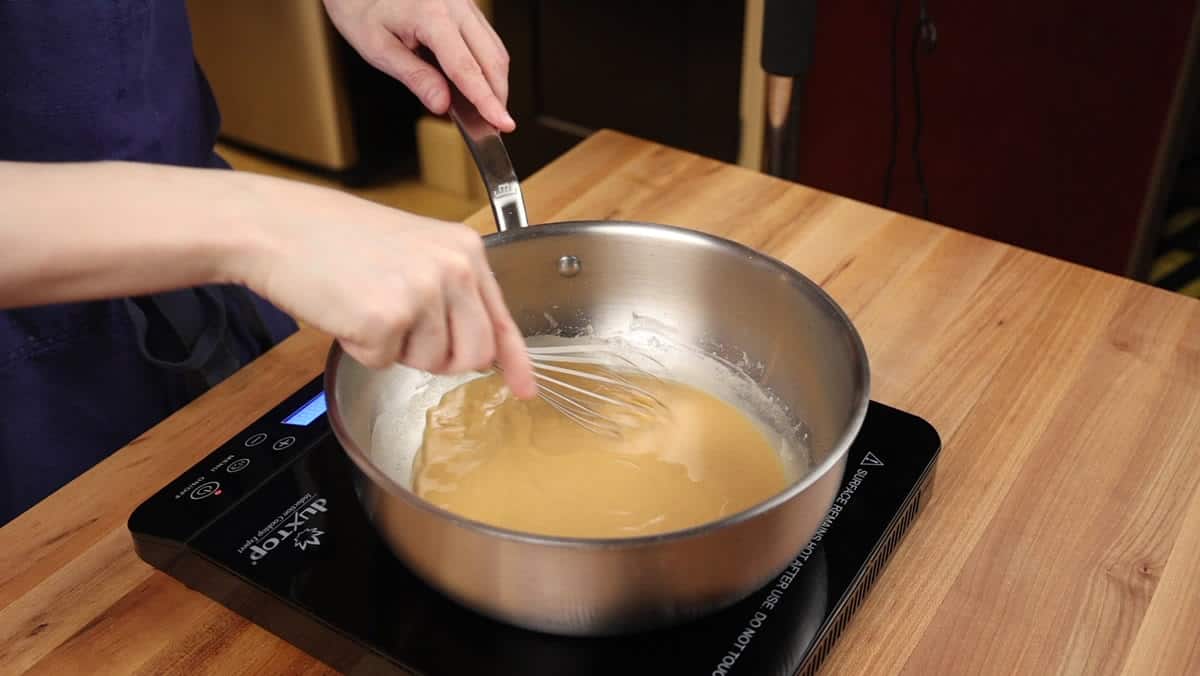
Stir the Knorr into the hot water first so the broth is ready. Then whisk half a cup of flour into 6 tablespoons of melted, hot lard. It's going to look a lot looser than a typical roux, and that's on purpose, because all the dry spices go into it next. Keep whisking the whole time, because a roux can burn really easily, and if you see any black specks in it, that means it's burned and you'll have to start over. It's ready once it turns light brown and smells toasty, usually somewhere around 6 to 10 minutes, so it's probably longer than you'd think.
7. Cook the spices into the roux
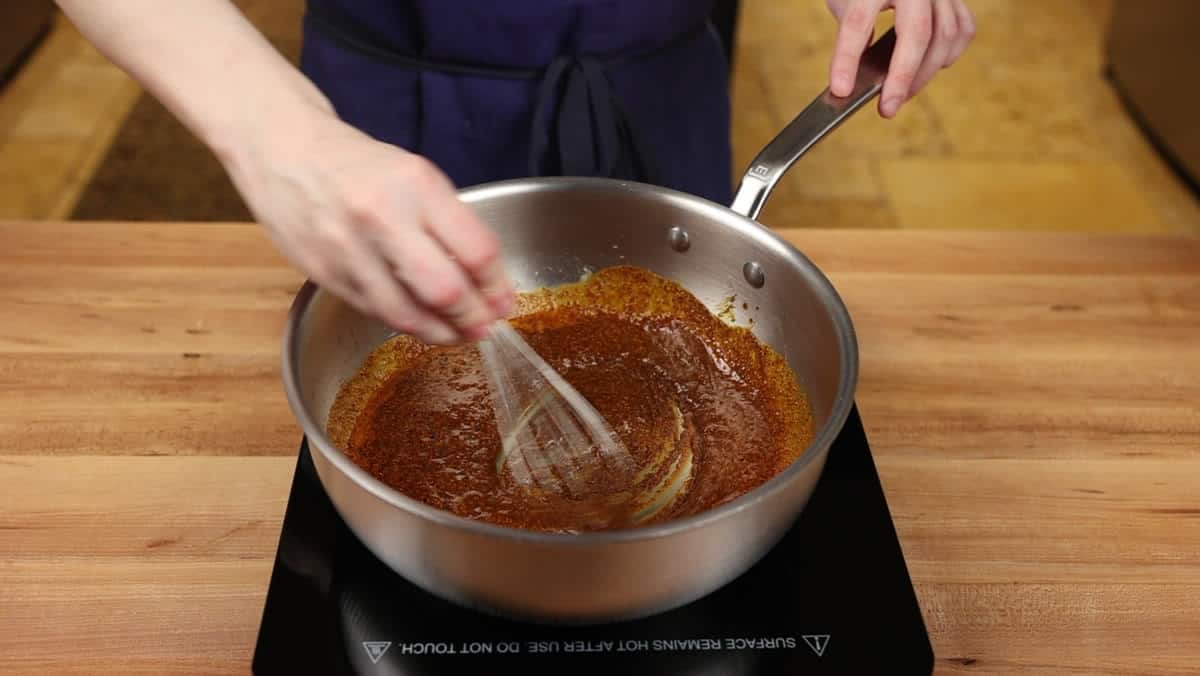
Turn the heat to low and whisk in the chili powder. You'll see the roux turn a dark red as the chili flavor goes into the fat. Then add the cumin and garlic powder, then the black pepper, and keep whisking for about a minute, until it all smells fragrant. Be very careful here, because ground spices can scorch pretty quickly in hot fat.
8. Add the oregano, then the broth
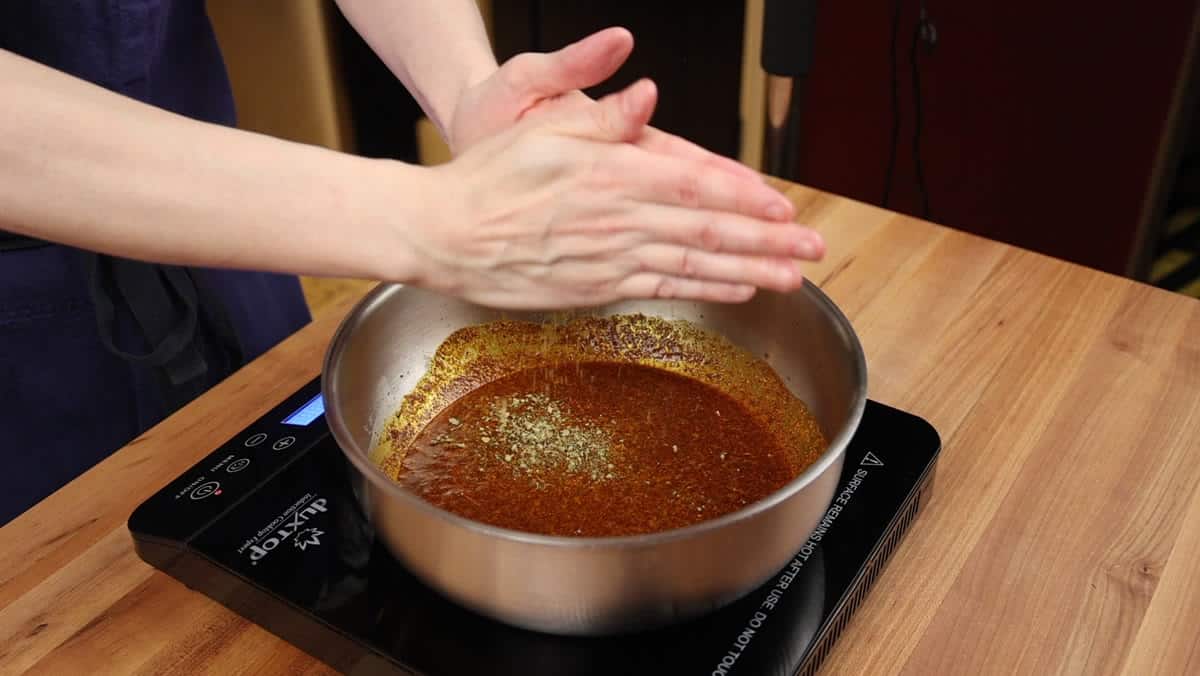
Rub the Mexican oregano between your palms over the pan as it goes in. The flavor in oregano is in microscopic oil glands on the outside of the leaf, and rubbing it breaks them open right before it goes into the fat. As soon as it's in, pour in a little of the hot broth and whisk hard. It's going to seize up and get thick and pasty, and that's totally normal, so keep adding a little at a time until it loosens up into a liquid, then pour in the rest.
9. Simmer until it coats a spoon
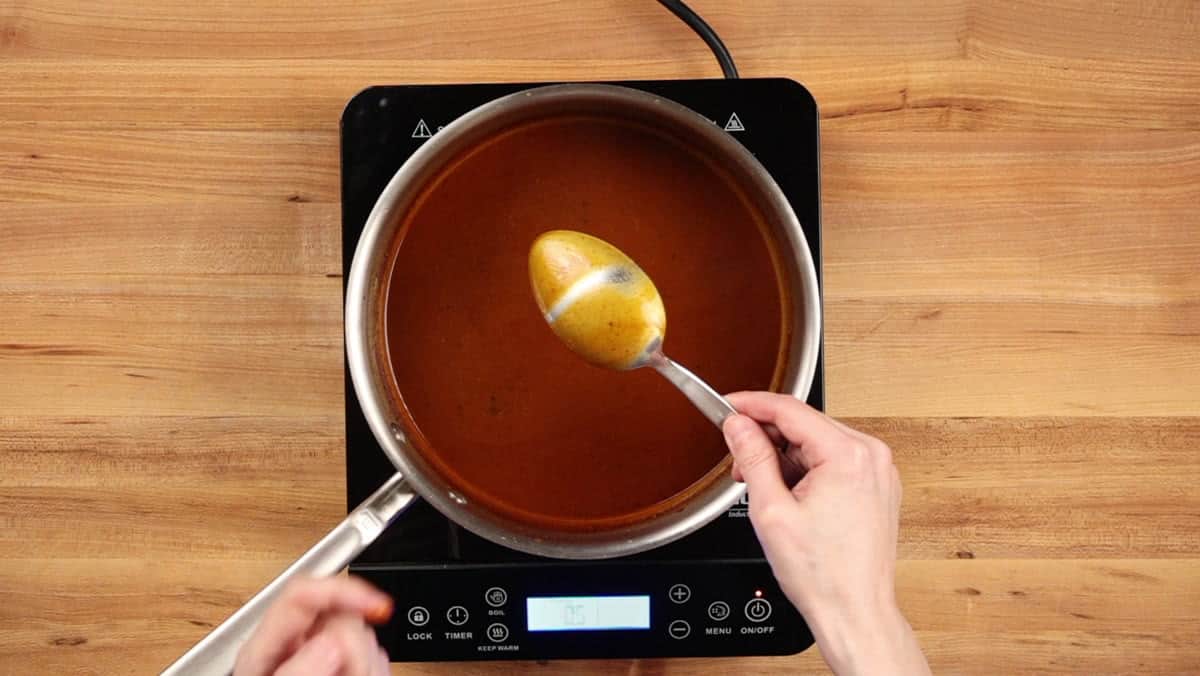
Let it barely simmer for about 10 minutes, whisking now and then so a skin doesn't form, and stop before it looks thick enough, because it keeps thickening off the heat and again in the oven. To check, dip a spoon in and drag your finger across the back of it. If the line stays clean, it's ready, and that's what the French call nappe. Then salt it to taste. I usually use about a teaspoon of Morton table salt, but if you used McCormick, taste it first.
The Enchiladas
10. Soften the tortillas in hot oil
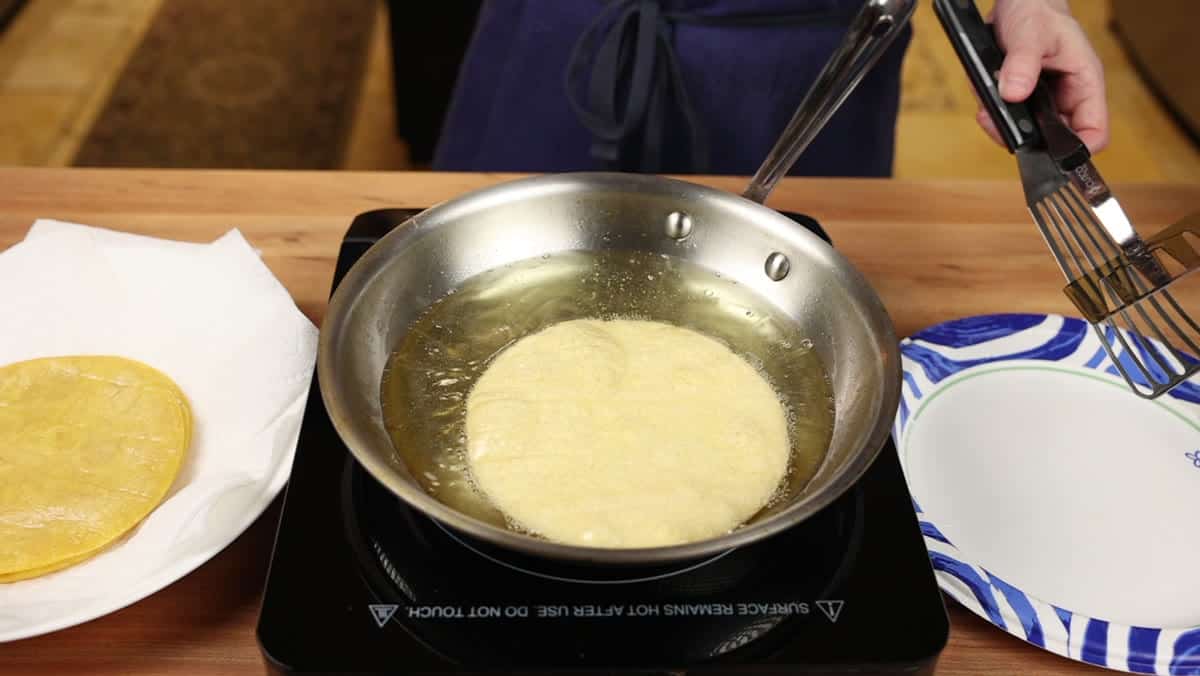
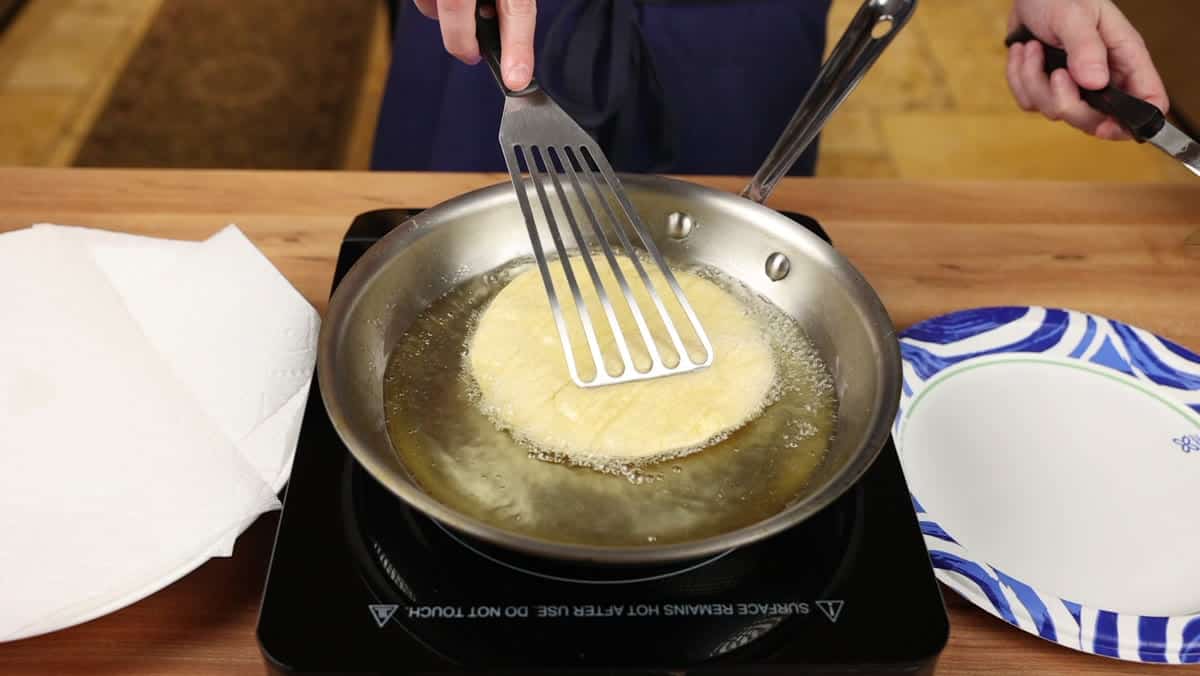
First, heat your oven to 400°F, and toss the American cheese with ¾ cup of the cheddar for the filling, saving the last cup of cheddar for the top. Then heat about half an inch of oil in a sauté pan to 365 to 375°F. If you don't have a thermometer, dip the edge of a tortilla in, and as long as it sizzles a little, you're good to go. Each tortilla only needs about 5 or 6 seconds, just until it's soft and bendable, and if you leave it in much longer than that, it's going to start crisping up on you. Lift it out with a spatula and let the extra oil drip back into the pan.
11. Pat them dry, then dip
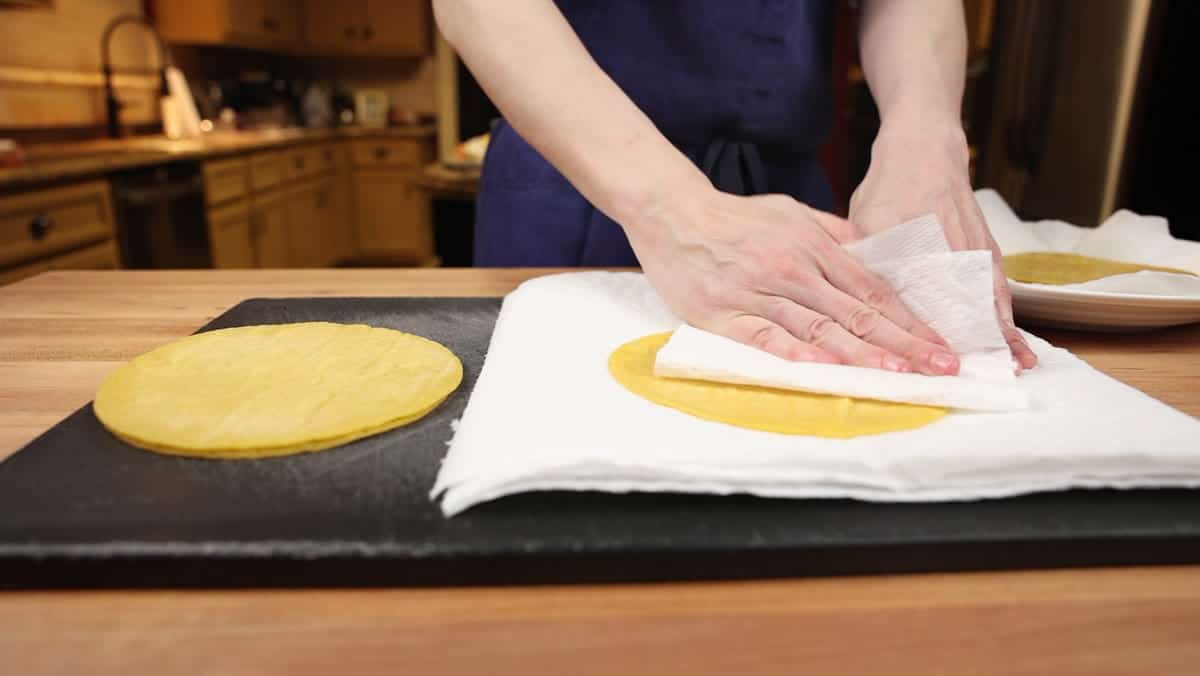
Lay each tortilla on paper towels and pat it dry. Spread about half a cup of the warm gravy over the bottom of a 9 by 13 inch baking dish so the enchiladas don't stick, then give each tortilla a quick dip through the gravy, a second or two at most. If it sits in the gravy too long, it'll get soggy and fall apart when you try to roll it up.
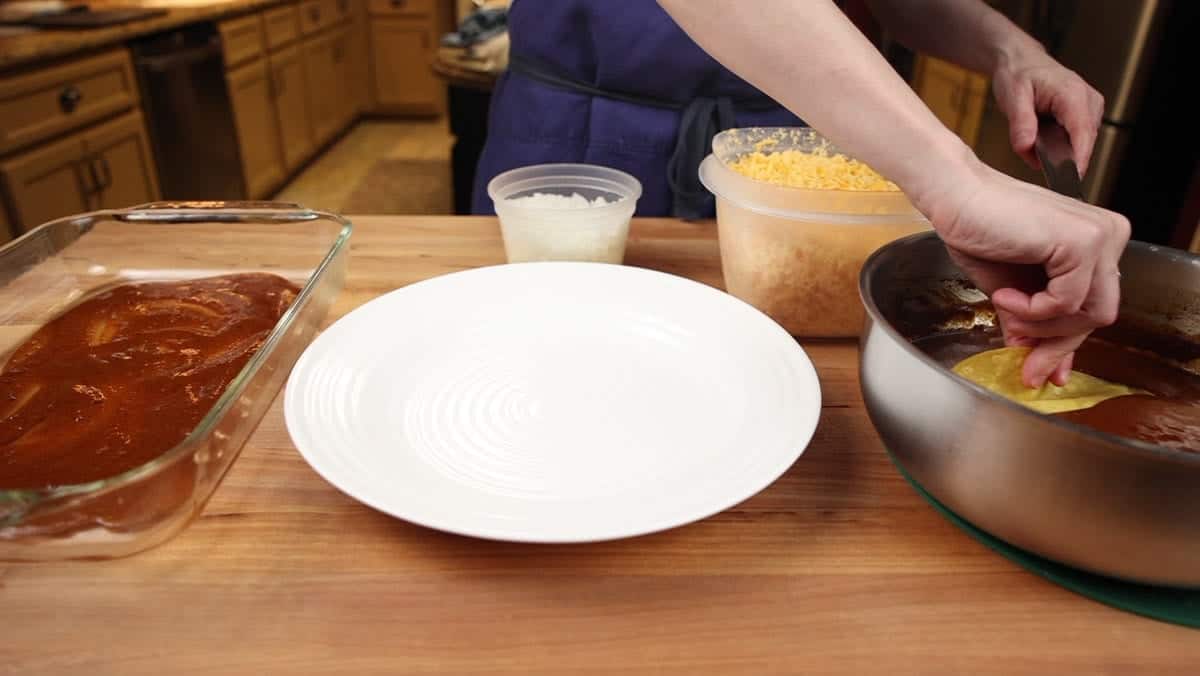
12. Fill and roll the enchiladas
I like to have everything set up right next to each other, so the tortillas, the gravy, a bowl of the cheese and the baking dish are all ready to go. Fill each tortilla with about half a cup of the cheese and a tablespoon of onion, roll it up pretty tight, and lay it seam side down so it doesn't come unrolled while it bakes.
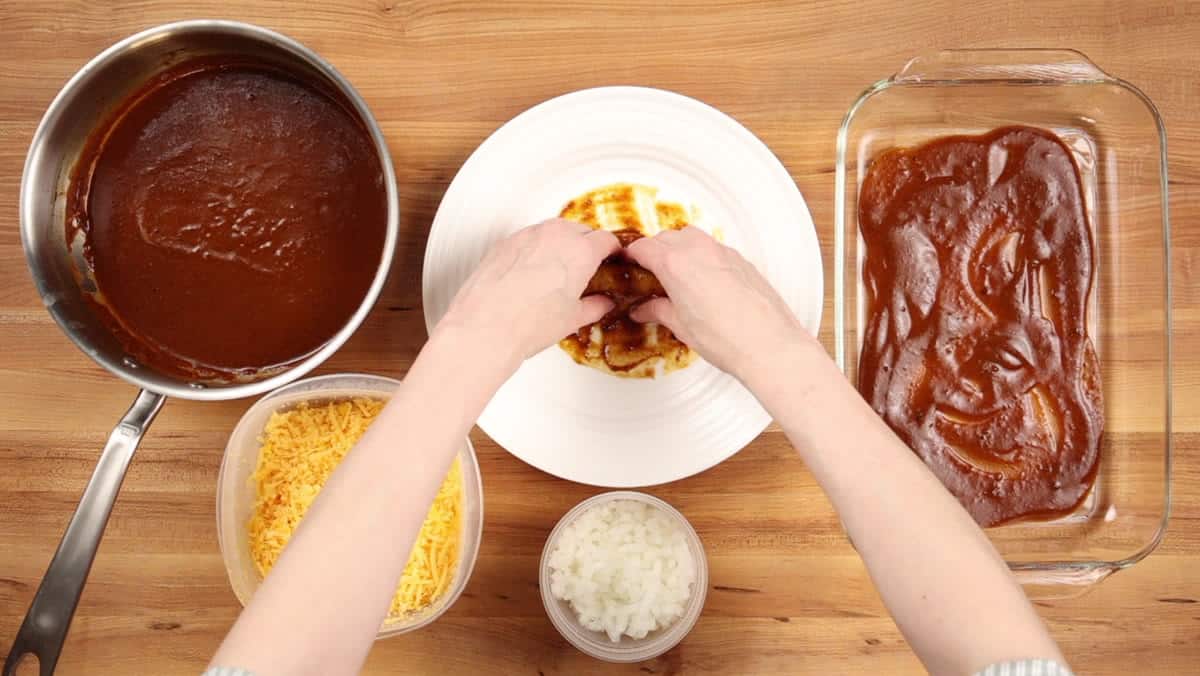
13. Cover them in gravy and cheddar
Pour the gravy over until every enchilada is moistened all over and every edge of tortilla is covered. This is where a lot of people go wrong, because they don't use enough of it. Just don't let them swim in it, and you may not need all of it. Then scatter the cup of cheddar you saved over the top. I don't measure this part; I just want a light layer with the gravy still showing through underneath.
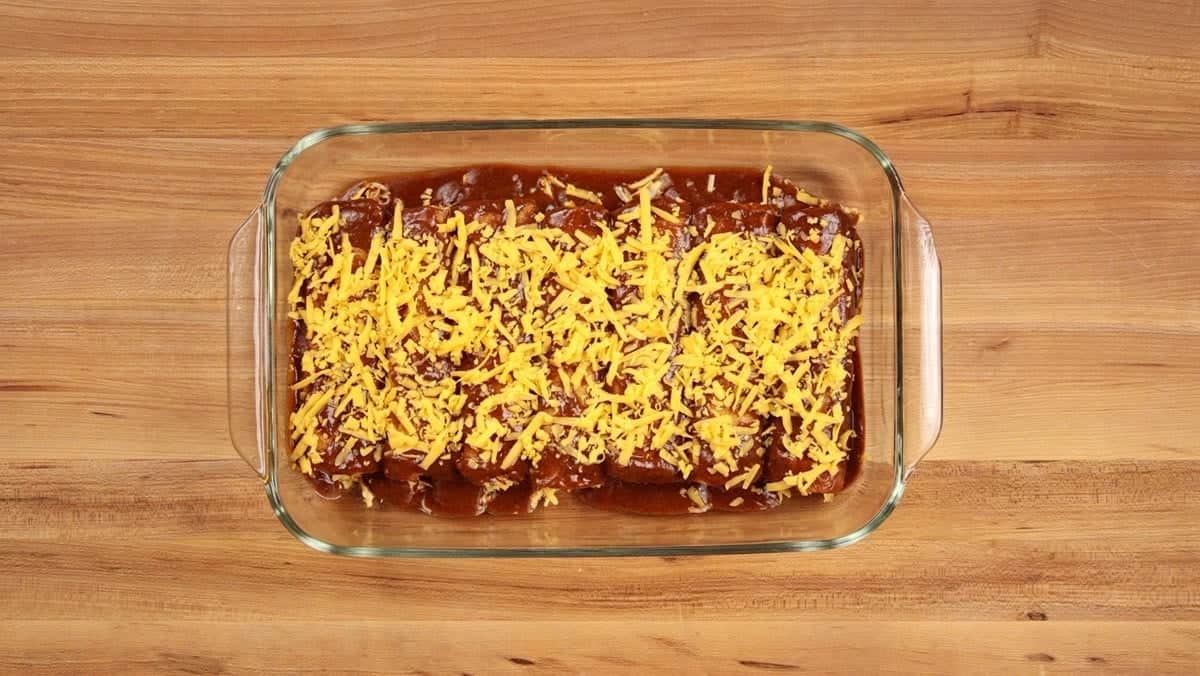
14. Bake until the cheese bubbles
Bake them uncovered at 400°F for about 15 minutes, and take them out as soon as the cheese on top starts to bubble. Most of the Texas restaurant recipes I found bake their enchiladas in a hot oven, but not for very long. As Harold McGee explains in On Food and Cooking, cheese heated too hard or too long tightens up and squeezes out its fat, and that's where greasy cheddar comes from.
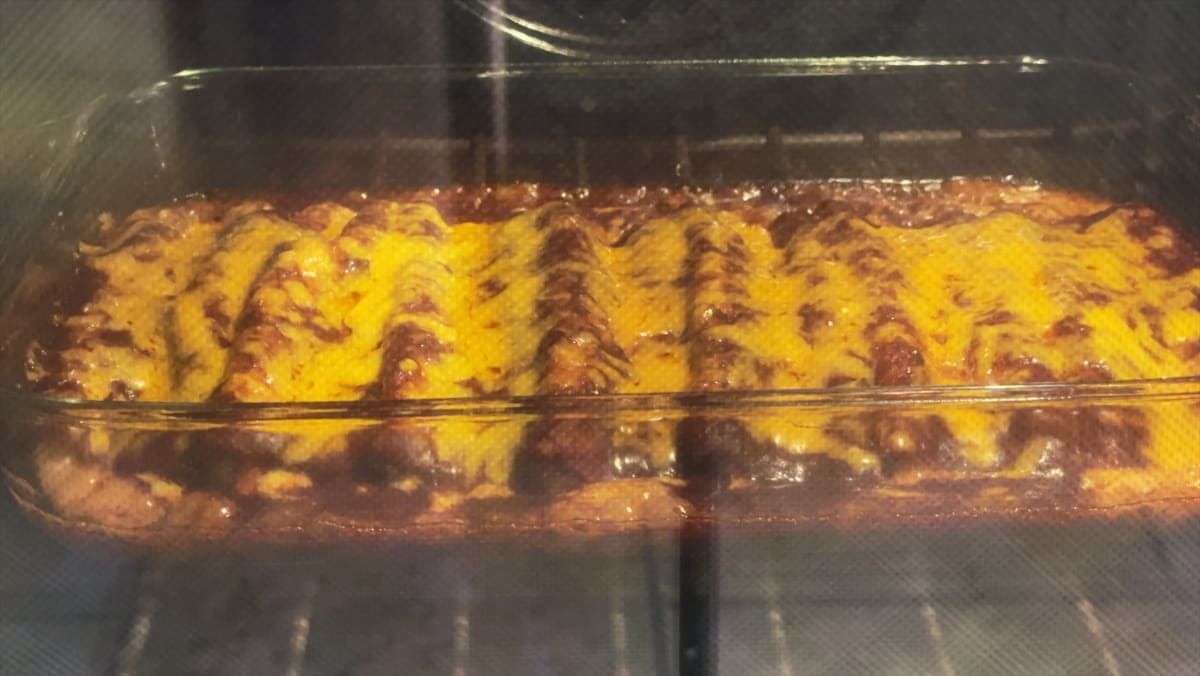
15. Top with raw onion and serve
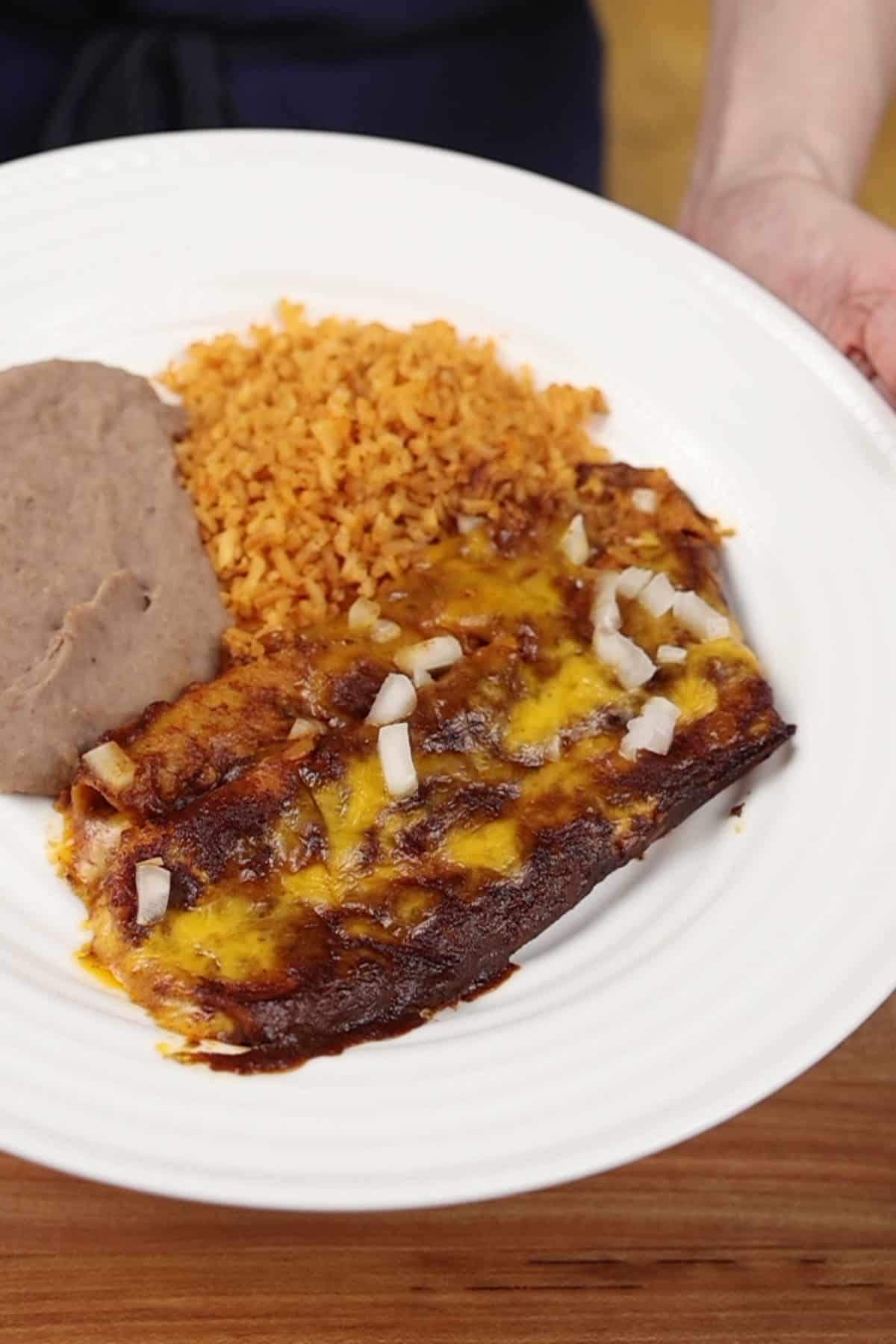
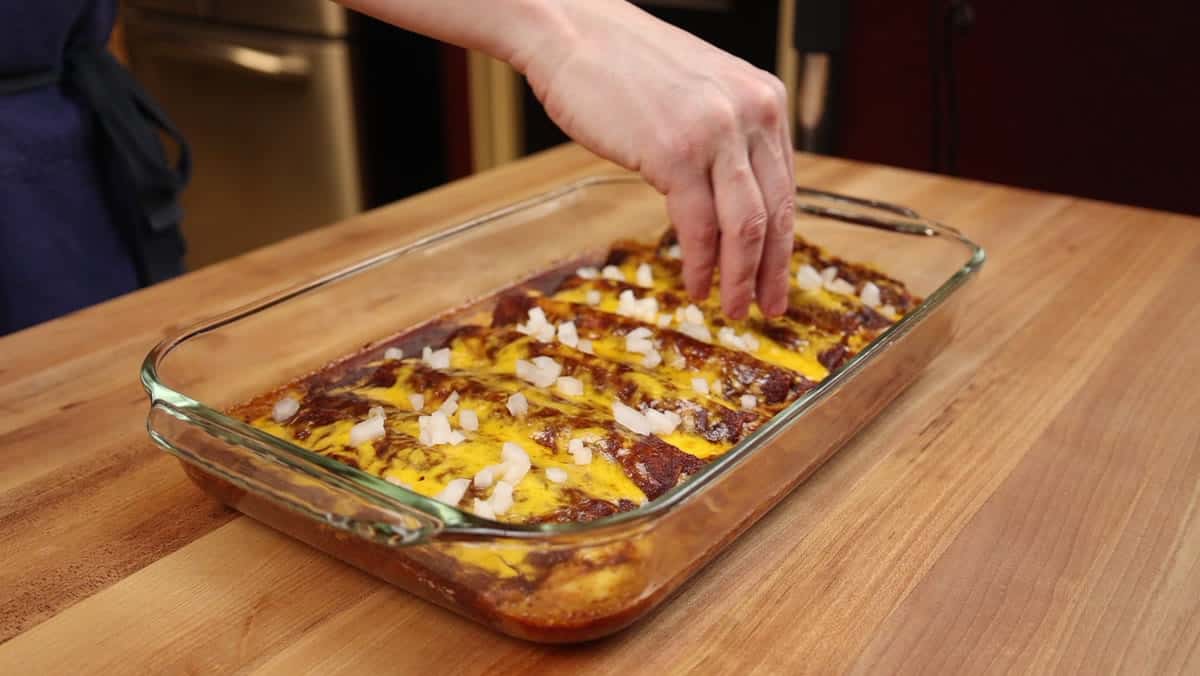
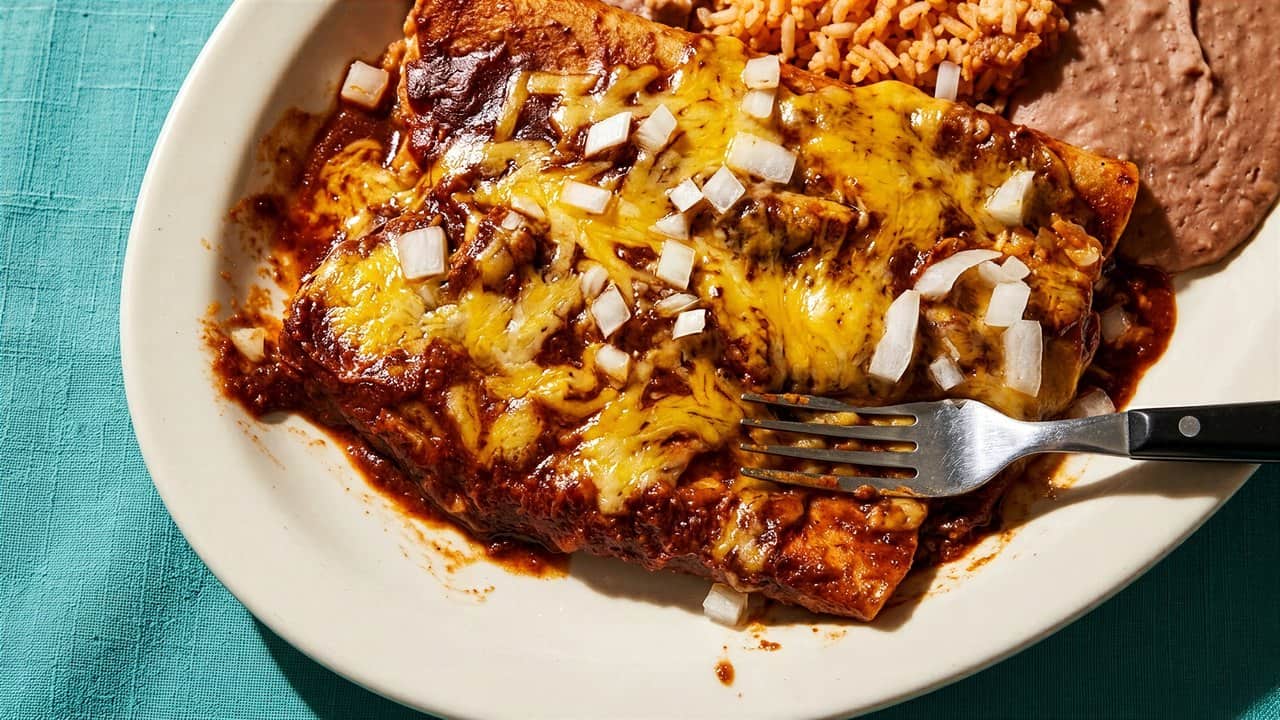
Let them sit for about 5 minutes, then scatter the rest of the chopped onion over the top. Raw onion on top is a big part of what makes this the classic Texas plate. Put 2 enchiladas on each plate, with the rice and refried beans right next to them.
Making Them Ahead
At a lot of Mexican restaurants, the enchiladas are made ahead of time in big baking dishes like this one. When an order comes in, they cut out a couple, put them on a plate with the rice and beans, and put the whole plate in the oven or under a broiler for a few minutes to heat it back up. That's why it's extremely unwise to touch your plate at a Mexican restaurant. You can do the same at home with oven-safe plates; if they've been in the fridge, heat them until the middle is steaming hot, 165°F, as the USDA advises.
Robb Walsh's old-fashioned San Antonio cheese enchiladas go a step further. He rolls them right on an ovenproof plate with a high lip, spoons the rice and beans on beside them, and bakes the whole plate at 450°F for about 10 minutes. Ford Fry says the rice gets crispy edges where it touches the hot plate.
If you need a little time before the bake, Sylvia Casares says sauced enchiladas can wait up to 30 minutes, covered and kept out of the fridge, before they go in the oven.
Storing and Reheating
Keep leftovers in the fridge for 3 to 4 days, or freeze them for 3 to 4 months (USDA leftovers guide). Reheat them until they're steaming hot, 165°F, as the USDA page says. The gravy and the beans both thicken in the fridge, so loosen either one with a splash of hot water, and bring leftover gravy back up to a boil, as the USDA page says for gravies.
Questions About Cheese Enchiladas
What cheese do Texas restaurants use?
There isn't one answer. Some of the old Texas kitchens used processed American cheese, like Molina's in Houston, and some use cheddar, like Sylvia's. A lot of plates use both, and processed cheese inside with cheddar on top is the most common pairing in the restaurant recipes I found. The thing they all share is the yellow color.
Why do my corn tortillas tear?
Usually they're too fresh, or the oil isn't hot enough, so buy them a day or two ahead and let them sizzle the moment they touch the oil. If they still tear, Diana Kennedy's fix in The Tortilla Book is to spread about 2 tablespoons of gravy on each fried tortilla instead of dunking it, roll it loosely, and pour the rest over at the end. She also says never to stack fried tortillas, because the heat of the others makes them mushy.
Why is my Mexican rice so salty?
Too much salt from too many places. Salty rice is the most repeated complaint under Mexican rice videos on YouTube, and the commenters trace it to salt stacking up. Bouillon already has salt in it, so do store-bought broth and canned tomato, and then the recipe adds a spoonful of salt on top. This rice uses fresh tomatoes and no broth, with a fixed 4 teaspoons of bouillon and a teaspoon of salt, and the rice takes in all of it.
Are refried beans fried twice?
Not really. Diana Kennedy says the "re" in refritos means well fried, and Ford Fry calls "refried beans" a misnomer for well-fried beans. The beans are fried once, in lard, until they're thick and creamy. Plenty of Mexican cooks read it as "fried again," though, so the argument runs both ways.
If you make this, leave a star rating in the card below; it helps other people find the recipe.
More Tex-Mex and Mexican Recipes
Tex-Mex Cheese Enchiladas
Ingredients
The Chili Gravy
- 6 tablespoon lard or any neutral oil
- ½ cup all-purpose flour
- ¼ cup chili powder Gebhardt; or ¼ cup McCormick chili powder (it has salt, so taste before salting)
- 2 teaspoon ground cumin
- 2 teaspoon garlic powder
- 1 teaspoon Mexican oregano dried; regular dried oregano works if you can't find Mexican
- 1 teaspoon black pepper ground
- 4 cups hot water
- 4 teaspoon Knorr Caldo de Pollo chicken bouillon any powdered chicken bouillon works
- 1 teaspoon Morton table salt to taste, at the end: I use about 1 tsp
The Enchiladas
- 12 yellow corn tortillas 6-inch, a day or two old; yellow or white corn
- 1 cup vegetable oil for softening the tortillas; any neutral oil works
- 5 ¼ cups American cheese grated from a block from the deli counter (about 1 ½ lb); ask for it in block form
- 1 ¾ cups mild cheddar cheese grated from one 8 oz block; divided: ¾ cup inside, 1 cup for the top
- 1 medium white onion finely chopped (about 1 cup); divided: ¾ cup inside, ¼ cup on top
The Mexican Rice
- 2 cups riceland long-grain white rice not parboiled or converted rice
- ¼ cup vegetable oil divided: 1 tablespoon for the purée, 3 tablespoon for the rice
- 2 Roma tomatoes cored and quartered (about 8 oz)
- ½ small white onion roughly chopped
- 2 garlic cloves
- hot water enough to bring the fried purée up to the 3 ½-cup line
- 4 teaspoon Knorr Caldo de Tomate tomato and chicken bouillon
- 1 teaspoon Morton table salt
- ½ teaspoon ground cumin
The Refried Beans: The Soak
- 1 lb dried pinto beans the freshest-looking bag on the shelf; old beans can take an hour longer
- 6 cups cold water
- 1 tablespoon Morton table salt
The Refried Beans: The Pot Beans
- ½ medium white onion
- 3 garlic cloves smashed
- water to cover by 2 inches
- 1 teaspoon Morton table salt for the last 30 minutes
The Refried Beans: The Fry
- ½ cup lard
- 1-1 ½ cups saved bean cooking liquid
- Morton table salt to finish, to taste
Instructions
Soak the Beans (the night before)
- Buy the tortillas a day or two ahead and leave them in their bag on the counter. A day-old tortilla holds together in hot oil and gravy where a very fresh one tears.
- The night before, pick over the pinto beans for little stones and rinse them. Stir the 1 tablespoon salt into the 6 cups of cold water until it dissolves, add the beans, cover and leave them on the counter for 8 to 16 hours. Drain and rinse.
- The beans can be finished first and held warm. Start the rice about 1 hour before serving, make the gravy while the rice cooks, and bake the enchiladas while the rice rests, so everything lands on the plate hot at the same time.
Make the Refried Beans
- Put the soaked beans, onion and garlic in a heavy pot and cover with water by 2 inches. Bring to a boil over medium-high heat, then turn down to a gentle simmer with the lid tilted. Add hot water as needed to keep the beans covered, and cook until a bean mashes easily with no chalky center, 1 ½ to 3 hours.
- For the last 30 minutes, stir in the 1 teaspoon salt.
- Take out the onion. Scoop the beans into a blender with 1 cup of their cooking liquid and blend until smooth. Save the rest of the liquid.
- Melt the lard in a large, heavy skillet or wide pot over medium-high heat until it shimmers. Pour in the bean purée (it will spatter) and whisk it into the lard. Boil, whisking, for 3 to 4 minutes, until the lard is fully worked in and the beans bubble and pull away from the sides.
- Loosen the beans with the saved cooking liquid, a splash at a time, until creamy. Keep them a little looser than looks right; they thicken as they sit.
- Taste the beans, then stir in salt ¼ teaspoon at a time, tasting after each, until they taste fully seasoned, not just "not bland." Hold them covered over the lowest heat, and taste again right before serving.
Make the Mexican Rice
- Blend the tomatoes, onion and garlic until completely smooth. Heat 1 tablespoon of the oil in a small skillet over medium heat, add the purée and cook, stirring often, for 6 to 8 minutes, until most of the liquid has cooked off and it is thick like a paste and darkened a shade with a few browned spots. Stir constantly at the end so it doesn't scorch.
- Scrape the fried purée into a 4-cup measuring cup and add hot water up to the 3 ½-cup line. Stir in the Knorr Caldo de Tomate, salt and cumin until dissolved. It will taste saltier than soup; the rice takes it all in. Keep it hot.
- Heat the remaining 3 tablespoon oil in a wide, heavy pot or deep skillet with a tight lid over medium heat until it shimmers. Add the rice and stir often until most of the grains are golden and the rice smells nutty, 8 to 10 minutes. Turn the heat toward medium-low if the grains brown in spots.
- Pour in the hot tomato liquid all at once (it will sputter) and stir once to free any rice stuck to the bottom. Bring to a boil over medium-high heat.
- Cover tightly, turn the heat to low and cook for 20 minutes. Don't lift the lid or stir.
- Take the pot off the heat and let it rest, still covered, for 10 minutes. Fluff with a fork.
Make the Chili Gravy
- Stir the Knorr Caldo de Pollo into the 4 cups of hot water until it dissolves. Keep it hot.
- Melt the lard in a heavy saucepan or saucier over medium heat until it is liquid and hot. Whisk in all the flour and cook, whisking constantly, until the roux turns light brown and smells toasty, about 6 to 10 minutes. It takes longer than you'd think, so keep whisking. If you see any black specks in it, it's burned and you'll have to start over. It will look looser than a typical roux, because the dry spices go into it next.
- Turn the heat to low. Add the chili powder and whisk until there are no dry clumps and the roux turns dark red, then add the cumin, garlic powder and black pepper and whisk until fragrant, about 1 minute. Much of the flavor in chili powder dissolves in fat, not water, so this minute in the hot roux is where it comes out. Don't let it scorch.
- Rub the oregano between your palms over the pan to crush it in, whisk once, and straight away pour in a splash of the hot broth, whisking hard. It will seize up and turn thick and pasty. Keep adding the broth a little at a time, whisking after each pour, until it turns liquid, then whisk in the rest until no lumps are left.
- Bring it up to a very light simmer, then let it barely simmer for about 10 minutes, whisking now and then, until it has some body but is still clearly looser than ketchup: not watery, not thick. Dip a spoon in and draw a finger across the back; the line should stay clean (the French call this nappe). It keeps thickening as it sits and again in the oven, so stop before it looks thick enough, and add hot water a splash at a time if it gets too thick.
- Taste, and stir in salt a little at a time until it tastes fully seasoned; I use about 1 tsp. Hold it over the lowest heat with the lid on, whisking now and then so no skin forms.
Soften the Tortillas
- Heat the oven to 400°F (204°C). Toss the American cheese with ¾ cup of the cheddar for the filling.
- Heat the oil in a sauté pan, about ½ inch deep, over medium-high heat to 365 to 375°F (185 to 191°C). Test with the edge of a tortilla: it should sizzle the moment it touches the oil. Oil that is too cool soaks into the tortilla and makes it greasy.
- One at a time, lay each tortilla in the hot oil for about 5 to 6 seconds, just until soft and bendable, not crisp. Lift it out with a spatula (tongs tend to tear them) and let the extra oil drip back into the pan.
- Lay each tortilla on paper towels and pat it dry. Oil left on the tortillas ends up pooled in the baking dish.
Fill, Roll and Bake
- Spread ½ cup of the gravy over the bottom of a 9 by 13 inch baking dish.
- Dip each softened tortilla quickly through the warm gravy: seconds, not a soak.
- Spoon ½ cup of the cheese filling and 1 tablespoon of chopped onion down the middle of each tortilla, roll it up and lay it seam side down in the dish.
- Pour gravy over the enchiladas until every one is moistened all over and every edge of tortilla is covered, but not swimming in sauce. You may not need all of it. Then sprinkle the remaining cheddar over the top, about 1 cup: a light, scattered layer with the gravy still showing between, not a solid blanket.
- Bake uncovered for about 15 minutes, just until the cheese on top starts to bubble, and take it out right away. Let it stand 5 minutes, then scatter the remaining ¼ cup of raw onion over the top.
Serve
- Put 2 enchiladas on each plate, with the rice and refried beans beside them.