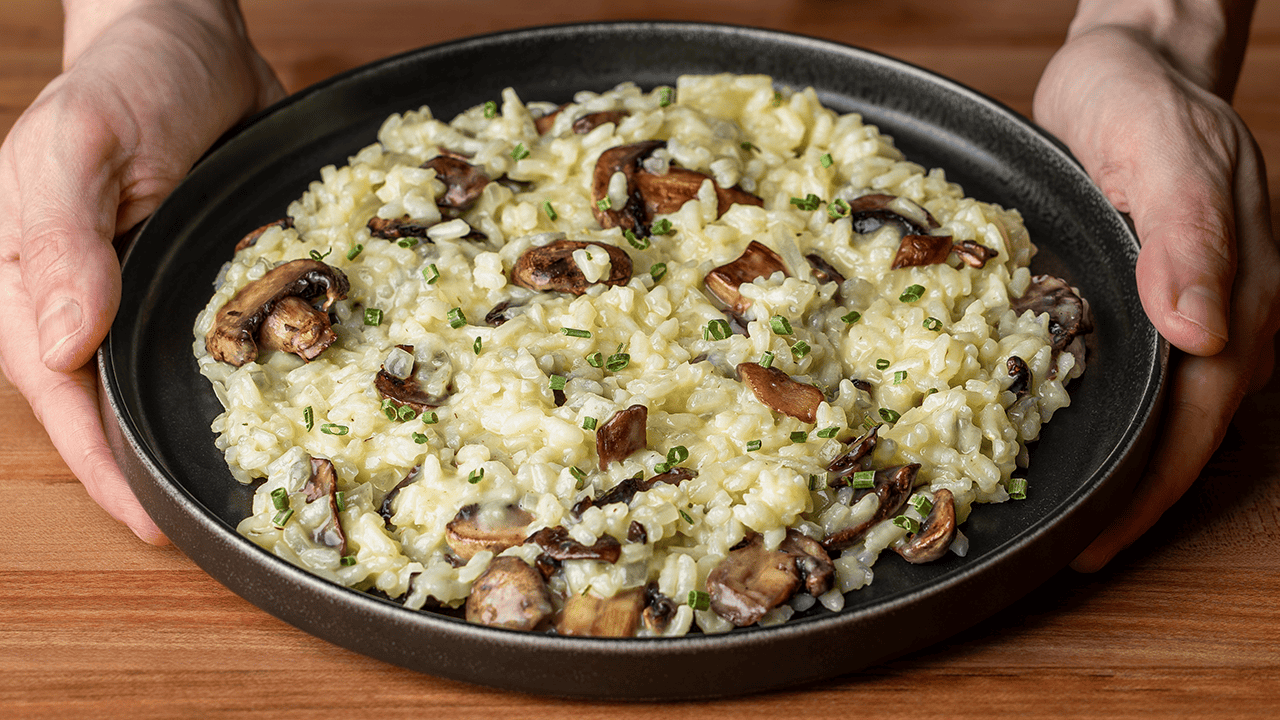
Gordon Ramsay's Mushroom Risotto Recipe
Risotto is the one dish that gives home cooks and Hell's Kitchen contestants the most trouble. I went to several Walmarts, sourced every ingredient for under $20, and made Gordon Ramsay's mushroom risotto from scratch. It took about 35 minutes of active cooking and one finishing technique that most online recipes leave out: adding the butter and Parmesan off the heat so they emulsify into the rice instead of splitting into grease.
The first Walmart I visited didn't carry risotto rice. But every other location had RiceSelect Arborio on the shelf, which is the short-grain rice you need for the starch that makes risotto creamy. The technique comes down to five steps, each with its own Italian name. I'll cover all of them so you know what you're doing at each stage.
This post contains affiliate links, which means I may earn a small commission if you make a purchase. It doesn't cost you anything extra. Full disclosure.
Why This Mushroom Risotto Recipe Works
- Arborio rice for the right starch. Short-grain rice like Arborio is high in amylopectin, a starch that gradually emulsifies into the broth during cooking. That's what gives risotto its creamy consistency without adding cream. Long-grain rice won't do that.
- Concentrated broth base over boxed stock. Better Than Bouillon or Knorr bouillon cubes have considerably more flavor than boxed or canned broths. Professional kitchens use these products regularly.
- Mushrooms cooked separately with butter, thyme, and garlic. Cooking the mushrooms in their own pan lets you control the sear and infuse them with aromatics. They get folded into the finished risotto at the very end so they keep their texture.
- Butter and Parmesan added off the heat. The Italian technique called mantecare (creaming) emulsifies the fats into the rice without splitting. If you add them while the pan is still on the burner, the risotto turns greasy instead of creamy.
- The "onde" wave test for doneness. When you shake the pan side to side, properly cooked risotto moves like a wave. That's the consistency Gordon Ramsay looks for, and it means you've gotten the liquid ratio right.
Ingredients You'll Need
Risotto rice. RiceSelect Arborio is available at most Walmarts and is exactly what you need. Arborio is high in amylopectin, a starch that slowly releases during the long cooking process and emulsifies into the broth. That's what creates the creamy sauce. Long-grain rice like jasmine or basmati won't give you that consistency because they're low in this particular starch.
Stock or broth. Homemade stock is ideal, but most home cooks aren't going to make stock from scratch just for a risotto. Better Than Bouillon or Knorr bouillon cubes are used in professional kitchens and have considerably more flavor than boxed or canned broths. If boxed or canned is all you can find, those work too. The type of stock traditionally depends on the garnish: chicken broth pairs well with the meatiness of mushrooms, and vegetable stock keeps it vegetarian.
Mushrooms. A typical Walmart carries three varieties: white button, baby bella (also called cremini), and portabella. Any of them work in this dish. Portabella tends to have the most concentrated flavor because the mushroom has lost more water as it matured. And all three are the exact same species at different stages of growth. White and brown when immature, and the brown one eventually grows into what marketers decided to call a "portabella."
White wine. Use a dry, crisp white. Pinot Grigio is the traditional Italian choice, and Sauvignon Blanc works well too. If you're going with Chardonnay, try to find an unoaked version because they're milder and more appropriate for a dish this subtle. You don't need anything expensive. I've worked in some really nice restaurants, and we all used boxed wine for cooking. In the industry, we called it "Cardboardeaux."
Parmesan. I was a little worried we'd have to use Kraft, the People's Parmesan. This is the sort of cheese you'd get in a former Soviet-bloc country in exchange for a ration card. But most Walmarts carry a fairly decent Parmesan in the deli section that works well for this recipe.
Butter. Risotto is one dish where I'd say spring for a nicer butter. Plugra, Kerrygold, or Land O'Lakes all work. Since butter is a finishing flavor here and not just a cooking fat, the higher fat content of a quality butter carries the other flavors better.
How to Make Gordon Ramsay's Mushroom Risotto
Cook the mushrooms first.
1. Heat a tablespoon of olive oil in a medium pan over medium-high heat. Add 8 ounces of roughly chopped mushrooms and a pinch of salt. Chop your mushrooms bigger than the size you want to serve them because they'll lose about 50% of their volume during cooking.
2. Once the mushrooms have given up their liquid, add a tablespoon of butter, a couple sprigs of thyme, and two smashed garlic cloves. Let the butter infuse with the thyme and garlic for the last 2-3 minutes of cooking. Taste, adjust the seasoning, then remove the thyme sprigs and garlic. Set the mushrooms aside.
Start the risotto base.
3. Heat 2-3 tablespoons of olive oil in a large pan over medium heat. Add half a minced onion with a pinch of salt and saute until translucent. You're looking for onion pieces about the size of a grain of rice. There is nothing worse than biting into a chunk of crunchy, undercooked onion in a risotto. This step is called sweating: softening the vegetable and bringing out its natural sweetness without getting any color on it.
4. Add a cup of Arborio rice and gently stir for a couple of minutes. In Italian, this step is called rossolare. You'll know the rice is ready when it has turned mostly translucent with maybe just a splotch of white in the middle.
5. Deglaze with ¾ cup of dry white wine. You should smell the alcohol in the steam. When the wine has fully evaporated and you no longer smell alcohol, it's time to start adding the broth.
Add the broth ladle by ladle.
6. Start adding your 3.5 cups of stock one ladle at a time. Let each addition reduce until there's almost nothing in the pan before adding the next. You'll know it's time for more when you drag your spoon across the rice and it's barely sticking but you can still see some trails from the broth. You don't have to stir constantly, just make sure the rice isn't burning on the bottom.
7. This step takes about 20-25 minutes. The total cooking time from the very beginning is more like 30-45 minutes, not the 20 minutes a lot of chefs online claim. The clock on the rice really only starts once you add the first ladle of broth.
Finish and cream the risotto.
8. When you've added the last of the broth, reduce it just slightly. You want the risotto a bit soupier than how you plan to serve it because it will continue absorbing liquid off the heat. The Parmesan also absorbs some broth when it goes in. When you shake the pan side to side, it should move like a wave. This is called onde in Italian, and it's the consistency you're after.
9. Take the pan off the heat, cover it, and let it rest for 60-90 seconds. This lets the temperature drop just enough for the next step to work.
10. Add ¼ cup of Parmesan and 3 tablespoons of butter. Gently whip them into the risotto until everything is emulsified. This step is called mantecare, or creaming. Always add the butter and cheese off the heat. If the pan is too hot, the fats split and the risotto turns greasy.
11. Fold in the mushrooms, reserving some for garnish. Taste and adjust the seasoning with salt. To serve, gently tap the bottom of the plate to spread the risotto out evenly. If the consistency is right, it should spread like lava. Garnish with reserved mushrooms and finely minced chives or parsley.
Tips for the Best Mushroom Risotto
Your broth should be warm, not boiling. A lot of people think the stock needs to be at a rolling boil. It doesn't. Risotto is traditionally made with warm liquid. You just don't want it cold, because cold stock drops the temperature in the pan and slows the cooking process, which can lead to overcooked, mushy rice.
You don't have to add pepper. Pepper has its own flavor, and with a dish as subtle as risotto, I prefer keeping it simple so you can actually taste the rice and mushrooms. Add it if you like it, but taste the risotto on its own first.
Use the wave test for consistency. When you shake the pan and the risotto moves like a wave, you've gotten the liquid ratio right. It should look like lava when you plate it. If it's stiff or clumpy, it needed more broth. If it's watery, it needed another minute of reduction.
Try the restaurant pre-cook method for entertaining. Cook the risotto about 90% of the way through. Just before you'd normally add the last bit of broth, spread the rice out on a baking sheet and let it cool completely. Store it in the fridge, and when you're ready to serve, grab what you need, toss it in a pan with the remaining broth, and heat it up. Then finish with the creaming and garnishing steps. This is how restaurants serve risotto in 3-5 minutes instead of 25. The par-cooked rice keeps in the fridge for about 2 days.
Storage and Reheating
Leftover risotto keeps in an airtight container in the fridge for 3-4 days. To reheat, add a splash of broth or water to a pan over medium-low heat and stir until it loosens back up. The starches firm up when cold, so you'll need that extra liquid to restore the creamy texture.
For the restaurant pre-cook method, the par-cooked rice (before the butter and cheese step) keeps in the fridge for about 2 days without noticeable quality loss. Spread it in a thin layer on a baking sheet to cool quickly, then transfer to an airtight container.
Risotto doesn't freeze well. The rice texture suffers after freezing and thawing. If you have leftovers you won't eat within a few days, consider making arancini (fried risotto balls). Cold, firm risotto is actually easier to shape and fry than fresh.
Frequently Asked Questions
Do you have to constantly stir risotto?
No. You don't need to stand over the pan stirring the entire time. Add your broth, give it a stir, and let it cook. Check on it periodically and stir enough to keep the rice from sticking to the bottom. Constant stirring matters more for large restaurant batches where the rice can burn unevenly. For a home-sized portion, occasional stirring gets the same result.
Can you add all the broth at once?
You can, and it does produce a decent risotto. But the traditional ladle-by-ladle method gives you more control over the final consistency. Adding it all at once is harder to correct if you end up with too much or too little liquid. The gradual approach lets you stop when the texture is right.
Why no garlic in the risotto base?
In traditional Italian risotto, garlic is pretty controversial. The reason is practical: garlic is a strong flavor that can overpower the subtle taste of the rice and the delicate aromatics in the broth. In this recipe, the garlic goes into the mushroom pan where it's balanced by the thyme and butter. It stays out of the risotto base so those subtler flavors come through.
What's the difference between Arborio, Carnaroli, and Vialone Nano?
All three are short-grain Italian rice varieties that work for risotto. Arborio is the most widely available in the US and is a great all-purpose choice. Carnaroli holds its shape a bit better and is sometimes called the "king of risotto rice." Vialone Nano is traditional in the Veneto region and cooks a bit faster. For a Walmart-sourced recipe, Arborio is the right call.
Can you use vegetable stock instead of chicken stock?
Yes. Vegetable stock works well and keeps the dish vegetarian. Traditionally, the type of stock matches the garnish of the dish. Chicken broth complements the earthiness of mushrooms, but vegetable stock is a perfectly fine option.
More Gordon Ramsay Recipes
You Might Also Like
Recipe
Gordon Ramsay's Mushroom Risotto
Equipment
- 1 Induction Burner Or any stovetop
- 1 Nonstick Pan Medium, for mushrooms
- 1 Saute Pan Large, for risotto
- 1 Sauce Pan For warming broth
- 1 Ladle
Ingredients
Mushrooms
Risotto
- 2-3 tablespoon olive oil
- ½ yellow or white onion
- 1 cup risotto rice
- ¾ cup dry white wine
- 3 ½ cups chicken stock or vegetable stock
- ¼ cup Parmesan
- 3 tablespoon butter
- chives or parsley
- salt
Instructions
Mushrooms
- Heat olive oil in a medium pan over medium to medium-high heat. Add mushrooms and a pinch of salt. Saute until the mushrooms have given up their liquid.
- 2-3 minutes before the mushrooms are done, add the butter, thyme, and smashed garlic cloves. Continue to cook until the butter has coated the mushrooms and infused with the thyme and garlic.
- Adjust seasoning with salt. Remove thyme and garlic and set mushrooms aside.
Risotto Base
- Heat olive oil in a large pan over medium heat. Add onion and saute until translucent.
- Add rice and saute until the rice is semi-translucent, with maybe just a splotch of white in the middle.
- Add wine and reduce until almost nothing.
Cook the Risotto
- Add stock a ladleful at a time, reducing almost completely before adding another ladleful.
- When you add the last ladle of stock, reduce slightly until the consistency of the risotto is like a wave. It shouldn't be watery, but the consistency should be slightly soupier than you plan to serve it because it will continue to cook.
Finish
- Remove from heat and cover for 60-90 seconds.
- Add Parmesan and butter and gently whip into the rice until totally emulsified. Adjust the seasoning with extra salt.
- Fold in mushrooms, reserving some for garnish.
- Garnish each plate with reserved mushrooms and minced chives or parsley.