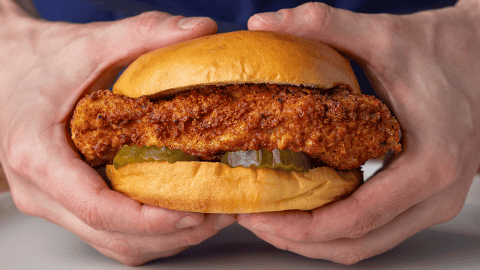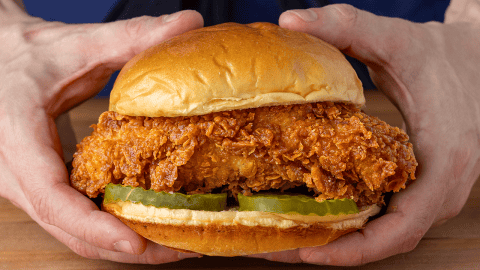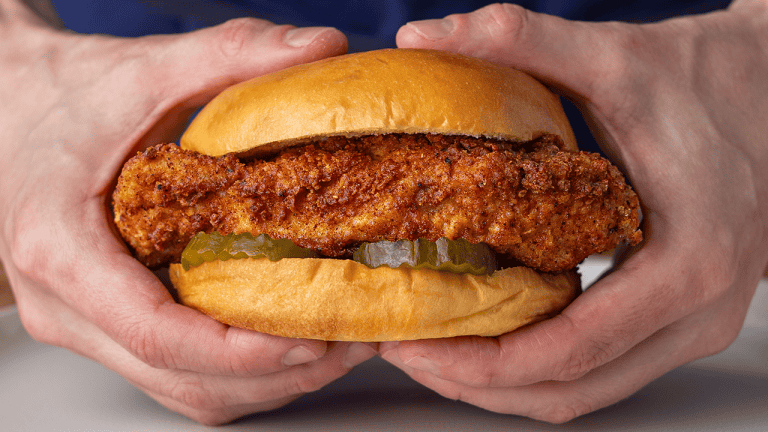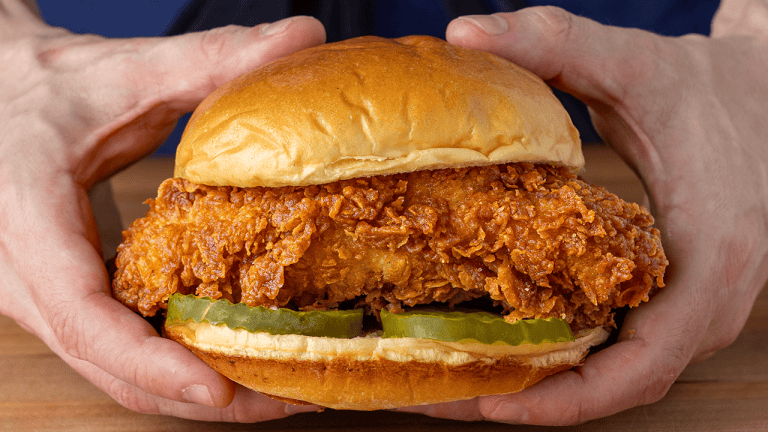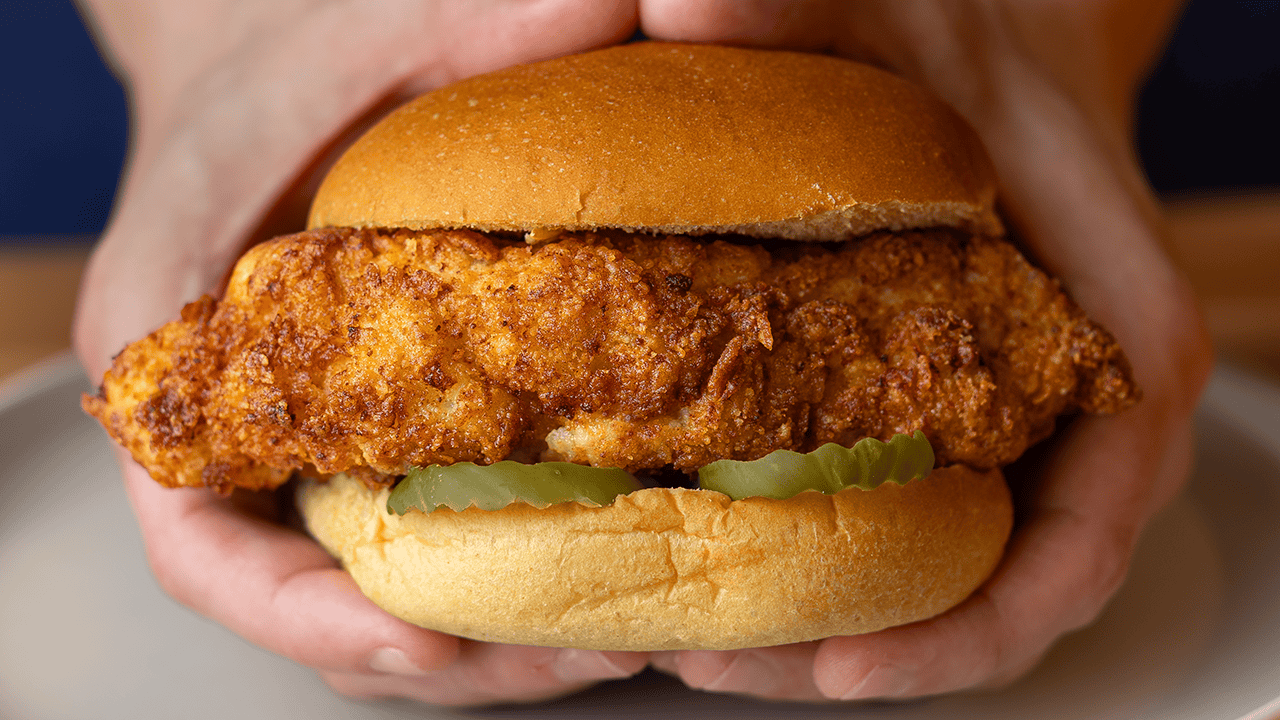
Copycat Chick-fil-A Chicken Sandwich Recipe
I made around 40 different versions of the Chick-fil-A chicken sandwich over two months. I tested every major recipe available, talked to former employees, and read through the FDA's regulations on food labeling. The breakthrough was a single spice that Chick-fil-A confirmed to a food writer but that hasn't shown up in any recipe online: mustard powder.
According to the FDA's code of federal regulations, the term "spices" on a food label specifically excludes substances traditionally regarded as foods, like onion, garlic, and celery. That narrowed the field considerably. Then I found a blog post where the writer had secured a meeting with Chick-fil-A executives and asked them directly what they meant by "spices." Their answer: black pepper, paprika, and mustard. Once I had that confirmed, I dialed in a 6.7% salt brine with MSG and the exact spice blend, and this recipe is the closest I've been able to get to the original.
This post contains affiliate links, which means I may earn a small commission if you make a purchase. It doesn't cost you anything extra. Full disclosure.
Why This Chick-fil-A Chicken Sandwich Recipe Works
- Mustard powder in both the brine and the breading. This is the ingredient Chick-fil-A confirmed to a food writer but that hasn't made it into the recipes circulating online. It goes in both components, and it's the difference between "close" and "this is it."
- A 6.7% salt brine with MSG, sugar, and the confirmed spice blend. After dozens of tests at different concentrations, this ratio gets closest to the actual restaurant flavor. If you use too much salt, the chicken will be inedible. If you use too little, the seasoning won't penetrate all the way through.
- Granulated sugar in the seasoned coater instead of powdered sugar. A lot of recipes call for powdered sugar, but Chick-fil-A's official ingredient list doesn't include cornstarch anywhere. Powdered sugar is almost always cut with cornstarch, and they would have to list it. That tells me they're almost certainly using regular granulated sugar, which is also considerably cheaper.
- The "seeding" technique for an extra crispy crust. Adding a few tablespoons of milk wash into the dry breading mixture and crumbling it between your fingers creates little beads of thickened coating. Those beads fry up into the craggy, crunchy texture that the sandwich is known for.
Ingredients You'll Need
Morton's Kosher Salt. The salt you use matters more than you'd expect for this recipe. One tablespoon of Morton's kosher salt weighs 14.4 grams, while one tablespoon of plain table salt weighs about 18 grams, which is roughly 25% more. If you use the wrong salt at the same volume measurement, you'll either over-salt or under-salt the brine, and both will wreck the result. I've included conversions for Morton's kosher, Diamond Brand kosher, and table salt in the recipe card below. If you have a kitchen scale, just weigh out 67 grams of whatever salt you have and you're good.
MSG (sold as "Accent" at Walmart). You'll find it in the spice aisle next to the salt. Chick-fil-A uses MSG in both their chicken seasoning and their breading, and it's listed right on their official ingredient label. It is essential to getting the real flavor.
Mustard Powder. This is the ingredient that separates this recipe from everything else out there. Chick-fil-A confirmed to a food writer that their "spices" are black pepper, paprika, and mustard. It goes in both the brine and the seasoned coater.
Nonfat Milk Powder. This is milk with all the liquid removed. You get the browning, texture, and flavor benefits of milk in the breading without adding extra moisture. It also means you don't need to buy a separate carton of skim milk for the milk wash: just reconstitute the powder with water following the directions on the box.
Peanut Oil. Chick-fil-A fries exclusively in peanut oil, and a lot of people think it gives their chicken a distinctive flavor. In all honesty, refined peanut oil is pretty much flavorless, similar to vegetable or canola oil. Any of those will work fine, but the recipe calls for peanut oil if you want to match the restaurant exactly.
Boneless, Skinless Chicken Breasts. Chick-fil-A uses 4-ounce whole breasts that haven't been split or cut in any way. You won't find those at a typical grocery store. Most store-bought breasts run 12 to 16 ounces each, so you'll need to section them down. Trim the narrow end about halfway up the breast, then take the thick half and butterfly it, cutting in half horizontally. This should give you about 3 sandwich filets and 1 tenderloin per breast.
Brioche Hamburger Buns. I tested several varieties at Walmart, and the brioche hamburger buns typically stocked near the front of the store were the closest match to the actual restaurant bun. Any cheap standard hamburger bun will also work fine.
Vlasic Ovals Hamburger Dill Chips. I tested every pickle brand available at Walmart, and these were the closest to the exact flavor. They're a bit thicker than what the restaurant uses, but the flavor is almost identical.
How to Make Chick-fil-A Chicken Sandwich
1. Make the brine. Combine salt, sugar, MSG, paprika, black pepper, and mustard powder in a bowl. Add 1 liter of water and stir until everything is completely dissolved. This is a 6.7% salt brine, and after months of testing at different concentrations, it gets closest to the original flavor.
2. Prep and brine the chicken. Clean the breasts and remove any fat or unsightly bits. Cut off the tenderloin and set it aside for chicken strips. Trim the narrow end about halfway up the breast, then butterfly the thick half and split it horizontally. Even out any thick spots with your hand or by lightly pounding with a meat mallet. You want thin, uniform filets so they cook evenly. Add the filets to the brine and refrigerate for 6 to 8 hours. Dry well with paper towels before using.
3. Make the seasoned coater. Combine flour, sugar, salt, MSG, nonfat milk powder, baking powder, white pepper, mustard powder, and cayenne. Sift the entire mixture through a strainer to remove any clumps. Then drizzle in 2 to 3 tablespoons of milk wash and crumble it between your fingers until you get little beads of thickened coating throughout the flour. This is called "seeding," and it's what gives you the extra crunchy crust.
4. Make the milk wash. Reconstitute 1 cup of milk from the nonfat milk powder following the directions on the box, then whisk in 2 eggs until the mixture is completely smooth.
5. Heat the oil to 325°F (165°C). Use a deep fryer or a heavy-bottomed pot like a Dutch oven. If you're using a pot, a deep-fry thermometer is essential for maintaining temperature.
6. Toast the buns. Butter both halves of each bun and toast them in a pan over medium heat. Do this while the oil is coming up to temp so your buns are ready when the chicken comes out of the fryer.
7. Bread the chicken. Dip each filet in the milk wash, shaking off the excess. Then press it firmly into the seasoned coater. Chick-fil-A's training manual actually instructs employees to press so hard their heels leave the ground. You want to flatten the filet out with the palm of your hand, making it as even as possible so it cooks quickly and uniformly. Shake off the excess flour before frying.
8. Fry the chicken. Cook each filet for approximately 4 minutes and 20 seconds at 325°F. Depending on the thickness of your filets, you may need a bit more time, so test one to dial it in. Place finished filets on a wire rack set over a baking sheet rather than paper towels. The air circulating underneath keeps the crust as crispy as possible.
9. Assemble the sandwich. Place 2 dill pickle slices on the bottom bun. A funny note from the Chick-fil-A training manual: the pickles should be "dating, not mating." They should never overlap. Top with the fried chicken filet and crown with the top bun.
Tips for the Best Chick-fil-A Chicken Sandwich
Weigh your salt if you can. The single most common reason home attempts don't match the restaurant is using the wrong amount of salt in the brine. A tablespoon of Morton's kosher salt and a tablespoon of table salt contain very different amounts of sodium. If you have a kitchen scale, weigh out 67 grams of whatever type you're using. If you don't have a scale, follow the conversions in the recipe card carefully.
Don't put pickle juice in the brine. This is the most persistent myth about this sandwich. Hundreds of current and former employees have confirmed that the restaurant does not use pickle juice. The chicken filets arrive frozen and pre-seasoned in a salt, sugar, and spice solution. The pickle flavor people taste comes from the actual pickle slices on the sandwich.
Keep your hands separate during breading. Use one hand for the wet milk wash and the other for the dry seasoned coater. If you handle both wet and dry with the same hand, the coating clumps up on your fingers instead of on the chicken.
Strain and reuse your frying oil. Peanut oil is expensive. If you run the cooled oil through a 100-micron coffee filter or line a strainer with cheesecloth, you can reuse it about 5 or 6 times before it starts to break down.
Freeze brined chicken for later. If you vacuum seal your brined filets and freeze them, they'll keep for several months. This is actually how the chicken arrives at Chick-fil-A restaurants. When you're ready to cook, thaw in the refrigerator overnight, dry off, and proceed with the breading step.
Storage and Reheating
Leftover fried chicken can be stored in the refrigerator for up to 3 days. For the best results, store the fried chicken separate from the bun and pickles.
To reheat, place the chicken on a wire rack set over a baking sheet and warm it in a 375°F (190°C) oven for about 10 minutes. This will re-crisp the breading much better than a microwave. If you can avoid microwaving the chicken, do, since it will soften the crust considerably.
Uncooked brined filets can be frozen for up to 3 months if vacuum sealed. Thaw overnight in the refrigerator before breading and frying.
Frequently Asked Questions
Can I use chicken thighs instead of chicken breasts?
You can, and they'll be juicy and flavorful. But the texture and flavor won't be the same as the original sandwich, which uses boneless, skinless breast meat exclusively. Thighs have more fat and a richer taste, which is great on its own but won't match the restaurant version.
Does Chick-fil-A use pickle juice to brine their chicken?
No. This has been debunked by hundreds of current and former employees. The chicken arrives at the restaurant frozen and pre-seasoned in a brine of water, salt, MSG, sugar, and spices (black pepper, paprika, and mustard). The most likely origin of the rumor is that the restaurant used to marinate their old-style chicken strips in pickle juice years ago, and the pickle flavor from the actual slices on the sandwich keeps the myth going.
Why is my brine too salty?
Almost certainly because of the type of salt you used. Morton's kosher salt, Diamond Brand kosher salt, and table salt all have very different weights per tablespoon. If a recipe was developed with one type and you measure the same volume of a different type, you can end up with significantly more or less sodium than intended. Always check what type of salt the recipe calls for, or weigh your salt on a kitchen scale (67 grams for this recipe, regardless of type).
Can I make the Chick-fil-A sauce at home?
The original sauce is actually available at Walmart on the condiment aisle. Walmart also sells their own version called "chicken sauce" that's virtually indistinguishable from the original and costs a couple dollars less.
Is Chick-fil-A's chicken pressure fried?
Yes. The restaurant uses commercial pressure fryers, which cook the chicken faster and help it retain more moisture. Home deep fryers and Dutch ovens won't replicate that exactly, but the brine in this recipe compensates well by keeping the chicken seasoned and juicy all the way through.
More Fast Food Chicken Sandwich Recipes
Recipe
Chick-fil-A Chicken Sandwich
Equipment
- 1 Dutch Oven Alternative to deep fryer
- 1 Deep Fry / Candy Thermometer Essential if using a pot
- 1 Meat Mallet For evening out filet thickness
- 1 Wire Cooling Rack For resting fried chicken
- 1 Jeweler's Gram Scale For precise salt measurement
- 1 100 Micron Coffee Filter For straining and reusing frying oil
- 1 Whisk For milk wash
- 1 Fine Mesh Strainer For sifting seasoned coater
Ingredients
Chicken Brine
- ¼ cup + 2 tsp Morton's kosher salt 67 grams. If using table salt: 3 tablespoon + 2 ¼ tsp. If using Diamond Brand: ½ cup. Or weigh 67 grams of any salt.
- ½ cup sugar
- 1 tablespoon MSG
- 2 teaspoon paprika
- ¼ teaspoon black pepper coarse ground
- 1 teaspoon mustard powder
- 1 liter water
Seasoned Coater (Double Batch)
- 2 cups + 2 tsp all-purpose flour
- 2 tablespoon sugar
- 1 ¾ teaspoon Morton's kosher salt If using table salt: 1 ½ tsp. If using Diamond Brand: 1 tbsp. Or weigh 9 grams of any salt.
- 2 teaspoon MSG
- 2 tbsp + 2 tsp nonfat milk powder
- 1 ½ teaspoon baking powder
- ½ teaspoon white pepper
- 2 teaspoon mustard powder
- 2 pinch cayenne pepper
- 4 tablespoon milk wash drizzle into flour mixture and crumble with your fingers to create "seeds" for extra crispy crust
Milk Wash
- 1 cup milk reconstituted from nonfat milk powder, or use skim milk
- 2 eggs
The Sandwich
- 2 boneless skinless chicken breasts 12-16 oz each; section into 4-oz filets (yields ~3 filets + 1 tenderloin per breast)
- 6 hamburger buns brioche preferred
- 2 tablespoon butter
- 12 dill pickle slices Vlasic Ovals Hamburger Dill Chips recommended; 2 per sandwich
- peanut oil for deep frying at 325°F; vegetable or canola oil also works
Instructions
Make the Brine
- Combine Morton's kosher salt, granulated sugar, MSG, paprika, black pepper, and mustard powder in a large bowl. Add 1 liter of water and stir until all the dry ingredients are completely dissolved. This is a 6.7% salt brine.
Prep and Brine the Chicken
- Remove the tenderloin from each breast and set aside. Trim the narrow end of the breast about halfway up, then butterfly the thick half and split it horizontally into two even pieces. You should get about 3 sandwich filets and 1 tenderloin per breast.
- Use a meat mallet to gently even out any thick spots. You want thin, uniform filets so they cook evenly and quickly.
- Place the filets in the brine, making sure they're fully submerged. Cover and refrigerate for 6 to 8 hours.
- Remove chicken from the brine and dry thoroughly with paper towels. The surface needs to be as dry as possible for the coating to stick.
Make the Seasoned Coater
- Combine all-purpose flour, granulated sugar, Morton's kosher salt, MSG, nonfat milk powder, baking powder, white pepper, mustard powder, and cayenne pepper in a large bowl. Sift the entire mixture through a fine mesh strainer to remove any clumps of flour or spice.
- Drizzle 4 tablespoons of milk wash into the flour mixture. Crumble it between your fingers until you get little beads of thickened coating throughout the flour. This is the "seeding" technique, and those beads fry up into the craggy, crunchy texture that the sandwich is known for.
Make the Milk Wash
- Reconstitute 1 cup of milk from nonfat milk powder following the directions on the box, or use 1 cup of skim milk. Whisk in 2 eggs until the mixture is completely smooth. Set aside and refrigerate if making in advance.
Bread and Fry the Chicken
- Heat peanut oil to 325°F (165°C) in a deep fryer or heavy-bottomed pot like a Dutch oven. If using a pot, clip a deep-fry thermometer to the side.
- While the oil heats, butter both halves of each hamburger bun and toast them in a pan over medium heat. Set aside.
- Dip each filet in the milk wash, shaking off the excess. Press it firmly into the seasoned coater with the palm of your hand. Chick-fil-A's training manual instructs employees to press so hard their heels leave the ground. Flatten the filet as evenly as possible, then shake off excess flour.
- Fry each filet for approximately 4 minutes and 20 seconds at 325°F. The breading should be deep golden brown and the internal temperature should read 165°F (74°C). Place finished filets on a wire rack set over a baking sheet. The air circulating underneath keeps the crust as crispy as possible.
Assemble the Sandwich
- Place 2 dill pickle slices on the bottom bun. According to Chick-fil-A's training manual, the pickles should be "dating, not mating" and should never overlap.
- Top with a fried chicken filet and crown with the top bun. Serve immediately.