Thailand Street Food Pad Thai Recipe
Most pad thai recipes online tell you to boil your rice noodles and cook them in a wok. I tested that approach across several noodle brands and got the same result every time: a gloopy, gelatinous brick that stuck together and fell apart the second I tried to plate it. I found two fixes that most Western recipes miss: soaking the noodles in room-temperature water instead of boiling them, and using a flat-bottomed pan instead of a wok.
The flat pan tip came from the She Simmers blog by Leela Punyaratabandhu, probably the most thorough resource on pad thai ever published in English. After watching dozens of Thai street food videos, I noticed the same thing she described: many cooks in Thailand use a flat cooking surface, not a wok. A wider pan lets the sauce evaporate evenly instead of pooling at the bottom, so the noodles absorb the flavor and still have some texture when you eat them. That single change made a bigger difference to the finished dish than any ingredient swap I tried.
This post contains affiliate links, which means I may earn a small commission if you make a purchase. It doesn't cost you anything extra. Full disclosure.
Why This Pad Thai Recipe Works
- Room-temperature water soak instead of boiling. Soaking the dried rice noodles in room-temperature water for about 90 minutes hydrates them slowly without releasing the starch that causes clumping. The noodles go into the pan partially hydrated and finish cooking by absorbing the sauce.
- Flat-bottomed stainless steel pan instead of a wok. A wider, flatter cooking surface gives the sauce room to evaporate evenly. In a wok, the sauce pools at the bottom and the noodles steam instead of absorbing it. Thai street vendors in Thailand often use flat surfaces for the same reason.
- Three-ingredient sauce made in advance. Palm sugar, tamarind, and fish sauce. That's the entire sauce, and you won't find soy sauce, ketchup, or sriracha anywhere in an authentic version. Making it ahead as a simple syrup lets you taste and adjust the balance before the pan is hot.
- Homemade tamarind paste from whole pulp blocks. The bottled concentrate is diluted, and Indian brands are concentrated enough to make the whole dish inedibly sour. Preparing paste from the whole pulp (one part tamarind to one part boiling water, strained) gives you the most consistent flavor, with that tangy, almost fruity sourness that's completely different from vinegar or lime.
- Specialty ingredients most Western recipes leave out. Sweet preserved radish, dried shrimp, pressed tofu, and garlic chives are in nearly every pad thai in Thailand. Most American takeout versions skip them entirely. They're the difference between pad thai that tastes like the real thing and pad thai that tastes like a stir-fry with peanuts.
Ingredients You'll Need
Rice noodles. You want thin, flat rice noodles about 3mm wide. You'll see them labeled as rice sticks, banh pho, or sen lek. Medium width is the standard for pad thai. Buy 4 ounces of dried noodles per 2 servings, which yields about 8.5 ounces once soaked. These are the same family of rice noodles used in dishes like P.F. Chang's Singapore Street Noodles.
Palm sugar. This is made from the sap of palm trees, boiled and solidified into bricks or pucks. It tastes like toffee, much more mild and complex than white or brown sugar. If yours has hardened into a rock, microwave it for 10-15 seconds to soften it up. Light brown sugar works as a substitute, though it won't taste exactly the same.
Tamarind. This is where most home cooks get into trouble. You'll find it in three forms: whole fruit pods (skip these, the flavor is wildly inconsistent between sweet and sour), bottled concentrate (usable, but avoid Indian brands because they're extremely concentrated and can overwhelm the dish), and seedless wet pulp blocks (the best option). To prepare the pulp, pour an equal amount of boiling water over the block, let it soak for 20-30 minutes, break it up with your hands, and strain out the fibrous material. The homemade paste stores in the fridge for about a month or in the freezer for six months.
Fish sauce. This is how Thai cooks add salt to their food. It's made from salted, fermented anchovies and it's loaded with glutamates, the naturally occurring molecules that make food taste savory. The smell is intense when you first open the bottle, but it mostly dissipates with cooking. Use a Thai brand like Squid Brand or Tiparos. Both are inexpensive and available at most Asian grocery stores.
Sweet preserved radish. A Chinese ingredient that's used in nearly every pad thai in Thailand, though most Western takeout versions leave it out. It's sweet and savory with a bit of crunch, and it smells a little funky out of the package. You want the sweet variety, not the salted one. If you can't find the Thai version, Korean pickled radish (danmuji) or Japanese pickled radish (takuan) are close substitutes. They come in larger pieces, so chop them before adding.
Dried shrimp. A holdover from the days before refrigeration. They're salty and savory, with a chewy texture that's a lot like shrimp jerky. You'll find them in the refrigerated section at most Asian grocery stores, or at Hispanic grocery stores labeled camaron entero. One technique from Andy Ricker's Pok Pok Noodles: rehydrate them in hot water for 10 minutes, drain them, then dry-fry in a pan over medium heat until completely dry and crispy. This eliminates the tough, chewy texture that puts a lot of people off dried shrimp entirely.
Pressed tofu. This is tofu that's been squeezed to remove all excess moisture. It's several degrees firmer than extra-firm tofu, and they are not the same product. Cut it into small matchsticks, about half an inch long and a quarter inch thick. If you cut them too big, they look like the main protein instead of a background ingredient, and that's not what they're there for. If you can't find pressed tofu, look for fried tofu, baked tofu, or the firmest extra-firm you can find.
Garlic chives. Similar to green onions but with a more subtle flavor, like a mild blend of onion and garlic. They have flat leaves that look like wide blades of grass. These are the traditional aromatic used to finish pad thai along with bean sprouts. Green onions are a fine substitute.
How to Make Pad Thai
Prepare the noodles. Cover 4 ounces of dried rice noodles in room-temperature water and let them soak for about 90 minutes. When they're ready, they should be pliable enough to wrap around your finger and slightly more translucent than their dried state. Drain them and cut them in half with scissors. They're inedibly long otherwise. You can store the soaked noodles in a covered container in the fridge for 3-5 days.
Make the pad thai sauce. Shave 4 tablespoons of palm sugar and add it to a small pot with a quarter cup of water over medium heat. Whisk until all the sugar is dissolved. You're making a palm sugar simple syrup, which distributes sweetness through the sauce much more evenly than tossing solid sugar into a hot pan. Transfer to a bowl and whisk in 1 tablespoon of tamarind paste and 2 tablespoons of fish sauce. If you're using bottled tamarind concentrate instead of homemade paste, double or triple the amount because it's diluted. Taste it. You should be able to taste the palm sugar, the tamarind, and the fish sauce in roughly equal proportion. Adjust until it tastes right, and store it in a covered container. The sauce keeps in the fridge for about a month, so making a big batch saves you a lot of time on future pad thai nights.
Scramble the eggs. Heat neutral oil in a large flat-bottomed pan over medium heat. Add 2 eggs and lightly scramble them. Remove to a bowl and set aside. A lot of traditional pad thai methods have you add the eggs at the end so they emulsify into the sauce. Cooking them separately gives you actual bites of egg in the finished dish, which I prefer.
Cook the shrimp. Clean the pan, return it to medium heat, add oil, and cook 6 large peeled and deveined shrimp just until done. Add them to the bowl with the eggs.
Cook the aromatics. Put the pan back on medium heat with more oil. Add 1 finely sliced shallot and 2 roughly chopped garlic cloves. Garlic is optional if you're a purist, but I always include it. Saute until they're just starting to brown, then add 2 tablespoons of sweet preserved radish, 1 tablespoon of roughly chopped dried shrimp, and about half a cup of the pressed tofu. Toss everything together for about a minute until heated through.
Cook the noodles in the sauce. Add the pre-soaked rice noodles and pour the pad thai sauce over them. This is the step where most people go wrong. Lower the heat to medium-low. If you keep it too high, the sauce evaporates before the noodles can absorb it. Stir everything together gently and let the noodles simmer in the sauce for a couple of minutes. They're done when they've absorbed all the sauce and they're slightly softer than al dente pasta. Don't go much past this point.
Combine everything. Toss in the eggs and shrimp, 2 tablespoons of roughly chopped peanuts, 1 cup of bean sprouts, and the green parts of 4 garlic chives cut into 1-inch pieces. Toss gently until the chives have slightly wilted and kill the heat.
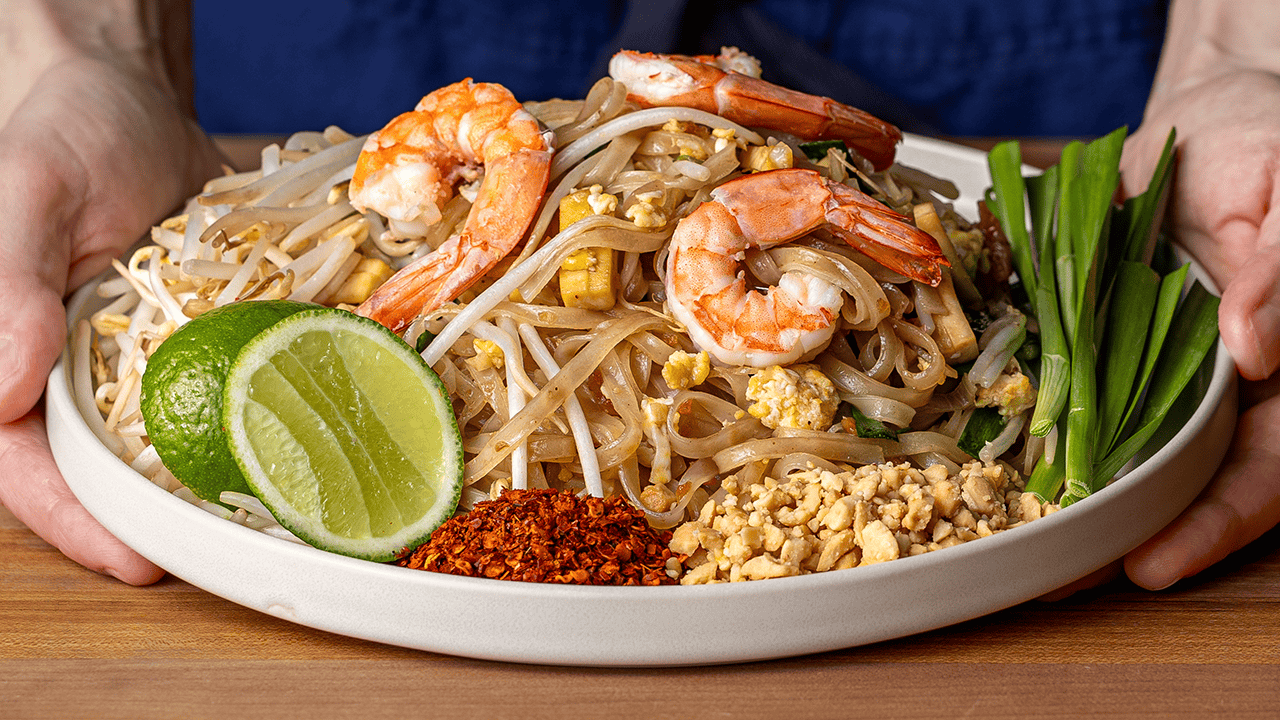
Plate and garnish. Transfer to a plate and set out lime wedges, more bean sprouts, chopped peanuts, Thai chili flakes, and the bottom ends of the garlic chives. These condiments are a traditional part of Thai dining that let each person season their own plate.
Tips for the Best Pad Thai
Don't cook more than two servings at once. Even professional Thai cooks rarely make more than 2-3 portions at a time. Overcrowding the pan drops the temperature, the noodles steam instead of frying, and you end up with the gloopy mess you were trying to avoid.
Have everything prepped before the pan gets hot. This is a stir-fried dish that comes together in minutes. If you're still slicing shallots while the shrimp overcook, you'll have problems. Get every ingredient measured, cut, and in its own container before you turn on the stove.
Taste the sauce before you cook with it. Tamarind ranges from mildly sour to face-scrunching tart depending on the brand and batch. You need to taste and adjust before it goes near the noodles. If it's too sour, add more palm sugar. Too sweet, add more tamarind. Too bland, add more fish sauce.
Use stainless steel, not cast iron. The pad thai sauce is acidic enough from the tamarind to strip the seasoning from cast iron or carbon steel pans. A wide stainless steel frying pan is the better choice here.
Chili heat goes on at the table, not in the pan. In Thailand, the spicy element is a condiment added by each person after the dish is plated. Thai chili flakes or chili powder go on top of the finished pad thai, not into the cooking.
Storage and Reheating
Pad thai is best eaten right after cooking. The noodles continue absorbing moisture as they sit and will get mushy. If you have leftovers, store them in a covered container in the fridge for up to 2 days. Reheat in a hot pan with a small splash of water to loosen the noodles. Microwave reheating works but the texture won't be as good. The pad thai sauce stores much better than the finished dish (up to a month in the fridge), so making a large batch of sauce and cooking fresh noodles each time is the way to go.
Frequently Asked Questions
Can I use chicken instead of shrimp?
Chicken pad thai is mostly a Western takeout thing. In Thailand, shrimp (both fresh and dried) is the more common protein. You can absolutely use chicken if that's what you prefer. Cut it into thin strips and cook it the same way as the shrimp. Pork is another traditional option.
Why are my noodles always sticky and clumpy?
Almost always because of hot water. If you boil or soak rice noodles in hot water, you release a flood of starch that gelatinizes and turns the noodles into glue. Room-temperature water hydrates them slowly without pulling starch out of the noodles. The final cooking happens in the pan when the noodles absorb the sauce.
Do I really need preserved radish and dried shrimp?
You won't find either ingredient in most American takeout pad thai, so you won't miss them if that's your reference point. But if you've ever had pad thai in Thailand and wondered why your homemade version doesn't taste the same, these two ingredients (along with garlic chives) are a big part of the answer.
Can I make the sauce spicy?
Traditional pad thai sauce is not spicy. The heat comes from condiments added at the table after the dish is plated. If you want the sauce itself to carry some heat, a small amount of Thai chili flakes added at the very end of cooking will do it. Just know that's not how it's done in Thailand.
More Thai Recipes
More Noodle Recipes
- Chinese Takeout Chow Mein
- Chinese Takeout Lo Mein
- P.F. Chang's Singapore Street Noodles
- Benihana Yakisoba
- 15 Minute Chili Garlic Noodles
- Homemade Ramen from Scratch
Recipe
Pad Thai
Equipment
- 1 Whisk
Ingredients
Pad Thai Sauce
- 4 tablespoon palm sugar shaved with a knife or grater
- ¼ cup water
- 1 tablespoon Seedless Wet Tamarind if using concentrate, double or triple amount
- 2 tablespoon Squid Brand Fish Sauce
The Noodles
- 4 oz Rice Noodles (medium) medium width
The Stir-Fry
- vegetable oil
- 2 eggs
- 6 large shrimp shelled and deveined
- 1 medium shallot finely sliced
- 2 large garlic cloves chopped (optional)
- 2 tablespoon sweet preserved radish use sweet variety, not salted
- 1 tablespoon dried shrimp (medium) rehydrate and dry-fry for best texture
- ½ cup pressed tofu cut into matchsticks
- 1 cup bean sprouts
- 4 garlic chives cut into 1-inch pieces (green parts only)
- 2 tablespoon peanuts roughly chopped
Garnish
- lime wedges
- bean sprouts
- peanuts roughly chopped
- Thai Crushed Chili Flakes
- garlic chive bottoms
Instructions
Prepare the Tamarind Paste
- Take a block of seedless tamarind and pour an equal amount of boiling water over it in a small bowl. For a 16 oz block, use 2 cups water. For a 14 oz block, use 1 ¾ cups.
- Allow tamarind to soak in hot water for 20-30 minutes. After the mixture has cooled slightly, break it up with your hands until the seeds and pulp have loosened.
- Pass the mixture through a mesh strainer into another bowl, pressing with your hand or a spoon. Scrape the bottom of the strainer to get every last bit of paste.
- Store the prepared paste in a covered container in the fridge for up to 1 month, or freeze in smaller portions for up to 6 months.
Make the Pad Thai Sauce
- Finely shave 4 tablespoons of palm sugar with a knife or grater.
- Add the palm sugar and ¼ cup water to a small pot over medium heat. Whisk until all the sugar is completely dissolved, then remove from heat.
- Whisk in 1 tablespoon of prepared tamarind paste and 2 tablespoons of fish sauce. If using tamarind concentrate, double or triple the amount.
- Taste and adjust with more palm sugar, water, tamarind, or fish sauce until the flavors are balanced.
- Store the prepared sauce in a covered container in the fridge for up to 1 month.
Soak the Noodles
- Cover 4 ounces of dried rice noodles in room-temperature water and soak for about 90 minutes, or until pliable enough to wrap around your finger.
- Drain the noodles and cut them in half with scissors.
- Store the soaked noodles in a covered container in the fridge for up to 3-5 days.
Cook the Pad Thai
- Add oil to a large flat-bottomed pan over medium heat. Add 2 eggs and lightly scramble. Remove eggs from the pan and set aside in a bowl.
- Add oil to the pan over medium heat. Cook 6 large shrimp until done. Remove to the bowl with the eggs.
- Add more oil to the pan over medium-high heat. Add the sliced shallot and chopped garlic, stirring frequently, until just starting to brown.
- Add the sweet preserved radish, dried shrimp, and pressed tofu. Toss with the shallot and garlic until well mixed, about 1 minute.
- Lower heat to medium-low. Add the pre-soaked noodles and pour the pad thai sauce over them. Toss everything together until the noodles are coated and have absorbed most of the sauce, about 2 minutes.
- Add the eggs and shrimp back to the pan and toss to combine.
- Add 1 cup of bean sprouts, the garlic chives, and half the peanuts. Mix until the bean sprouts and chives start to wilt but are still firm, and the shrimp is heated through.
- Remove from heat. Serve on a plate with lime wedges, remaining peanuts, Thai chili flakes, bean sprouts, and garlic chive bottoms.