
This post contains affiliate links, which means I may earn a small commission if you make a purchase. It doesn't cost you anything extra. Full disclosure.
In this post
Why Restaurant Red Beans Taste Better
If your red beans and rice has ever come out watery and bland, it's probably because most recipes treat it like a simple dish, just beans, water and some vegetables simmered in a pot.
The way the best New Orleans restaurants still make it goes back to traditional French cooking techniques, done in a specific order. To find every one of them, I went through 187 recipes and all the old New Orleans cookbooks I could get my hands on, from The Picayune's Creole Cook Book of 1901 to Paul Prudhomme's Louisiana Kitchen, plus over 10,000 comments on 43 other YouTube videos about red beans and rice.
A few things kept coming up. The andouille gets browned first for its fat, the way French cooks render lardons. Prudhomme cooks half the vegetables early and half later. The ham hock stands in for stock. And some of the most famous restaurants in the city finish their red beans with fat. According to food historian Toni Tipton-Martin, Austin Leslie at Chez Helene stirred in half a cup of butter right before serving.
The holy trinity itself has a French story. The oldest New Orleans red beans recipe I found, in that 1901 Picayune cookbook, uses an onion and a carrot, the French way, with no celery or bell pepper at all. Historians think Louisiana cooks traded the carrot for green bell pepper because of what grows there. As the book New Orleans Cuisine, edited by Susan Tucker, puts it, "Soil and weather conditions are very poor for good carrot production in Louisiana. However, sweet pepper production is easy and often year-round."
What I Tested
I cooked my first full pot on November 6. It turned out amazing, and it still changed a few things in the recipe.
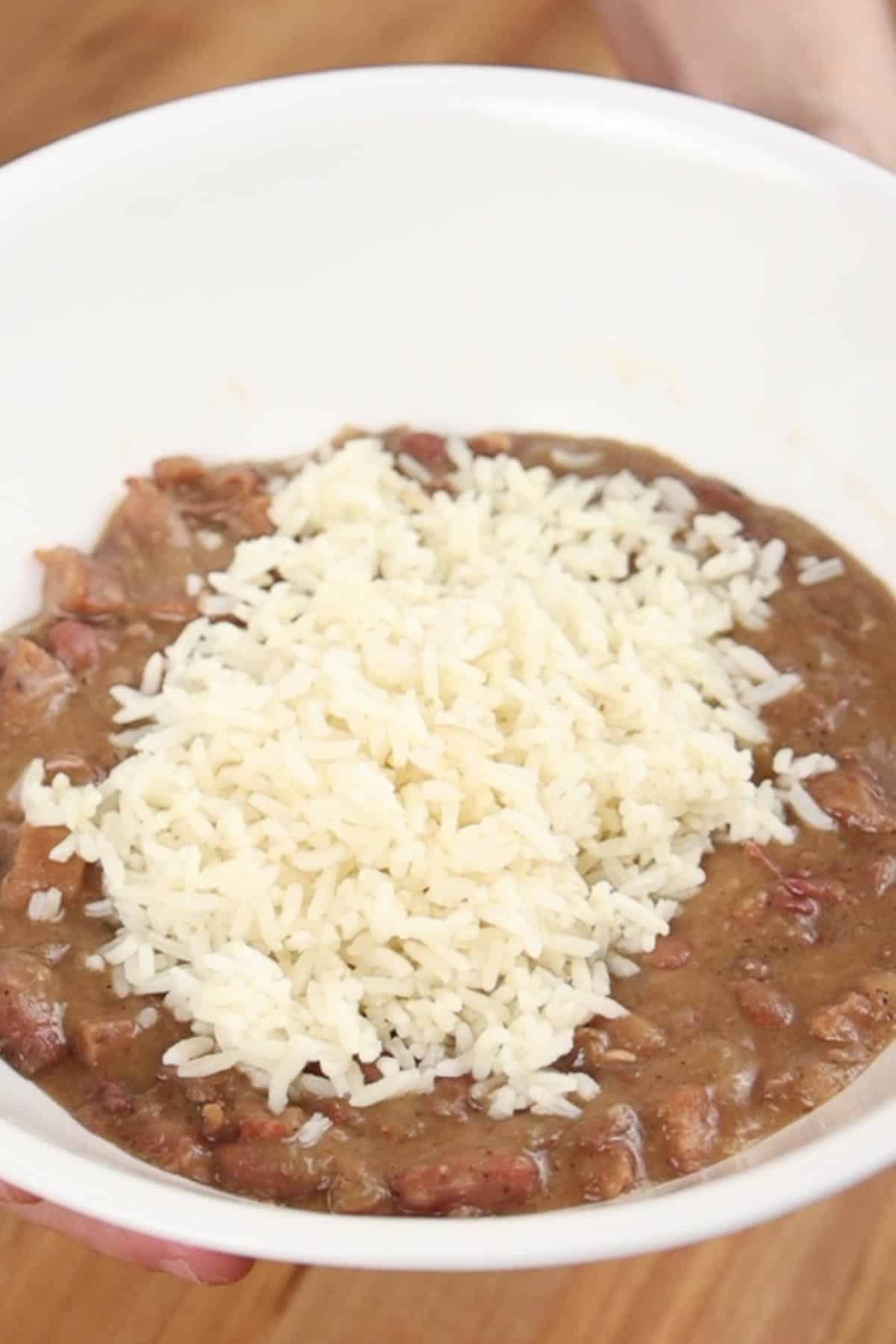
The ham hock is no longer browned. My first version browned it, but of the 83 recipes I counted that use a hock, only 9 brown it, so now it goes straight into the pot with the beans. I also cut the salt in the rice to half a teaspoon, and after tasting the finished pot, the final salt settled at about 2 teaspoons of Morton table salt, still added to taste. The rice now goes in the pan with the water, salt, bay leaves and butter all at once before it comes to a boil, and the rice goes on top of the beans in the bowl, because it just looks better that way.
Why This Red Beans and Rice Recipe Works
- A salt-water soak keeps the skins whole. The sodium softens the bean skins so they stretch with the bean instead of splitting, and it seasons the beans from the inside.
- Browned andouille fat flavors the whole pot. The vegetables and spices cook in it, and the sausage goes back in for the last 30 minutes so it doesn't turn rubbery.
- Two rounds of vegetables give you two flavors. The first half caramelizes for sweetness and color, and the second half goes in later and stays fresher.
- The ham hock thickens the broth. Its gelatin and smoke cook out into the water over the long simmer, so you don't need stock.
- Butter and hot sauce go in at the very end. The butter makes it taste richer, and the vinegar in the hot sauce brings the tang pickled pork usually gives.
Six restaurant dishes that taste exactly like the original.
My free recipe pack: fried rice, lo mein, orange chicken, lettuce wraps, yum yum sauce and the chicken sandwich.
Straight to your inbox. No spam, unsubscribe whenever.
The Ingredients
Camellia red kidney beans. In New Orleans this pretty much means Camellia. According to Camellia, back in 1984 they sold 95 out of every 100 bags of dry beans in the entire city. Walmart carries them for about two dollars a pound, and so does Amazon. If you can't find them, any red kidney beans will work. What matters more is how old they are. Fresh beans have smooth, firm skins, and old ones look wrinkled and dried out and can stay hard no matter how long they simmer.
Andouille sausage. A spicy Cajun smoked pork sausage. Chef John Folse's Encyclopedia of Cajun and Creole Cuisine says it's traditionally smoked over pecan wood and sugar cane until it turns almost black. If you can't find it, most of the cookbooks and test kitchens I looked at use kielbasa, or Polish sausage.
Smoked ham hock. The joint at the bottom of the pig's leg, just above the foot, so basically the pig's cankle. It's mostly skin, bone and connective tissue, which is exactly why it's here. If you can't find one, New Orleans cook Kenneth Temple uses smoked turkey necks instead, or smoked turkey legs or wings.
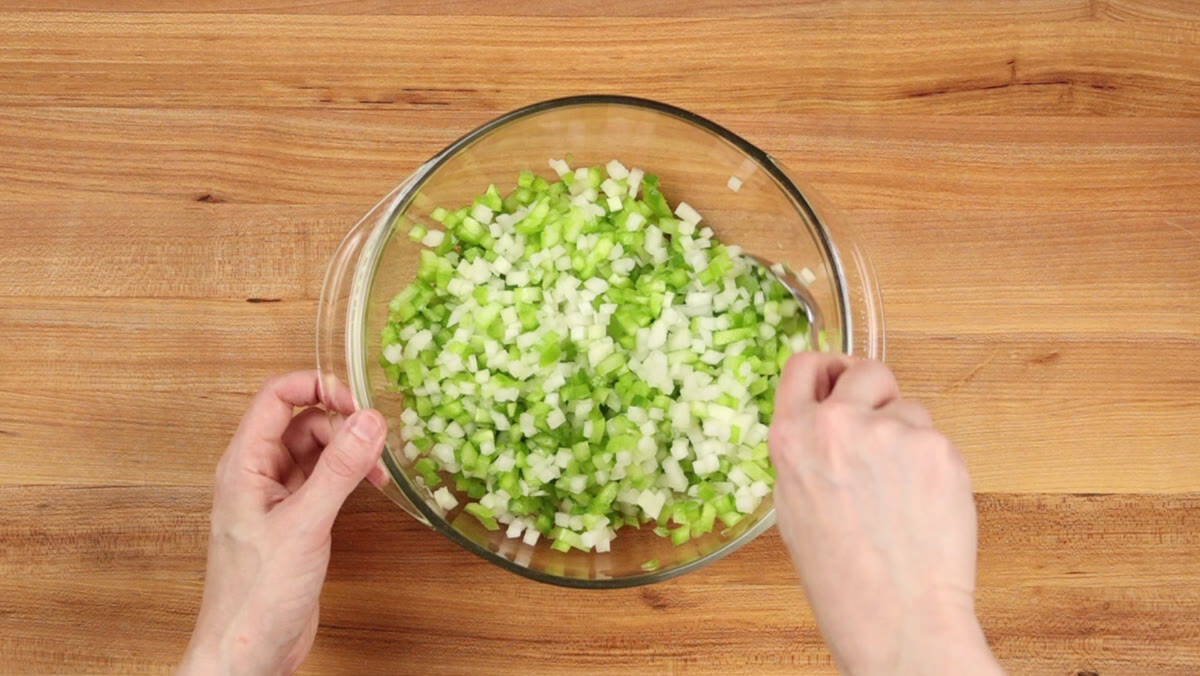
The holy trinity. One large yellow onion, two celery ribs and one green bell pepper, diced and mixed, then split into two equal piles. You'll see why in the method.
Popcorn rice. A Louisiana aromatic rice, like basmati or jasmine, that really does smell like popcorn when you take the lid off. I use the Cajun Country brand, which most grocery stores carry; Randy Evans, the first chef I ever worked for, uses popcorn rice from the same mill in his cookbook. Any long-grain white rice works if you can't find it.
Louisiana hot sauce. A vinegar-based one, like Crystal or Tabasco. When I worked for Randy Evans we always used Crystal, so that's what I still use, but Louisiana Hot Sauce or Tabasco work just as well.
How to Make Red Beans and Rice
1. Soak the beans in salt water
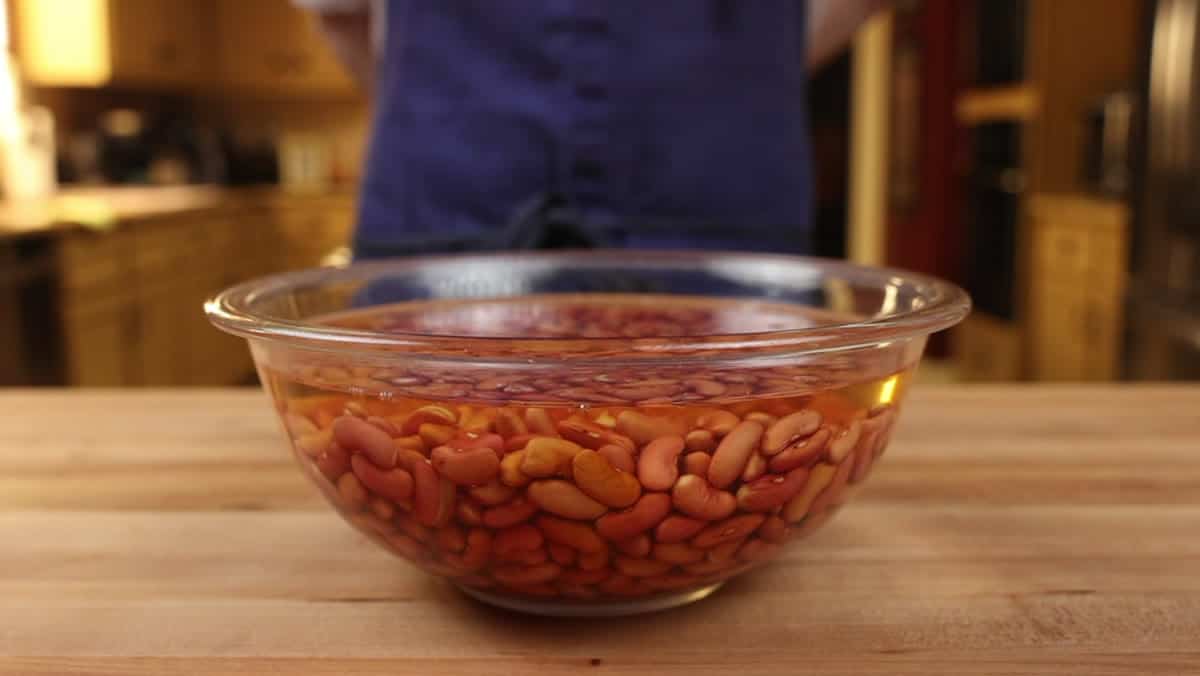
Pick through the beans first, because every so often there's a little stone or a shriveled bean in the bag. Whisk 1 tablespoon (18 grams) of Morton table salt into 6 cups of cold water, add the beans and leave them at room temperature for 8 to 16 hours. One study out of Brazil found the beans pretty much stopped taking in water after about 12 hours. Drain and rinse them so the salty water doesn't go into the pot.
2. Brown the andouille and set it aside
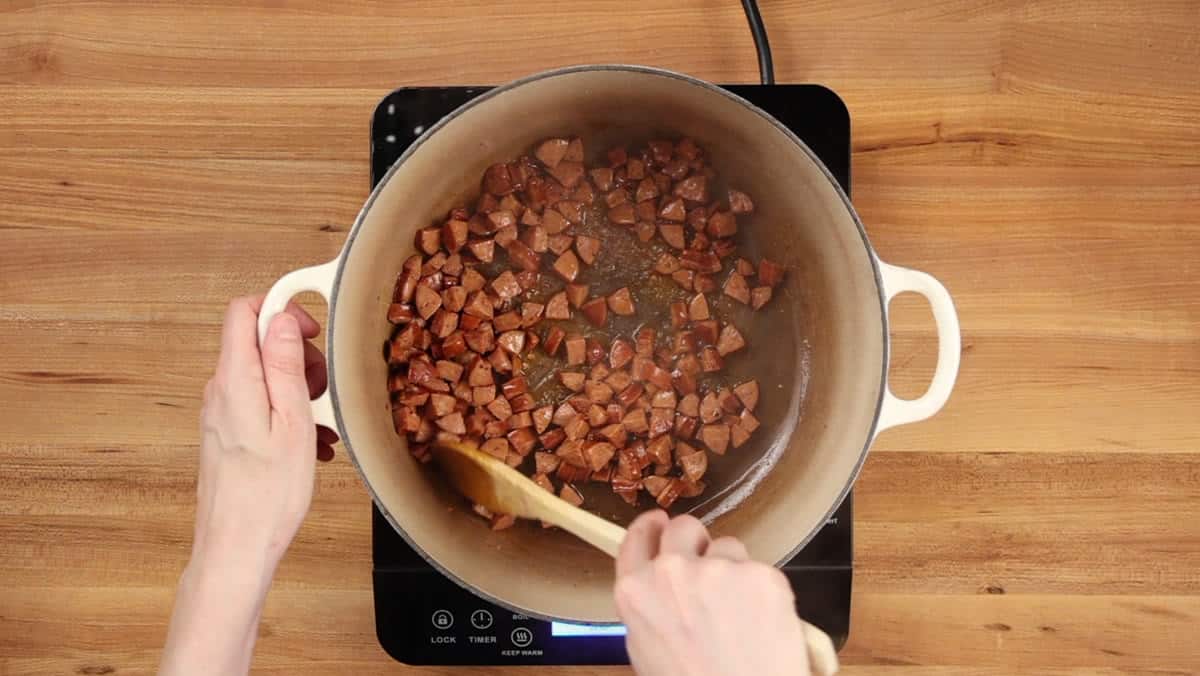
Cook the diced andouille in a tablespoon of oil over medium heat until it has rendered its fat and is a little crispy, then lift it out and leave the fat in the pot. A lot of people cook their sausage in the beans the whole time, but a lot of cooks find it turns rubbery after a few hours.
3. Caramelize half the vegetables
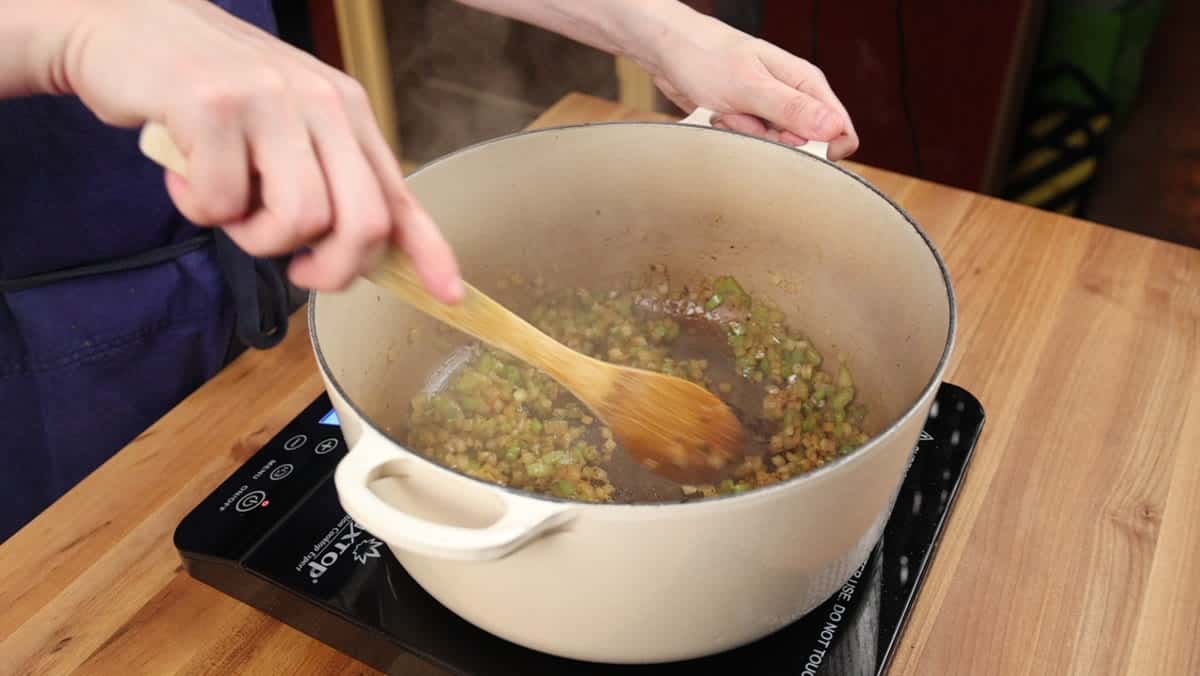
Add one pile of the trinity to the andouille fat and cook it over medium to medium-high heat. Go by color, not time: you want them deeply caramelized, right up to the point where you're maybe just starting to get nervous, but not burnt. This half-now, half-later trick comes from Paul Prudhomme's Louisiana Kitchen, which is basically the bible of Cajun and Creole cooking.
4. Cook the garlic and peppers in fat
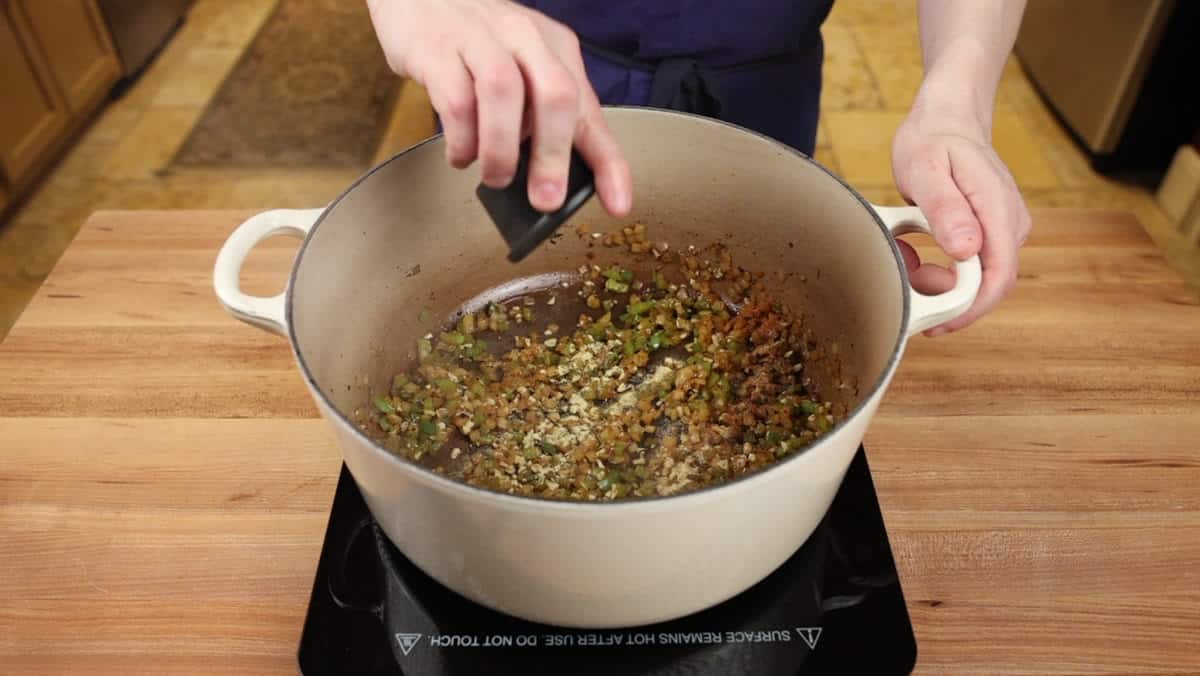
Add the garlic for the last 20 to 30 seconds. Just as it smells fragrant, stir in half a teaspoon of ground white pepper, a quarter teaspoon of black pepper and a quarter teaspoon of cayenne for 10 to 20 seconds. That three-pepper blend is Prudhomme's, but his recipes are almost inedibly hot, so I cut his amounts by 50 to 75%.
5. Deglaze and add the other half
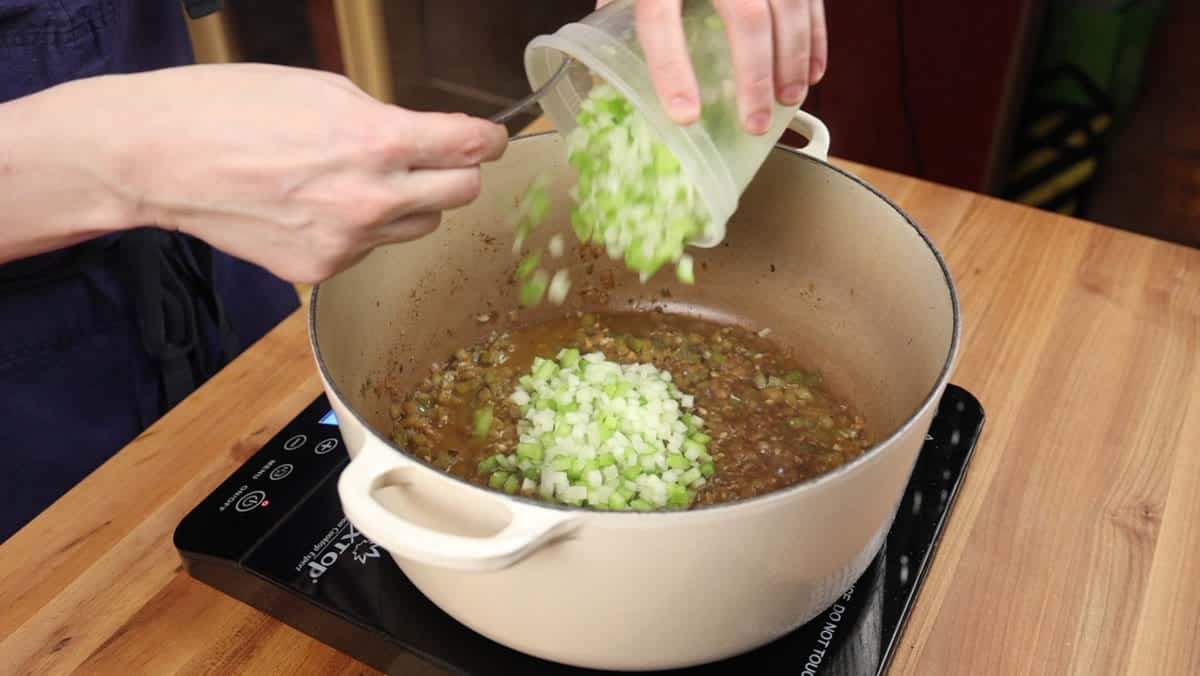
Pour in half a cup of water and scrape up all the browned bits on the bottom of the pot. French cooks call those bits the fond, and that's where the flavor from browning the andouille and the vegetables is. Then add the second pile of vegetables, 3 bay leaves and a teaspoon of dried thyme. The thyme waits until after the water because dried thyme burns quickly in hot fat.
6. Simmer the beans with the ham hock
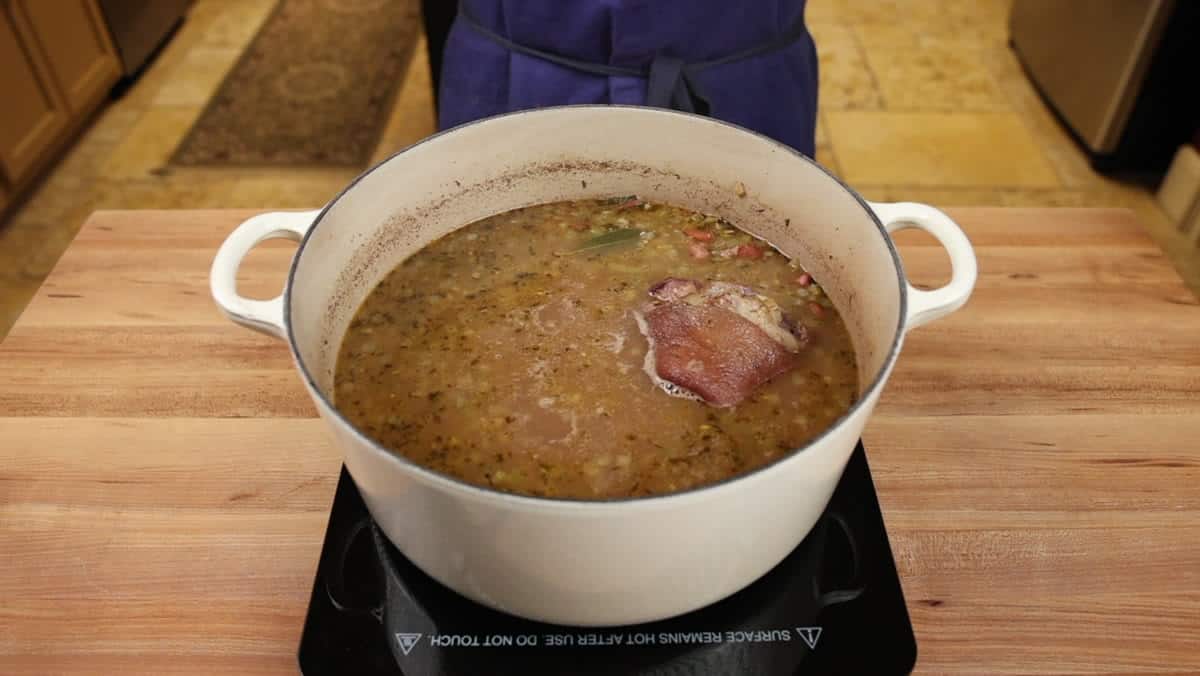
Add the drained beans, the ham hock and 7 and a half cups of water, bring it to a boil, then turn it down to a low simmer with just a few bubbles popping up here and there. Set the lid on tilted so some steam escapes, stir now and then, and add hot water if it drops below the beans. Most of the recipes I went through use water here, because the hock makes the stock.
7. Make the popcorn rice
While the beans simmer, put 2 cups of rice in a saucepan with 3 cups of water, half a teaspoon of salt, 2 bay leaves and a tablespoon of butter, and bring it to a boil. Cover it, turn it to low and cook 18 minutes without lifting the lid, then let it rest off the heat, covered, for 10 more. Pull out the bay leaves and fluff it with a fork, lifting from the bottom so the grains separate.
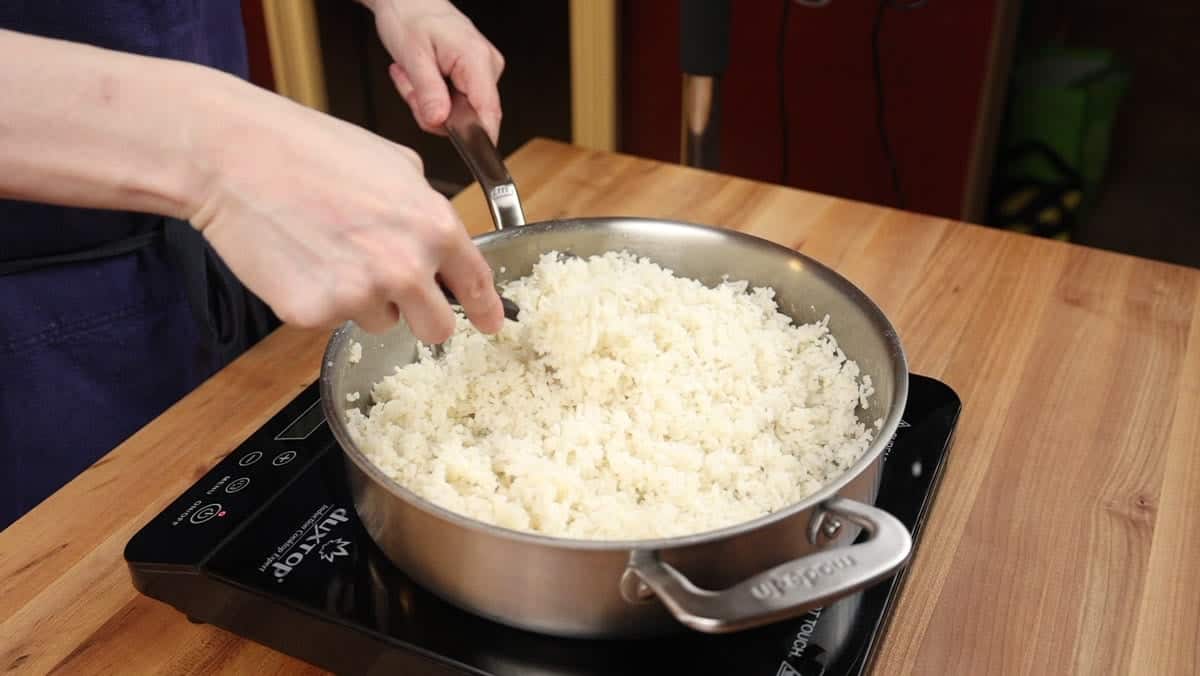
8. Check the beans at 2 hours
Take a bean out and press it against a spoon or squeeze it between your fingers. Every bean should be soft all the way through; if any are still firm in the middle, keep simmering. It usually takes 2 to 3 hours.
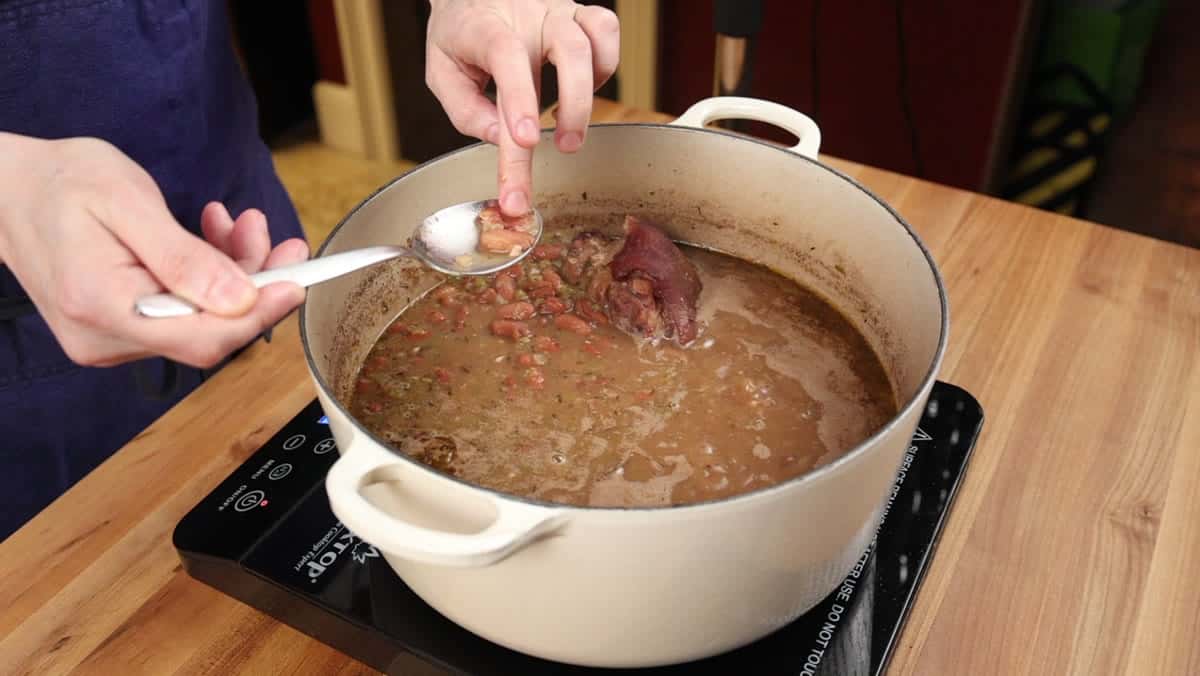
9. Mash some of the beans
For the last 30 to 45 minutes, mash some of the beans in the pot with a spoon or a potato masher and stir. As Harold McGee explains in On Food and Cooking, hot water softens the walls of the beans' cells and the starch inside them swells up, so when you mash some of them, that starch gets into the broth and thickens it.
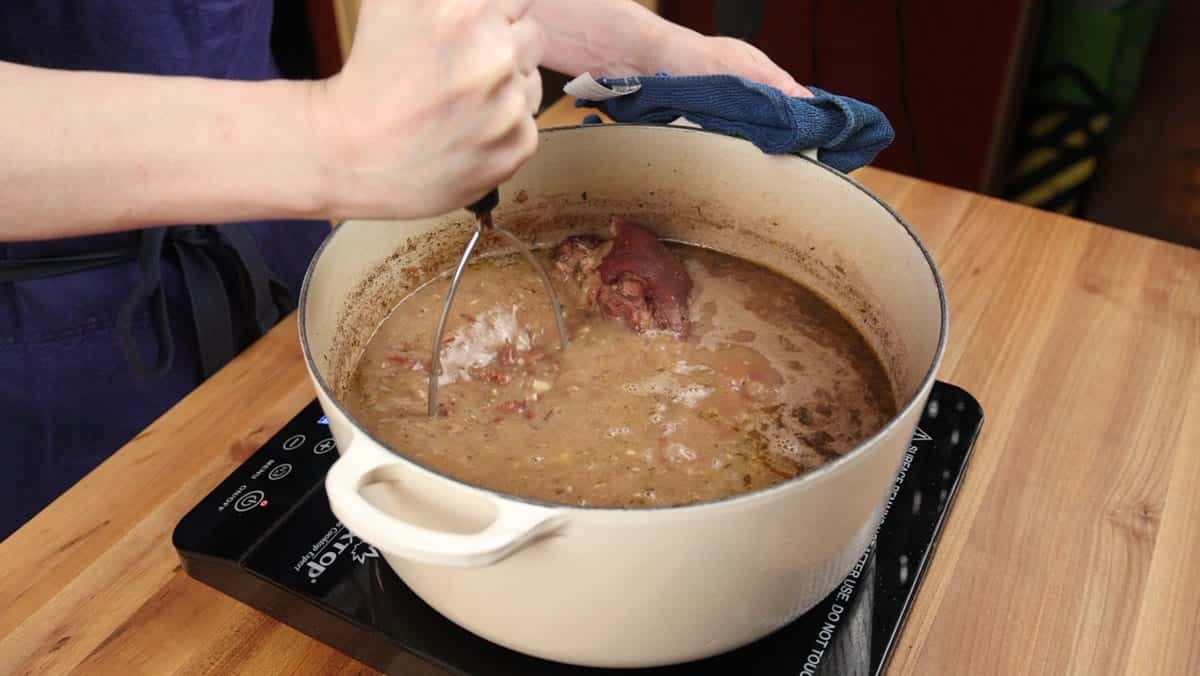
10. Shred the hock, add the andouille
Fish out the hock. One trick we always used in the restaurant kitchens I worked in is two layers of silicone gloves, which let you handle something that hot. Throw away the skin and bone, shred the meat into the pot, and stir the andouille back in for the last 30 minutes.
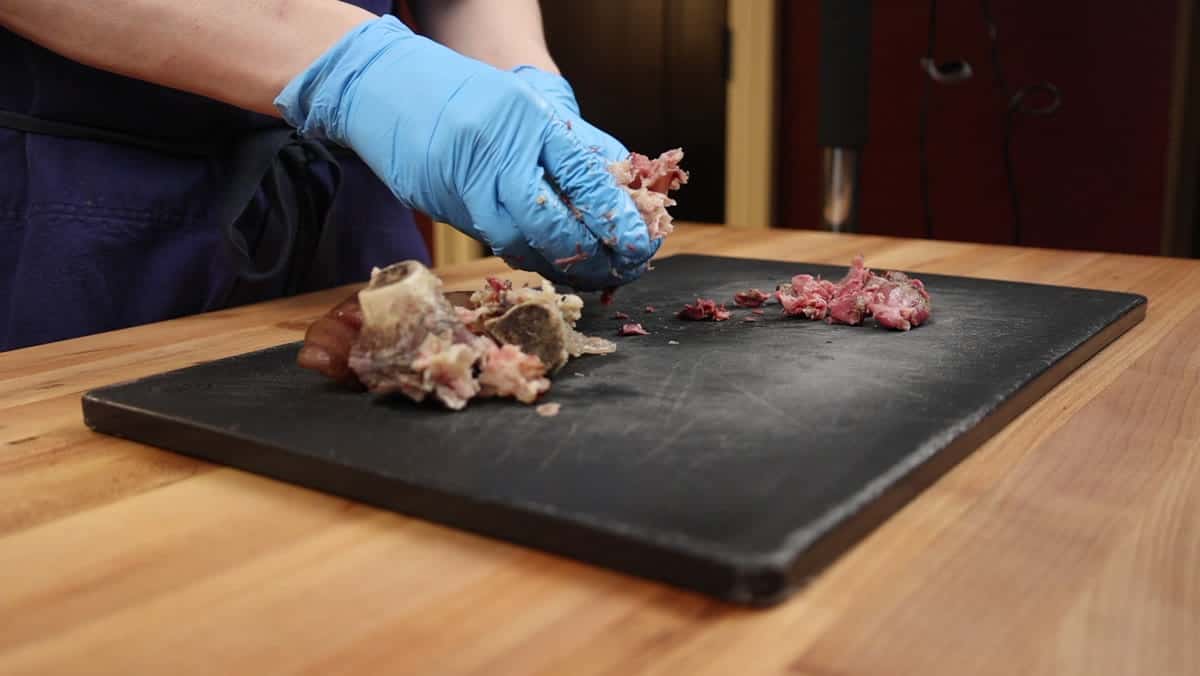
11. Finish with butter
For the last 5 minutes, stir in 4 tablespoons of unsalted butter until it melts into the broth. This is the step most home cooks leave out. The French call it monter au beurre, finishing with butter, and it makes the whole pot taste richer. Fat coats the tongue, so the smoky, spicy flavors from the long simmer linger longer.
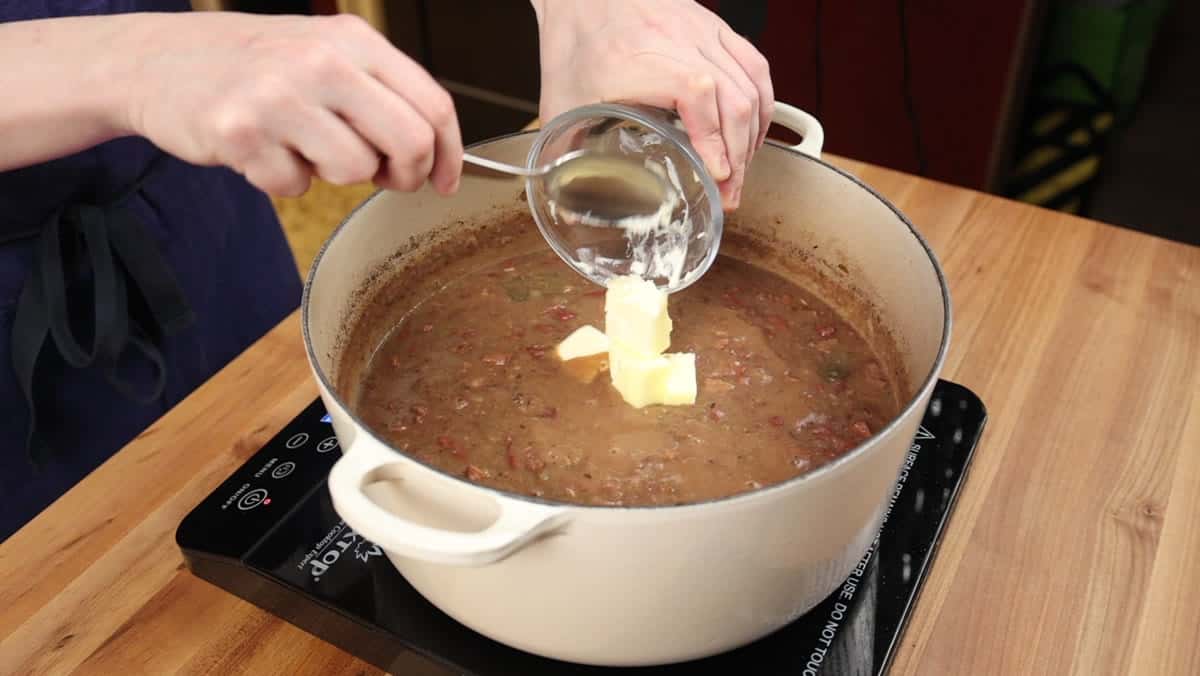
12. Taste, salt, then add the hot sauce
Taste before you salt. The ham hock has already salted the pot, so add only what it needs; I add about 2 teaspoons of Morton table salt, a little at a time. Then stir in a tablespoon of hot sauce. It goes in last on purpose, because as chef Justin Devillier of La Petite Grocery writes in his cookbook, "Add acid too early in the cooking process, and its flavor becomes muted." Take out the bay leaves.
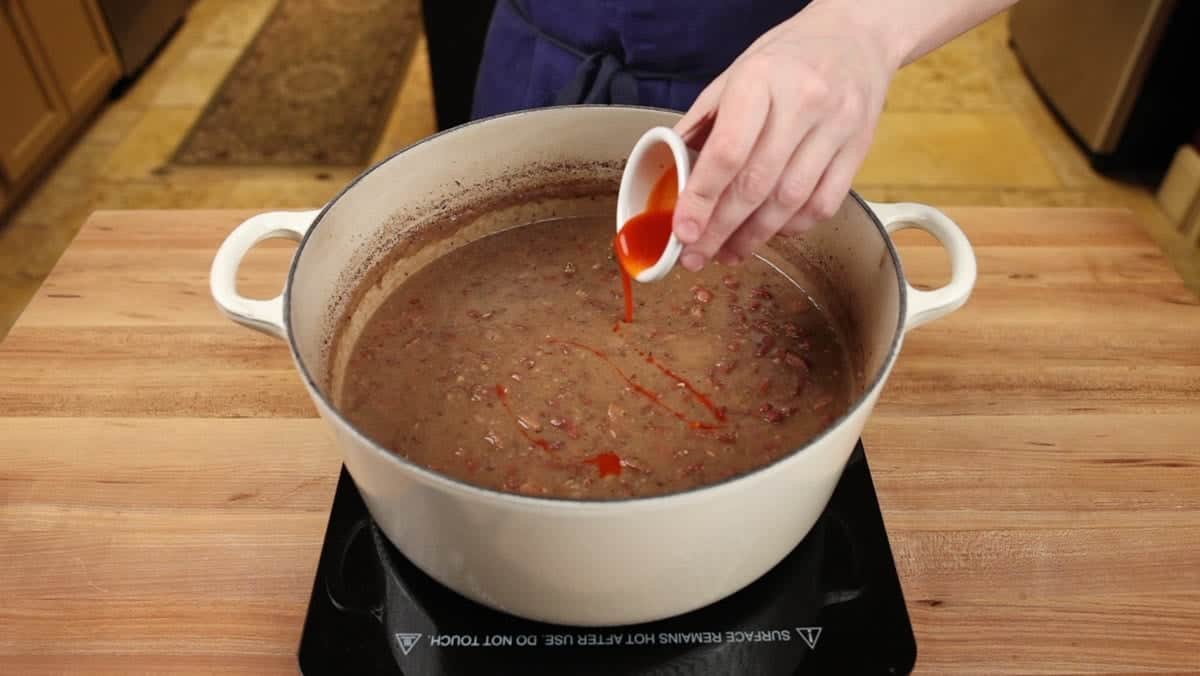
13. Serve
Ladle the red beans into bowls and spoon the popcorn rice right on top.
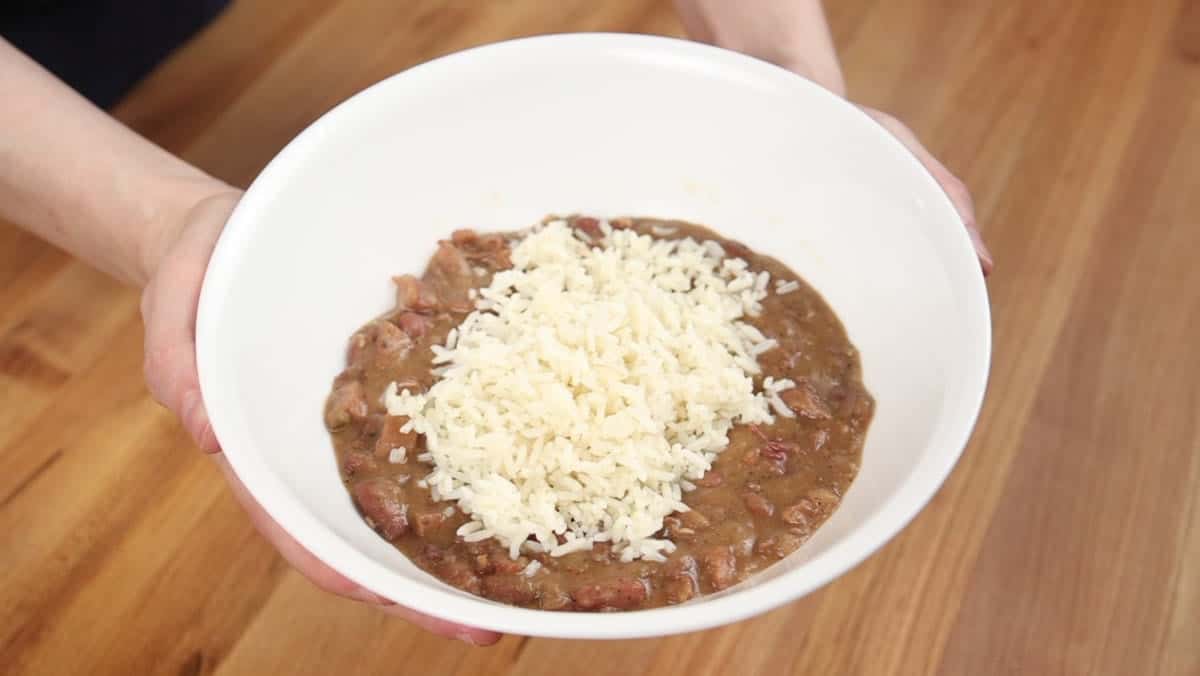
Tips for Restaurant-Style Red Beans
- Use beans that look fresh. Old beans are the most common reason a pot stays hard after hours. As cookbook author James Peterson puts it, "The cooking time for most beans is a function of the age of the bean, not the variety."
- Using kosher salt, go by weight. The soak takes 18 grams of salt whatever brand you use, and kosher salt is much lighter by the spoon.
- Don't rush the first round of vegetables. Pale vegetables won't give the pot its sweetness and color; that's the half Prudhomme browns.
- If it gets too thick, add water. Keep a little hot water nearby while it simmers, and loosen leftovers the same way.
Storing and Reheating
Keep leftover red beans and rice in the fridge for 3 to 4 days, or freeze them for 3 to 4 months (USDA leftovers guide). The beans thicken in the fridge, so loosen them with a splash of water and reheat them until they're steaming hot, 165°F, as the USDA page says.
Questions About Red Beans and Rice
Do you have to soak red beans?
No, but I always do. Camellia says on its own website that soaking only cuts the cooking time slightly, sometimes by as little as 15 minutes. But when Milk Street's test kitchen cooked almost 12 pounds of kidney beans, they found that "Beans that weren't soaked cooked unevenly no matter what cooking technique we used," and you can't mash a bean that's still hard in the middle.
What can I use instead of pickled pork?
A lot of New Orleans cooks swear by pickled pork, small pieces of pork cured in a salty brine. Jamie Shannon, who was head chef at Commander's Palace, wrote in his cookbook, "My favorite is pickled pork." But it's hard to find outside of Louisiana or Texas and takes days to make, and what it mostly adds is a little tang, so a tablespoon of vinegar-based hot sauce at the end gets you that same flavor.
Why are my red beans watery?
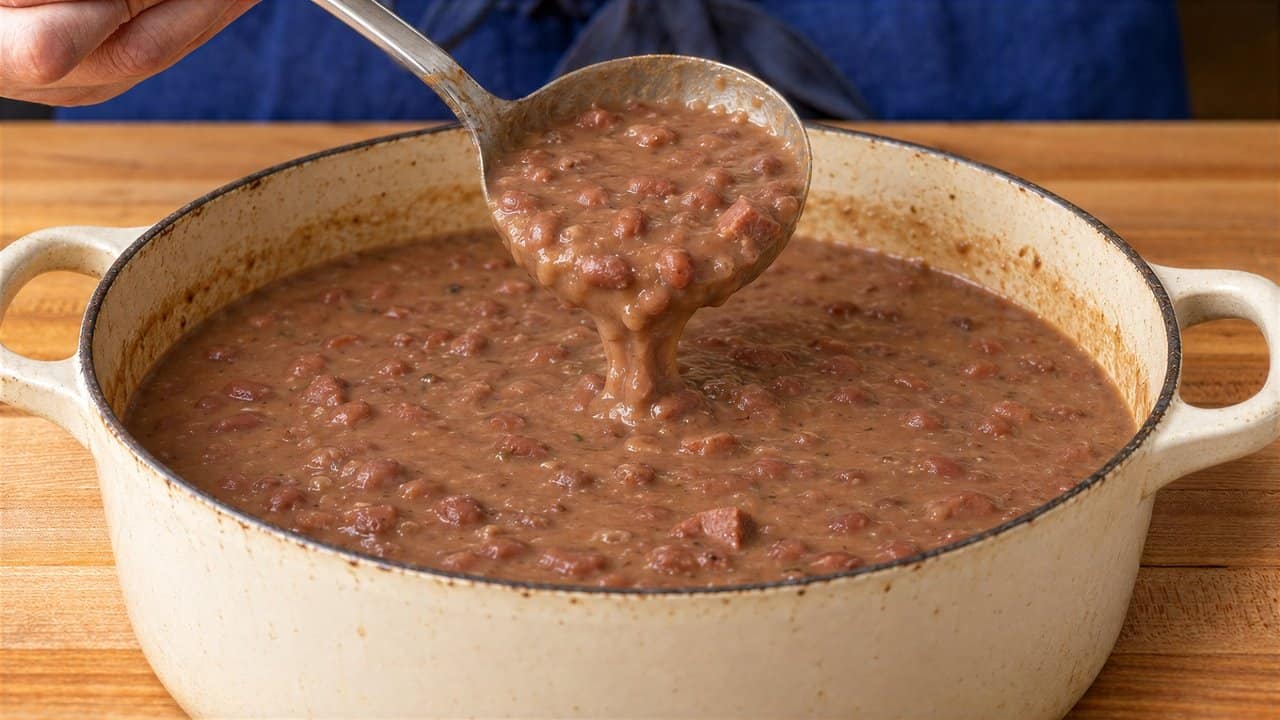
Usually the pot is missing what thickens it. In this recipe, the gelatin from the smoked ham hock thickens the broth over the long simmer, and mashing some of the beans for the last 30 to 45 minutes thickens it the rest of the way. If it's still thin, give it more time at a simmer, since the broth keeps thickening as the beans soften.
Does salt keep beans from softening?
No. The test kitchens I looked at found that's a myth, and these beans were soaked in salt water before they ever hit the pot. The reason to wait on salt is the ham hock. As Jamie Shannon wrote, "It's very easy to oversalt, especially when you're cooking meat in beans."
If you make this, leave a star rating in the card below; it helps other people find the recipe.
More Beans and Rice Recipes
New Orleans Red Beans and Rice
Ingredients
The Soak
- 1 lb Camellia red kidney beans or any red kidney beans; pick out stones and shriveled beans, then rinse
- 6 cups cold water
- 1 tablespoon Morton table salt using kosher salt, go by weight: 18 g
The Pot
- 1 smoked ham hock 1 to 1½ lb; or smoked turkey necks, legs or wings
- 12 oz andouille sausage diced small; or kielbasa (Polish sausage)
- 1 tablespoon vegetable oil any neutral oil
- 1 large yellow onion diced
- 2 celery ribs diced
- 1 green bell pepper diced; mix the onion, celery and pepper, then split into two equal piles
- 4 garlic cloves minced
- ½ teaspoon white pepper ground
- ¼ teaspoon black pepper ground
- ¼ teaspoon cayenne pepper
- ½ cup water to deglaze
- 1 teaspoon dried thyme
- 3 bay leaves
- 7 ½ cups water plus more hot water to keep the beans covered
The Finish
- 4 tablespoon unsalted butter
- 2 teaspoon Morton table salt to taste: taste first, start with less, add a little at a time
- 1 tablespoon Louisiana hot sauce vinegar-based: Crystal (what I use), Tabasco or Louisiana Hot Sauce
The Rice
- 2 cups popcorn rice Cajun Country; any long-grain white rice works too
- 3 cups water
- ½ teaspoon Morton table salt
- 2 bay leaves
- 1 tablespoon unsalted butter
Instructions
Soak the Beans (the night before)
- Pour out the beans and pick through them for little stones and shriveled beans, then rinse them in a colander.
- In a large bowl, whisk the salt into the 6 cups of cold water until it dissolves. Add the beans and leave them at room temperature for 8 to 16 hours, or overnight. The salt water keeps the skins from splitting and seasons the beans from the inside.
- Drain the beans and give them a quick rinse, so the salty soaking water doesn't go into the pot.
Build the Flavor Base
- Heat the oil in a large, heavy pot over medium heat. Add the diced andouille and cook, stirring now and then, until it has rendered its fat and is browned and a little crispy. Lift the andouille out and set it aside for the end, leaving all the fat in the pot.
- Add the first pile of onion, celery and green bell pepper to the andouille fat. Cook over medium to medium-high heat, stirring, until deeply caramelized; go by color, not time, right up to the point where you start to get nervous, without burning. This is Paul Prudhomme's method: the first half browns for sweetness and color.
- Add the garlic for the last 20 to 30 seconds. Just as it turns fragrant, add the white pepper, black pepper and cayenne and stir them into the fat for 10 to 20 seconds.
- Pour in the ½ cup of water and scrape up every browned bit stuck to the bottom of the pot (the fond). That's where the flavor from the andouille and the vegetables is.
- Stir in the second pile of onion, celery and green bell pepper, the bay leaves and the dried thyme. The second half stays fresher, and the thyme goes in after the water because dried thyme burns quickly in hot fat.
Simmer the Beans
- Add the drained beans, the smoked ham hock and the 7 ½ cups of water. Turn the heat to high and bring it to a boil.
- Turn it down to a low simmer, with just a few bubbles here and there, and set the lid on tilted so some steam escapes. Stir now and then, and add hot water if the level drops below the beans. Don't salt yet: the ham hock salts the pot as it cooks.
- Simmer until the beans are soft and creamy all the way through, 2 to 3 hours. At about 2 hours, test a few by pressing them against a spoon; if any are still firm in the middle, keep simmering. Make the rice while the beans simmer.
Mash and Finish
- For the last 30 to 45 minutes, mash some of the beans in the pot with a spoon or potato masher and stir. The starch from the mashed beans thickens the broth and makes it creamy.
- Fish out the ham hock (two layers of silicone gloves let you handle it hot). Throw away the skin and bone, shred the meat and stir it back in.
- Stir the andouille back in for the last 30 minutes, so it heats through without turning rubbery.
- For the last 5 minutes, stir in the butter until it melts into the broth.
- Taste first, then add salt only as it needs it, a little at a time (I add about 2 teaspoon Morton table salt). Stir in the hot sauce and take out the bay leaves.
Cook the Popcorn Rice
- Put the rice in a saucepan and pour in the water. Add the salt, bay leaves and butter and bring it to a boil.
- Cover, turn the heat to low and cook for 18 minutes without lifting the lid.
- Take the pan off the heat and let it rest, covered, for 10 minutes. Take out the bay leaves and fluff the rice with a fork, lifting from the bottom so the grains separate.
Serve
- Ladle the red beans into bowls and spoon the popcorn rice right on top.