

This post contains affiliate links, which means I may earn a small commission if you make a purchase. It doesn't cost you anything extra. Full disclosure.
In this post
- What I Learned About P.F. Chang's
- What I Tested
- What Is Mongolian Beef?
- Mongolian Beef Ingredients
- How to Make Mongolian Beef
- Tips for the Best Mongolian Beef
- Make It Ahead
- Storing and Reheating Leftovers
- What to Serve With Mongolian Beef
- Questions About Mongolian Beef
- More P.F. Chang's Recipes
- The recipe card
What I Learned About P.F. Chang's
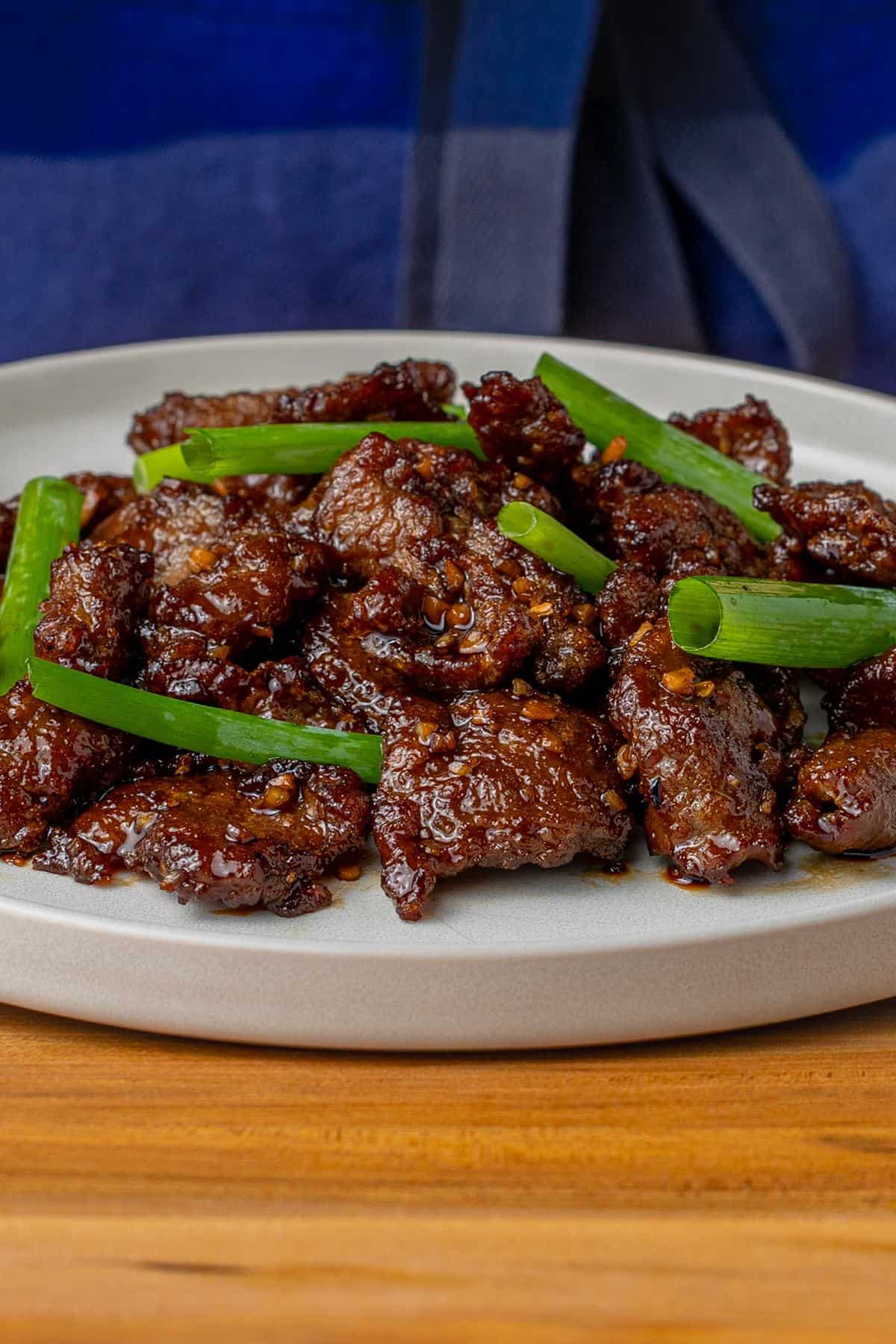
Most of the Mongolian beef recipes I went through for this one are some version of soy sauce and brown sugar poured over seared steak. That gets you a sweet beef stir-fry, but it doesn't get you the beef they serve at P.F. Chang's, which is crispy at the edges and soft all the way through the middle.
I read what a lot of people who've worked at P.F. Chang's have said about it, much of it in the comments under my videos. The beef goes through two steps before it ever reaches the wok.
First it sits in an alkaline soy marinade, which is just baking soda dissolved in water with some soy sauce, and I was told the restaurant gives its protein at least 24 hours in it. Then it's velveted, which means it gets a thin coating of egg white and starch and a quick fry in oil.
The sauce is what they call a dark sauce, made with soy sauce, mushroom soy sauce, oyster sauce, rice wine, chicken broth and sugar. From what I've pieced together, the restaurant uses the same dark sauce in a lot of dishes, and not all of them are sweet, so the extra sugar for the Mongolian beef gets added in the wok. Once I had it figured out, it was a lot closer to a basic stir-fry sauce than I expected.
They didn't always agree with each other. Where they disagreed, I went with the most recent accounts, and tested the rest.
What I Tested
Updated October 2026: new step photos, a rewritten method and answers to readers' questions. What changed in the recipe: the fridge time for the dark sauce is now 3 to 4 days, the USDA's figure.
I made the dark sauce with both Lee Kum Kee low-sodium soy sauce and Kikkoman. From what I was told, P.F. Chang's used to use Kikkoman, and when I made the video it was using Lee Kum Kee, so if you use Kikkoman, you're making the older version of the dish.
To be completely honest, there isn't much difference. Kikkoman is a little sweeter, and Lee Kum Kee tastes saltier even though it's the low-sodium one. I liked Kikkoman a bit better in the marinade and Lee Kum Kee in the dark sauce.
The velveting is where I got the most conflicting reports. Most of them said potato starch and a few said cornstarch, while others said it's just egg white and white pepper, with no starch at all. So I made all three side by side.
The potato starch and cornstarch batches were basically impossible to tell apart, and the egg-only batch came out tougher.
I've also found that the marinating time makes a difference. Two hours works, but beef that goes a full day comes out more tender and better seasoned all the way through.
Why This Mongolian Beef Works
- An alkaline soy marinade. The baking soda raises the pH of the water, which keeps the meat from tightening up in the heat of the wok, and the soy sauce seasons the beef all the way through. Dissolving the baking soda in water also helps avoid the off-flavor some people get when they rub it straight onto meat.
- A starch in the velveting. The egg white and potato starch coating sits between the beef and the hot oil, so the slices cook more gently and stay juicy.
- A quick pass through the oil. Frying the beef at 350°F for 60 to 90 seconds cooks it before the stir-fry, so it gets browned edges and a tender middle, and the final toss in the wok only takes a couple of minutes.
- Sugar added at the wok. A tablespoon of sugar with a quarter cup of dark sauce boils down fast into a glossy coating that sticks to the beef.
- Dehydrated minced garlic. It doesn't burn and stick to a hot wok as easily as fresh garlic, and the flavor is smoother. When I made the video, P.F. Chang's was using it in almost all of their dishes.
Six restaurant dishes that taste exactly like the original.
My free recipe pack: fried rice, lo mein, orange chicken, lettuce wraps, yum yum sauce and the chicken sandwich.
Straight to your inbox. No spam, unsubscribe whenever.
What Is Mongolian Beef?
Mongolian beef is a Chinese American stir-fry of thin-sliced beef and green onions in a sweet, dark soy sauce. Even with the name, it isn't from Mongolia. As far as I can tell, it came out of Taiwan, where Mongolian barbecue restaurants were popular, and it was named after them before it spread through Chinese takeout kitchens in the US.
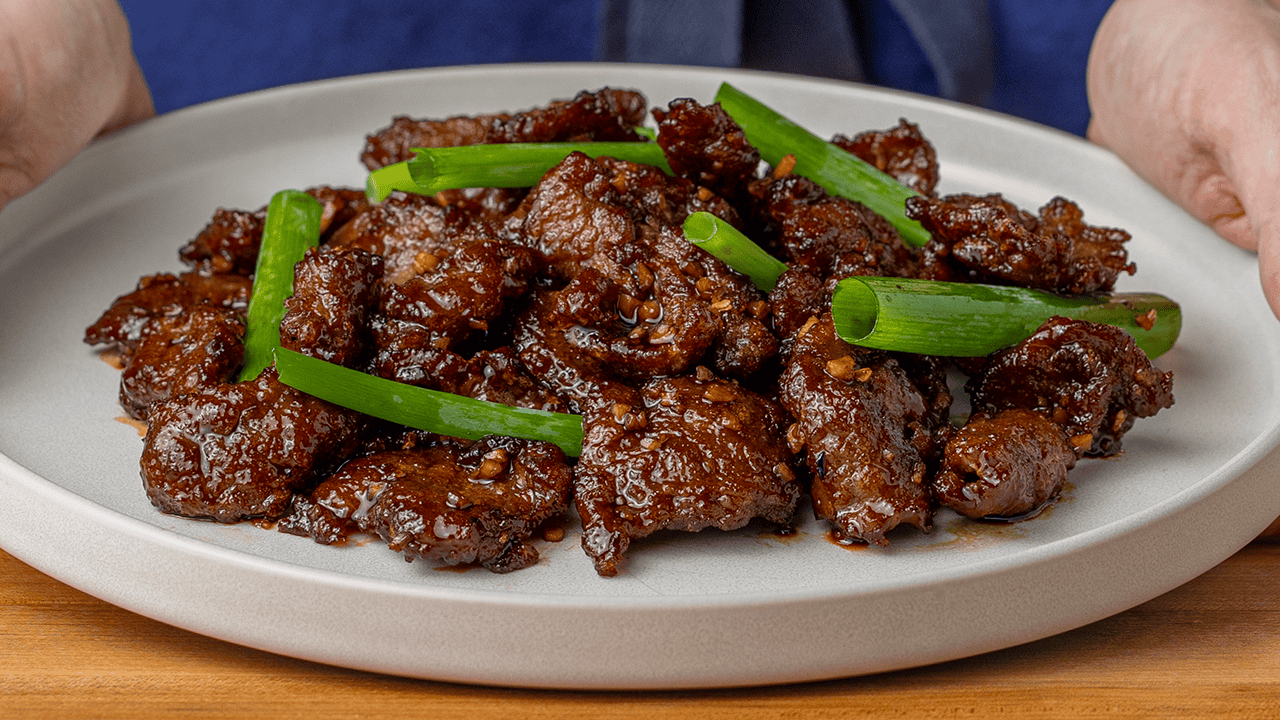
P.F. Chang's own menu calls it a fan favorite: tender beef stir-fried in a sweet soy glaze with garlic and green onions.
Mongolian Beef Ingredients
The full list with amounts is in the recipe card below. These are the ones worth knowing about before you shop.
Flank steak is what P.F. Chang's was using when I made the video. It has a lot of beef flavor and it's still fairly cheap, but it has long muscle fibers, so if you slice it the wrong way, it comes out really chewy. Top round or chuck will also work if that's what you have.
Soy sauce: Lee Kum Kee low-sodium (the green bottle) or Kikkoman both work for the marinade and the dark sauce.
Mushroom soy sauce is a dark soy sauce, so it's mostly there for color, with a little extra savoriness from the mushroom seasoning. It doesn't taste like mushrooms. If you can't find it, use regular dark soy sauce, and if you can't find that either, add a little more regular soy sauce.
Oyster sauce: Lee Kum Kee Panda brand, the one with the green label, is the gluten-free one with no added MSG. If you can find Lee Kum Kee's premium oyster sauce, the one with the mother and son harvesting gargantuan oysters on the label, I think it's even better. If you can't eat shellfish, look for a vegetarian or mushroom oyster sauce at an Asian grocery store.
Chicken base: the card calls for Minor's chicken base, the paste that comes in a tub. Asian-style chicken powder works just as well, and that's what I used in the video: Knorr chicken powder (sold here as Knorr Broth Mix) or Lee Kum Kee chicken powder. Stay away from Western-style bouillon cubes, because the little bits of dried parsley in them end up floating in the sauce. If you're not worried about how it looks, though, any chicken broth or stock will work for the dark sauce.
Michiu rice cooking wine is popular in Cantonese and Taiwanese kitchens. It's lighter than Shaoxing wine, but either one works here, so use whichever one you can find. If you'd rather not cook with alcohol, you can just leave it out.
Potato starch and cornstarch work the same in this recipe, so use whichever one you have.
Dehydrated minced garlic is in the spice aisle at most grocery stores. Cover it with hot water for 20 to 30 minutes, then drain it and press out the extra water, and it keeps in the fridge for about a week. If you'd rather use fresh garlic, use the same amount and just don't let it burn.
Sesame oil: when I made the video, P.F. Chang's was using Lee Kum Kee pure sesame oil, and any toasted sesame oil works fine.
How to Make Mongolian Beef
The dark sauce
1. Make the dark sauce
Start by bringing the water, sugar and chicken base to a simmer over medium heat, whisking just until nothing's left on the bottom of the pot. Then kill the heat and whisk in the soy sauce, mushroom soy sauce, oyster sauce and rice wine. You'll only use a quarter cup of it in this recipe.

The beef
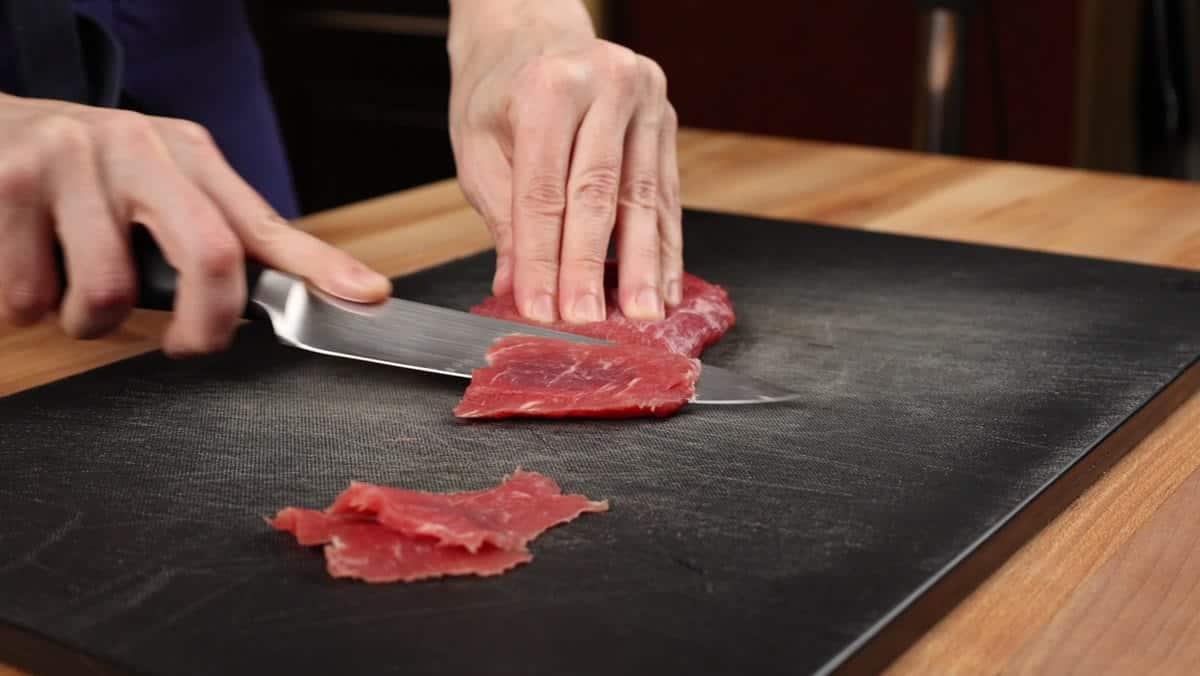
2. Slice the flank steak
Find the long muscle fibers running down the steak, and first cut with them into strips about 1.5 inches wide. Then turn each strip sideways, tilt your knife to about 30 to 40 degrees, and slice it against the grain into pieces about ⅛ inch thick. If the grain veers off at an angle in a spot, cut that piece off and slice it on its own. J. Kenji López-Alt shows the same two-step cut for flank steak in his book The Wok.
If the steak is hard to slice that thin, put it in the freezer for 20 to 30 minutes first.
3. Marinate the beef
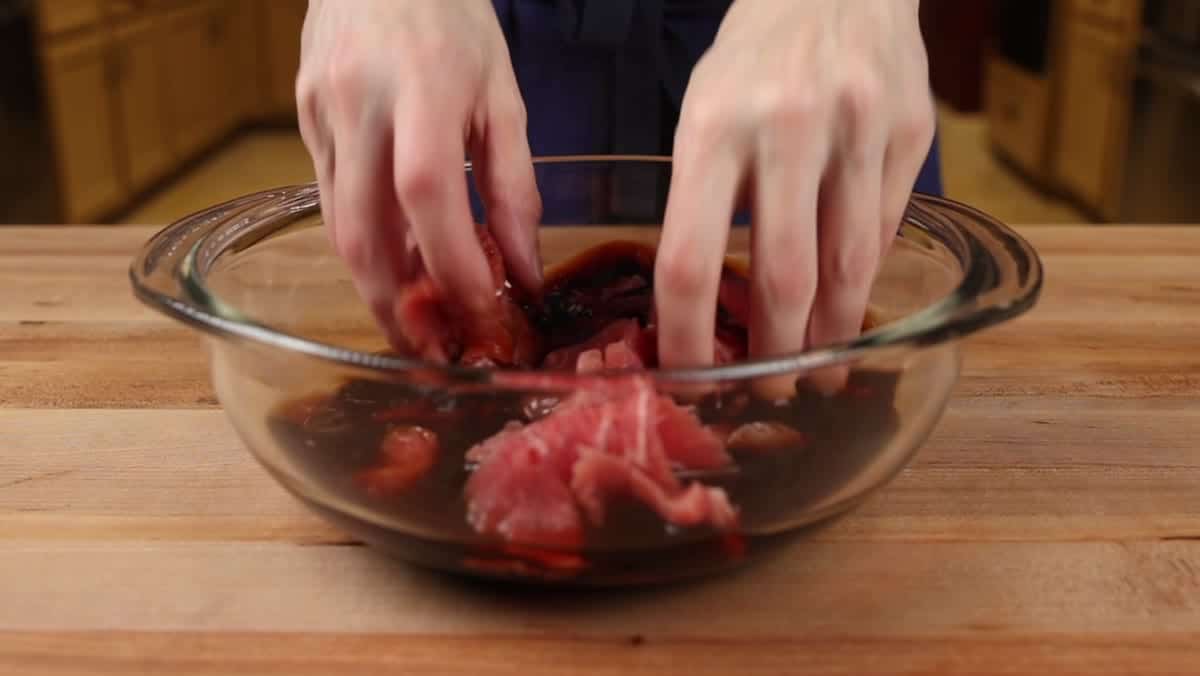
Stir the baking soda into the water until it dissolves, then add the soy sauce. Put the sliced beef in and make sure every piece is under the liquid. Two hours in the fridge is the least you want, and a full day is better.
4. Pat it dry
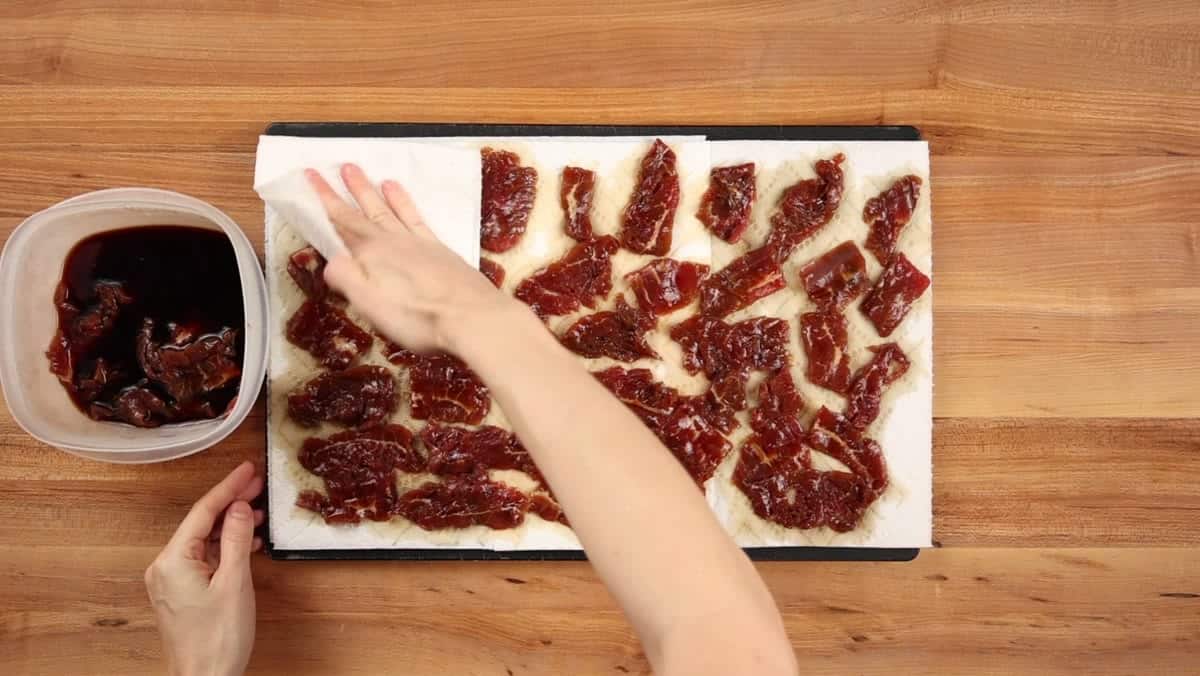
Take the beef out of the marinade and lay it out on paper towels, then pat the tops dry too. The egg white coating won't stick well to wet meat.
5. Velvet the beef
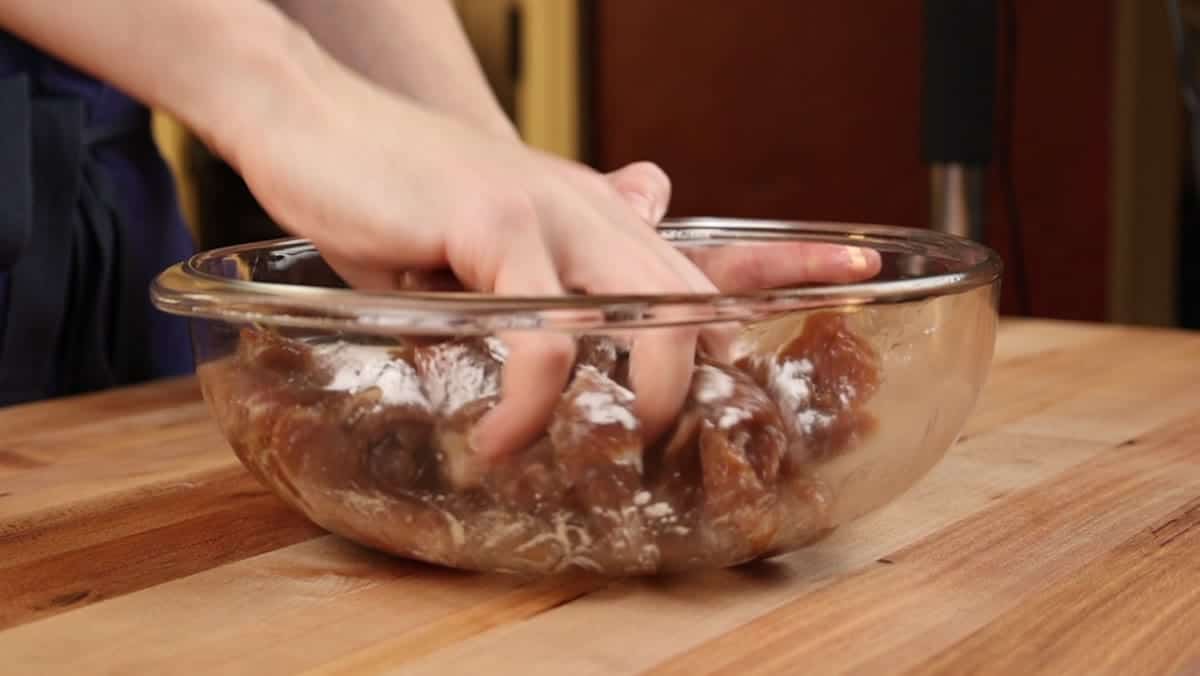
Put the dried beef in a bowl and stir in the egg white and white pepper until every slice is coated. Then add the potato starch and work it in with your hands until there's no dry starch left, and stir in the oil last so the slices don't stick together. Let it rest in the fridge for at least 30 minutes, or overnight.
The fry
6. Pass the beef through the oil
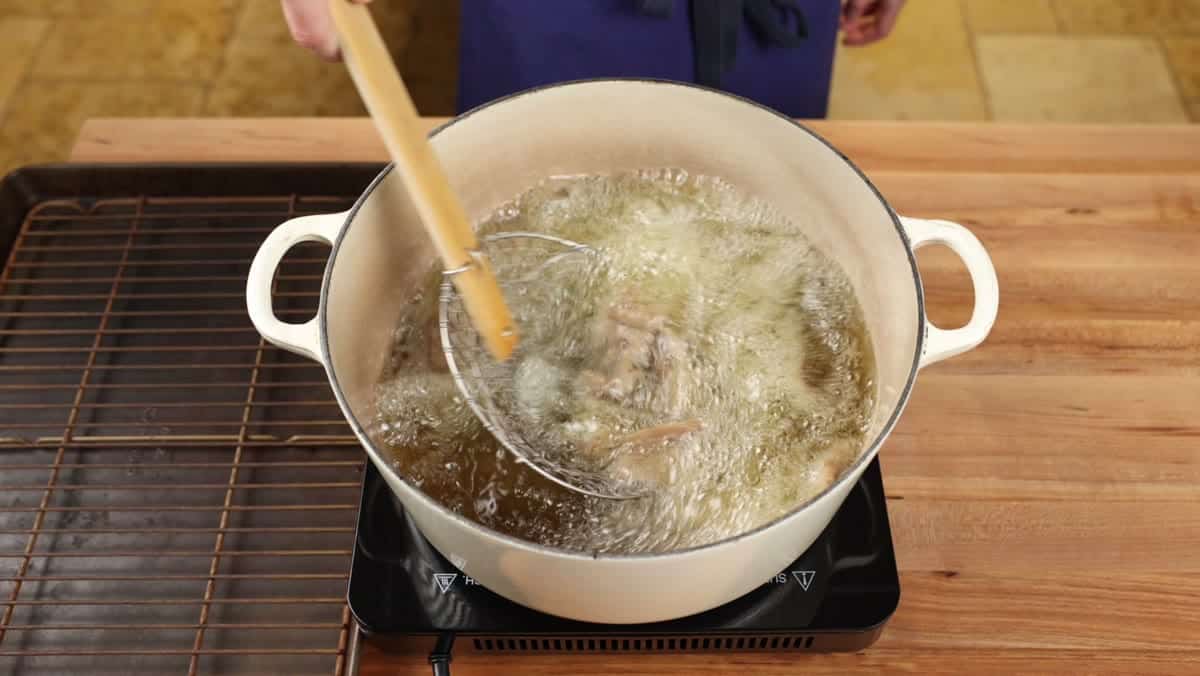
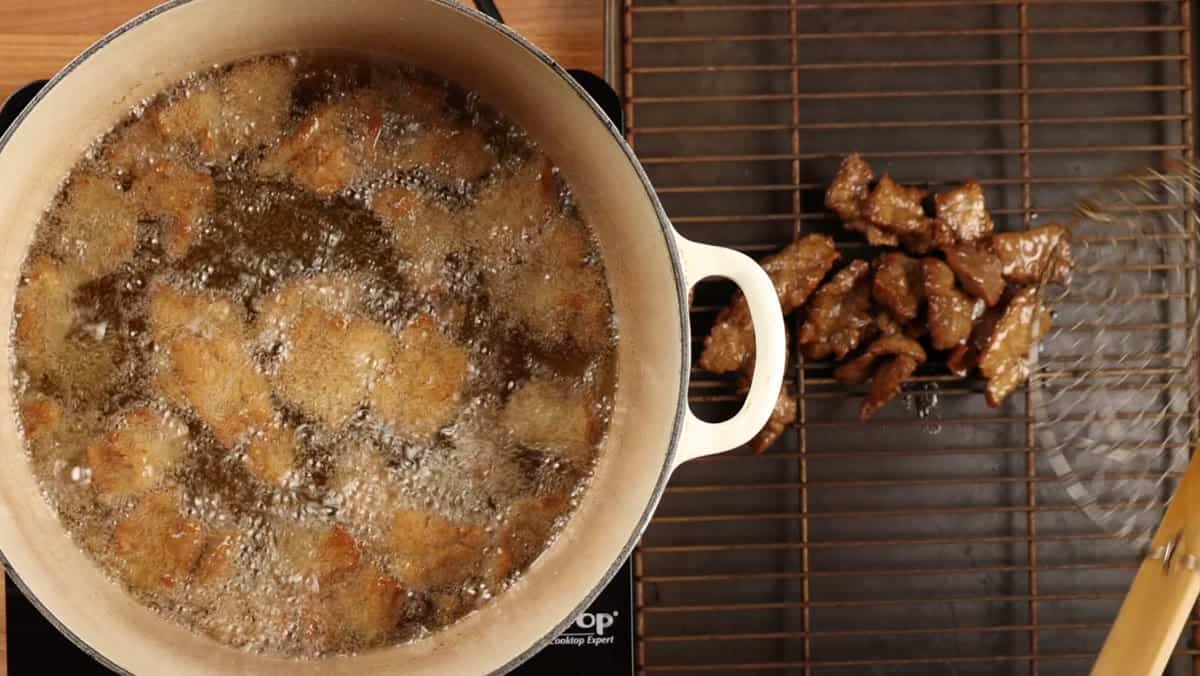
Heat the frying oil to 350°F. Working in batches, add the beef and stir it around right away so the slices don't clump. After 60 to 90 seconds the edges should be browned, and the middle should still be tender.
7. Drain it
Lift the beef out onto a wire rack set over a baking sheet.
Then set it aside.
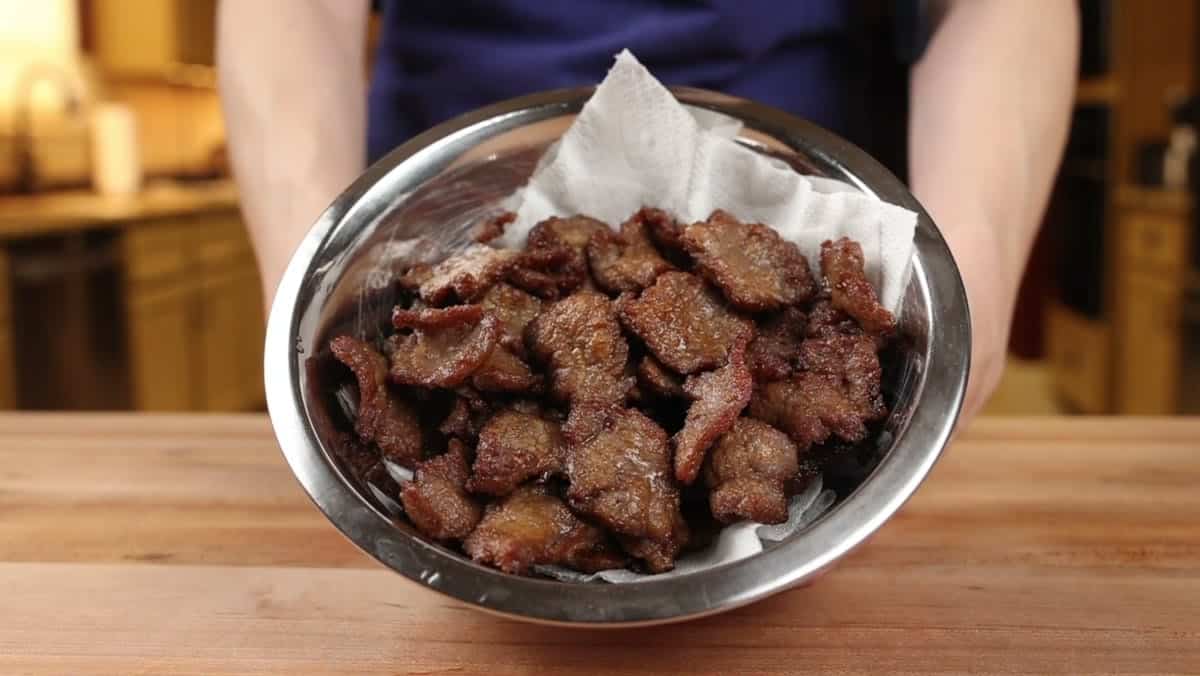
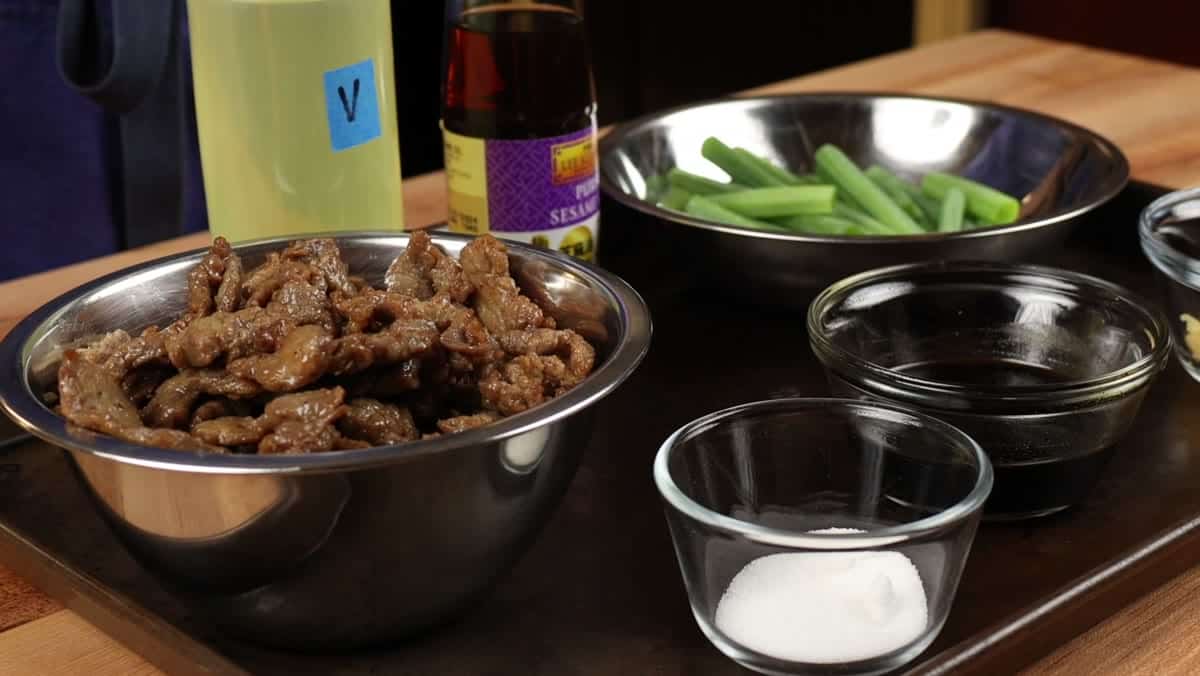
At this point, get everything else ready and next to the stove: the reconstituted garlic, the dark sauce, the sugar, the sesame oil and the green onions. The rest of the cooking only takes about 2 minutes.
The stir-fry
8. Fry the garlic
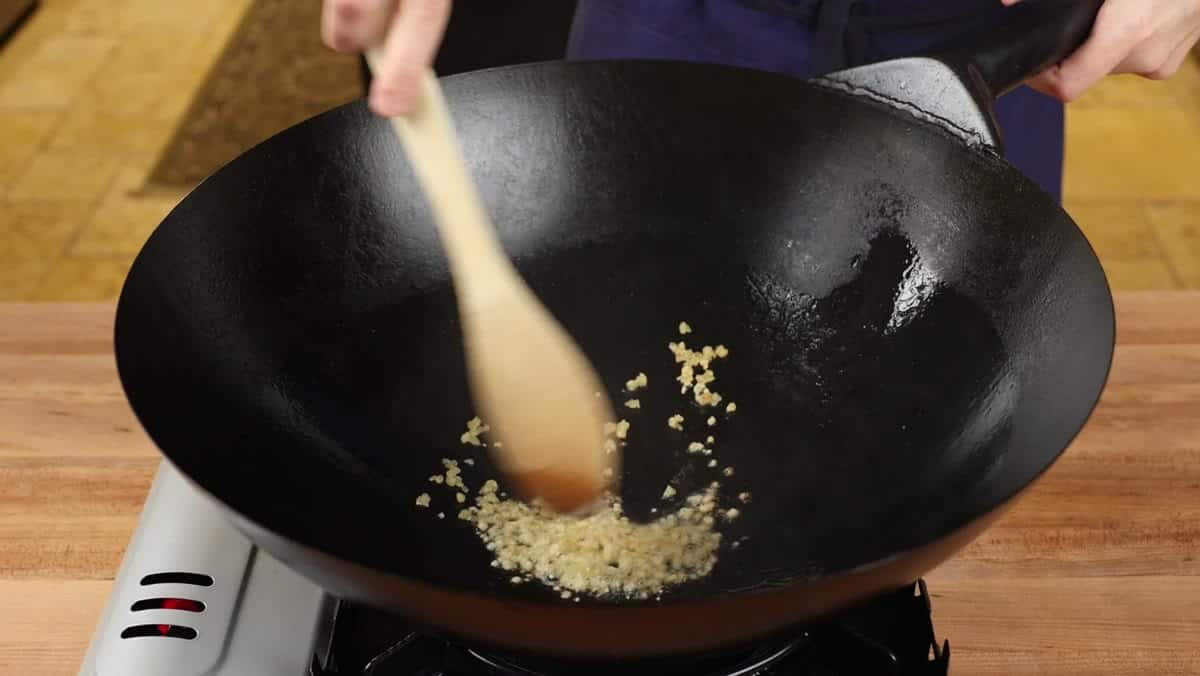
Heat a teaspoon of oil in a wok over medium-high heat, then add the garlic and stir it for 10 to 15 seconds. Don't let it brown, because you only want it to flavor the oil.
9. Boil the sauce with the sugar
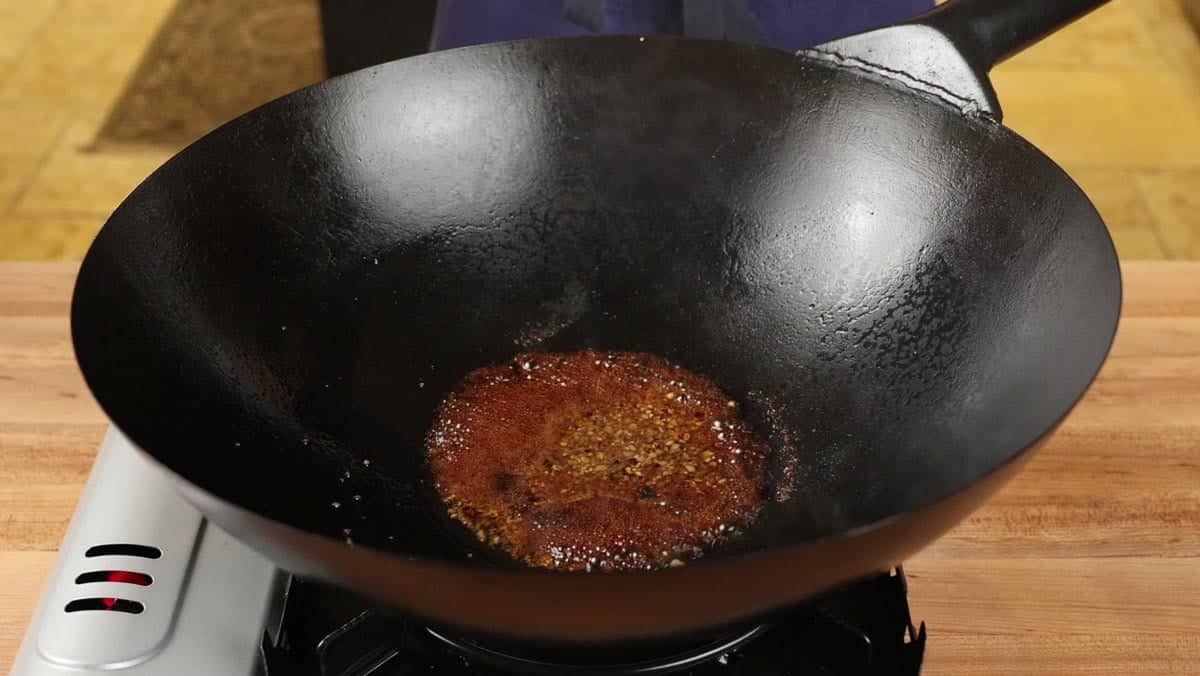
Next, add the quarter cup of dark sauce and the tablespoon of sugar and stir until the sugar dissolves. Let it come to a boil and bubble for about 30 seconds so it thickens a little.
10. Toss in the beef
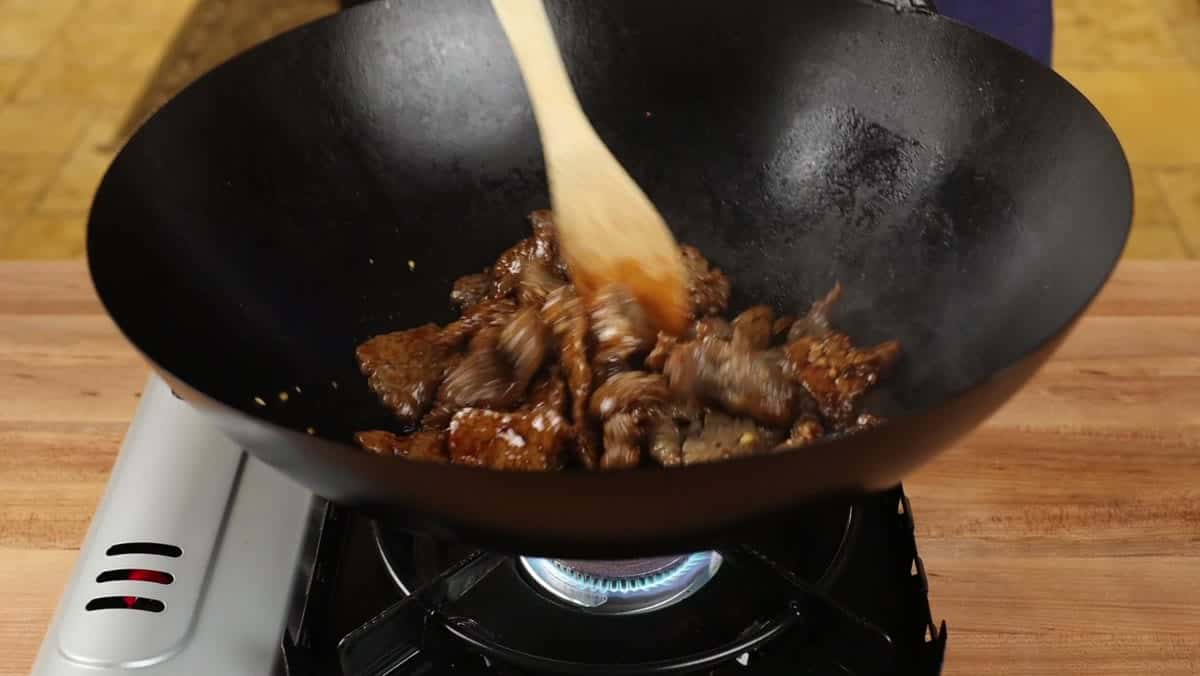
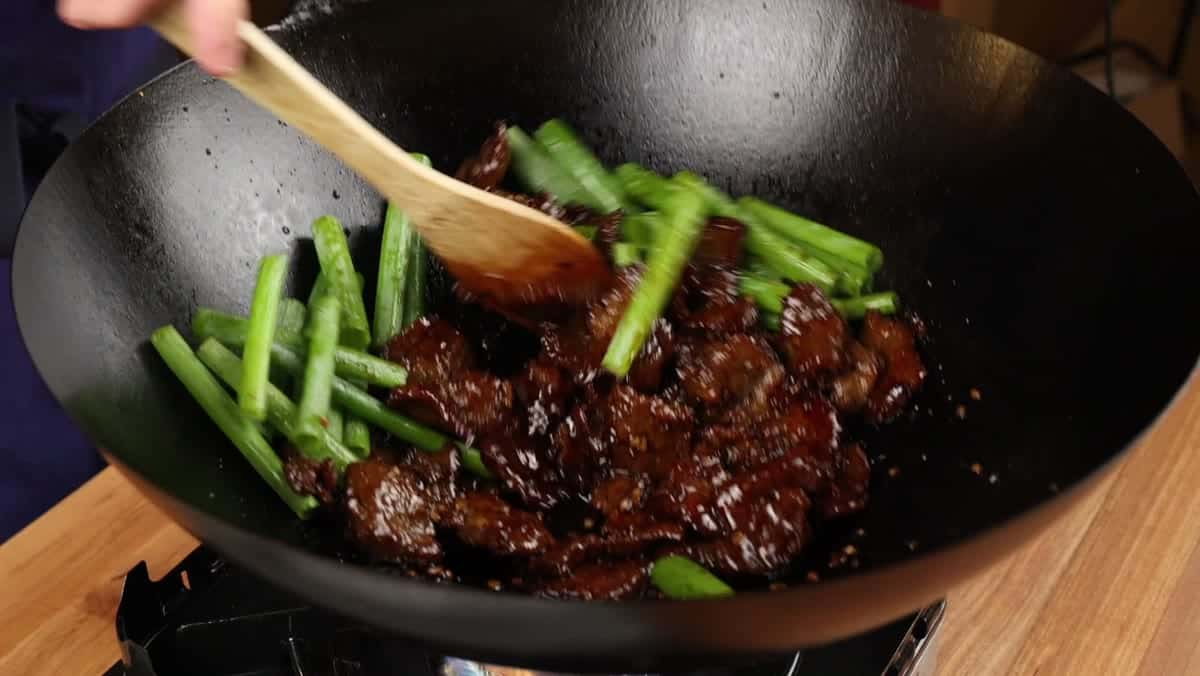
Add the fried beef and toss it in the sauce for 30 to 60 seconds, until the sauce has cooked down and the beef is shiny and coated.
11. Finish with the green onions
And finally, add the sesame oil and the green onion tops and toss for another 15 to 20 seconds, just long enough to warm the onions and coat them in the sauce. Then kill the heat and serve it right away.
Tips for the Best Mongolian Beef
- Don't crowd the oil. If you add all the beef at once, the oil temperature drops and the beef steams instead of frying. Two or three batches is about right for most pots.
- Use the dark sauce like a stir-fry sauce. It's less sweet than the finished dish, so the leftover sauce works in other stir-fries. I keep a container of it in my fridge.
- Cut back on the sugar if you like it less sweet. The tablespoon of sugar in the wok is how I was told the restaurant does it, but I like it without the sugar too.
Make It Ahead
The dark sauce keeps covered in the fridge for 3 to 4 days, the USDA's time for leftovers, and the reconstituted garlic keeps for about a week. You can also velvet the beef the night before, or fry it up to 2 or 3 days ahead and keep it in the fridge, and I haven't noticed any difference in the finished dish. On the night you serve it, the wok part takes 5 to 10 minutes.
If you need to freeze the beef, freeze it raw before it goes into the marinade, then thaw it in the fridge and marinate it for about 2 hours before you cook it.
Storing and Reheating Leftovers
Leftovers keep in an airtight container in the fridge for 3 to 4 days, counted from the day you fried the beef. The beef is best in the first day or two, before the sauce softens the fried edges.
Reheat it in a wok or skillet over high heat until it's hot all the way through, 165°F in the middle according to the USDA's leftovers guide. A microwave works too, but the edges won't be crispy anymore.
What to Serve With Mongolian Beef
Steamed white rice is the classic side. For a bigger takeout night, it goes well with my Chinese takeout fried rice or Chinese takeout lo mein, with 10-minute egg drop soup to start.
There's one ingredient almost every home recipe for orange chicken gets wrong. The right one is in my free recipe pack, along with five more restaurant recipes. You can get it here.
Questions About Mongolian Beef
Can I make it without deep-frying?
Yes. Cook the velveted beef in a little oil in the wok, stir-fry style, and make sure it's cooked through before the sauce goes in. A few people who've worked there have said that's how they've done it, but most said the beef gets fried, and you'll lose some of the crispy edges.
Why did mine come out too salty?
It's usually the marinade. If the beef sat in it for a long time with full-sodium soy sauce, cut back on the time or use a little less soy sauce in the marinade next time. The dark sauce is fairly sweet, but it's worth tasting it on its own to make sure.
How many does it serve?
It serves 2, or 3 with a couple of sides. To double it, double everything. For the marinade, keep 3 parts water to 1 part soy sauce and use ½ teaspoon of baking soda for every cup of water.
Can I make it with chicken?
Yes. The marinade and the velveting work on chicken too, and the steps are the same. Just make sure the chicken is cooked all the way through, to 165°F in the middle, before it goes into the sauce.
Can I freeze the dark sauce?
I've never frozen it, but I don't see why it wouldn't freeze. The rice wine might keep it from going completely solid, but there isn't much of it in there. I just keep it in the fridge.
If you make this, leave a star rating in the card below. It helps other people find the recipe.
More P.F. Chang's Recipes
- P.F. Chang's Beef with Broccoli
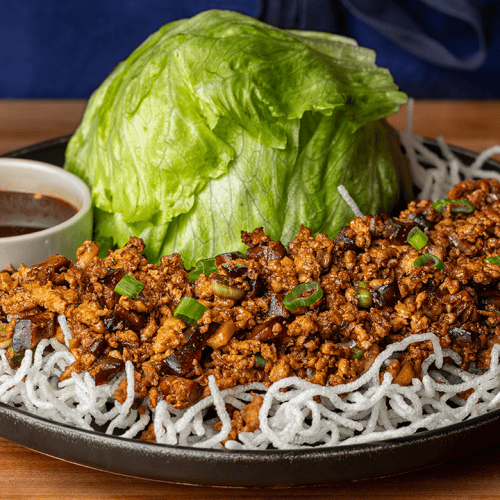
- P.F. Chang's Chicken Lettuce Wraps
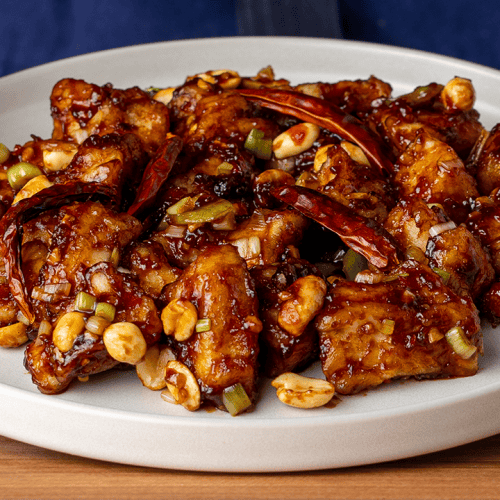
- Kung Pao Chicken with a Homemade Sauce
- Crispy Spicy Chicken
- P.F. Chang's Fried Rice Recipe
- Stir-Fried Eggplant Recipe
P.F. Chang's Mongolian Beef
Ingredients
Dark Sauce
- ½ teaspoon Minor's Original Chicken Base
- ¼ cup white sugar
- ¼ cup water
- 6 tablespoon low sodium soy sauce Lee Kum Kee or Kikkoman
- 1 tablespoon mushroom dark soy sauce Lee Kum Kee
- 1 tablespoon Lee Kum Kee Panda Brand Oyster Sauce or Lee Kum Kee premium
- 2 tablespoon Michiu rice cooking wine or Shaoxing
Alkaline Soy Marinade
- 1 cup water
- ½ teaspoon baking soda
- ⅓ cup low sodium soy sauce Lee Kum Kee (green bottle) or Kikkoman
Flank Steak
- 12 oz flank steak sliced against the grain into ⅛-inch pieces
Egg White Velveting
- ½ egg white
- ⅛ teaspoon white pepper
- 1 tablespoon potato starch or cornstarch
- ½ teaspoon neutral oil vegetable canola or peanut
Passing Through the Oil
- neutral oil vegetable canola or peanut (enough to submerge beef)
Final Stir-Fry
- 1 teaspoon neutral oil
- 2 teaspoon dehydrated minced garlic reconstituted in hot water 20-30 min and drained
- ¼ cup dark sauce from above
- 1 tablespoon white sugar
- ½ teaspoon sesame oil toasted
- 1-2 oz green onion tops cut into 2-inch pieces
Instructions
Make the Dark Sauce
- Add ¼ cup of water, ½ teaspoon of Minor's Original Chicken Base, and ¼ cup of white sugar to a small saucepan.
- Bring to a simmer over medium heat and whisk until the sugar and chicken base are fully dissolved.
- Remove from heat. Add ¼ cup plus 2 tablespoons of soy sauce, 1 tablespoon of mushroom dark soy sauce, 1 tablespoon of oyster sauce, and 2 tablespoons of Michiu or Shaoxing rice cooking wine. Whisk until incorporated.
- Let the sauce cool. This can be stored covered in the refrigerator for 3 to 4 days.
Prepare and Slice the Flank Steak
- Identify the long muscle fibers running along the surface of the flank steak. Cut with the grain into 1.5-inch sections.
- Turn each section perpendicular to you. Angle your knife at about 30-40 degrees and slice against the grain into pieces about ⅛ inch thick. If the steak is difficult to slice thinly, freeze it for 20-30 minutes first.
Brine the Beef
- Combine 1 cup of water with ½ teaspoon of baking soda and stir until dissolved. Add ⅓ cup of soy sauce and stir to incorporate.
- Submerge the sliced flank steak in the alkaline soy marinade for at least 2 hours. A full 24 hours is the target, and the longer you go, the more tender and flavorful the beef gets. Keep it refrigerated the entire time.
Velvet the Beef
- Remove the beef from the marinade and pat dry thoroughly with paper towels. Drying the meat helps the velveting batter adhere properly.
- Add ½ egg white and ⅛ teaspoon of white pepper to the beef. Stir until evenly coated. Add 1 tablespoon of potato starch and gently massage it into the slices until all the beef is covered.
- Add ½ teaspoon of neutral oil and stir to distribute. Refrigerate for at least 30 minutes or up to overnight before cooking.
Pass Through the Oil
- Heat neutral frying oil to 350°F (175°C) in a Dutch oven or deep pot.
- Working in batches, add the velveted beef slices and immediately agitate so they don't clump together. Fry for 60-90 seconds, until the edges are browned but the centers remain tender.
- Remove the beef to a wire rack set over a baking sheet to drain. Set aside until ready for the final stir-fry.
Final Stir-Fry
- Heat 1 teaspoon of neutral oil in a wok over medium-high heat. Add 2 teaspoon of reconstituted dehydrated garlic and fry for 10-15 seconds. Do not let the garlic brown.
- Add ¼ cup of the prepared dark sauce and 1 tablespoon of white sugar. Stir until the sugar dissolves and bring to a boil. Let the sauce reduce and thicken slightly, about 30 seconds.
- Add the fried flank steak and toss in the sauce for 30-60 seconds, allowing the sauce to coat the beef and reduce further.
- Add ½ teaspoon of sesame oil and 1-2 ounces of green onion tops cut into 2-inch pieces. Toss everything together for 15-20 seconds, then remove from heat and serve immediately.
Video
Equipment
- 1 14-inch Mandarin Wok for final stir-fry and optional oil-pass
- 1 Butane Burner for wok cooking
- 1 All-Clad Saucepan for dark sauce
- 1 Dutch Oven for passing through the oil (deep frying)
- 1 Deep Fry / Candy Thermometer for oil temperature
- 1 Wok Spider/Strainer for removing beef from oil
- 1 Wire Cooling Rack for draining fried beef
- 1 Baking Sheet under wire rack for draining
- 1 Misono Chef's Knife for slicing flank steak
- 1 Whisk for dark sauce
- 2 Mixing Bowls for marinating and velveting
- 3 Deli Containers for prepped ingredients
- 1 Induction Burner for the dark sauce and the frying oil
This was dead on for PF Chang’s Mongolian beef! It was absolutely delicious! A few more steps then I usually want to go through for dinner, but it will absolutely be added to our regular dinner rotation.
I'm glad you liked it!
Thank you for this. Made it according to the recipe. We love it. The only thing I will change is making more sauce for the wok because we enjoy putting some on our rice to compliment the meal. We are saving this!
Thank you, Craig! I'm glad y'all like it. The good news is the dark sauce makes a lot more than the quarter cup you use in the wok, so you've got plenty left over to add more. I keep a container of it in my fridge.