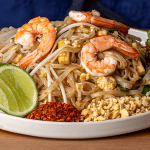
Pad Thai
Pad thai with a three-ingredient sauce (palm sugar, tamarind, fish sauce), room-temperature soaked rice noodles, and the specialty ingredients most Western recipes leave out: sweet preserved radish, dried shrimp, pressed tofu, and garlic chives. Flat-bottomed stainless steel pan instead of a wok for even sauce absorption.
Servings 2 servings
Calories 500kcal
Equipment
- 1 Whisk
Ingredients
Pad Thai Sauce
- 4 tablespoon palm sugar shaved with a knife or grater
- ¼ cup water
- 1 tablespoon Seedless Wet Tamarind if using concentrate, double or triple amount
- 2 tablespoon Squid Brand Fish Sauce
The Noodles
- 4 oz Rice Noodles (medium) medium width
The Stir-Fry
- vegetable oil
- 2 eggs
- 6 large shrimp shelled and deveined
- 1 medium shallot finely sliced
- 2 large garlic cloves chopped (optional)
- 2 tablespoon sweet preserved radish use sweet variety, not salted
- 1 tablespoon dried shrimp (medium) rehydrate and dry-fry for best texture
- ½ cup pressed tofu cut into matchsticks
- 1 cup bean sprouts
- 4 garlic chives cut into 1-inch pieces (green parts only)
- 2 tablespoon peanuts roughly chopped
Garnish
- lime wedges
- bean sprouts
- peanuts roughly chopped
- Thai Crushed Chili Flakes
- garlic chive bottoms
Instructions
Prepare the Tamarind Paste
- Take a block of seedless tamarind and pour an equal amount of boiling water over it in a small bowl. For a 16 oz block, use 2 cups water. For a 14 oz block, use 1 ¾ cups.
- Allow tamarind to soak in hot water for 20-30 minutes. After the mixture has cooled slightly, break it up with your hands until the seeds and pulp have loosened.
- Pass the mixture through a mesh strainer into another bowl, pressing with your hand or a spoon. Scrape the bottom of the strainer to get every last bit of paste.
- Store the prepared paste in a covered container in the fridge for up to 1 month, or freeze in smaller portions for up to 6 months.
Make the Pad Thai Sauce
- Finely shave 4 tablespoons of palm sugar with a knife or grater.
- Add the palm sugar and ¼ cup water to a small pot over medium heat. Whisk until all the sugar is completely dissolved, then remove from heat.
- Whisk in 1 tablespoon of prepared tamarind paste and 2 tablespoons of fish sauce. If using tamarind concentrate, double or triple the amount.
- Taste and adjust with more palm sugar, water, tamarind, or fish sauce until the flavors are balanced.
- Store the prepared sauce in a covered container in the fridge for up to 1 month.
Soak the Noodles
- Cover 4 ounces of dried rice noodles in room-temperature water and soak for about 90 minutes, or until pliable enough to wrap around your finger.
- Drain the noodles and cut them in half with scissors.
- Store the soaked noodles in a covered container in the fridge for up to 3-5 days.
Cook the Pad Thai
- Add oil to a large flat-bottomed pan over medium heat. Add 2 eggs and lightly scramble. Remove eggs from the pan and set aside in a bowl.
- Add oil to the pan over medium heat. Cook 6 large shrimp until done. Remove to the bowl with the eggs.
- Add more oil to the pan over medium-high heat. Add the sliced shallot and chopped garlic, stirring frequently, until just starting to brown.
- Add the sweet preserved radish, dried shrimp, and pressed tofu. Toss with the shallot and garlic until well mixed, about 1 minute.
- Lower heat to medium-low. Add the pre-soaked noodles and pour the pad thai sauce over them. Toss everything together until the noodles are coated and have absorbed most of the sauce, about 2 minutes.
- Add the eggs and shrimp back to the pan and toss to combine.
- Add 1 cup of bean sprouts, the garlic chives, and half the peanuts. Mix until the bean sprouts and chives start to wilt but are still firm, and the shrimp is heated through.
- Remove from heat. Serve on a plate with lime wedges, remaining peanuts, Thai chili flakes, bean sprouts, and garlic chive bottoms.
Video
Notes
Tamarind Forms: Three options. Whole fruit pods (inconsistent, avoid). Bottled concentrate (usable, use Thai brands only, double or triple the amount). Seedless wet pulp blocks (best option, most consistent flavor).
Palm Sugar Substitute: Light brown sugar works as a substitute, though it won't taste exactly the same.
Pressed Tofu: Pressed tofu and extra-firm tofu are not the same product. Pressed is several degrees firmer. If unavailable, use fried tofu, baked tofu, or the firmest extra-firm you can find. Cut into small matchsticks (½ inch long, ¼ inch thick).
Noodle Soak: Use room-temperature water only. Hot water releases starch and causes clumping. Noodles are ready when pliable enough to wrap around your finger and slightly translucent.
Batch Size: Don't cook more than 2 servings at once. Overcrowding the pan drops the temperature and steams the noodles instead of frying them.
Flat Pan vs Wok: Use a flat-bottomed stainless steel pan. In a wok, the sauce pools at the bottom. Cast iron and carbon steel will be stripped by the acidic tamarind in the sauce.
Dried Shrimp Technique: Rehydrate in hot water for 10 minutes, drain, then dry-fry in a pan over medium heat until completely dry and crispy. This eliminates the tough, chewy texture.
Sauce Storage: The pad thai sauce stores in the fridge for up to 1 month. Consider making a large batch so pad thai comes together quickly on future nights.
Nutrition
Calories: 500kcal