15 Minute Chili Garlic Noodles Recipe
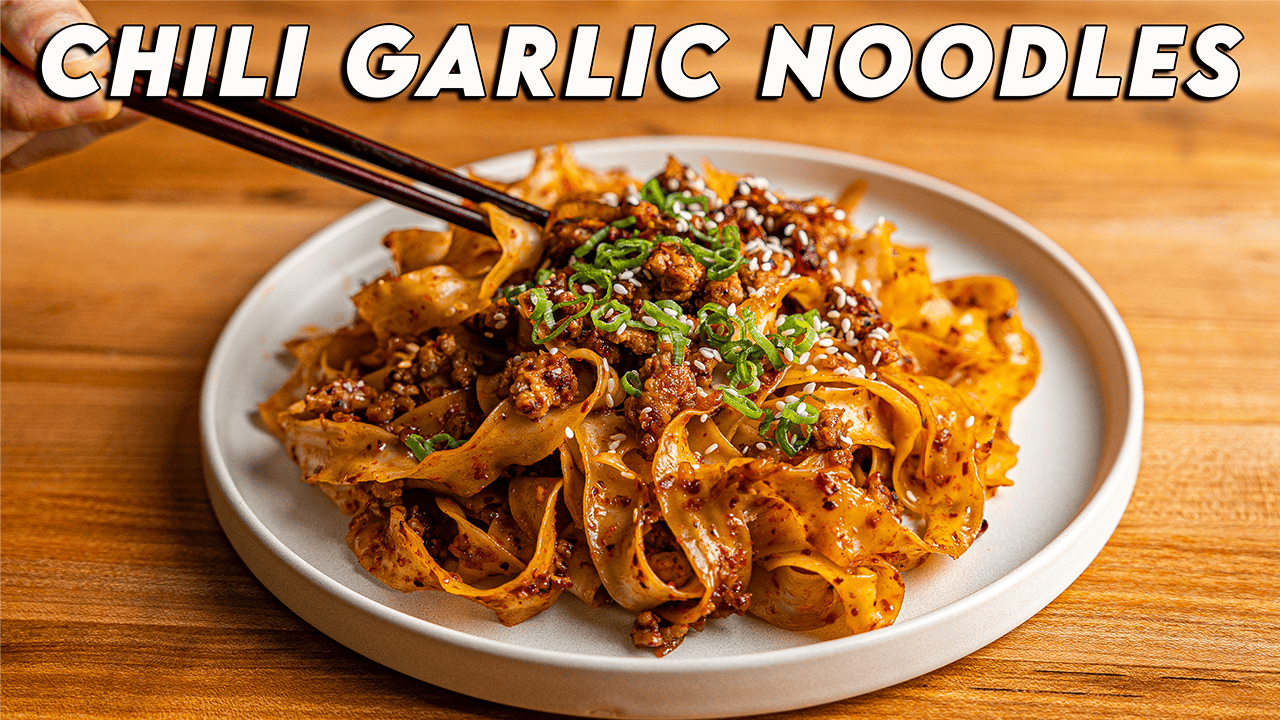
Most chili garlic noodle recipes I found online didn't taste like much. After testing about a dozen variations, the fix came down to two things: using Shanxi-style knife-cut noodles (Dao Xiao Mian) that actually hold onto the sauce, and blooming the gochugaru in hot rendered pork fat to release flavor compounds that don't come out any other way.
The whole dish takes about 15 minutes, uses one pan plus a pot for the noodles, and relies on pantry staples you can stock once and use for months. If you've made a quick noodle dish at home and the sauce just slid off or the flavor wasn't there, it was probably the noodle shape and how the chili was cooked.
This post contains affiliate links, which means I may earn a small commission if you make a purchase. It doesn't cost you anything extra. Full disclosure.
Why This Chili Garlic Noodles Recipe Works
- Knife-cut wheat noodles with flat surfaces. Dao Xiao Mian has rough edges that hold onto the meat sauce. Round noodles let it slide right off.
- Gochugaru bloomed in rendered pork fat. Korean chili flakes have fat-soluble flavor compounds that only release in hot oil. A minute or two in the pan is the difference between chili that just adds color and chili that actually tastes like something.
- Oyster sauce and black vinegar as the sauce base. Most of the flavor comes from these two ingredients. The oyster sauce covers the savory end and the black vinegar adds just enough acid to balance it out.
- Ragu consistency that coats every noodle. The sauce clings instead of pooling at the bottom of the bowl.
- One pan, one pot, 15 minutes. No wok needed. A regular saute pan handles everything.
Ingredients You'll Need
Dao Xiao Mian (Knife-Cut Noodles). These are flat wheat noodles from Shanxi province in northern China. The flat surface and uneven edges are what you want here because the meat sauce needs something to hold onto. If you can't find them at an Asian market, tagliatelle is the closest Western substitute. Linguine and fettuccine also work well. Any flat wheat noodle with some surface texture will do the job.
Gochugaru (Korean Chili Flakes). Gochugaru is a mild Korean chili pepper that's more smoky and earthy than it is spicy, which means you can use a full tablespoon without the dish getting too hot. If you can't find gochugaru, a mix of sweet paprika and a pinch of cayenne gets you in the right neighborhood. Store it in a zip-lock bag in the freezer and it stays fresh almost indefinitely.
Oyster Sauce. A savory, slightly sweet condiment made from oysters. It's a staple in dishes like my Chinese Takeout Lo Mein and Chinese Takeout Chow Mein, and it's worth tracking down if you don't already have it. Most grocery stores carry it in the Asian aisle. For a vegetarian or vegan option, mushroom-based oyster sauces are a solid substitute.
Chinese Black Vinegar. Also called Zhenjiang or Chinkiang vinegar. Mildly acidic with a toasty, slightly sweet flavor. If you've had dumpling dipping sauce at a Chinese restaurant, it was almost certainly made with this. If you've tried my Chinese Takeout Hot and Sour Soup, you've already tasted it. If you can't find it, mix equal parts balsamic vinegar, red wine vinegar, and water. It won't be identical, but it works for this recipe.
Ground Pork. Pork is the natural fit here since this is a mostly Chinese-inspired dish, but ground beef or turkey both work well. For a vegetarian version, crumbled extra-firm tofu or diced mushrooms are good options.
How to Make Chili Garlic Noodles
1. Mix the sauce. Combine oyster sauce, black vinegar, soy sauce, toasted sesame oil, MSG, and sugar in a small bowl. Stir until the sugar dissolves completely. Set it aside.
2. Bring a pot of lightly salted water to a boil. Go easy on the salt. The sauce is fairly salty on its own, so over-salting the noodle water will push the finished dish over the edge.
3. Cook the pork. Add about a tablespoon of neutral oil to a saute pan over medium-high heat. Once it's hot, add the ground pork, season with salt, and break it up with a spatula. Cook until the pork is well browned and slightly crispy, then remove it with a slotted spoon. Leave the rendered fat in the pan.
4. Cook the aromatics. If there's not much fat left in the pan, add a bit more oil. Add the sliced shallots, minced garlic, and minced ginger with a pinch of salt. Cook until the garlic just starts to turn slightly brown.
5. Bloom the gochugaru. Add the gochugaru to the aromatics and stir for 1-2 minutes. There are flavor compounds in ground chilis that are fat-soluble, and even a minute or two in the hot oil opens them up in a way that dry cooking never will. You'll notice the color deepens and the aroma changes.
6. Combine everything. Add the cooked pork and the sauce to the pan and stir until combined. You're going for a thick, ragu-like consistency. If you want it a bit more saucy, add a splash of the noodle cooking water.
7. Add the noodles. Cook your noodles according to package directions (fresh Dao Xiao Mian takes only 2-3 minutes). Toss them into the pan and stir everything together. Cook for another 1-2 minutes so the noodles absorb some of the sauce.
8. Serve. Garnish with sesame seeds and thinly sliced green onions.
Tips for the Best Chili Garlic Noodles
The blooming step is worth the extra minute. Gochugaru has flavor that only comes out when it hits hot fat. Without the blooming, you get mostly color and mild heat. With it, the chili tastes like toasted pepper instead of just adding warmth.
Save the rendered pork fat. After you cook the ground pork, leave whatever fat rendered out in the pan. That's what you're cooking the aromatics and blooming the gochugaru in. If there's not enough fat left, add a bit more neutral oil.
Cook the noodles about 1 minute less than the package says. They finish cooking in the pan with the sauce. If you cook them all the way through in the water first, they'll be overcooked by the time you serve.
Use the noodle cooking water. If the finished dish looks too dry, a splash of the starchy cooking water loosens everything up and helps the sauce cling. Add it a tablespoon at a time.
Serve with something acidic on the side. Pickled vegetables or kimchi are great next to this dish. The tartness of kimchi or the sharpness of pickled cucumbers works really well against the rich, savory noodles.
Storage and Reheating
Fridge: Store leftover chili garlic noodles in an airtight container for up to 3-4 days.
Reheating: A saute pan over medium heat with a splash of water is the best way to reheat. Microwave works in a pinch, but the noodles can dry out. Add a few drops of water and cover with a damp paper towel if you go that route.
Freezer: These noodles freeze well for up to 2 months. Thaw overnight in the fridge before reheating.
Frequently Asked Questions
Can I use a different type of noodle?
Any flat wheat noodle works well. Tagliatelle, linguine, fettuccine, and pappardelle are all good Western substitutes. Udon noodles also work. The key is something with a flat surface that the sauce can hold onto. Round noodles like spaghetti won't grip the sauce the same way. For rice noodle dishes, something like my Thailand Street Food Pad Thai is a better fit for that noodle type.
What can I substitute for gochugaru?
You can use any ground chili powder, but the heat level will vary. A mix of sweet paprika and a pinch of cayenne is a reasonable starting point. Some people have had good results with smoked paprika and chopped fresh chili, or even Mexican chili powder. You'll need to experiment with the amount to dial in the heat level. Gochujang (Korean chili paste) is a related product but the flavor and texture are different enough that it won't be a direct swap.
Can I make this gluten-free?
Use a gluten-free noodle (rice noodles or shirataki noodles work) and swap the soy sauce for tamari or coconut aminos. Check your oyster sauce label too, as some brands contain wheat.
Is this dish very spicy?
With gochugaru, no. Gochugaru is a mild chili, so the dish has warmth and flavor but it won't light you up. If you substitute a hotter chili powder like cayenne, use much less and add more as you go.
More Chinese Takeout Recipes
- Chinese Takeout Crab Rangoon
- Chinese Takeout Egg Foo Young
- Chinese Takeout Egg Rolls
- Chinese Takeout Orange Chicken
- Chinese Takeout Kung Pao Chicken
- Chinese Takeout General Tso's Chicken
- Chinese Takeout Wonton Soup
- Chinese Takeout Hot and Sour Soup
- Chinese Takeout Egg Drop Soup
- Chinese Takeout Chow Mein
- Chinese Takeout Lo Mein
- Chinese Takeout Fried Rice
- Char Siu (Chinese BBQ Pork)
More P.F. Chang's Recipes
- P.F. Chang's Mongolian Beef
- P.F. Chang's Lettuce Wraps
- P.F. Chang's Beef with Broccoli
- P.F. Chang's Dynamite Shrimp
- P.F. Chang's Singapore Street Noodles
- P.F. Chang's Stir-Fried Eggplant
- P.F. Chang's Fried Rice
- P.F. Chang's Kung Pao Chicken
- P.F. Chang's Spicy Chicken
- P.F. Chang's Crispy Honey Chicken
More Panda Express Recipes
More Din Tai Fung Recipes
More Noodle Recipes
Recipe
15 Minute Chili Garlic Noodles
Equipment
- 1 All-Clad Nonstick Pan for cooking pork and sauce
- 1 All-Clad 8 qt Stockpot for boiling noodles
- 1 Anchor Glass Ramekins for prepped ingredients
Ingredients
Noodles & Protein
- 8 oz wheat noodles preferably Shanxi Dao Xiao Mian; tagliatelle, linguine, or fettuccine as Western substitutes
- 8 oz ground pork beef or turkey also work
- 1 tablespoon neutral oil vegetable, canola, or peanut oil
- salt to taste
Aromatics
- 2 whole shallots thinly sliced, cut against the grain
- 2 tablespoon garlic finely minced, about 6 cloves
- 2 teaspoon ginger finely minced
- 1 tablespoon gochugaru Korean chili flakes; substitute sweet paprika with a pinch of cayenne
Sauce
- 2 tablespoon oyster sauce
- 1 teaspoon Chinese black vinegar also called Zhenjiang/Chinkiang vinegar; substitute equal parts balsamic, red wine vinegar, and water
- 1 tablespoon soy sauce
- ½ teaspoon toasted sesame oil
- ⅛ teaspoon MSG optional
- ½ teaspoon sugar
Garnish
- 1 tablespoon sesame seeds for garnish
- 2 green onions thinly sliced, for garnish
Instructions
Prep
- Combine oyster sauce, black vinegar, soy sauce, toasted sesame oil, MSG, and sugar in a small bowl. Stir until the sugar dissolves. Set aside.
- Bring a pot of lightly salted water to a boil.
Cook
- Add 1 tablespoon neutral oil to a saute pan over medium-high heat. Add ground pork, season with salt, and break up with a spatula. Cook until well browned and slightly crispy, about 3-4 minutes. Remove pork with a slotted spoon, leaving rendered fat in the pan.
- If needed, add more oil to the pan. Add shallots, garlic, and ginger with a pinch of salt. Cook until garlic just starts to turn slightly brown.
- Add gochugaru to the aromatics and stir for 1-2 minutes to bloom in the hot oil.
Finish
- Add cooked pork and sauce to the pan. Stir until combined. For a more saucy consistency, add a splash of the noodle cooking water.
- Cook noodles according to package directions and add to the pan. Toss to combine and cook for an additional 1-2 minutes.
- Serve garnished with sesame seeds and sliced green onions.