Din Tai Fung Pork Chop Fried Rice Recipe
Nearly every Din Tai Fung pork chop fried rice recipe online tells you to dredge the pork in starch or flour right before you fry it. But Din Tai Fung's own Taiwanese website says they fry it without any flour at all, and their UK kitchen footage from TikTok shows the pork going from the marinade straight into the fryer with no breading station anywhere in the frame. So I tracked down the materials they use to train their employees, and their own ingredient list confirmed what is actually going on.
The potato starch is real, but it goes into the marinade from the beginning instead of onto the pork as a separate coating. That one change is why people who eat this dish regularly describe the crust as so thin it barely tastes like a coating, while every recipe online produces something closer to chicken fried steak. Their ingredient list also helped me figure out the marinade ratios, the House Seasoning blend they use on the rice, and a detail almost nobody talks about: why they don't use soy sauce on their fried rice.
This post contains affiliate links, which means I may earn a small commission if you make a purchase. It doesn't cost you anything extra. Full disclosure.
Why This Din Tai Fung Pork Chop Fried Rice Recipe Works
- The starch goes in the marinade, not dredged on afterward. Mixing the potato starch directly into the soy sauce and seasonings creates a thin film instead of a thick crust. At about 4 percent of the weight of the meat, it fries into something so subtle that the pork seems almost like it has no breading.
- Seven ingredients in the entire pork chop, and none of them are what most recipes use. No five spice, no garlic, no sugar, no rice wine, no egg. Din Tai Fung's own ingredient list names soy sauce, potato starch, chicken bouillon, salt, pepper, the pork itself, and soybean oil. That is all of it.
- The rice has no soy sauce in it. Din Tai Fung's official allergen guide lists every fried rice except this one as gluten-free. Regular soy sauce contains wheat, and the only soy sauce anywhere in this dish is in the pork chop marinade. If soy sauce were in the rice, every fried rice on the menu would carry a gluten flag.
- Fresh rice, cooled to room temperature, not day-old from the fridge. Refrigerating cooked rice crystallizes the starches around each grain and costs you the bouncy, chewy texture Taiwanese fried rice is known for. Spreading fresh rice on a sheet pan and fanning it dries the surface while preserving that texture.
- A 4 to 6 hour marinade that doubles as a brine. Pounding a lean pork loin this thin is known to make it dry and mealy. The soy and salt in this marinade fix that by restructuring the proteins so they hold onto moisture instead of squeezing it out.
Ingredients You'll Need
Boneless center-cut pork loin chops are what you want, and a value pack from any grocery store works fine. Check the label before you buy, because tenderloin and sirloin chops are different cuts and they won't pound out the same way. Leave the fat rim on.
Chinese light soy sauce is the marinade base and the only source of browning on this pork chop. Potato starch barely browns on its own. The soy sauce is loaded with amino acids and sugars that give you color at 350°F, which is why you fry at that temperature instead of the usual 375°F for uncoated fried food.
Potato starch is the only starch in the recipe. It goes in with the soy sauce, bouillon, salt, and pepper all at once, massaged into the meat until no dry powder is visible. There is no separate dredging step.
Lee Kum Kee chicken bouillon powder (the one in the red tin) shows up twice: once in the marinade and again in the House Seasoning for the rice. Any chicken bouillon powder will work, but stay away from Western-style bouillon pastes. Those have carrots, celery, and thyme in them, and they taste completely wrong here.
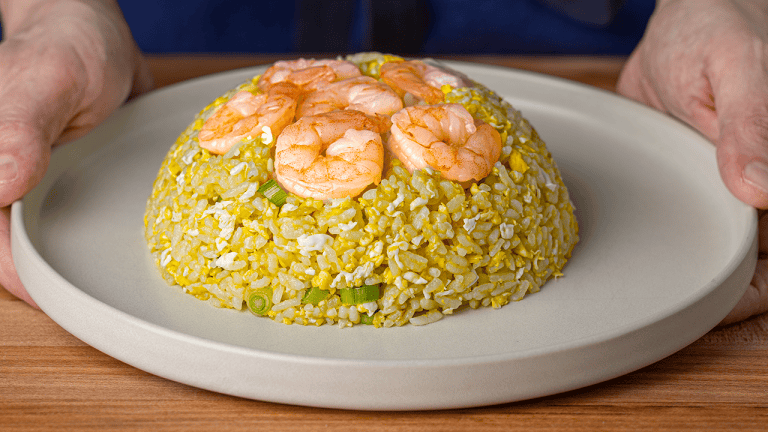
Nishiki medium grain rice is what every US location uses, according to my sources. You can find it at Walmart or pretty much any grocery store. Jasmine or long grain will work if that is what you have, but the chewy Q texture only comes from a medium or short grain. It's the same rice I use in my Din Tai Fung shrimp fried rice, so if you've made that one you already know the texture you're after.
MSG in the House Seasoning is my own addition, not something Din Tai Fung puts in. Their position is that they do not add MSG directly, and that it comes through the soy sauce and the chicken bouillon. I add a quarter teaspoon per serving of rice because it tastes better.
How to Make Din Tai Fung Pork Chop Fried Rice
1. Pound the chops thin. Cover a chop with plastic wrap and use the flat face of a meat pounder. Bring it down flat and slide from the center outward, stretching the meat thinner in one continuous motion. You want just under a quarter inch. Do not hammer straight down in one place, and never use the spiked side of a tenderizing mallet. The spikes tear the fibers instead of stretching them, which is what causes the dry, mealy texture this recipe is designed to avoid.
2. Marinate and wait. Whisk the soy sauce, potato starch, bouillon, salt, and pepper together and pour it over the pounded chops. Massage it in until every surface is coated and no dry starch is visible. Refrigerate 4 to 6 hours or overnight. Within an hour or two, a thin layer of liquid pools at the bottom. That is supposed to happen.
3. Cook the rice. Rinse Nishiki rice under running water until it runs mostly clear, then cook it at a 1:1 to 1.1:1 water-to-rice ratio in a rice cooker on the harder setting. If yours does not have that option, use slightly less water than usual. Once it is done, spread the rice on a baking sheet and fan it for 20 to 30 minutes until it reaches room temperature. You are drying the surface of each grain while the inside stays chewy. Never use cold rice from the fridge.
4. Fry the pork chops. Heat oil in a wok to 350°F and give it a few minutes to stabilize. Lower in one chop at a time. It will look almost bare going in because there is no dredge on it. Fry about 4 to 6 minutes total, turning once when the edges start to brown. Pull it slightly lighter than you want the finished color to be, since the coating keeps darkening after the pork leaves the oil. Drain on a wire rack, never on paper towels.
5. Fry the rice. Heat a dry wok over high heat until it just starts to smoke, then turn off the heat and swirl in 2 tablespoons of oil. This is called long yao, and the cool oil hitting hot metal creates a thin layer that keeps the eggs and rice from sticking. Turn the heat back to medium. Crack in 2 unbeaten eggs, break the yolks, and scramble to about 60 to 70 percent done. Leaving them unbeaten is the point: loose yolk coats every grain of rice and gives it that golden color without the uniform look of a beaten egg. Add the rice while the eggs are still wet and use a cutting motion with a small silicone spatula to separate the grains. Sprinkle the House Seasoning over the rice and work it in until no dry seasoning is visible. Toss in the sliced green onion and turn off the heat. Cook only 1 to 2 servings per batch, or the rice steams instead of frying.
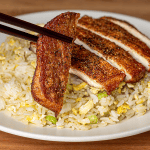
6. Plate the dome. Pack the rice into a bowl and press it flat. Set a plate over the bowl, flip the two together, and lift the bowl away. Slice the pork chop into five or six even strips, crack fresh black pepper over them, and lay them across the top of the rice in an ordered row.
Tips for the Best Din Tai Fung Pork Chop Fried Rice
Scale the marinade to the weight printed on the package, not to the chop count. Chop sizes vary, and a store value pack usually runs well over the 500 grams this recipe is written for. A typical pack lands around 1 lb 10 oz, which is roughly 1.5 times the marinade amounts listed.
Go by color, not by thermometer. At a quarter inch thick, a meat probe is awkward and unreliable. The soy sauce in the marinade gives you all the browning cues you need. Pull when the crust looks almost right, since it keeps darkening off the heat.
Fry the chops as close to eating as you can. The marinating can happen days in advance, and I regularly prep a batch on Sunday and fry them fresh throughout the week. But the pork chops themselves do not hold well. Fry to order.
The pepper goes on the sliced pork, not in the rice. It shows up twice in the recipe: once in the marinade as coarsely ground pepper, and again cracked fresh over the finished slices. It never goes into the wok with the rice.
What to Serve With Din Tai Fung Pork Chop Fried Rice
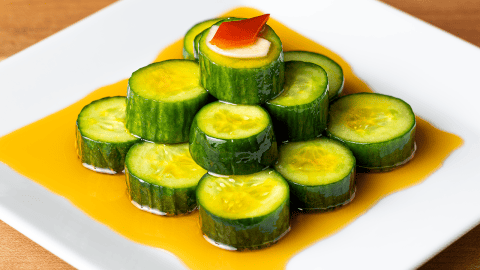
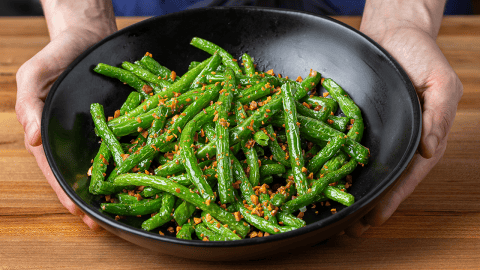
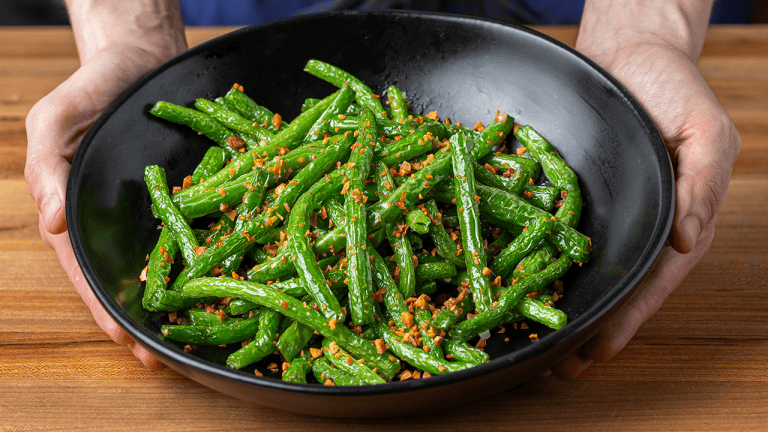
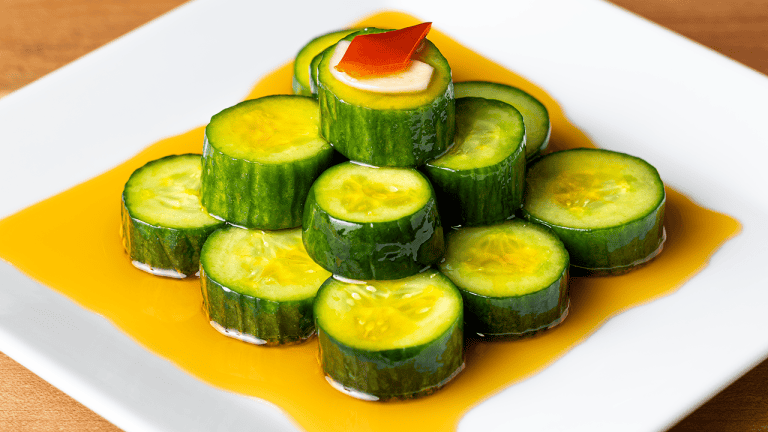
This pork chop is moderately heavy, so something cold and sharp alongside it goes a long way. My Din Tai Fung cucumber salad is the pairing the restaurant itself would suggest, and it takes about 20 minutes of active work plus a dry-brining rest. The Din Tai Fung green beans with garlic are another good option if you want something warm.
Storage and Reheating
The marinated raw pork chops hold in the fridge for 2 to 3 days before frying. The fried rice stores well for up to 4 days refrigerated. Reheat the rice in a dry wok or skillet over medium heat until it is hot all the way through. Fried pork chops do not store well once cooked. The thin crust goes soft within an hour even at room temperature, and reheating does not restore it.
Frequently Asked Questions
Can I use an air fryer for the pork chops?
You can, but the result will be different. An air fryer circulates dry heat instead of submerging the pork in hot oil, so the thin starch film does not set the same way. If you try it, preheat to 400°F and cook for about 8 to 10 minutes, flipping halfway. The crust will be drier and less glossy than the deep-fried version.
Can I marinate the pork overnight?
Yes. Their own timing is 4 to 6 hours, and overnight falls right in line with that. The salt in this marinade reaches equilibrium well before the 6-hour mark on a chop this thin, so an overnight sit will not over-salt the meat.
What is in the House Seasoning?
It is a dry blend you mix before you start cooking and sprinkle over the rice at the end, which is what replaces the soy sauce most fried rice recipes use. For 1 to 2 servings it is 1 teaspoon of chicken bouillon powder and a quarter teaspoon of salt. The quarter teaspoon of MSG in my version is my own addition, not theirs. Stir the blend again right before it goes in if it has been sitting.
Can I pan-fry the pork chops instead of deep-frying?
Yes. Add oil to a depth of about 1 cm in a heavy pan, get it slightly above 350°F, and lay the chop in. Leave it alone while the crust sets, then bring the heat down to medium so it browns slowly. Turn once when the bubbling slows around the edges. A heavy pan with good heat retention matters here, since the small amount of oil loses temperature fast when the pork goes in.
More Din Tai Fung Recipes
- Din Tai Fung Cucumber Salad (Restaurant Recipe)
- Din Tai Fung Green Beans with Garlic (5-Ingredient Recipe)
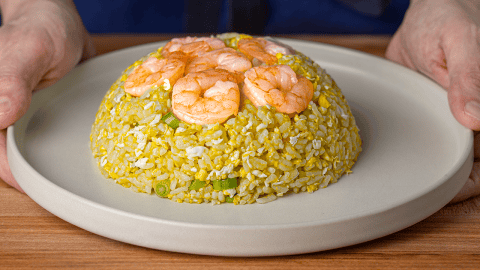
- Din Tai Fung Shrimp Fried Rice Recipe
More Chinese Takeout Recipes
- Chinese Takeout Fried Rice Recipe
- Chinese Takeout Orange Chicken Recipe
- Chinese Takeout Kung Pao Chicken Recipe
Recipe
Din Tai Fung Pork Chop Fried Rice
Equipment
- 1 14-inch Mandarin Wok for the rice
- 1 Made-In Carbon Steel Wok (for deep-frying)
- 1 Large Pot Only for the stovetop steaming method in the Notes
- 1 Glass Mixing Bowls One heatproof bowl for the stovetop steaming method
- 1 Meat Mallet Flat face only
- 1 Plastic Wrap Covers the chop while pounding
- 1 Wire Cooling Rack for draining the pork chops
- 1 Baking Sheet For spreading and cooling the rice
- 1 Silicone Spatula Small one for the rice
- 1 Whisk
- 1 Tongs
Ingredients
The Pork Chop
- 18 oz boneless center-cut pork loin chops about ⅝ inch thick, pounded to just under ¼ inch. Leave the fat rim on.
- 2 tablespoon soy sauce Chinese light soy sauce
- 2 tablespoon potato starch
- 1 teaspoon chicken bouillon powder Lee Kum Kee, red tin
- ¼ teaspoon table salt
- ¼ teaspoon black pepper coarsely ground
For Frying
- 6 cups vegetable oil
The Fried Rice
- 1 ¼ cups cooked rice Nishiki medium grain, rinsed before cooking. Cook at a 1:1 to 1.1:1 water to rice ratio, or on the harder setting in a rice cooker.
- 2 large eggs do not beat
- 1-2 tablespoon vegetable oil
- 2-3 stalks green onion white and light green parts only, finely chopped
House Seasoning Blend
- 1 teaspoon chicken bouillon powder Lee Kum Kee, red tin
- ¼ teaspoon table salt
- ¼ teaspoon MSG
To Finish
- 1 teaspoon black pepper
Instructions
Marinate the Pork
- Check that your chops are boneless center-cut loin. Leave the fat rim on and do not trim it. If you're starting from a whole loin roast instead, firm it in the freezer for 30 to 45 minutes and cut across the grain into slices about ⅝ inch thick.
- Cover a chop with plastic wrap. Using the flat face of the pounder, bring it down flat and slide it from the center outward in one continuous motion, working around the chop until it reaches an even thickness just under ¼ inch. Do not hammer straight down in one place and do not use the spiked face. You are stretching the meat thinner, not crushing it.
- Whisk the soy sauce, bouillon powder, black pepper, table salt, and potato starch together in a small bowl, then pour it over the chops. Massage by hand until every surface is coated and no dry starch is visible. It should look like a thin paste on the meat, not like damp sand and not like a bath the meat swims in.
- Stack the chops in a container or press them into a zip-top bag with the air pushed out. Refrigerate 4 to 6 hours or overnight. Within an hour or two a thin layer of liquid pools at the bottom, which is exactly what should happen. Turn the chops once during the rest so the starch stays distributed.
Cook the Rice
- Rinse the rice under running water until the water runs mostly clear. Medium grain rice is very starchy, and that loose starch is what makes the grains clump together in the wok.
- Cook the rinsed rice at a 1:1 to 1.1:1 water to rice ratio. In a rice cooker, use the harder setting if yours has one, or slightly less water than usual if it doesn't. Every restaurant kitchen steams its rice in a commercial cooker, and this is the home version of the same thing. If you don't own one, the stovetop steaming method is in the Notes below.
- Spread the cooked rice on a baking sheet and fan it for 20 to 30 minutes until it reaches room temperature, turning it over every few minutes so moisture doesn't pool underneath. You're drying the surface of each grain while the inside stays chewy. Warm or room temperature only, never cold.
Fry the Pork Chops
- Heat the oil in a wok to 350°F (177°C) and give it a few minutes to stabilize before the first chop goes in. Pull the chops from the fridge. The marinade will have set into a thin paste on the meat with a little liquid pooled underneath.
- Lower in one chop at a time and leave it alone until the surface sets. It will look almost bare going in, because there is no dredge on it. All the browning comes from the soy sauce.
- Fry about 4 to 6 minutes total, turning once when the edges start to brown. Go by color, not by thermometer. At this thickness a probe is awkward, and the target is 145°F (63°C) if you want to confirm.
- Pull it slightly lighter than you want it to end up, since the coating keeps darkening after it leaves the oil. Let the excess drip off, then drain on a wire rack, never on paper and never covered. Let the oil come back to 350°F between chops.
Fry the Rice
- Heat a dry wok over high heat until it just starts to smoke. Turn off the heat, add 2 tablespoons of oil, and swirl to coat. This is long yao, and the cool oil hitting hot metal creates a thin layer that keeps the eggs and rice from sticking.
- Turn the heat back to medium and crack in 2 unbeaten eggs. Let them set for a second, break the yolks with your spatula, and scramble to about 60 to 70 percent done with soft yellow curds. Leaving them unbeaten is the point, since you want loose yolk coating the grains rather than one uniform color.
- Add 1 ¼ cups of the cooled rice while the eggs are still wet. Switch to a small silicone spatula and use a cutting motion to separate the grains, then toss to coat everything in the egg and oil. Keep it moving constantly and drop the heat if you see any browning. This is the technique called Silver over Gold.
- Sprinkle the House Seasoning over the rice and work it in until no dry seasoning is visible and the grains look glossy and separated. Add the green onion, toss thoroughly, and turn off the heat. Taste and adjust with extra bouillon, salt, or MSG.
- Cook 1 to 2 servings per batch. Any more than that in the wok at once and the rice steams instead of frying, and you end up with soggy grains instead of separated ones. If you're cooking for more people, run the rice through in batches this size.
Plate the Dome
- Pack the rice into a bowl and press it down flat with the back of a spoon. Set a plate over the mouth of the bowl, invert the two together, and lift the bowl straight up. The rice holds the shape of the bowl.
- Cut each chop across into five or six even strips and crack fresh black pepper over them. Lay the slices across the top of the rice in an ordered row. Do not stir them through.