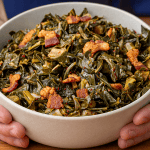
Asian Style Collard Greens
Asian style collard greens made with a 3-step layering process: fried in bacon fat to concentrate flavor, braised in Japanese dashi for deep umami, and finished with a Korean kimchi seasoning for moderate heat and acidity. Includes a bonus pickled stems recipe for zero waste. Developed by applying Asian cooking techniques to a classic Southern soul food dish.
Servings 6 servings
Calories 200kcal
Equipment
- 1 Dutch Oven For frying and braising the greens
- 1 All-Clad Sauce Pot For making the dashi
- 1 Small All-Clad Pot For pickling the stems
- 1 Deli Containers For storing pickled stems
- 1 Ladle For serving pot liquor
- 1 Chinois Strainer For straining dashi
- 1 food processor For making kimchi base
- 1 All-Clad Non-Stick Pan For cooking kimchi base
- 1 Vegetable Peelers For peeling stems
- 1 Spider Strainer For removing bacon
- 1 Salad Spinner For drying greens
- 1 Hefty Storage Gallon Bags For freezing greens (optional)
Ingredients
Dashi
- 6 cups water
- 45 g kombu dashi seaweed; available at Asian grocery stores
- 45 g katsuobushi bonito flakes
Kimchi Base
- ½ cup onion sliced
- 1 tablespoon jalapeno chopped
- ¼ cup green onion whites only, sliced
- 1 tablespoon ginger minced
- 5 cloves garlic rough chopped
- 2 teaspoon sugar
- 1 ½ tablespoon gochugaru Korean pepper flakes
- 2 ½ tablespoon vegetable oil
- 1 tablespoon fish sauce
- 1 ½ tablespoon white vinegar
- 1 tablespoon soy sauce light soy sauce
Collard Greens
- 2 lb collard greens 4-5 bunches, about 2 pounds of leaves
- 6 oz bacon thinly sliced
- 1 yellow onion thinly sliced
- 4 cloves garlic thinly sliced
- 4 cups dashi prepared above, or reconstituted Hon-Dashi
- ¼ cup kimchi base prepared above, or store-bought; start with less for milder heat
- 2 tablespoon mirin
- 2 tablespoon unseasoned rice vinegar
- 2 teaspoon kosher salt to taste; start with ½ teaspoon at a time, you may need up to 4 tsp
- ¼ teaspoon sugar to taste; add ¼ teaspoon at a time to counteract bitterness
Instructions
Make the Dashi
- Add 6 cups of water and 45 grams of kombu to a pot. Turn the heat on medium-high and bring it just to the point before simmering. Do not let it fully simmer or the broth can turn bitter and slimy.
- As soon as small bubbles start hitting the surface, remove the kombu and turn off the heat. Add 45 grams of katsuobushi, cover the pot, and allow it to steep for approximately 10 minutes.
- Strain the stock through a fine mesh strainer and set aside. If using Hon-Dashi instead, follow the package directions to reconstitute with hot water.
Make the Kimchi Base
- Add ½ cup sliced onion, 1 tablespoon chopped jalapeno, ¼ cup sliced green onion whites, 1 tablespoon minced ginger, 5 rough-chopped garlic cloves, 2 teaspoons sugar, and 1½ tablespoons gochugaru to a food processor. Blend on high until you have a fine paste.
- Heat 2½ tablespoons of vegetable oil in a small non-stick pan over medium heat. Add the chili paste and saute for a few minutes until cooked through.
- Deglaze the pan with 1 tablespoon of fish sauce and stir it into the paste. Kill the heat and add 1½ tablespoons of white vinegar and 1 tablespoon of soy sauce. Mix until well combined.
Prep the Greens
- Remove the stems from each leaf by folding the leaf in half and slicing down the stem, or by using the rip-and-pull method. Save the stems for pickling if desired.
- Cut the leaves in half lengthwise, stack several together, roll them into a cigar shape, and slice crossways into small pieces.
- Wash the greens in several changes of water. Add a splash of white vinegar and some coarse salt to the first wash and rub the leaves together. Drain, refill, and repeat 2-3 more times. Use straight water for the last wash.
- Dry the greens using a salad spinner or by blotting on towels. Removing excess water before cooking keeps the flavor concentrated.
Fry and Braise the Greens
- Add 6 ounces of thinly sliced bacon to a cold pot. Turn the heat on medium-low and slowly render the fat out while crisping the bacon, about 15-30 minutes. Remove the bacon with a slotted spoon and save for garnish.
- Turn the heat up to medium and add 1 thinly sliced yellow onion to the bacon fat. Sweat the onion until it turns translucent.
- Add the greens in batches, stirring each handful until it wilts down before adding the next. Continue frying until the greens have given up most of their liquid. When the liquid is mostly gone and you hear sizzling, add 4-5 cloves of thinly sliced garlic and stir in.
- Pour in 4 cups of dashi and bring to a light simmer. Turn the heat down to low or medium-low, cover, and braise for 1 to 2 hours. Test a leaf for tenderness. If still tough, continue cooking with the lid on.
Season and Finish
- Kill the heat and stir in ¼ cup of the kimchi base. Start with less if you prefer milder heat. Add 2 tablespoons of mirin and 2 tablespoons of unseasoned rice vinegar.
- Taste and adjust seasoning with kosher salt, ½ teaspoon at a time. You will likely need between 2 and 4 teaspoons total. The kimchi base is already quite salty, so go slowly.
- Add sugar ¼ teaspoon at a time until any lingering bitterness from the greens is gone. Serve in a bowl with the pot liquor poured over the greens and garnish with the reserved crispy bacon.
Pickled Stems (Optional)
- Cut off the thick woody ends of the stems and discard. Trim the tender stalks of any leaf remnants, peel them, and cut into 1-inch pieces.
- In a small pot, combine ½ cup apple cider vinegar, ½ cup water, 1 tablespoon sugar, 2 teaspoons salt, and your preferred aromatics such as garlic and jalapeno. Bring to a simmer.
- Add the stems and cook for about 1 minute. Kill the heat and let it come to room temperature. Transfer to a covered container and refrigerate overnight. Pickled stems will keep for about a month.
Video
Notes
Homemade vs. Store-Bought Dashi: Hon-Dashi is a dehydrated dashi product that you mix with hot water. It's used in Japanese households far more often than homemade dashi, and it works perfectly in this recipe. Look for it in the Asian aisle of most grocery stores.
Homemade vs. Store-Bought Kimchi Base: Pre-made kimchi base is available in jars at most Asian grocery stores in the refrigerated section near the other kimchi products. The pre-made base tends to have bolder flavors than homemade, which actually works well with collard greens.
Smaller Leaves Are Better: If you can find collard green bunches with smaller leaves, these tend to be sweeter and more tender. Larger leaves work fine but may need more braising time.
The Freezing Trick: Some Southern grandmothers freeze cleaned, dried collard greens overnight before cooking. The freezing mimics the first frost and reportedly makes the greens more tender and sweeter. Cook them right out of the freezer.
If Greens Are Still Tough: Add about ¼ teaspoon of baking soda during braising. This shifts the liquid toward alkaline, which helps break down the cell walls faster.
Don't Waste the Stems: You can either slice stems into coins and saute them with the onion at the beginning of cooking (they need a head start), or pickle them using the optional recipe above.
Storage: Cooked collard greens keep 4-5 days in the fridge in a sealed container with the pot liquor. They taste better the next day. Freeze for up to 3 months. Pickled stems last about a month refrigerated.
Nutrition
Calories: 200kcal