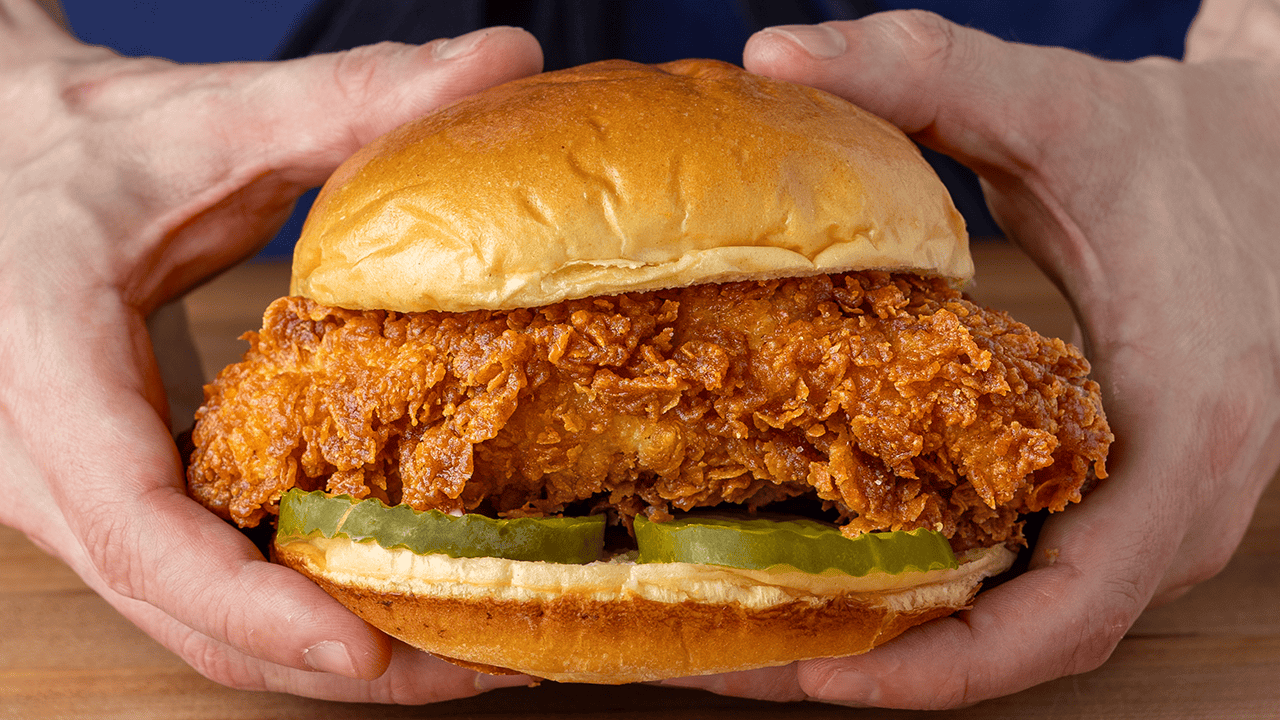
Copycat Popeyes Fried Chicken Sandwich Recipe
I spent several months and over 60 test batches reverse-engineering the Popeyes fried chicken sandwich recipe. After visiting 14 different Popeyes restaurants and tracking down their actual ingredient list, which isn't publicly available, I found the one thing every recipe online gets wrong: the batter.
Every Popeyes chicken sandwich recipe I could find uses liquid buttermilk and eggs for the wet dip. Popeyes doesn't. They use a pre-mixed dry powder they call "poultry batter" that contains powdered egg, powdered buttermilk, powdered milk, and vinegar powder, all reconstituted with cold water before frying. That's what produces the crispy, flaky, light crust. Without the dry powder approach, you get a heavier, wetter coating that tastes like regular fried chicken, not Popeyes.
This post contains affiliate links, which means I may earn a small commission if you make a purchase. It doesn't cost you anything extra. Full disclosure.
Why This Popeyes Chicken Sandwich Recipe Works
- The poultry batter uses all dry ingredients. Powdered egg, buttermilk, milk, and vinegar give you the classic Southern fried chicken flavor without introducing any extra moisture. The crust stays crispier and lighter than anything you'll get from a liquid buttermilk dip.
- The dry flour mix is plain. Just flour, baking powder, baking soda, and salt. No spice blend at all. This is the opposite of what every other online recipe tells you to do, and it matches what Popeyes actually uses according to their ingredient list.
- A 4.5% salt brine seasons the chicken all the way through. Twelve hours in a solution of water, salt, sugar, MSG, garlic powder, and onion powder. This is how you get flavor in every layer of the meat, not just the crust.
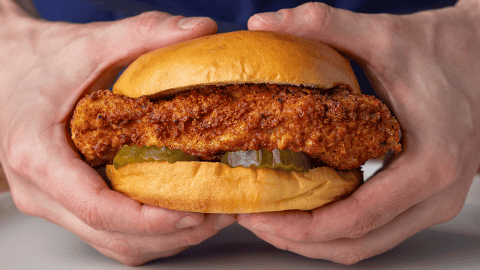
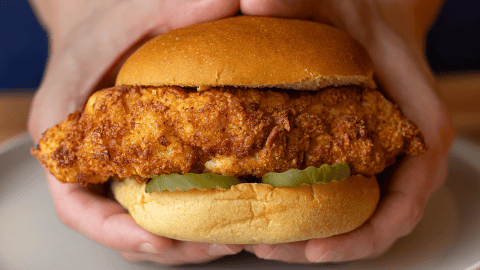
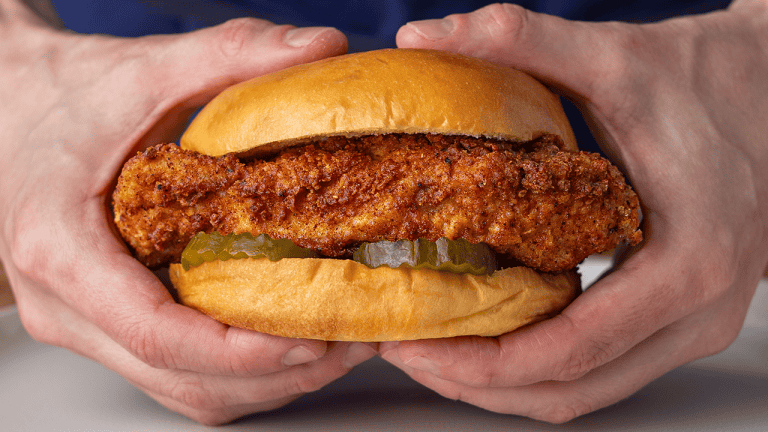
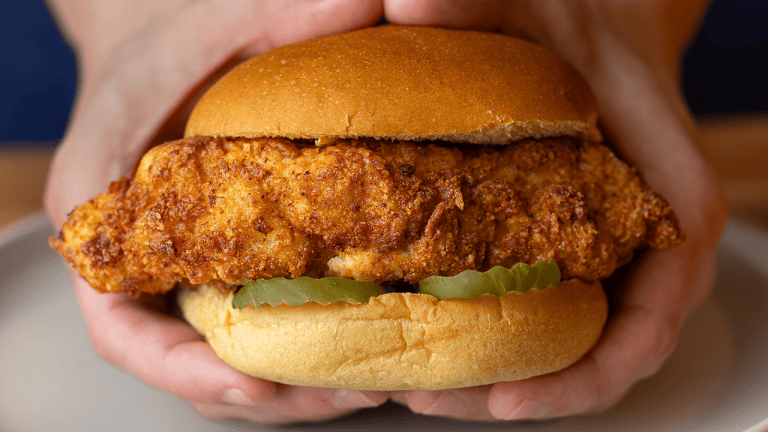
- The 3-step breading process creates those craggy bits. Flour first, then wet batter, then back into the flour with 10-20 tosses. That tumbling action in the final flour step is what produces the irregular, textured crust that Popeyes is known for.
- A pinch of sugar in the mayonnaise matches the restaurant. Both Hellman's and Blue Plate were slightly less sweet than the samples I picked up from Popeyes. Adding a small amount of sugar to either brand made them indistinguishable from the restaurant version.
Ingredients You'll Need
Boneless, skinless chicken breasts. Split horizontally and pounded to about ½-inch thick, with the tenderloin removed. Popeyes filets typically weigh 4-5 ounces each. I brought my kitchen scale into Popeyes like a deranged lunatic to confirm that.
Morton's Table Salt. Used in both the brine and the dry flour mix. I tested with Morton's specifically because it gave me the closest flavor match to the restaurant, and Popeyes' ingredient list specifies salt as a primary component in their seasoning solution.
MSG (Accent). An essential part of the Popeyes flavor, used in both the brine and the poultry batter. You can find it at most grocery stores under the brand name Accent. If you leave it out, you'll notice the difference immediately.
Whole Egg Powder. Eggs in the batter provide binding, structure, color, and a slight richness to the crust. Using powdered eggs means you get all of that without adding liquid, which keeps the crust as crispy as possible.
Buttermilk Powder. The most classic flavor of Southern fried chicken, in powdered form. Same principle as the egg powder: you get the tangy buttermilk flavor without introducing moisture that would soften the crust during frying.
Vinegar Powder. Works alongside the buttermilk powder to add an extra layer of tang without any liquid. You won't find this at a standard grocery store. Amazon links are in the recipe card below.
Corn Flour. Important: corn flour is different from cornstarch, even though some recipes use the names interchangeably. Corn flour uses the whole kernel, which gives more flavor than cornstarch. It also lightens the crust and adds crispiness because it contains no gluten.
Nonfat Milk Powder. Milk with all the liquid removed. Helps with browning, texture, and flavor without adding moisture. This is the one specialty ingredient you can usually find at a standard grocery store, on the baking aisle near the evaporated milk.
Sara Lee Artesano Brioche Buns. I tested every major brioche bun brand available at the grocery stores near me. They're all fairly similar, but the Sara Lee Artesano tasted closest to what I was getting at the restaurant. These are available pretty much everywhere.
Dill Pickles. Popeyes uses barrel-cured Chipco pickles, which aren't available to consumers. I tested every grocery store brand I could find, and, bizarrely enough, the closest match was Great Value dill pickle chips from Walmart. Any sliced dill pickle will get you close.
Hellman's or Blue Plate Mayonnaise. I got conflicting answers from Popeyes employees on which brand the restaurant uses. Both were slightly less sweet than the restaurant version, so I whisk in a small pinch of sugar. That one addition made both brands indistinguishable from the samples I tested against.
Neutral frying oil. Popeyes uses a beef-flavored shortening, which is expensive and hard to find. Any neutral oil works well at home: vegetable, canola, or peanut.
How to Make Popeyes Fried Chicken Sandwich
Step 1: Prepare the chicken filets. Remove the tenderloin from each breast and set it aside for another use. Trim the tapered point from the bottom of the breast, then make a horizontal slice halfway through to create two even filets. Place them under plastic wrap and pound to ½-inch thickness with a meat mallet. Popeyes uses a technique called a "knuckle roll" to flatten their filets in the restaurant, but pounding at home gives you more consistent results.
Step 2: Brine the chicken for 12 hours. Dissolve the salt, sugar, MSG, garlic powder, and onion powder in 1 liter of water. Submerge the filets and refrigerate for 12 hours. I tested several different brine times, and 12 hours consistently produced the closest match to the restaurant flavor. You can go a little shorter or a little longer without any problems.
Step 3: Make the poultry batter dry mix. Whisk together the flour, cornstarch, egg powder, buttermilk powder, milk powder, corn flour, baking powder, sugar, vinegar powder, baking soda, salt, MSG, paprika, mustard powder, garlic powder, onion powder, white pepper, and turmeric. The turmeric is optional (Popeyes likely uses artificial food coloring), but it helps with the golden color. This dry mix stores in a sealed container for months.
Step 4: Make the dry flour mix. Whisk together the flour, baking powder, baking soda, and salt. That's it. I know it looks too simple, but Popeyes' actual ingredient list shows only flour, leavening agents, and salt in the dredge. All the flavor comes from the brine and the poultry batter. The flour is just the structural layer.
Step 5: Bread and fry. When you're ready to cook, reconstitute the poultry batter dry mix with cold water and whisk until smooth. You want a consistency slightly thinner than pancake batter. Pull the chicken from the brine and dry each filet thoroughly with paper towels. Any leftover moisture will prevent the breading from sticking. Set up your station: filets, flour mix, and wet batter. Press each filet into the flour and shake off the excess. Dip into the batter and let the excess drip off. Then place the chicken back into the flour and toss it around 10-20 times, pressing the flour into the surface as you go. That tossing is what creates the craggy, irregular texture in the crust. Fry at 350°F for 4-6 minutes until golden and cooked through.
Step 6: Assemble the sandwich. Butter both halves of the brioche bun and toast them cut-side down in a pan over medium heat until golden. Spread the sweetened mayo on the top and bottom bun. Place 3 dill pickle slices on the bottom, top with the fried chicken filet, and close the sandwich.
Tips for the Best Popeyes Chicken Sandwich
Dry the chicken thoroughly after brining. Any moisture left on the surface prevents the first flour coat from sticking properly. Pat each filet down with paper towels until it feels dry to the touch before you start the breading process.
Keep the wet batter cold. Reconstitute the poultry batter with cold water and keep it refrigerated until you're ready to dip. Cold batter hitting hot oil creates more steam during frying, and that's what gives you a lighter, crispier crust.
Don't cut the tossing short in the final flour step. 10-20 tosses is the real number, not an exaggeration. The tossing and pressing action in that last flour dip is what produces the craggy, irregular texture that defines a Popeyes crust. If you just press the chicken gently into the flour once or twice, you'll get a smooth, uniform coating that doesn't look or taste like the original.
Most of the specialty ingredients aren't at your grocery store. Whole egg powder, buttermilk powder, vinegar powder, and corn flour are all specialty items. Amazon links are in the recipe card below. Nonfat milk powder is the exception. You can usually find it on the baking aisle.
Make a big batch of the dry mixes and store them. The poultry batter dry mix and the dry flour mix both keep for months in sealed containers. This is exactly how Popeyes operates: the dry powder sits on a shelf, and they add water when it's time to fry. A double or triple batch means you can do fried chicken on a weeknight without the prep.
Storage and Reheating
Dry poultry batter mix keeps in a sealed container at room temperature for several months.
Dry flour mix stores the same way. Make both ahead and keep them on hand for whenever you want fried chicken.
Brined chicken filets can be prepared up to 2 days in advance. After brining, dry the filets completely, place them in a sealed container, and refrigerate until you're ready to bread and fry.
Assembled fried chicken sandwiches are best eaten right away. The crust starts losing its crispiness within about 20-30 minutes of frying. If you have leftover fried filets, reheat them (without the bun) on a wire rack over a baking sheet at 375°F for about 8-10 minutes. The oven reheats more evenly than a microwave, which will make the crust soggy.
Frequently Asked Questions
Can I use liquid buttermilk and eggs instead of the powdered versions?
You can, but the result will be noticeably different. The whole reason for using powdered ingredients is to get the flavor of buttermilk and eggs without adding extra liquid to the batter. Liquid buttermilk and eggs create a wetter, heavier coating. The powdered version produces a lighter, crispier, flakier crust that stays crunchy longer. This is the specific difference that separates the Popeyes texture from standard fried chicken.
Where can I buy whole egg powder, buttermilk powder, and vinegar powder?
Most grocery stores don't carry them. I've linked everything in the recipe card below with Amazon links. Nonfat milk powder is the easiest to find — it's typically on the baking aisle near the evaporated milk. Corn flour is sometimes available in the baking or Latin foods section, but look for fine-ground corn flour, not coarse masa.
Does the brine really need to be 12 hours?
Twelve hours gave me the most consistent match to the restaurant flavor. You can go as short as 8 hours or as long as 24 without major issues. Shorter than 8 hours and the seasoning doesn't penetrate all the way through the filet. Longer than 24 and the salt starts breaking down the muscle fibers more than you want, which can make the texture mushy.
Why is the dry flour mix so simple?
Because that's what Popeyes actually uses. Their ingredient list shows only flour, leavening agents, and salt in the dredge. All those spice blends you see in other recipes (cayenne, paprika, garlic powder, onion powder in the flour) aren't part of the Popeyes process. The flavor comes from the brine, which seasons the meat itself, and the poultry batter, which carries the buttermilk, egg, and spice flavors. The flour is there to provide structure and crunch.
More Fast Food Chicken Sandwich Recipes
Recipe
Popeyes Fried Chicken Sandwich
Equipment
- 1 Deep Fryer or heavy-bottomed pot
- 1 Plastic Wrap for pounding filets
- 1 Meat Mallet for pounding to ½-inch
- 1 Deli Containers for brine and storage
- 1 Whisk
- 1 All-Clad Nonstick Pan for toasting buns
- 1 Colander
Ingredients
The Chicken Brine
- 2 tbsp + 1.5 tsp table salt
- 1 tbsp + 2 tsp sugar
- 1 tablespoon MSG Accent brand at most grocery stores
- 1 teaspoon garlic powder
- 1 teaspoon onion powder
- 1 liter water
The Poultry Batter (Dry Mix)
- ¾ cup all-purpose flour
- 2 tablespoon cornstarch
- 3 tablespoon whole egg powder for binding, structure, and color
- 2 tablespoon buttermilk powder provides classic Southern fried chicken flavor without adding moisture
- 3 tablespoon nonfat milk powder aids browning and flavor
- 1 tablespoon corn flour different from cornstarch; uses whole kernel for more flavor
- 1 teaspoon baking powder
- 1 teaspoon sugar
- 1 teaspoon vinegar powder boosts tang without adding liquid
- ¼ teaspoon baking soda
- 1 ½ teaspoon table salt
- ½ teaspoon MSG
- ¼ teaspoon paprika
- ¼ teaspoon mustard powder
- ¼ teaspoon garlic powder
- ¼ teaspoon onion powder
- ⅛ teaspoon white pepper
- ¼ teaspoon turmeric optional; for golden color
The Poultry Batter (Wet)
- 1 cup cold water minus 2 tsp
The Dry Flour Mix
- 1 cup all-purpose flour
- 1 ¼ teaspoon baking powder
- ¼ teaspoon baking soda
- 1 ½ teaspoon table salt
The Sandwich Assembly
- 4 brioche buns Sara Lee Artesano recommended
- 2 tablespoon butter
- 4 tablespoon mayonnaise Hellman's or Blue Plate; whisk sugar in before using
- 1 pinch sugar
- 12 slices dill pickles Great Value from Walmart closest to restaurant; any dill works
- neutral oil vegetable, canola, or peanut
Instructions
Prepare the Chicken Filets
- Remove the tenderloin from each chicken breast and reserve for another use. Trim the tapered point from the bottom of the breast.
- Make a horizontal slice halfway through each breast to create 2 evenly cut filets. You should end up with filets that are roughly 4-5 ounces each.
- Place the filets under plastic wrap and pound with a meat mallet to an even ½-inch thickness.
Make the Chicken Brine
- Add the salt, sugar, MSG, garlic powder, and onion powder to a large bowl.
- Pour over the water and whisk until all seasonings are completely dissolved.
- Submerge the chicken filets in the brine, cover, and refrigerate for 12 hours. You can go as short as 8 hours or as long as 24.
Make the Poultry Batter (Dry Mix)
- Add the flour, cornstarch, egg powder, buttermilk powder, milk powder, corn flour, baking powder, sugar, vinegar powder, baking soda, salt, MSG, paprika, mustard powder, garlic powder, onion powder, white pepper, and turmeric to a large bowl.
- Whisk gently until all spices are evenly distributed. The dry mix can be stored in a sealed container for several months.
Make the Dry Flour Mix
- Add the flour, baking powder, baking soda, and salt to a large bowl and whisk until combined. The dry flour mix can be stored in a sealed container for several months.
Bread and Fry the Chicken
- Heat neutral oil in a deep fryer or heavy-bottomed pot to 350°F (175°C).
- Reconstitute the poultry batter dry mix with the cold water. Whisk until smooth with no dry spots. You want a consistency slightly thinner than pancake batter.
- Remove the chicken from the brine and pat each filet thoroughly dry with paper towels. Any moisture left on the surface will prevent the breading from sticking.
- Press each filet into the dry flour mix until well coated. Shake off the excess flour.
- Dip the floured filet into the wet poultry batter. Lift and let excess batter drip off.
- Place the battered filet back into the dry flour mix. Toss it around 10-20 times, pressing the flour into the surface as you go. This tossing action creates the craggy, irregular bits in the crust. Shake off excess flour.
- Lower the breaded filets into the hot oil and fry for 4-6 minutes, or until golden and cooked through. Do not overcrowd the fryer.
- Remove the fried filets to a baking sheet lined with a wire cooling rack to drain.
Assemble the Sandwich
- Spread butter on both halves of the brioche buns. Toast them cut-side down in a pan over medium heat until golden brown.
- Spread sweetened mayonnaise on the top and bottom bun.
- Place 3 dill pickle slices on the bottom bun. Top with the fried chicken filet and close the sandwich. Serve immediately.