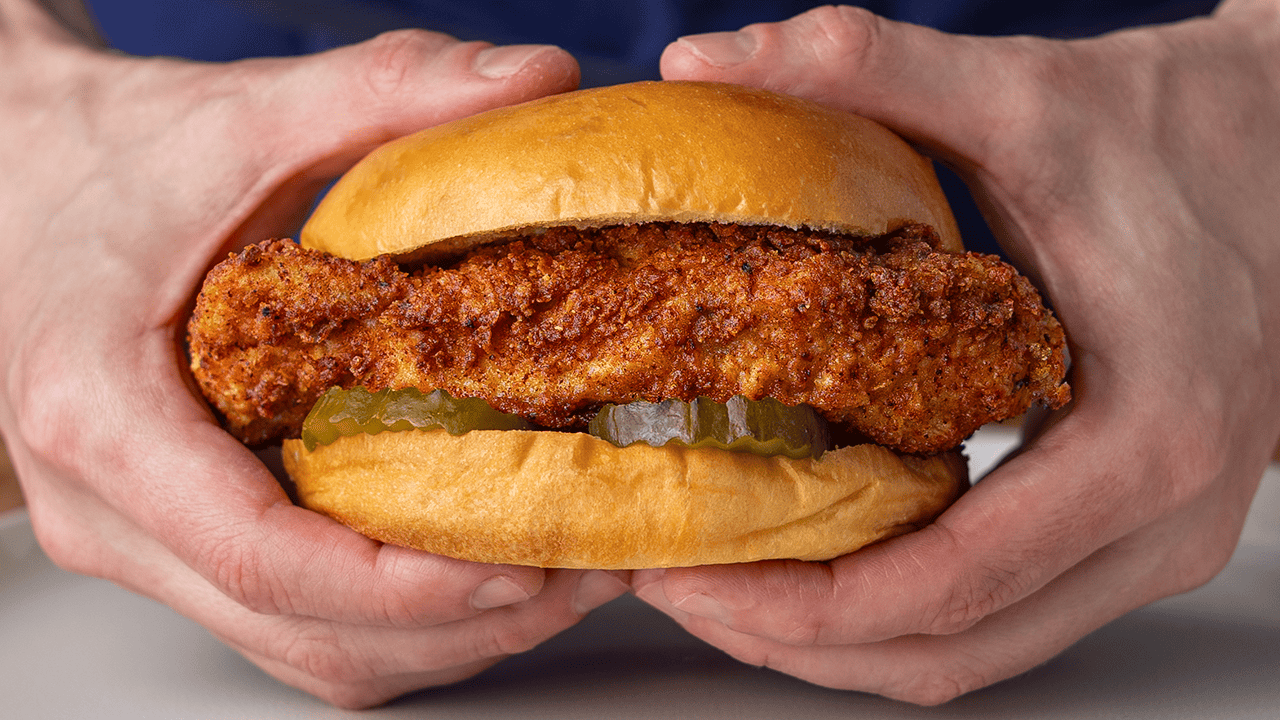
Copycat Chick-fil-A Spicy Chicken Sandwich Recipe
I spent six weeks and 27 batches reverse-engineering Chick-fil-A's spicy chicken sandwich. The hardest part was the heat. Chick-fil-A describes it as a "spicy blend of peppers," and that's all they'll say. After weeks of daily comparisons against sandwiches from the restaurant, I identified the three peppers responsible: paprika, white pepper, and cayenne, in a very specific ratio.
The other discovery was a step most recipes completely overlook. If you peel back the crust on a Chick-fil-A spicy filet, there's an orange-tinted layer of seasoning sitting directly on the meat, underneath the breading. That's a separate spice rub applied after brining and before the milk wash. If you leave this step out, the spice stays on the outside of the crust and the chicken itself is bland. The rub is what gives every bite peppery warmth all the way through.
This post contains affiliate links, which means I may earn a small commission if you make a purchase. It doesn't cost you anything extra. Full disclosure.
Why This Spicy Chicken Sandwich Recipe Works
- A specific three-pepper blend for the exact heat profile. Chick-fil-A's spice comes from paprika, white pepper, and cayenne in a precise ratio. Each one handles a different part of the heat: paprika adds color and mild warmth, white pepper is the slow-building spice you feel a few seconds after you bite, and cayenne is the immediate, upfront heat. You need all three to match the restaurant.
- Double-seasoned chicken for flavor through the entire filet. The brined chicken gets coated in a spicy seasoning mixture before the milk wash or breading step. This is the step that produces the orange layer you see between the meat and crust. Without it, you get a spicy coating on top of bland chicken.
- Nonfat milk powder in the seasoned coater for browning and texture. Chick-fil-A uses milk powder to get their golden-brown crust without adding liquid to the flour. The dairy proteins brown faster than flour alone during frying, and they contribute a subtle richness to the breading you can't replicate with flour and spices by themselves.
- Mustard powder, the seasoning most recipes overlook. A food writer once asked Chick-fil-A executives directly what "spices" means on their ingredient label. The answer: black pepper, paprika, and mustard. Mustard powder adds a subtle, almost tangy sharpness to the breading that you wouldn't identify eating it blind, but you'd notice if it were gone.
- Seeding the breading for an extra crunchy crust. Adding a few tablespoons of the milk wash into the dry coater and squeezing it between your fingers creates small clumps throughout the flour. Those clumps fry into the craggy, crunchy bits all over the surface of the chicken that make a Chick-fil-A sandwich feel different from a standard fried chicken sandwich.
Ingredients You'll Need
Table salt. Chick-fil-A's brine uses plain table salt, not kosher. If you want to substitute, the recipe includes conversions for Morton's kosher and Diamond Crystal. The important number is 67 grams of salt per liter of water, regardless of which salt you use. A kitchen scale removes the guesswork here.
White pepper. This is the medium-heat pepper in the three-pepper blend. It's a different kind of spice than cayenne. Cayenne is immediate and sharp. White pepper is slower and more lingering. You'll find it in the spice aisle of most grocery stores, usually near the black pepper.
Cayenne. The immediate-heat pepper in the blend. If you want the sandwich spicier, this is the one to increase. If you want it milder, reduce the cayenne and keep the white pepper and paprika amounts the same.
MSG. Sold as Accent at most grocery stores. This is nonnegotiable if you want the actual Chick-fil-A flavor. It's on their official ingredient list and shows up in both the seasoning mixture and the coater. If you've never cooked with it before, you can find Accent in the spice aisle, usually on the bottom shelf.
Nonfat milk powder. You'll use this twice: once in the seasoned coater for browning and texture, and once to make the milk for the milk wash. Look for it in the baking aisle. Using the powder for both means you don't need to buy a separate carton of skim milk.
Mustard powder. The spice Chick-fil-A confirmed they use, but that almost no recipe online includes. It appears in the brine, the seasoning mixture, and the seasoned coater. It adds a subtle, almost tangy quality to the breading that's hard to identify when you eat it, but you'd notice its absence immediately.
Peanut oil. Chick-fil-A fries everything in peanut oil, but refined peanut oil is essentially flavorless. Vegetable oil or canola oil produce the same result. If you want to match the restaurant exactly, go with peanut oil. If you want to save a few dollars, any neutral frying oil is fine.
Dill pickles. Chick-fil-A sources proprietary pickles from Paradise Farms in Wisconsin, but those aren't commercially available. Their ingredient list includes dill spice and garlic, which matches a kosher dill profile more than a regular dill. Hamburger dill chips or kosher dill slices will get you close. Stay away from bread-and-butter pickles. They're sweet, and that's not the flavor you're going for with this sandwich.
How to Make Chick-fil-A's Spicy Chicken Sandwich
Step 1: Make the spicy brine.
Combine 67 grams of table salt with white pepper, paprika, cayenne, mustard powder, and garlic powder in a bowl. Pour in 1 liter of water and whisk until the salt has completely dissolved. This brine can be stored in the fridge for several weeks, so you can make it well in advance.
Step 2: Section and brine the chicken.
Most grocery store chicken breasts average 12 to 16 ounces, much larger than the 4-ounce filets Chick-fil-A uses. Trim any fat, remove the tenderloin (save it for a chicken tender), then section the breast into sandwich-sized pieces. Cut the narrow end off about halfway up, then butterfly the thick half by splitting it horizontally. Pound each piece under plastic wrap with the smooth side of a meat mallet until the filets are thin and uniform in thickness.
Place the filets in the spicy brine and refrigerate for 8 to 12 hours. This brine is what gives Chick-fil-A's chicken its seasoning all the way through the meat, and it's the single most important step in the recipe.
Step 3: Apply the spicy seasoning mixture.
Remove the brined filets, pat them dry with paper towels, and sprinkle each piece with the spicy seasoning mixture on both sides. This is the step that produces the orange layer between the meat and the crust. These brined-and-seasoned filets are essentially how the chicken arrives at Chick-fil-A locations, ready to cook. You can prepare them a few days ahead and store them in the fridge, or vacuum-seal them and freeze for a couple of months.
Step 4: Prepare the milk wash and seasoned coater.
Reconstitute 1 cup of skim milk from the nonfat milk powder, then whisk in 2 eggs until the mixture is completely smooth. Set the milk wash aside.
For the coater, combine flour, sugar, salt, MSG, milk powder, baking powder, paprika, white pepper, cayenne, and mustard powder in a large bowl. Sift everything together to remove clumps, then stir in the coarse ground black pepper last. The pepper goes in after sifting because you want visible specks in the finished crust, and sifting would break them up.
Step 5: Bread and fry.
Heat your oil to 325°F. Before you start breading, take a few tablespoons of the milk wash and mix them into the coater with your fingers, squeezing until small clumps form throughout the flour. This is called seeding, and it's what gives the crust that craggy, extra-crunchy texture.
While the oil heats, butter the top and bottom of your buns and toast them in a pan over medium heat. Set them aside.
Dip each filet in the milk wash, let the excess drip off, then press the chicken into the seasoned coater. Press firmly with the palm of your hand. Chick-fil-A's training manual says your heels should actually leave the ground when you press the chicken into the breading. You're flattening the filet and packing the coating on at the same time.
Fry the chicken for approximately 4 minutes and 20 seconds. Depending on the thickness of your filets, you may need a bit longer. Transfer to a wire rack and let it rest for a couple of minutes before assembling.
Step 6: Assemble the sandwich.
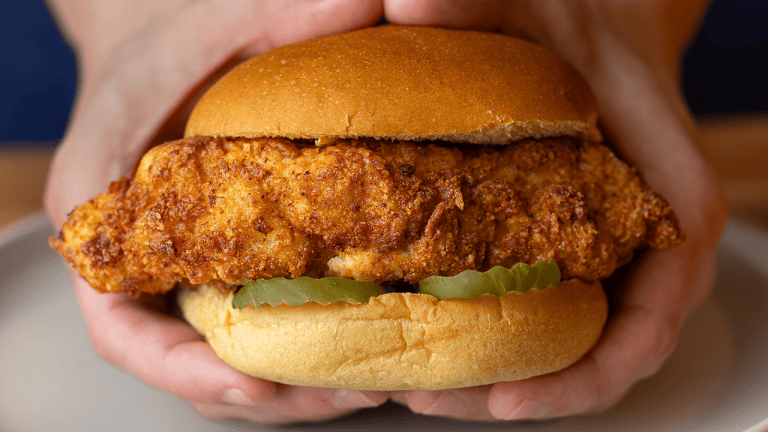
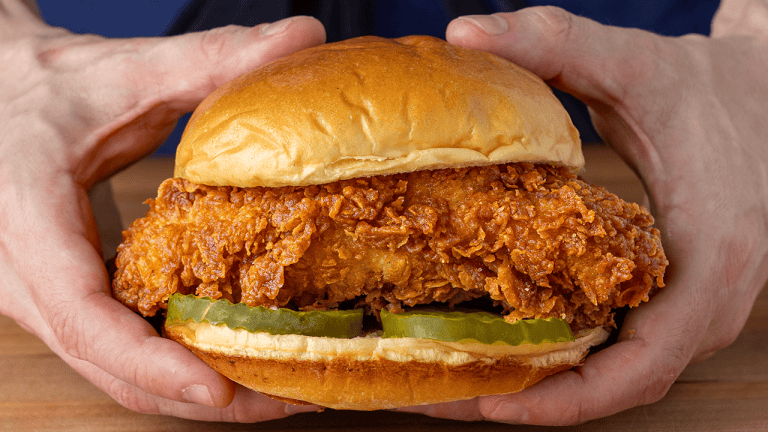
Place two dill pickle chips on the bottom bun. According to the Chick-fil-A training manual, the pickles should be "dating, not mating." Side by side, never stacked on top of each other. Place the spicy chicken filet on top of the pickles, add the top bun, and you're done.
Tips for the Best Spicy Chicken Sandwich
Adjust the heat by changing which pepper you increase. More cayenne gives you sharper, more immediate heat. More white pepper gives you a deeper, slower burn that lingers. The paprika is mostly there for color and mild warmth, so increasing it won't make the sandwich noticeably hotter.
Press the breading on like it owes you money. This is the biggest factor in whether the crust stays attached during frying. Light pressure means loose breading, and loose breading separates in the oil.
You don't need a pressure fryer. Chick-fil-A uses Henny Penny pressure fryers, and a lot of people assume that's the secret to the sandwich. The pressure fryer lets them cook faster and retain slightly more moisture, but the flavor comes from the brine, the seasoning, and the coater. If your brine is accurate and your oil temperature is steady at 325°F, your sandwich will taste like the restaurant.
Prep the components ahead of time and you can fry sandwiches in about 15 minutes. The spicy brine keeps in the fridge for weeks. The seasoning mixture and the seasoned coater both last months in a sealed container. If you keep all three on hand and brine a batch of chicken over the weekend, weeknight sandwiches are just a milk wash, a bread, and a fry away from being done.
Use a kitchen scale for the brine. The difference between a properly salted brine and an oversalted one is small in volume measurements but obvious in the final product. A kitchen scale removes the guesswork. A jeweler's scale is useful for the smaller spice amounts measured in fractions of grams.
For the deluxe version, just add lettuce, tomato, and pepperjack cheese. Place them on top of the pickles before adding the chicken. That's the only difference between the regular spicy and the spicy deluxe.
Storage and Reheating
Brined and seasoned chicken keeps in the fridge for 2 to 3 days. Vacuum-sealed, it freezes well for a couple of months. Thaw overnight in the fridge before cooking.
The spicy seasoning mixture and the seasoned coater both store in sealed containers at room temperature for several months. Keep them away from direct sunlight.
Make the milk wash fresh each time you fry. It takes about a minute.
Assembled sandwiches don't store well. The crust absorbs moisture from the pickles and the chicken fairly quickly, so this is a cook-and-eat recipe. If you want to reheat leftover fried chicken on its own, a 375°F oven for about 10 minutes will re-crisp the coating better than a microwave.
Frequently Asked Questions
Does Chick-fil-A brine their chicken in pickle juice?
No. This is the most persistent myth about Chick-fil-A's chicken, and it has been confirmed as false by hundreds of current and former employees and by the ingredient list on their website. Chick-fil-A uses a salt-and-spice brine for their original and spicy sandwiches. There is no pickle juice involved. The only Chick-fil-A chicken that gets a pickle-based marinade is the grilled chicken.
Do I need a pressure fryer to make this at home?
No. Chick-fil-A's Henny Penny pressure fryers cook the chicken faster and help retain moisture, but the flavor comes entirely from the brine, the spice rub, and the seasoned coater. A standard deep fryer or a heavy-bottomed pot with a deep-fry thermometer will produce a sandwich that tastes like the restaurant. The texture may differ very slightly in terms of juiciness, but the flavor will be accurate.
Can I adjust the spice level?
Yes. The heat comes from three peppers: paprika (mild), white pepper (medium, slow-building), and cayenne (hot, immediate). To make it spicier, increase the cayenne in both the seasoning mixture and the seasoned coater. To make it milder, reduce the cayenne. The white pepper and paprika can stay the same in either direction.
What's the difference between baking powder and baking soda in the coater?
They are not interchangeable in this recipe. The seasoned coater uses baking powder, which is a complete leavening agent that reacts with heat and moisture to create tiny air pockets in the crust during frying. Baking soda is only the alkaline component and requires an acid to activate. Using baking soda instead of baking powder will give you a dense, flat crust with a metallic aftertaste.
What pickles should I use?
Chick-fil-A uses proprietary pickles from Paradise Farms in Wisconsin that aren't available to consumers. Based on their ingredient list, the flavor profile is closest to a kosher dill pickle. The dill spice and garlic in their ingredients match that style. Hamburger dill chips or kosher dill slices will both work well. Avoid bread-and-butter pickles. They're sweet, and the sandwich is meant to be savory and peppery, not sweet.
More Fast Food Chicken Sandwich Recipes
Recipe
Chick-fil-A Spicy Chicken Sandwich
Equipment
- 1 Deep Fryer Or use a heavy-bottomed pot with a thermometer
- 1 Glass Mixing Bowls For the brine
- 1 Wire Cooling Rack For resting fried chicken
- 1 Hefty Storage Gallon Bags For brining
- 1 Pyrex Glass Baking Dish For breading station
- 1 Glass Mixing Bowls For seasoned coater
- 1 Pyrex Glass Storage Containers For storing components
- 1 Kitchen Scale For weighing brine salt
- 1 Jeweler's Scale For small spice amounts
- 1 Anchor Glass Ramekins For spice prep
- 1 Whisk For brine and milk wash
- 1 Plastic Wrap For pounding chicken
- 1 Meat Mallet For pounding filets
- 1 Vacuum Sealer For freezing brined chicken
Ingredients
The Spicy Brine
- 3 tbsp + 2 ⅛ tsp table salt
- 1 teaspoon white pepper
- 2 teaspoon paprika
- 1 teaspoon cayenne
- 1 teaspoon mustard powder
- 2 teaspoon garlic powder
- 1 liter water
The Spicy Seasoning Mixture
- ½ teaspoon table salt
- ¼ teaspoon MSG
- ¼ teaspoon white sugar
- 2 ½ teaspoon paprika
- 1 ½ teaspoon white pepper
- 1 ½ teaspoon cayenne
- ½ teaspoon mustard powder
The Seasoned Coater
- 1 cup all-purpose flour
- 1 tablespoon granulated sugar
- ¾ teaspoon table salt
- ½ teaspoon MSG
- 1 tbsp + 1 tsp nonfat milk powder
- ¾ teaspoon baking powder
- 1 teaspoon paprika
- 1 teaspoon white pepper
- 1 teaspoon cayenne
- 1 teaspoon mustard powder
- ½ teaspoon coarse ground black pepper
The Milk Wash
- 1 cup nonfat milk powder Reconstituted into skim milk per package directions
- 2 large eggs Add 2 eggs per cup of milk
The Sandwich
- 4 boneless skinless chicken breasts Section into 4 oz filets. Each breast yields ~3 filets + 1 tenderloin
- 4 white hamburger buns
- 2 tablespoon butter For toasting buns
- 8 dill pickle slices Kosher dill or hamburger dill. Not bread-and-butter
- peanut oil For deep frying. Vegetable or canola oil also works
Instructions
Make the Spicy Brine
- Add table salt, white pepper, paprika, cayenne, mustard powder, and garlic powder to a small bowl.
- Pour in 1 liter of water and whisk until the salt has totally dissolved. The brine can be stored in the fridge for several weeks.
Section and Brine the Chicken
- Remove the tenderloin from each chicken breast and set aside. Trim any fat or unsightly bits.
- Cut the narrow end off about halfway up the breast. Take the thick half and split it horizontally by butterflying and cutting it in half.
- Place each piece under plastic wrap and pound with the smooth end of a meat mallet until thin and uniform in thickness. Each breast should yield about 3 sandwich filets and 1 tenderloin.
- Place the chicken in the spicy brine, making sure the filets are fully submerged. Refrigerate for 8 to 12 hours.
Apply the Spicy Seasoning Mixture
- Combine table salt, MSG, white sugar, paprika, white pepper, cayenne, and mustard powder in a small bowl. Mix everything together.
- Remove the brined chicken from the brine and dry each filet thoroughly with paper towels.
- Sprinkle each filet with the spicy seasoning mixture on both sides. These brined and seasoned filets can be stored in the fridge for 2-3 days or vacuum-sealed and frozen for several months.
Make the Seasoned Coater
- Add all-purpose flour, granulated sugar, table salt, MSG, nonfat milk powder, baking powder, paprika, white pepper, cayenne, and mustard powder to a large bowl.
- Sift everything together to ensure there are no clumps of flour or seasonings.
- Stir in the coarse ground black pepper after sifting. You want visible specks of pepper in the finished crust.
Make the Milk Wash
- Reconstitute 1 cup of skim milk from the nonfat milk powder by following the directions on the box.
- Add 2 eggs per cup of milk and whisk until the mixture is totally smooth and homogeneous. Refrigerate if making in advance.
Bread and Fry the Chicken
- Heat peanut oil to 325°F (165°C) in a deep fryer or heavy-bottomed pot. Use a deep-fry thermometer to monitor temperature.
- Set up a breading station with the brined and seasoned chicken, milk wash, and spicy seasoned coater on a baking sheet with a wire rack nearby.
- Take a few tablespoons of the milk wash and add it to the seasoned coater. Squeeze the mixture between your fingers until small clumps form throughout the flour. This is called seeding and creates an extra crunchy crust.
- Butter the top and bottom of each bun and toast over medium heat in a pan. Set aside.
- Dip each filet in the milk wash, allowing excess to drip off.
- Press the chicken into the spicy seasoned coater, pressing down firmly with the palm of your hand to flatten the filet and pack the coating on. Your heels should leave the ground when pressing.
- Fry the chicken for approximately 4 minutes and 20 seconds. Adjust time based on filet thickness. The chicken should be golden brown and cooked through.
- Remove the chicken to the wire rack and allow to rest for a couple of minutes.
Assemble the Sandwich
- Place 2 dill pickle slices side by side on the bottom bun. Do not stack the pickles on top of each other.
- Place the spicy chicken filet on top of the pickles.
- Add the top bun and serve immediately.
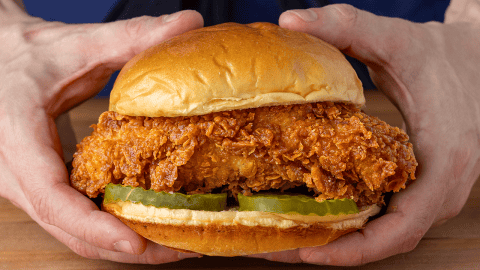
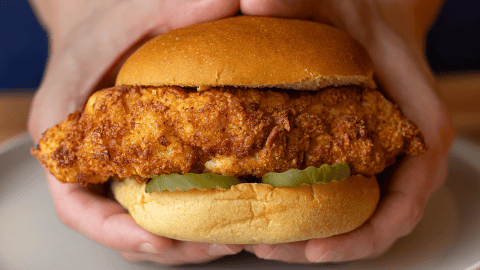
This is the best! We made it half as spicy, because I'm a wuss.
Lyndsey, I'm so glad y'all liked it!