Chinese Takeout General Tso’s Chicken (Crispy Double-Fried Recipe)
Most General Tso’s chicken you get from a takeout place is too sweet, with soggy chicken and no crunch. The meat is tough, the crust has no texture, and the…


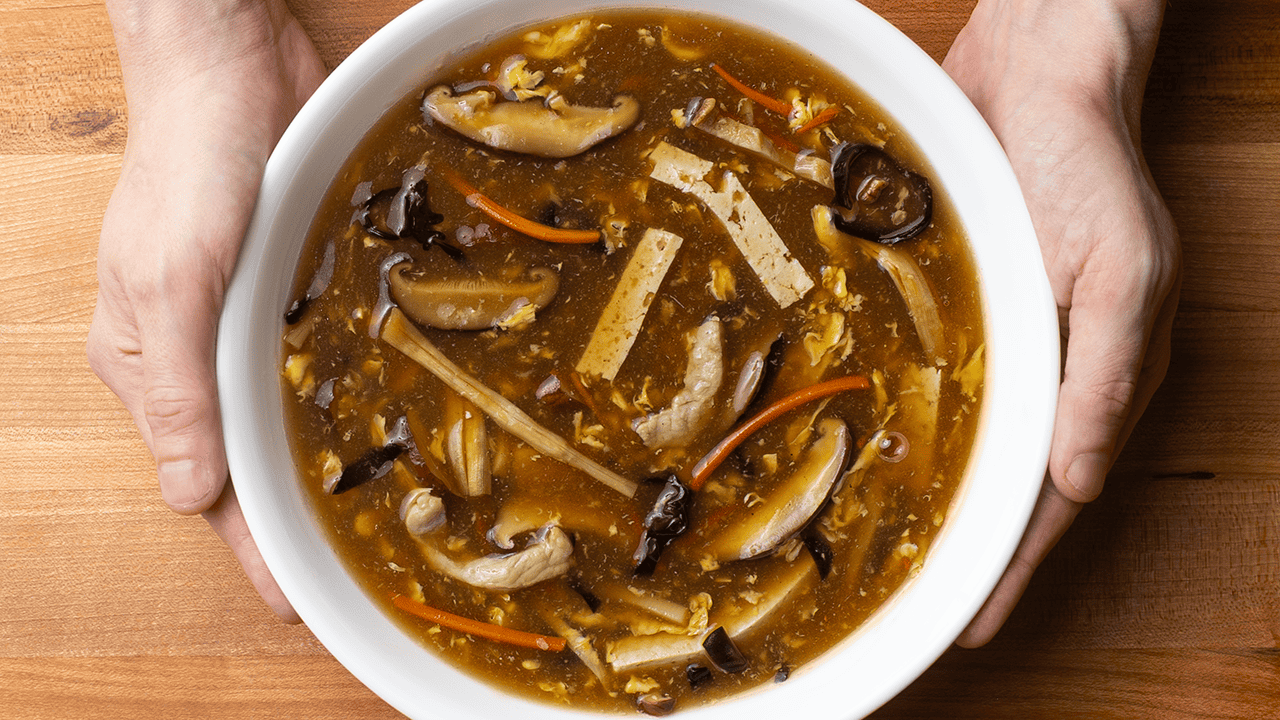
Your homemade hot and sour soup doesn’t taste like your favorite restaurant’s, and the recipe you followed is the reason. I tested 19 versions across six restaurants before I found the pattern. The soup that separated the great places from the mediocre ones came down to three mistakes most recipes make: using the wrong kind of broth, adding the vinegar and white pepper too early, and thickening the broth after the egg instead of before it.
Most recipes online tell you to add the vinegar and white pepper while the soup is still simmering. That cooks off the aromatic compounds that make the soup taste like hot and sour soup. You end up with a thick, brownish broth that tastes like salty mushroom water, and no amount of extra vinegar at the end fixes it.
This post contains affiliate links, which means I may earn a small commission if you make a purchase. It doesn’t cost you anything extra. Full disclosure.
Asian chicken bouillon powder. This is the broth base most takeout kitchens actually use. The two brands I’ve seen in real restaurant kitchens are Knorr and Lee Kum Kee. You’ll know you’ve got the right one if you see Chinese characters on the packaging. If you’re using a Western-style chicken broth, expect a noticeably different flavor. It’ll still work, but it won’t taste like takeout.
Chinese black vinegar (Chinkiang/Zhenjiang). This is the traditional vinegar for hot and sour soup. The acidity is much milder than white vinegar, but the flavor is far more complex: sweet, rich, malty, almost fruity. The two brands I’ve seen in kitchens are Jin Shan and Gold Plum.
If you can’t find Chinese black vinegar, mix equal parts red wine vinegar and apple cider vinegar for a passable substitute.
If you’re using regular white vinegar instead, cut the amount in half. White vinegar is significantly more acidic and will overpower the broth.
Ground white pepper. This is the “hot” in hot and sour. White pepper heat builds slowly, more of a creeping warmth than an instant burn. It’s a completely different sensation from black pepper or cayenne.
Dried black fungus (wood ear mushrooms). These are dried mushrooms that grow on the sides of trees. They rehydrate into thin, slightly crunchy sheets that add textural contrast to the soft tofu and silky egg ribbons. You’ll find them on the dried food aisle at most Asian grocery stores, usually labeled “Black Fungus.”
Dried shiitake mushrooms. Dried shiitakes are significantly cheaper than fresh, store indefinitely, and have a more concentrated flavor. They’re loaded with glutamates, so they add a meaty savoriness to the broth. Save the soaking liquid. It’s essentially liquid umami.
Dried daylily buds. You won’t find these at most Western grocery stores, but they’re on the dried food aisle at Asian markets, usually near the mushrooms. They add a subtle floral note and a slightly chewy texture that rounds out the three-dried-ingredient combination.
Chinese light soy sauce and dark soy sauce. Light soy sauce is the Chinese equivalent of “regular” soy sauce, used for seasoning and savoriness. Dark soy sauce is thicker and adds color more than flavor. For this soup, I like mushroom-flavored dark soy sauce because it reinforces the umami from the dried shiitakes. Lee Kum Kee and Pearl River Bridge both make good versions.
Firm tofu. Traditional versions often use silken tofu for its custardy texture, but takeout kitchens use firm because it holds its shape better in large batches. For this recipe, firm or extra-firm is the way to go.
1. Marinate the protein. Cut 4 ounces of pork loin or chicken breast into thin slivers, about 1/4-inch matchsticks. For chicken, cut across the grain for the most tender result. Toss with salt, sugar, light soy sauce, Shaoxing wine, cornstarch, and a little oil. Refrigerate for at least 20 minutes or up to overnight.
2. Rehydrate the dried ingredients. Pour boiling water over the shiitake mushrooms and black fungus separately and soak for 30 to 60 minutes. Pour cool water over the daylilies and soak for 20 to 30 minutes. After soaking, slice the stems off the shiitakes (they never fully soften), cut the mushroom caps into thin strips, trim the tough base off the black fungus and slice into slivers, and cut the daylilies in half lengthwise after trimming both ends. Save the shiitake soaking liquid for the broth.
3. Poach the protein separately. Bring a pot of lightly salted water to a simmer and cook the marinated meat for 2 to 3 minutes until just done. Cooking it in the broth works, but cooking it separately gives you a cleaner-tasting, clearer soup because you don’t have to skim scum from the broth. Remove and set aside.
4. Blanch the bamboo shoots. Drop the bamboo shoots into the same simmering water for 30 to 60 seconds. This removes the tinny, metallic taste that canned bamboo shoots sometimes have and firms them up slightly.
5. Make the broth. Add 6 cups of prepared Asian chicken broth to a large pot (replace some of the water with reserved shiitake soaking liquid). Heat over medium and season with salt, sugar, light soy sauce, and dark soy sauce. Whisk in freshly grated ginger. Grating rather than dicing gives you the flavor without the chunks.
6. Add everything to the broth. Toss in the poached protein, both mushrooms, daylilies, julienned carrots, blanched bamboo shoots, and sliced firm tofu. Heat through for 3 to 5 minutes to let the mushrooms soak up the seasoning.
7. Thicken with the cornstarch slurry. Mix 5 tablespoons cornstarch with 5 tablespoons water. Slowly pour it into the faintly simmering broth while stirring constantly to prevent clumps. Let it cook for a minute or two. The broth will seem thicker than you expect, but the vinegar will loosen it later. Test by dipping a spoon in and checking that it coats the back.
8. Add the egg ribbons. Lower the heat to just below a simmer. Beat one egg with a splash of water (the water helps you pour finer threads). Drizzle it in as thin a stream as possible and don’t stir. Let the egg set for about a minute in the thickened broth, then gently fold it in. The thick broth acts like a raft, suspending the egg on top so it sets into wispy strands instead of sinking and clumping.
9. Finish with vinegar, white pepper, and sesame oil. Kill the heat. In a small bowl, combine 3 tablespoons Chinese black vinegar, 1 teaspoon ground white pepper, and 1 teaspoon toasted sesame oil. Stir the mixture into the soup. Taste and adjust. These three ingredients are a final seasoning, not a building block. Adding them off the heat preserves every bit of their aroma and flavor.
The order you add ingredients matters more than which ingredients you use. Vinegar added before the cornstarch slurry raises the acidity of the broth, and cornstarch can’t gelatinize properly in an acidic solution. Your soup ends up thin instead of velvety. White pepper heated in liquid for more than a few seconds loses its earthy warmth and turns bitter. Sesame oil breaks down with extended heat and loses the toasted flavor. All three go in at the end, after the heat is off.
Use the shiitake soaking liquid. Dried shiitakes are loaded with glutamates. That soaking liquid is essentially free umami concentrate. Replace some of your water with it when preparing the broth.
Grate the ginger instead of dicing it. Most hot and sour soups I tried at restaurants had a faint ginger presence but no visible chunks. Grating on a Microplane dissolves the ginger into the broth so you taste it without biting into pieces.
Stir the cornstarch slurry right before adding it. Cornstarch in water is a non-Newtonian fluid and it settles fast. If you made it ahead of time, give it another stir before pouring it in or you’ll add starchy water and leave the thickening power at the bottom of the bowl.
Add a little cornstarch to the beaten egg. About 1/4 teaspoon of cornstarch whisked into the egg with the water helps produce smoother, more defined ribbons.
Hot and sour soup works as a starter for a bigger Chinese takeout spread or as a standalone meal. Here are some dishes that pair well with it:
Hot and sour soup stores in the refrigerator for 3 to 4 days. The vinegar and white pepper lose potency the longer the soup sits, so add a splash of extra vinegar and a pinch of white pepper when you reheat each serving. The tofu may soften further, and the cornstarch will continue to thicken the soup as it cools, so you may need to thin it with a little broth or water. Reheat gently over medium-low heat to avoid breaking down the egg ribbons. This soup does not freeze well because the tofu texture changes and the cornstarch-thickened broth separates.
Yes, but use about half the amount. White vinegar is significantly more acidic than Chinese black vinegar and has a sharper, less complex flavor. Most budget takeout restaurants actually use white vinegar. Chinese black vinegar (Chinkiang or Zhenjiang) is malty, slightly sweet, and gives the soup a deeper, more rounded sourness.
The white pepper and vinegar are both volatile. Their aromatic compounds dissipate over time, especially when reheated. Always add a small amount of fresh vinegar and white pepper to each serving when reheating. Think of them as a seasoning you apply at the table, not a flavor that’s locked into the broth.
They serve completely different purposes. Dried shiitake mushrooms are there for concentrated umami flavor and a meaty chew. Wood ear mushrooms (black fungus) contribute almost no flavor on their own but add a distinctive mild crunch that contrasts with the soft tofu and silky egg ribbons. Using both is important for the texture range that defines a well-made hot and sour soup.
You can, but the soup won’t have the same depth. Dried shiitakes have a much more concentrated flavor because the drying process concentrates the glutamates. You also lose the soaking liquid, which is a significant umami boost to the broth. If you use fresh, you may want to add a pinch of MSG or some mushroom powder to compensate.