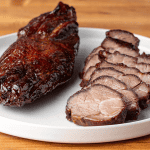
Char Siu (Chinese BBQ Pork)
Char siu (Chinese BBQ pork) made tender and juicy in a standard home oven, no special gear required. After comparing ten recipes from nine Cantonese cookbooks, the marinades all turned out nearly identical; what actually separates restaurant char siu from the dry version at home is the cook. This method roasts well-marbled pork shoulder low and slow at 225°F until the collagen converts to gelatin, then finishes with a glossy maltose lacquer the way Hong Kong BBQ shops do. Red fermented bean curd (nam yu) carries the signature savory flavor, and red yeast rice gives the natural color without dye. Accessible with just a couple of Asian-market pantry staples.
Servings 6 servings
Calories 370kcal
Equipment
- 1 Baking Sheet Foil-lined
- 1 Mortar & Pestle Grind the red yeast rice to powder
- 1 Whisk
- 1 Microplane Grater For the garlic
- 1 Tongs
- 1 Leave-In Probe Thermometer Push into thickest strip at the start of the cook
- 1 Instant-read thermometer For spot-checking if you don't have a leave-in probe
Ingredients
The Pork
- 2 lb boneless pork shoulder Boston butt, well-marbled (about half fat), fat cap on; cut into 1¼ to 1½ inch strips with the grain.
The Marinade
- 3 tablespoon hoisin sauce
- 2-4 cubes red fermented bean curd nam yu (南乳), about 40g, mashed. Buy the yeast-reddened type, not the chili type.
- 1 teaspoon red fermented bean curd brine from the jar
- 2 tablespoon light soy sauce Chinese light soy (生抽)
- 1 teaspoon dark soy sauce for color (老抽)
- 1 tablespoon oyster sauce
- 2 tablespoon brown sugar
- 1 ½ tablespoon rose wine 玫瑰露酒; Shaoxing or dry sherry as a 1:1 substitute
- 1 teaspoon five-spice powder
- 3 cloves garlic grated
- ¼ teaspoon white pepper ground
- 1 teaspoon sesame oil toasted
- ¼ teaspoon MSG Aji-No-Moto
- ½ teaspoon red yeast rice powder 紅曲米, ground to a powder first; ¼ to ½ teaspoon to taste, purely for color. Or a couple drops of red food color for the bright takeout look. Optional.
The Glaze
- 3 tablespoon maltose 麥芽糖; honey is a 1:1 substitute by weight. Wet your hands or spoon so it doesn't weld to them.
- 2 tablespoon reserved marinade the 2 tablespoon set aside before the marinade touched the pork. Microwave the two together ~30 sec and whisk smooth.
Instructions
Cut and Marinate
- Cut the pork into long strips 1¼ to 1½ inches thick, cutting with the grain and leaving the fat cap on. Keep the thickness even so the strips finish cooking together; the shape doesn't matter.
- Stir all marinade ingredients together until the bean curd breaks up smooth. Set aside 2 tablespoons in a covered container in the fridge before the marinade touches the pork. That clean portion becomes the glaze.
- Coat the strips in the remaining marinade in a zip-top bag or covered dish and refrigerate 8 to 24 hours. Marinade only seasons the surface, so a longer soak doesn't go deeper and can toughen the meat.
Before Roasting
- Take the pork out of the fridge about 1 hour before cooking so it roasts evenly instead of cooking from cold on the outside first.
- Heat the oven to 225°F. Line a sheet pan with foil, lay the strips flat with space between them, and tent loosely with a second sheet of foil to hold in moisture.
Roast Low and Slow
- Roast at 225°F until the thickest strip reads 180°F in the center, anywhere from 2 to 5 hours depending on cut size and fat. Go by temperature, not the clock.
- Expect a long stall in the 150s where the temperature barely moves. That stall is the connective tissue converting to gelatin, which is what makes the pork tender, so do not raise the heat to rush it.
Glaze and Finish
- While the pork roasts, microwave the maltose and reserved marinade together about 30 seconds and whisk into a smooth glaze. No water; the marinade is the only thinner it needs.
- At 180°F, uncover, lift the strips off the pan, and pour off the pooled liquid (save it for char siu sauce). Pat the strips very dry and raise the oven to 350°F. A dry surface takes the glaze; a wet one sheds it.
- Brush the strips with glaze, return to the 350°F oven about 3 minutes to set, then brush a second coat and give it another 3 minutes. Two thin coats build the glossy lacquer.
- Optional: for blackened edges, switch to broil for short bursts at the very end, watching every 30 to 60 seconds. The sugar goes from caramelized to burnt in seconds.
Rest and Serve
- Rest the pork 10 to 15 minutes, then slice thin across the grain so each piece comes out tender instead of chewy.
- For char siu sauce, strain the reserved pan liquid into a small saucepan and reduce slightly to concentrate it. Spoon over the sliced pork or over steamed rice.
Video
Notes
Get the fatty cut. Char siu wants a well-marbled Boston butt, close to half fat and half lean. The fat bastes the meat from the inside as it roasts. Lean loin or tenderloin dries out fast, and pork belly makes a different dish entirely (siu yuk).
Why low and slow. The authentic Cantonese method is fast and hot in a vertical fire oven, which a home oven can't reproduce. On a boneless butt, fast-hot stays tough. The tenderness is locked in connective tissue that only turns to gelatin over hours of gentle heat, so low and slow is the method that actually works at home.
Nam yu is the flavor; dye is the color. Red fermented bean curd (南乳) gives char siu its savory funk and a soft natural red. Red yeast rice powder (紅曲米) adds more natural red without flavor. The neon takeout red is food dye, which is flavor-neutral. Natural coloring alone reads as a soft pink-red, never neon.
The glaze is maltose and reserved marinade only, no water. Maltose is the body and the reserved marinade is the flavor and color. Water thins out the exact thickness the maltose is there to provide, so a watery glaze runs off and won't set. Brush it on a drained, browning surface.
Maltose vs honey. Maltose sets to a firm, glossy, glass-like lacquer and scorches less than honey. Honey is the 1:1 substitute by weight and a tradition of its own (honey char siu).
The marinade seasons the surface, not the inside. Marinade flavor only reaches about ⅛ inch in, so a longer soak doesn't flood the center; past about a day on a fatty cut you only toughen the meat.
Char siu sauce. The juices that render during the cook are fully cooked. Strain and reduce them into a spoon-over sauce for rice bowls, the way many BBQ shops do.
Storage. Keeps 3 to 4 days refrigerated, 2 to 3 months frozen in portions. Reheat in a hot oven or air fryer to re-crisp the lacquered edges.
Use a thermometer, not the clock. On a cook that ranges from 2 to 5 hours, temperature is the only reliable way to know when the pork is ready. A leave-in probe thermometer is ideal: push it into the thickest strip at the start and monitor the temperature without opening the oven door. If you don't have a leave-in probe, check with an instant-read thermometer once you're past the 2-hour mark. Either way, you're pulling the pork at 180°F in the center.
Nutrition
Calories: 370kcal