Char Siu (Chinese BBQ Pork)
Char siu (Chinese BBQ pork) made tender and juicy in a regular home oven. Well-marbled pork shoulder roasts low and slow at 225°F until the center reaches 180°F, then gets a shiny maltose glaze. It takes an overnight marinade plus 2 to 5 hours in the oven, mostly hands-off.
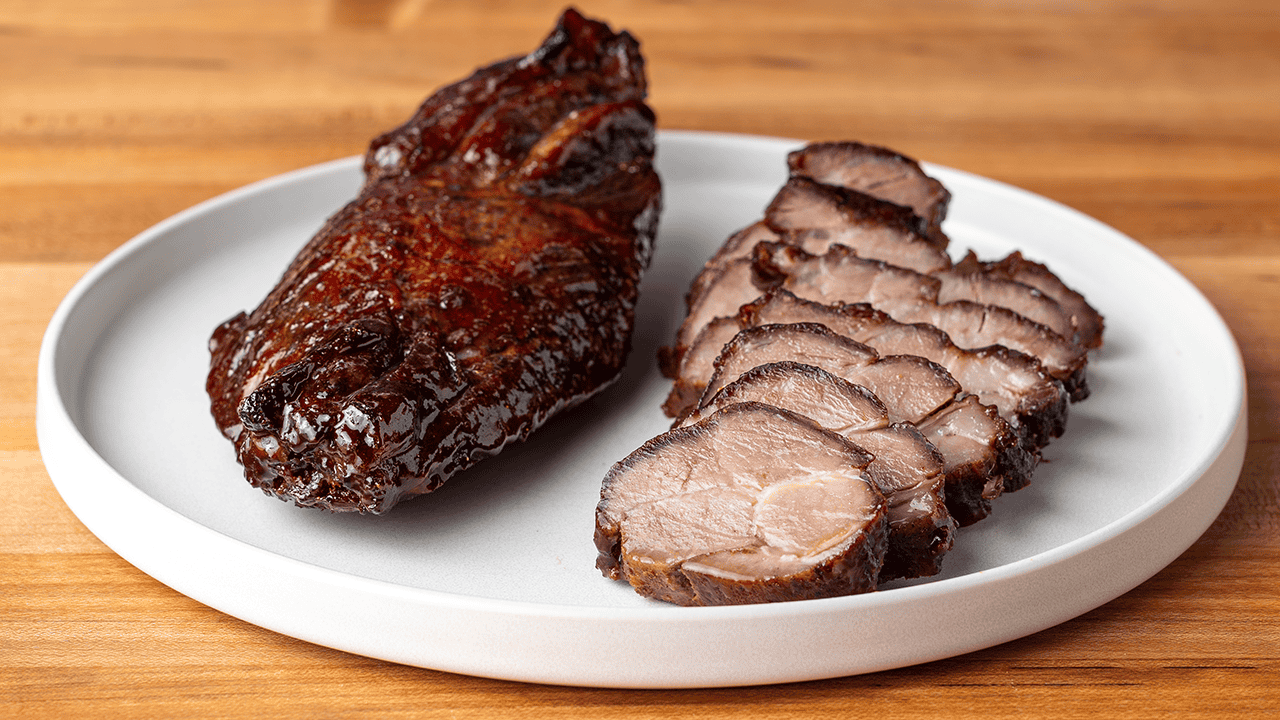
Serves 6 servings
Calories 370
Ingredients
The Pork
- 2 lb boneless pork shoulder Boston butt, well-marbled (about half fat), fat cap on; cut into 1¼ to 1½ inch strips with the grain.
The Marinade
- 3 tablespoon hoisin sauce
- 2-4 cubes red fermented bean curd nam yu (南乳), about 40g, mashed. Buy the yeast-reddened type, not the chili type.
- 1 teaspoon red fermented bean curd brine from the jar
- 2 tablespoon light soy sauce Chinese light soy (生抽)
- 1 teaspoon dark soy sauce for color (老抽)
- 1 tablespoon oyster sauce
- 2 tablespoon brown sugar
- 1 ½ tablespoon rose wine 玫瑰露酒; Shaoxing or dry sherry as a 1:1 substitute
- 1 teaspoon five-spice powder
- 3 cloves garlic grated
- ¼ teaspoon white pepper ground
- 1 teaspoon sesame oil toasted
- ¼ teaspoon MSG Aji-No-Moto
- ½ teaspoon red yeast rice powder 紅曲米, ground to a powder first; ¼ to ½ teaspoon to taste, purely for color. Or a couple drops of red food color for the bright takeout look. Optional.
The Glaze
- 3 tablespoon maltose 麥芽糖; honey is a 1:1 substitute by weight. Wet your hands or spoon so it doesn't weld to them.
- 2 tablespoon reserved marinade the 2 tablespoon set aside before the marinade touched the pork. Microwave the two together ~30 sec and whisk smooth.
Instructions
Cut and Marinate
- Cut the pork into long strips 1¼ to 1½ inches thick, cutting with the grain and leaving the fat cap on. Keep the thickness even so the strips finish cooking together; the shape doesn't matter.
- Stir all marinade ingredients together until the bean curd breaks up smooth. Set aside 2 tablespoons in a covered container in the fridge before the marinade touches the pork. That clean portion becomes the glaze.
- Coat the strips in the remaining marinade in a zip-top bag or covered dish and refrigerate 8 to 24 hours. Marinade only seasons the surface, so marinating longer doesn't go deeper and can toughen the meat.
Before Roasting
- Take the pork out of the fridge about 1 hour before cooking.
- Heat the oven to 225°F. Line a sheet pan with foil, lay the strips flat with space between them, and tent loosely with a second sheet of foil to hold in moisture.
Roast Low and Slow
- Roast at 225°F until the thickest strip reads 180°F in the center, anywhere from 2 to 5 hours depending on cut size and fat. Go by temperature, not the clock.
- Expect a long stall in the 150s where the temperature barely moves. That stall is moisture evaporating off the meat while the connective tissue slowly turns to gelatin, which is what makes the pork tender, so do not raise the heat to rush it.
Glaze and Finish
- While the pork roasts, microwave the maltose and reserved marinade together about 30 seconds and whisk into a smooth glaze. No water; the marinade is the only thinner it needs.
- At 180°F, uncover, lift the strips off the pan, and pour off the pooled liquid (save it for char siu sauce). Pat the strips very dry and raise the oven to 350°F. A dry surface takes the glaze; a wet one sheds it.
- Brush the strips with glaze, return to the 350°F oven about 3 minutes to set, then brush a second coat and give it another 3 minutes. Two thin coats give it the glossy finish.
- Optional: for blackened edges, switch to broil for short bursts at the very end, watching every 30 to 60 seconds. The sugar goes from caramelized to burnt in seconds.
Rest and Serve
- Rest the pork 10 to 15 minutes, then slice thin across the grain so each piece comes out tender instead of chewy.
- For char siu sauce, strain the reserved pan liquid into a small saucepan and reduce slightly to concentrate it. Spoon over the sliced pork or over steamed rice.
Video
Equipment
- 1 Baking Sheet Foil-lined
- 1 Mortar & Pestle Grind the red yeast rice to powder
- 1 Whisk
- 1 Microplane Grater For the garlic
- 1 Tongs
- 1 Leave-In Probe Thermometer Push into thickest strip at the start of the cook
- 1 Instant-read thermometer For spot-checking if you don't have a leave-in probe
Notes
Get the fatty cut. Buy a well-marbled Boston butt (pork shoulder), close to half fat and half lean, with the fat cap left on. The fat renders down over the long cook and keeps the meat juicy from the inside. Lean loin or tenderloin dries out, and pork belly makes a different dish (siu yuk).
Why low and slow. The traditional Cantonese method roasts char siu fast and hot over a fire, which a home oven can't reproduce. On a boneless butt, a fast roast stays tough, because the connective tissue only turns to gelatin over hours of gentle heat. Roasting at 225°F to 180°F in the center is what makes it tender at home.
Use a thermometer, not the clock. The cook can take anywhere from 2 to 5 hours. A leave-in probe thermometer pushed into the thickest strip at the start shows the center without opening the oven. Without one, start checking with an instant-read thermometer after 2 hours. Expect the temperature to stall in the 150s for a long time; don't turn up the heat.
Nam yu is the flavor; red yeast rice is the color. Red fermented bean curd (南乳) gives char siu its savory flavor and a soft red tint. Buy the jar colored with red yeast; the chili kind makes the pork spicy. Red yeast rice powder (紅曲米) adds more red without changing the taste. The neon red at many takeout shops is food coloring, which doesn't change the taste either. Without food coloring, the pork comes out a soft pink-red, never neon.
The glaze is maltose and reserved marinade only. The maltose gives the glaze its body, and the reserved marinade gives it its flavor and color. Don't thin it with water: a watery glaze runs off and won't set. Brush it on pork that's been drained and patted dry. Wet your hands before handling maltose so it doesn't stick to you.
Maltose or honey. Maltose sets to a firm, glossy finish and scorches less than honey. Honey is a 1:1 substitute by weight, and plenty of char siu is glazed with honey anyway, but it stays a little tackier.
Marinate 8 to 24 hours. The marinade only reaches about ⅛ inch into the meat, so marinating longer than a day doesn't add flavor deeper inside and can make the meat tougher.
Char siu sauce. The juices poured off after roasting are fully cooked. Strain them, simmer until slightly reduced and spoon over the sliced pork or steamed rice, the way many BBQ shops do.
Storage. Keeps 3 to 4 days in the fridge and 2 to 3 months in the freezer, wrapped in portions. Reheat to 165°F in a hot oven or air fryer to crisp the glazed edges again.
Made this? Tap a star at the top of this card to rate it.
Calories 370kcal
Course Main Course
Cuisine Chinese