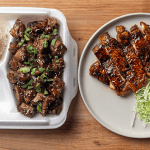
American Teriyaki Chicken
American teriyaki chicken with soy sauce, brown sugar, garlic, ginger, and cornstarch over seared boneless skinless chicken thighs. The composite recipe from the top-rated American versions, ready in 20 minutes. Served over steamed white rice with sesame seeds and scallions.
Servings 3 servings
Calories 400kcal
Equipment
- 1 Whisk
Ingredients
The Sauce
- ⅓ cup Japanese soy sauce Kikkoman, naturally brewed
- 3 tablespoon brown sugar
- 2 cloves garlic grated on a Microplane
- 1 teaspoon fresh ginger grated on a Microplane
- 2 teaspoon rice vinegar unseasoned
- 1 teaspoon toasted sesame oil
- ¼ cup water
- 2 teaspoon cornstarch
The Chicken
- 1 lb boneless skinless chicken thighs 2 to 3 thighs, left whole
- 1 tablespoon vegetable oil
- 1 pinch salt
- 1 pinch black pepper
Garnish
- 1 teaspoon sesame seeds
- 2 scallions thinly sliced
Instructions
Prep
- Whisk soy sauce, brown sugar, garlic, ginger, rice vinegar, sesame oil, water, and cornstarch in a bowl until sugar dissolves and cornstarch is fully incorporated. Set aside.
Cook
- Pat the thighs dry with paper towels. Season lightly with salt and pepper. Heat vegetable oil in a large skillet over medium to medium-high heat. Add the thighs in a single layer. Cook without moving for 5 to 6 minutes until golden brown on the bottom. Flip and cook another 3 to 4 minutes until cooked through (165°F / 74°C internal). Remove to a cutting board and let rest for 2 to 3 minutes.
- Cut the rested chicken into 1.5-inch pieces. Have everything cut and ready before the sauce goes in.
- Reduce heat to medium. Give the sauce a good whisk (cornstarch settles). Pour the sauce into the same skillet. Let it simmer for 1 to 2 minutes, stirring occasionally, until the sauce thickens and turns glossy.
- Return the chicken to the skillet. Toss to coat every piece. Cook 30 seconds more to let the glaze set.
Plating
- Serve immediately over steamed white rice. Top with sesame seeds and sliced scallions.
Video
Notes
Why no mirin or sake? This is a standard American teriyaki recipe. Fewer than half of top-rated American teriyaki recipes include mirin, and sake appears in fewer than 10%. The American version gets its flavor from brown sugar, garlic, ginger, and cornstarch instead. For the Japanese version with mirin and sake, see the companion recipe: Authentic Japanese Teriyaki Chicken.
Why brown sugar instead of white? Brown sugar is the dominant sweetener in American teriyaki home recipes. The molasses gives it a deeper, caramel-like sweetness that most Americans associate with teriyaki. The Japanese version uses plain white sugar for clean, neutral sweetness.
Why sear whole, then cut? Whole thighs have less surface area exposed to direct heat, so the outside won't dry out before the inside is cooked through. Cutting after searing gives you chunky glazed pieces with a golden crust on every side.
Cornstarch tip. Cornstarch settles to the bottom of the bowl quickly. Always give the sauce one more whisk right before you pour it into the pan.
Chicken breast substitution. Boneless skinless breast works but cooks faster (3 to 4 minutes per side). Pull at 160°F and let carryover bring it to 165°F during the rest. Thighs are more forgiving.
Storage. Refrigerate chicken and sauce in an airtight container for up to 4 days. Store rice separately. Reheat in a skillet with a splash of water. Do not freeze; the cornstarch sauce breaks down after thawing.
Nutrition
Calories: 400kcal