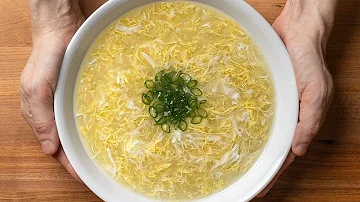
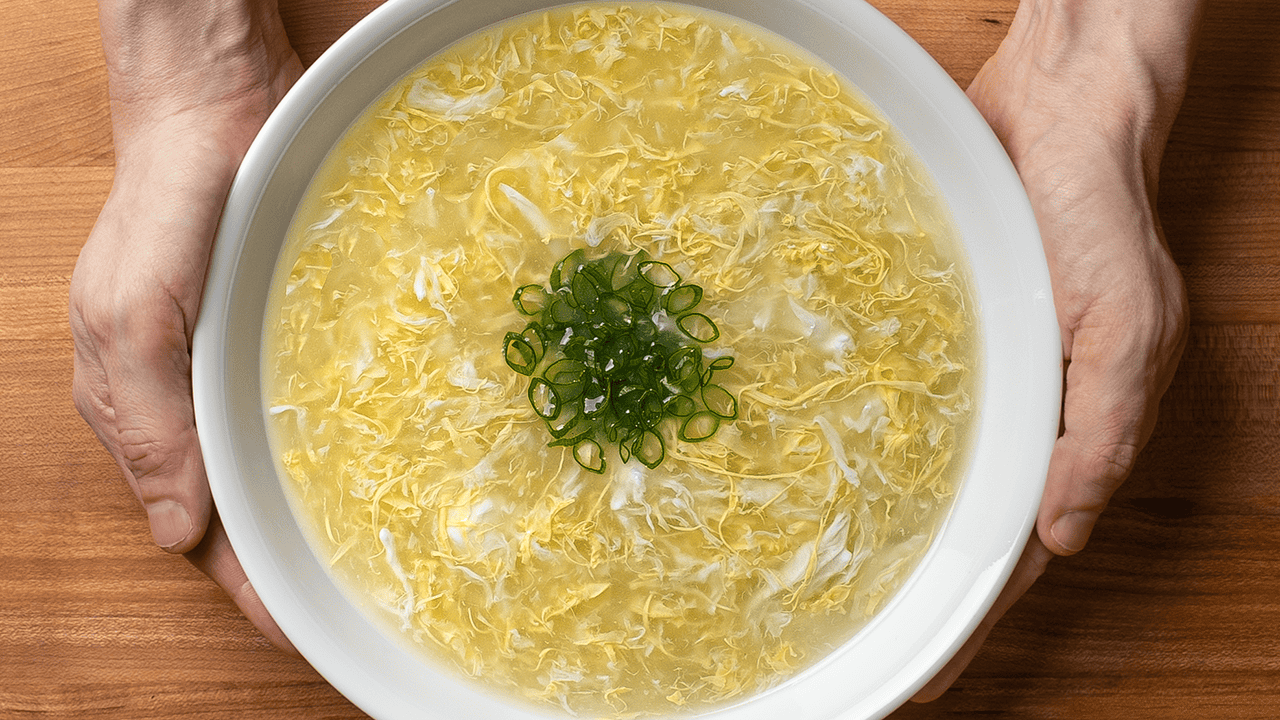
Chinese takeout egg drop soup is one of those dishes that sounds impossible to mess up. It’s broth and eggs. But if you’ve made it at home and ended up with a watery bowl of scrambled egg pieces instead of silky, wispy ribbons floating in a savory, slightly thick broth, three specific mistakes explain the gap. I tracked down the seasoning ratios and techniques used in actual takeout kitchens to figure out what most recipes leave out.
The number one reason your homemade version doesn’t taste like the restaurant is almost certainly MSG. After that, it’s the cornstarch slurry that gives the broth body, and the specific chicken bouillon base that provides the right flavor. Fix those three things and the soup is done in under 10 minutes.
This post contains affiliate links, which means I may earn a small commission if you make a purchase. It doesn’t cost you anything extra.Full disclosure.
Why This Egg Drop Soup Recipe Works
Chicken bouillon powder, not homemade stock. Every takeout kitchen I’ve visited uses reconstituted bouillon as the base. Homemade stock is a different soup entirely. If you want the actual takeout flavor, start where they start.
Five seasonings in a specific ratio, not just salt and pepper. Salt, white pepper, MSG, sugar, and toasted sesame oil. Most home recipes skip the MSG, the sugar, and the sesame oil. All five together are what close the gap.
A cornstarch slurry for body, not a thin broth. The broth should lightly coat the tongue, not run off it like water. A 1:1 cornstarch-to-water slurry added before the eggs gives you that characteristic viscosity.
Eggs thinned with water for a finer pour. Adding a splash of water to the beaten eggs lets you pour in a thinner stream, which produces those wispy, cloudlike ribbons instead of chunky pieces. Stir gently in one direction to keep the strands from breaking apart.
The broth just under a simmer when the eggs go in. Boiling water curdles the eggs too fast and clouds the soup. Too cool and they sink and clump together. The temperature window matters more than the pour technique.
Ingredients You’ll Need
Chicken bouillon powder is the whole base of this soup. Lee Kum Kee Chicken Bouillon Powder (the red can, with MSG) is the one I’ve seen most often in takeout kitchens and the one I recommend. It has the cleanest chicken flavor. Knorr Asian Chicken Bouillon works too, but get the version without dehydrated parsley. The cubes at most Western grocery stores have little bits of parsley you never see in egg drop soup. If you’re vegetarian, a mushroom bouillon is a solid substitute.
White pepper is the standard across virtually every egg drop soup I’ve encountered in Chinese takeout. Black pepper works in a pinch, but the flavor profile is different. White pepper can take over the whole soup if you’re not careful, so start with less than you think you need.
MSG is the single biggest flavor gap between home and takeout. If you’re not into it, skip it, but if your soup tastes flat and you can’t figure out why, this is why. Aji-No-Moto is the brand you’ll find everywhere.
You only need about 2-3 drops of toasted sesame oil. It has a tendency to overpower every other flavor in the bowl if you use too much, so always err on the side of too little.
Cornstarch thickens the broth from watery to that slightly viscous, tongue-coating texture you recognize from the restaurant. You’ll make a simple 1:1 slurry with cold water. Always stir the slurry right before you add it to the broth, because cornstarch and water separate pretty quickly once you stop stirring.
Sugar at a quarter teaspoon rounds out the salinity of the other seasonings. It won’t make the soup taste sweet. It’s used across Chinese takeout cooking for exactly this purpose, especially in dishes adapted for an American palate.
How to Make Chinese Takeout Egg Drop Soup
1. Heat the broth base. Add 1 liter of water and 4 teaspoons of chicken bouillon powder to a pot over medium-high heat. Stir to dissolve and bring to a light simmer.
2. Season the broth. Add 1.5 teaspoons kosher salt, 1/8 teaspoon white pepper, 1 teaspoon MSG, 1/4 teaspoon sugar, and 2-3 drops of toasted sesame oil. Stir to combine. Taste the broth and adjust the seasoning. It should taste like a well-seasoned chicken soup before you add anything else.
3. Make and add the cornstarch slurry. Mix 2 tablespoons cornstarch with 2 tablespoons cold water. It’ll resist at first because cornstarch is a non-Newtonian fluid, but keep stirring until it’s liquid. Bring the broth back to a simmer, give the slurry one more stir, then slowly drizzle it in while stirring the broth. Let it simmer for 1-3 minutes. You’re looking for a broth that has some body and lightly coats a spoon, but isn’t gravy-thick.
4. Prepare the eggs. Beat 2 eggs with 1-2 teaspoons of water until completely homogeneous. You shouldn’t see any distinct whites. The water thins them out so they pour in a finer stream.
5. Stream in the eggs. Lower the heat to just under a simmer. Give the broth a gentle stir in one direction. Pour the eggs in a very thin stream while continuing to stir gently in that same direction. One direction creates longer, more delicate strands. Stirring too hard breaks the eggs into tiny pieces and clouds the soup.
6. Let the eggs set. After all the eggs are in, let them simmer gently for 1-2 minutes to cook through. Give it a final taste for seasoning. Garnish with thinly sliced green onion and serve.
Tips for the Best Chinese Takeout Egg Drop Soup
Add the slurry gradually. You can always thicken more, but you can’t un-thicken without adding water and diluting the flavor. Start with the full 2-tablespoon slurry, but drizzle it in slowly and check the consistency as you go. If you overshoot, a splash of water brings it back, but you’ll need to re-taste and adjust the seasoning.
Control your pour speed for different egg textures. A very thin stream gives you delicate, wispy ribbons. A thicker, faster pour gives you larger, chewier pieces. Both are valid. The thin stream is the standard takeout style.
For that neon yellow takeout color, add turmeric or yellow food dye. Half a teaspoon of turmeric added with the other seasonings gives a natural golden hue. A few drops of yellow food dye gives you the full 1980s neon look. Both are purely cosmetic.
Add vegetables before the cornstarch and eggs. Corn is the most common addition. Most takeout places near me include one or two rogue corn kernels per serving. You can also add carrots, peas, mushrooms, or whatever you have. Simmer them in the broth until tender, then proceed with the slurry and eggs.
Don’t beat air into the eggs. You’re combining, not whipping. Too much air makes the whites foamy, which gives the soup a cloudy, unappetizing look. Chopsticks or a fork work better than a whisk for this.
Variations
Enhanced Version: Aromatic-Infused Broth
For a more refined flavor, start with 1 liter plus 1 tablespoon of water (the extra accounts for evaporation). Add sliced ginger (lightly smashed with the back of your knife to release more flavor) and green onion bottoms. Lower the heat to just under a simmer and steep for 30-45 minutes. Remove the aromatics, then add bouillon and proceed as normal. The ginger and scallion add a clean, bright freshness that the basic version lacks. Do not use ginger powder. It makes the soup unpleasantly spicy in a way that doesn’t belong here.
From-Scratch Version: Homemade Chinese Chicken Stock
Make a simple Chinese chicken stock with 2-3 chicken carcasses (or rotisserie chicken bodies), sliced ginger, and scallion bottoms. Blanch the raw chicken for 2 minutes first, rinse under cold water to remove scum, then simmer in fresh cold water at a very gentle bubble for 2-6 hours. Strain and use 1 liter as your base. Season with just salt and white pepper. For the eggs, separate the yolks and whites, beat each with a splash of water, and stream them in separately. This creates two distinct textures and naturally colors the soup without turmeric. Finish with a splash of Chinese black vinegar for depth.
Storage and Reheating
The broth (without eggs) stores well in the fridge for 3-4 days or in the freezer for up to 6 months. I’d recommend freezing the broth base without the eggs. Reheated eggs turn rubbery. When you’re ready to eat, reheat the broth to a simmer and stream in fresh beaten eggs.
Frequently Asked Questions
Why is my egg drop soup cloudy instead of clear?
Two common causes. The broth was boiling too hard when the eggs went in, which breaks them into tiny particles that cloud everything. Or the eggs were beaten with too much air, which makes the whites foam up in the hot liquid. Lower the heat to just under a simmer and beat the eggs gently.
Can I make egg drop soup without cornstarch?
You can, but the texture will be noticeably different. The broth will be thin and watery instead of having that slight viscosity that coats the tongue. Tapioca starch works as a substitute. Some readers have reported potato starch working as well, though I haven’t tested it.
Why doesn’t my homemade egg drop soup taste like the restaurant?
Almost certainly MSG. Most chicken bouillon powders used in takeout kitchens contain it, and it’s the single biggest flavor difference between home and restaurant versions. The Lee Kum Kee red can includes it. If you’re using a brand without MSG and the soup tastes flat, that’s why.
Is egg drop soup the same as egg flower soup?
Same soup, different name. “Egg flower soup” is a more literal translation of the Chinese name. The technique of streaming beaten eggs into simmering broth produces strands that resemble flower petals, which is where the name comes from.
Chinese takeout egg drop soup made with chicken bouillon powder, a five-seasoning blend of salt, white pepper, MSG, sugar, and toasted sesame oil, thickened with a cornstarch slurry for that signature viscosity. The technique produces wispy, cloudlike egg ribbons by streaming beaten eggs into gently simmering broth. Reverse-engineered from the seasoning ratios and methods used in actual takeout kitchens. Ready in under 10 minutes with pantry ingredients.
Course Appetizer, Side Dish, Soup
Cuisine Chinese-American
Keyword chinese egg drop soup, chinese takeout egg drop soup, egg drop soup, egg drop soup recipe, egg flower soup, homemade egg drop soup
Add 1 liter of water and 4 teaspoons of chicken bouillon powder to a pot over medium-high heat. Stir to dissolve the bouillon and bring to a light simmer.
Add 1.5 teaspoons kosher salt, 1/8 teaspoon white pepper, 1 teaspoon MSG, 1/4 teaspoon sugar, and 2-3 drops of toasted sesame oil. Stir to combine. Taste the broth and adjust the seasoning. It should taste like a well-seasoned chicken soup.
Thicken with Cornstarch
In a small bowl, mix 2 tablespoons of cornstarch with 2 tablespoons of cold water. Stir until it becomes a smooth liquid. It will resist at first because cornstarch mixed with water is a non-Newtonian fluid. Just keep stirring for a few seconds.
Bring the seasoned broth back to a simmer. Give the slurry one more stir (it settles quickly), then slowly drizzle it into the broth while stirring. Let it simmer for 1-3 minutes to thicken. The broth should have some body and lightly coat a spoon, but not be as thick as gravy. If it’s too thick, add a splash of water. If too thin, mix another tablespoon each of cornstarch and water and drizzle that in.
Add the Eggs
Beat 2 eggs with 1-2 teaspoons of water until completely homogeneous. You should not see any distinct whites. The added water thins the eggs for a finer pour.
Lower the heat until the broth is just under a simmer. You do not want it boiling, as this will curdle the eggs too quickly and make them tough. Give the broth a gentle stir in one direction.
In a very thin stream, slowly pour the beaten eggs into the broth while continuing to stir gently in the same direction. Stirring in one direction creates longer, more delicate ribbons. Do not stir too vigorously or it will break the eggs into small pieces and cloud the soup.
After all the eggs have been added, let them simmer gently for 1-2 minutes to ensure they are thoroughly cooked. Taste and adjust the seasoning one final time. Garnish with thinly sliced green onion and serve.
Video
Notes
For a more yellow soup: Add 1/2 to 1 teaspoon of turmeric with the other seasonings for a natural golden color. For a brighter neon yellow, add a few drops of yellow food dye just before streaming in the eggs. Both are purely cosmetic and don’t affect the flavor in any meaningful way.Enhanced version with aromatic broth: Start with 1 liter plus 1 tablespoon of water. Add sliced ginger (lightly smashed with the back of a knife) and green onion bottoms. Simmer just under a boil for 30-45 minutes. Remove the aromatics, then add bouillon and proceed as normal. Do not substitute ginger powder. It makes the soup unpleasantly spicy.From-scratch version: Replace the water and bouillon with 1 liter of homemade Chinese chicken stock (blanch 2-3 chicken carcasses, rinse, then simmer in fresh water with ginger and scallions for 2-6 hours). Season with just salt and white pepper. For a more refined egg technique, separate the yolks and whites, beat each with a splash of water, and stream them in one at a time. Finish with a splash of Chinese black vinegar.Adding vegetables: Corn is the most common addition at takeout restaurants. Add vegetables to the broth and simmer until tender before adding the cornstarch slurry and eggs. Carrots, peas, mushrooms, and baby corn all work well.Crispy wonton strips: Heat oil to 360°F/180°C. Slice wonton or egg roll wrappers into 1/2-inch strips. Fry until just under your desired shade of golden (they darken after removal). Drain on paper towels and season with salt.Storage: Store broth without eggs in the fridge for 3-4 days or freeze for up to 6 months. Do not freeze the soup with eggs already in it. Reheated eggs turn rubbery. Reheat the broth and stream in fresh beaten eggs when ready to serve.Cornstarch slurry troubleshooting: Always stir the slurry immediately before adding to the broth, as it settles within seconds. Always have the broth moving when you add the slurry to prevent clumping. Add the slurry gradually. You can always thicken more, but you can’t un-thicken without diluting the flavor.Why sugar in a savory soup? A small amount of sugar rounds out the salinity of the other seasonings. This is standard across Chinese takeout cooking, especially in dishes adapted for an American palate. It will not make the soup taste sweet at this amount.
If your homemade wonton soup broth doesn’t taste like takeout, you’re probably using the wrong chicken broth. Western-style stock uses mirepoix, parsley, and black peppercorns. Asian-style chicken bouillon is a…
Most General Tso’s chicken you get from a takeout place is too sweet, with soggy chicken and no crunch. The meat is tough, the crust has no texture, and the…
Chinese takeout egg drop soup is one of those dishes that sounds impossible to mess up. It’s broth and eggs. But if you’ve made it at home and ended up…
I hate Spam as much as you do. So, I'll never share your address or send you advertisements. Just the occasional update and the inside scoop on new recipes.
4tspAsian chicken broth (red can with MSG; or any chicken bouillon)
Seasoning
1.5tspkosher salt
1/8tspwhite pepper
1tspMSG
1/4tspsugar
2-3dropstoasted sesame oil
Cornstarch Slurry
2tbspcornstarch
2tbspwater (cold)
Eggs
2eggs
1-2tspwater (for thinning)
Garnish
1-2green onions (thinly sliced)
Equipment
1All-Clad Saucepanor any medium pot
1Whiskor fork/chopsticks
1Measuring Spoons
1measuring cups
1Mixing bowlsfor slurry and eggs
1Deli Containersfor storage
1
Add 1 liter of water and 4 teaspoons of chicken bouillon powder to a pot over medium-high heat. Stir to dissolve the bouillon and bring to a light simmer.
2
Add 1.5 teaspoons kosher salt, 1/8 teaspoon white pepper, 1 teaspoon MSG, 1/4 teaspoon sugar, and 2-3 drops of toasted sesame oil. Stir to combine. Taste the broth and adjust the seasoning. It should taste like a well-seasoned chicken soup.
3
In a small bowl, mix 2 tablespoons of cornstarch with 2 tablespoons of cold water. Stir until it becomes a smooth liquid. It will resist at first because cornstarch mixed with water is a non-Newtonian fluid. Just keep stirring for a few seconds.
4
Bring the seasoned broth back to a simmer. Give the slurry one more stir (it settles quickly), then slowly drizzle it into the broth while stirring. Let it simmer for 1-3 minutes to thicken. The broth should have some body and lightly coat a spoon, but not be as thick as gravy. If it's too thick, add a splash of water. If too thin, mix another tablespoon each of cornstarch and water and drizzle that in.
5
Beat 2 eggs with 1-2 teaspoons of water until completely homogeneous. You should not see any distinct whites. The added water thins the eggs for a finer pour.
6
Lower the heat until the broth is just under a simmer. You do not want it boiling, as this will curdle the eggs too quickly and make them tough. Give the broth a gentle stir in one direction.
7
In a very thin stream, slowly pour the beaten eggs into the broth while continuing to stir gently in the same direction. Stirring in one direction creates longer, more delicate ribbons. Do not stir too vigorously or it will break the eggs into small pieces and cloud the soup.
8
After all the eggs have been added, let them simmer gently for 1-2 minutes to ensure they are thoroughly cooked. Taste and adjust the seasoning one final time. Garnish with thinly sliced green onion and serve.