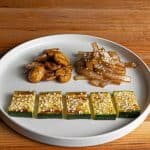
Hibachi Vegetables
Hibachi vegetables made the right way by cooking each vegetable separately. Zucchini, onion, and mushrooms are seared individually in safflower oil, then finished with hibachi garlic butter and soy sauce. This batch-cooking technique is what teppanyaki restaurants use to get caramelized, slightly crunchy vegetables instead of a watery, mushy mess. Ready in about 25 minutes with standard home equipment.
Servings 4 servings
Calories 200kcal
Equipment
- 1 Induction Burner Or any stovetop
Ingredients
Vegetables
- 2 medium zucchini trimmed and cut into planks about ⅓ inch thick (see post for cut instructions)
- 1 large yellow onion sliced into ½-inch rounds, then cross-cut into quarters
- 8 oz white button mushrooms sliced into 3-4 pieces per cap
Seasoning
- 3 tablespoon safflower oil divided, 1 tablespoon per vegetable. Any neutral oil works.
- 3 tablespoon hibachi garlic butter divided, 1 tablespoon per vegetable
- 1 tablespoon Japanese soy sauce divided, about 1 teaspoon per vegetable
- kosher salt to taste
- black pepper to taste
- 1 tablespoon sesame seeds for garnish on zucchini and onion only
Instructions
Prep the Vegetables
- Trim the top and bottom off each zucchini. Cut lengthwise to remove the skin on one side, then flip and do the same on the opposite side. Turn the zucchini so the skin sides face up and down, then slice through the skin side into planks about ⅓ inch thick.
- Trim the stem end off the onion. Peel back the skin and the papery first layer. Trim the root end. Slice off a thin piece from one side so the onion lays flat. Slice the onion into rounds about ½ inch thick. Take each round and make a cut down the middle and another cut perpendicular to the first, creating quarters.
- Slice each mushroom cap into 3 or 4 pieces, slightly thicker than you would for a stir-fry.
Cook the Zucchini
- Heat 1 tablespoon of safflower oil in a nonstick pan over medium heat. Once the oil is hot, lay the zucchini slices flat in the pan. Do not add any salt or seasoning yet.
- Sear until the first side has good golden-brown color, then flip each piece and sear the second side.
- Flip back over. Add 1 tablespoon of hibachi garlic butter and spread it across the zucchini. Season with salt, pepper, and about 1 teaspoon of soy sauce. Flip once more so both sides pick up the butter and soy mixture.
- Remove from heat. Slice each plank into 6 pieces and garnish with sesame seeds.
Cook the Onion
- Heat 1 tablespoon of oil in the same pan over medium-high heat. Add the onion pieces and leave them alone for about 2 minutes to get color on one side.
- Stir, then leave them alone again for another 2 minutes. When you see color all around but the onion still has some crunch, season with salt and pepper.
- Add 1 tablespoon of hibachi garlic butter and a couple squirts of soy sauce. Stir until the butter melts and the soy emulsifies into the onions.
- Kill the heat. Sprinkle with sesame seeds and stir once more.
Cook the Mushrooms
- Heat 1 tablespoon of oil in the pan over medium-high heat. Add the mushrooms with a pinch of salt right away. The salt helps draw out their water quickly.
- Cook, stirring occasionally, until done to your liking.
- Right before pulling them off the heat, add 1 tablespoon of hibachi garlic butter, cracked black pepper, and a little soy sauce. Stir until coated in the melted butter and soy mixture. Serve without additional garnish.
Video
Notes
Garlic Butter: You'll need hibachi garlic butter for this recipe. Make it ahead of time. The full recipe is on the blog.
Salt Timing: The salt goes on at different times for different vegetables. Zucchini and onion get no salt until after the sear, because early salt draws out moisture and prevents caramelization. Mushrooms get salted right away to release their water quickly.
Oil Choice: Use safflower oil or any neutral oil with a high smoke point. Avoid olive oil, which adds a flavor that isn't part of Japanese steakhouse cooking.
Storage: Store leftovers in an airtight container in the refrigerator for 3-4 days. Reheat in a skillet over medium heat, not the microwave. Store each vegetable separately if possible to maintain their individual textures.
Why Cook Separately? At a teppanyaki restaurant, the flat top has enough surface area for moisture to evaporate instantly. At home with a standard pan, cooking everything together drops the temperature and traps moisture. The vegetables steam instead of searing. Cooking each one individually is the only way to get proper caramelization at home.
Nutrition
Calories: 200kcal