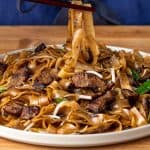
Dry-Fried Beef Chow Fun
This dry-fried beef chow fun (beef ho fun) is built for a home kitchen, using extra-large dried rice noodles soaked in room-temperature water instead of the fresh ho fun that's basically impossible to find in the US. The beef gets a baking soda marinade and a hard sear using long yau, the hot wok, cold oil technique, and the noodles go on top of the aromatics so they don't stick to the wok. A blowtorch finish adds smoky wok hei on a standard home burner. Every noodle stays whole, the plate stays dry, and it takes about 10 minutes of wok time once the prep is done.
Servings 2 servings
Calories 790kcal
Equipment
- 1 Cooking Chopsticks For tossing the noodles without breaking them
- 1 Blowtorch Optional, for wok hei
- 1 Large Mixing Bowls For soaking the noodles
- 1 Whisk
- 1 Colander For draining the noodles
- 1 Glass Food Storage Containers For storing soaked noodles
Ingredients
The Noodles
- 8 oz dried flat rice noodles extra-large, about 10 mm wide
- 1-2 teaspoon neutral oil for tossing after the soak
The Beef and Marinade
- 7 oz flank steak sliced thin against the grain (top round works too)
- ¼ teaspoon baking soda
- 1 teaspoon cornstarch
- 1 teaspoon soy sauce Chinese light soy sauce
- 1 teaspoon dark soy sauce
- ½ teaspoon Shaoxing cooking wine
- ¼ teaspoon granulated sugar
- 1 pinch table salt
- 1 teaspoon neutral oil
The Sauce
- 1 tablespoon soy sauce Chinese light soy sauce
- 2 teaspoon dark soy sauce
- 1 tablespoon Shaoxing cooking wine
- 1 teaspoon table salt not a typo, see Notes
- ½ teaspoon MSG Aji-No-Moto
- ½ teaspoon granulated sugar
- 1 pinch white pepper
The Vegetables
- 1 ¾ oz leek white and light green part, cut into long thin strips
- ¾ oz scallion whites and light greens, smashed flat, then split lengthwise
- ½ oz scallion greens 2-inch lengths
- 1 ½ oz mung bean sprouts
The Stir-Fry
- 2 tablespoon neutral oil 1 tablespoon for the beef, 1 tablespoon for the noodles
Instructions
Soak the Noodles
- Put the dried noodles in a large bowl and cover them with room-temperature tap water so they're completely submerged. Soak for at least 90 minutes, or overnight. No boiling water, no hot soak, no heat at any point.
- The noodles are ready when you can wrap one around your finger without it breaking. Drain them, then rinse under cold running water while pulling the strands apart with your hands. Rinsing off the surface starch is what keeps them from clumping, so keep going until every strand is loose.
- Spread the noodles on a towel and dry them really well. Wet noodles steam in the wok instead of charring. Toss with 1 to 2 teaspoon neutral oil so they don't stick to each other. You should end up with about 14 oz (400 g).
Marinate the Beef
- Cut the flank steak with the grain into strips about 1 ½ inches wide. Turn each strip 90 degrees, tilt your knife at an angle, and slice thin against the grain. Cutting against the grain keeps the beef from being chewy, and the angle gives you wider slices for the marinade.
- Sprinkle the baking soda over the beef and massage it into the meat for a full minute before anything else goes in. Baking soda keeps the beef tender in the high heat of wok cooking.
- Add the cornstarch, soy sauce, dark soy sauce, Shaoxing wine, sugar, salt and neutral oil, and mix until every slice is coated. Let it sit for at least 15 minutes, or overnight in the fridge.
Make the Sauce
- In a small bowl, combine the salt, MSG, sugar and white pepper. Pour in the soy sauce, dark soy sauce and Shaoxing wine, and whisk until all the dry ingredients have dissolved.
Prep the Vegetables
- Trim the root and the dark green top off the leek. Make a shallow cut down the length of it, just deep enough to get through the first couple of layers, and peel those off. Wipe out any sand trapped between the layers.
- Cut the leek across into 2-inch pieces, then cut each piece lengthwise, press it flat with your hand, and slice it into long thin strips.
- Smash the scallion whites and light greens flat with the side of your knife, then split them in half lengthwise. Smashing breaks up the fibers so they give more of their flavor to the oil. Cut the green tops into 2-inch pieces and keep them separate for the end.
- Set everything next to the stove in the order it goes in: beef, scallion whites, leek, noodles, sauce, then scallion greens and sprouts. Once the wok is hot there's no time to go looking for anything.
Sear the Beef
- Heat a dry wok over high heat until it just starts lightly smoking. Turn off the heat, add 1 tablespoon neutral oil, and swirl it around to coat the whole wok. This is long yau, or hot wok, cold oil: the oil spreads into a thin film that acts like a temporary nonstick coating.
- Turn the heat back on to medium-high and add the beef, pressed into a single layer. Leave it alone so one side gets some color. On a home burner, stirring constantly keeps the beef from browning.
- Keep cooking until the beef is about 80 to 90 percent done, which should only take a few minutes. Move it to a small bowl and set it aside.
Stir-Fry the Noodles
- Heat the wok back up until it's smoking, turn off the heat, swirl in the second 1 tablespoon neutral oil, and bring it back up to medium-high.
- Once it's hot, add the scallion whites and saute them for 15 to 20 seconds to flavor the oil. Add the leek and stir-fry for 20 to 30 seconds.
- Put all the noodles on top of the aromatics instead of pushing the vegetables aside. The layer of vegetables underneath keeps the noodles off the bare metal so they don't stick. Toss them gently with chopsticks to mix; a spatula or tongs tend to break the noodles.
- Let the noodles sit for about a minute to pick up some color, then keep tossing gently until they're soft and pliable.
- Add the beef back in and toss for 15 to 20 seconds to finish cooking it. Pour the sauce over the noodles and keep tossing until every noodle has gone from white to brown. The sauce goes in last so the noodles fry instead of steaming.
Add Char (Optional)
- For a little char, leave the noodles on the heat a bit longer. Once the liquid cooks off, the sugar in the sauce caramelizes where the noodles touch the metal, and you'll see small dark spots forming on the edges.
- For real wok hei, turn off the heat and hit the noodles with a blowtorch while tossing them with chopsticks. Hold the flame 4 to 6 inches above the noodles and keep it moving instead of leaving it in one spot. The flame makes the oil on the surface of the noodles combust, which gives the dish its smoky flavor.
Finish and Serve
- Turn off the heat if it's still on. Add the scallion greens and bean sprouts and toss a few times. The heat left in the wok wilts them a little and keeps them crunchy.
- Serve immediately. This dish is at its best in the first couple of minutes.
Notes
Why Dried Noodles. Most recipes call for fresh rice noodles, and they're the reason this dish fails at home. Real fresh ho fun has to be used the day it's made, and it's almost impossible to find in the US. The fresh noodles you can buy have usually been refrigerated, and cold rice noodles turn hard and brittle. Good dried noodles, soaked in room-temperature water, worked the first time and every time after. They're not the same as ho fun made that morning, but for a home cook they're easier to find and much easier to cook with.
Buying the Noodles. Look for the extra-large dried flat rice noodles, about 10 mm wide. The size labels on these bags are all over the place, so look at the noodle through the bag before you buy it. The ingredients should be just rice flour and water. Most Asian grocery stores carry them in the dried foods aisle. If you can't find them locally, The Mala Market sells dried ho fun noodles made in Guangdong online.
About the Soak. Most instructions for dried rice noodles, including the package, use heat somewhere: boiling water, a hot soak, or a quick boil. This recipe uses none. Boiling cooks the noodles all the way through before they go into the wok, and it releases starch that makes them clump. Soaked in room-temperature water, 225 g of dry noodles weighed 396 g after 90 minutes and only 426 g after 20 hours, so almost all the water goes in during the first hour and a half. Anywhere from 90 minutes to overnight gives you the same noodle.
Why the Beef Is Seared, Not Oil-Blanched. Restaurant recipes often pass the beef through half a cup of hot oil before the stir-fry. That makes it tender but doesn't brown it, and unbrowned beef tastes flat. Pressing the slices into a single layer and leaving them alone gives them a real sear, and it leaves browned bits in the wok that season the noodles. It's also one less step, no thermometer, and a lot less oil.
About the Baking Soda. A quarter teaspoon massaged into seven ounces of beef keeps flank steak tender in the high heat of wok cooking. Work it in on its own before anything else goes in the bowl, because it needs direct contact with the meat. There's no water in this marinade because water dilutes everything else in it. The cornstarch doesn't tenderize; it forms a thin coating that holds the juices in and keeps the slices from sticking to each other.
Why the Noodles Go On Top of the Vegetables. Rice noodles stick to hot metal. Most recipes have you push the vegetables aside or pull them out before the noodles go in. Leaving the aromatics in place and putting the noodles on top gives them a layer to sit on while they heat through, and that's the difference between noodles that char and noodles that weld to the wok.
About the Salt and MSG. Fourteen ounces of soaked noodles have no seasoning of their own, and the soy sauce alone isn't enough to season that much starch. The full teaspoon of salt came from cooking the dish three times and raising it each time. If your soy sauce is a salty brand, or the dish tastes salty to you, cut the salt to ¾ teaspoon before changing anything else. The MSG can be left out, but the dish won't taste as savory.
About the Vegetables. The amounts are small on purpose. The noodles and beef are the dish, and too many sprouts turn it into a salad. Traditional chow fun uses a Chinese chive that's hard to find in the US; leeks are the closest thing. A yellow onion or a shallot works too.
Other Cuts of Beef. Flank steak is what most Cantonese recipes call for, but the baking soda does most of the tenderizing, so a less expensive cut like top round works too.
Blowtorch Wok Hei. Restaurant woks sit over burners far more powerful than anything in a home kitchen. A blowtorch mimics that heat on the surface of the noodles and gives you the smoky wok hei flavor this dish is known for. It's a trick from J. Kenji Lopez-Alt. Keep the flame moving so nothing burns in one spot.
Make-Ahead and Storage. Soak, drain, rinse, and dry the noodles, toss them with oil, and keep them in a covered container in the fridge for up to a couple of days. Unlike fresh noodles, they won't firm up in the fridge because they aren't fully cooked yet. The beef can marinate overnight, and the sauce can be mixed a day ahead. The finished dish doesn't hold at all, so cook it to order.
Nutrition
Calories: 790kcal