Caramelized Onions
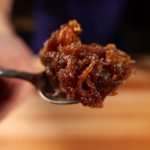
Caramelized onions made the slow way, with just butter and kosher salt and no sugar added. Eight pounds of onions cook down into about 2 cups over 4 to 5 hours of slow cooking and stirring now and then, and the leftovers freeze well in small portions.
Servings 32 tablespoons
Calories 70kcal
Equipment
- 1 Wusthof Paring Knife for the V-cut
- 1 Induction Burner or any stove burner
- 1 Dutch Oven large and heavy; any big pot works
Ingredients
- 8 lb onions yellow or sweet onions
- 8 tablespoon unsalted butter or salted; or 8 tablespoon cooking oil
- 1 tablespoon Diamond Crystal kosher salt or about 1 ¾ teaspoon Morton kosher salt or a little under 1 ½ teaspoon table salt
Instructions
Slice the Onions
- Cut the tops and bottoms off the onions and slice each one in half lengthwise, down through the root end. Peel off the papery skin and any tough outer layers, and cut out any hard root left at the bottom with a small V-shaped cut.
- Set each half cut side down with the root end facing you and slice it into strips about ¼ inch thick, along the lines that run from the root to the tip. Cutting with the grain helps the slices soften without falling apart over the long cook. When you're a little over halfway through, flip the smaller piece onto its side so it's easier to hold.
Cook Off the Water
- Melt the butter in a large, heavy pot over medium heat. Add enough onions to fill the pot about two-thirds of the way, add the salt and give it a good stir.
- As the onions give up their liquid and cook down, keep adding more until they're all in the pot. Stir about once every 10 minutes; the liquid keeps the onions on the bottom from burning, but they can still scorch if you leave them too long.
- Keep cooking on medium until the onions have given up all their liquid, usually 60 to 90 minutes and sometimes longer. To check, drag a spoon across the bottom of the pot: if liquid seeps into the gap, keep going.
Brown the Onions
- Once the liquid is gone, turn the heat down to low, or somewhere between low and medium-low. Stir about once every 5 minutes, each time scraping up the brown bits (the fond) from the bottom of the pot and stirring them back into the onions.
- Keep a close eye on the pot toward the end, when the brown bits can burn very quickly; if any scorch, the onions will taste bitter. The whole process usually takes 4 to 5 hours.
- The onions are done when they're an even dark brown, the color of a Tootsie Roll. Pour off any melted butter pooled in the pot.
Video
Notes
The one mistake to avoid: too much heat once the liquid is gone. While the onions are giving up their liquid, it keeps them from burning; after that, keep the heat low and scrape the bottom often, because scorched brown bits make the whole batch bitter. If the bottom burns while there's still liquid in the pot, turn the heat down a notch.
No sugar needed: caramelizing just means cooking the water out of the onions and slowly browning the sugar already in them. Added sugar shortcuts that, and the onions come out too sweet.
Salt: 1 tablespoon of Diamond Crystal kosher salt weighs about 8.4 grams, so weighing it is the easiest way to use another salt. By the spoon, that's about 1 ¾ teaspoons of Morton kosher salt or a little under 1 ½ teaspoons of table salt.
Swaps: Salted butter works fine. Any cooking oil or olive oil works in place of the butter, 1 tablespoon for each tablespoon. Yellow or sweet onions both work.
The pot: any large, heavy pot or Dutch oven, no lid. A large skillet or sauté pan works for a smaller batch, though a half batch still takes a good few hours.
Stopping partway: you can get the pot into the fridge within 2 hours and finish the onions the next day. If there's still a lot of liquid after a few hours, you can pour some off.
Storage: Get the onions into the fridge within 2 hours of cooking, in shallow covered containers, and use them within 3 to 4 days (the USDA's guide to leftovers). For longer, freeze them in portions of a tablespoon or two up to ¼ cup. The USDA says frozen leftovers are best within 3 to 4 months; I've kept mine about 6 months without noticing a change. Thaw in the fridge overnight, or run the sealed bag under cool water for a few minutes.
Made this? Tap a star at the top of this card to rate it.
Nutrition
Calories: 70kcal