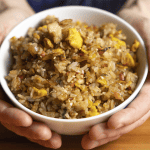
Benihana Fried Rice
Benihana's hibachi fried rice reverse-engineered for the home kitchen. This recipe uses the same calrose rice and hibachi garlic butter technique as the restaurant, with three tested rice cooking methods ranked and a soy sauce caramelization step that most recipes miss. Tested hundreds of times over several years and scaled to 2, 4, and 8 servings.
Servings 2 servings
Calories 450kcal
Equipment
- 1 12-inch Lodge Cast Iron Skillet Or any large skillet
- 1 Anchor Glass Ramekins for mise en place
- 1 Budget Zojirushi Rice Cooker Entry-level option
- 1 Zojirushi rice cooker Top-of-the-line option
- 1 Baking Sheet For cooling rice
- 1 Whisk For beating eggs
- 1 Mixing Bowls For assembling cooked ingredients
Ingredients
Fried Rice
- 2 cup cooked calrose rice made from about 1 cup (180g) uncooked rice
- 2 large eggs beaten until uniform in color
- 2 oz chicken breast thinly sliced, about ¼ inch thick
- ½ cup yellow onion finely diced (brunoise)
- 2 tablespoon carrot finely diced (brunoise, 2-3mm cubes)
- 2 tablespoon green onion very finely sliced, tops only
- 2 teaspoon sesame seeds
- 1 tablespoon Japanese soy sauce Kikkoman
- 1 tablespoon hibachi garlic butter recipe below
- safflower oil or any neutral oil (vegetable, canola, avocado)
- kosher salt
- black pepper
Hibachi Garlic Butter
- 2 tablespoon unsalted butter softened to room temperature
- ½ teaspoon garlic minced
- ½ teaspoon Japanese soy sauce Kikkoman
Instructions
Make the Hibachi Garlic Butter
- Allow 2 tablespoons of unsalted butter to come to room temperature. Add ½ teaspoon of minced garlic and ½ teaspoon of Kikkoman soy sauce. Mix the garlic and soy sauce into the butter until it's completely combined and you don't see any liquid at the bottom of the bowl. Set aside.
Cook the Chicken
- Heat a bit of safflower oil in a large cast iron or nonstick skillet over medium heat. Season the chicken cutlets on both sides with salt and pepper. Cook until done, about 1-2 minutes total. Remove to a cutting board.
- Make slices approximately ¼ inch (½ cm) thick, then turn perpendicular and make cuts the same size to create small cubes. Return the cubed chicken to the pan.
- Add 1 teaspoon of garlic butter and salt and pepper to taste. Toss the chicken in the garlic butter until it melts and coats the chicken. Transfer to a bowl.
Cook the Eggs
- Wipe out the pan with a wet paper towel. Return to medium heat and add a bit of oil. Once hot, add the beaten eggs and season with salt and pepper.
- Break up the egg as it cooks. You don't want large pieces of scrambled egg in the final dish. Once the egg is fully set, add it to the bowl with the chicken.
Cook the Vegetables
- Wipe out the pan again. Return to medium heat and add a bit of oil. Once hot, add the onion and carrot. Season with salt and pepper and cook until slightly softened, about 2 minutes.
- Add the green onion, stir to combine, and turn off the heat. Transfer the cooked vegetables to the bowl with the chicken and eggs.
Fry the Rice
- Wipe out the pan one more time. Return to medium heat and add about 2 teaspoons of oil (1 teaspoon per cup of rice). Too much oil will make the final dish greasy since you're also adding garlic butter.
- Once the oil is hot, add the rice and spread it out in the pan. Break up any large chunks with a spatula and cook for 2-3 minutes, turning the rice over and letting the heat separate the grains. Don't crowd the pan. The rice needs room for the moisture to evaporate.
- Add the bowl of cooked chicken, eggs, and vegetables to the rice. Stir until well combined. Add 1 tablespoon of hibachi garlic butter and salt and pepper to taste. Stir until the butter melts and coats everything. Cook for about 1 minute.
- Push the rice to one side of the pan. Add the soy sauce directly to the exposed pan surface (not on top of the rice). Once the soy sauce sizzles, immediately stir the rice into it. Keep stirring with a cutting motion until all the rice is uniformly seasoned and you don't see any large chunks of white rice.
- Kill the heat. Add the sesame seeds, stir until combined, and serve. Garnish with additional sesame seeds or sliced green onion.
Video
Notes
Rice cooking methods. The best method for preparing rice for fried rice is a rice cooker. If yours has a "harder rice" setting, use it. The second best method is steaming: use equal grams of rice and milliliters of water (180g rice = 180ml water), steam in a bowl set over simmering water for 20 minutes, then 10 minutes off heat with the lid on. The third option is the traditional stovetop method: 1:1 rice to water ratio by volume plus 1 extra tablespoon of water, boil, lid on, medium-low for 10 minutes, then 10 minutes off heat. With a rice cooker or steaming, let the rice sit at room temperature for 10-15 minutes before frying. With the stovetop method, refrigerate the rice uncovered for 12-24 hours for best results.
Wash your rice. Rinse 3-5 times until the water is a bit clearer. This removes surface starch and gives you drier grains after cooking. Don't over-rinse or you'll overhydrate the rice.
Cut everything small. The carrot and onion should be a fine dice (brunoise, 2-3mm cubes). The chicken should be sliced about ¼ inch thick, then cubed. Green onion sliced as thin as possible. Oversized pieces of any ingredient change the texture of the dish.
Don't crowd the pan. Cook 2 servings at a time maximum, even if you've prepped a larger batch. The rice needs direct contact with the hot pan to let the moisture evaporate. The recipe scales to 4 and 8 servings.
Soy sauce goes on the pan. Adding the soy sauce directly to the exposed hot pan surface (not on the rice) lets it caramelize slightly before you stir the rice into it. This adds more depth of flavor.
Variations. Replace the chicken with steak (small cubes) or shrimp (peeled, deveined, cut small). Leave the protein out for a vegetarian egg-only version. Jasmine rice works as a calrose substitute. Any neutral oil works in place of safflower oil.
Storage. Leftovers keep in an airtight container in the fridge for 3-4 days. Reheat in a skillet with a bit of oil for the best texture. Freezes well for up to 2 months.
Nutrition
Calories: 450kcal