Chipotle Chicken Burrito Bowl
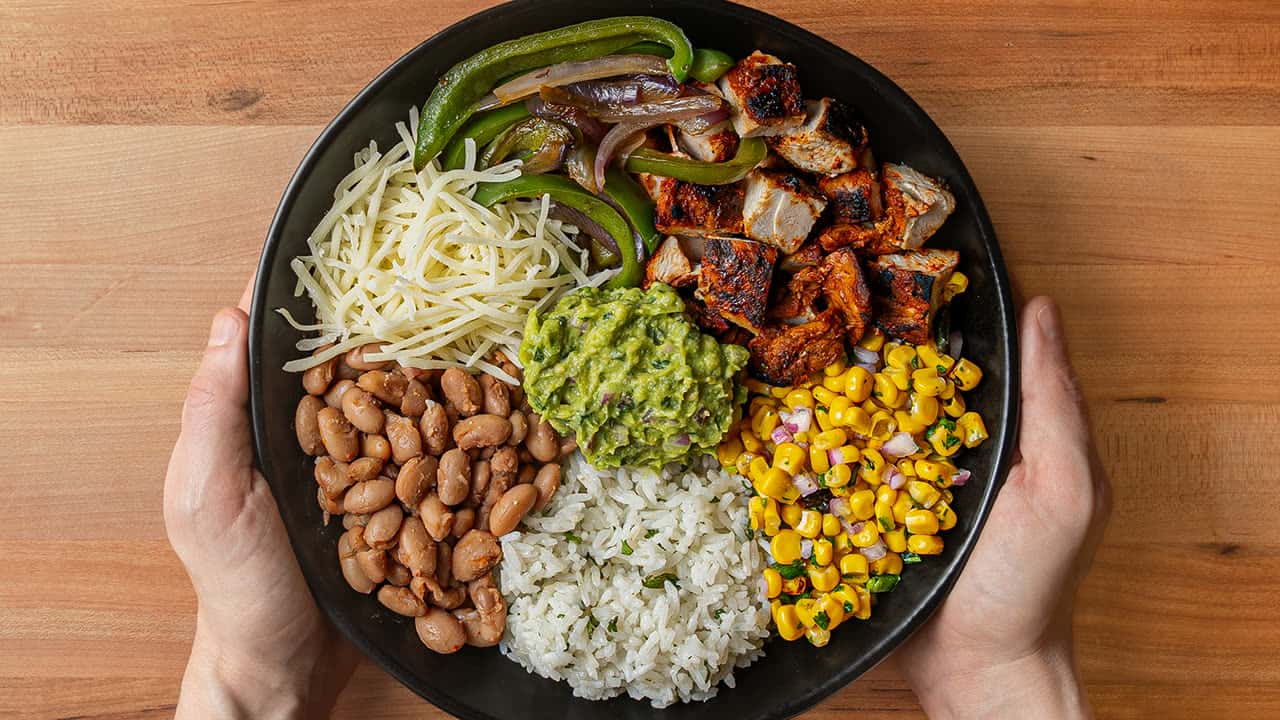
My version of Chipotle's old-school chicken burrito bowl, with every part made at home. The chicken and pinto beans start with an adobo paste made from dried Morita chiles, and the chicken marinade has the honey Chipotle used to list in its own. It takes about 2 ¼ hours of work, plus 8 to 12 hours of marinating.
Serves 4 servings
Calories 650
Ingredients
Chipotle Adobo Paste
- 8 oz dried Chipotle Morita peppers
- 4 cloves garlic skin on; use 6 if small
- 1 ¼ cups water
- 1 teaspoon ground cumin
- ½ teaspoon black pepper
- 1 teaspoon Mediterranean oregano McCormick's brand; not Mexican oregano
- 1 tablespoon Morton kosher salt
Adobo-Marinated Chicken
- 2 lbs chicken thighs boneless, skinless
- ¼ cup chipotle adobo paste use up to ½ cup for more heat
- 2 tablespoon distilled white vinegar
- 1 tablespoon honey optional; Chipotle used it until about 2015
- neutral oil
- Morton kosher salt
Citrus Juice
- 2 small limes this is a ratio; scale up as needed
- 1 large lemon
Adobo Pinto Beans
- 1 lb dried pinto beans
- 1 tablespoon Morton kosher salt for soaking water
- neutral oil
- ½ cup yellow onion finely diced
- 2 tablespoon chipotle adobo paste
- 2 bay leaves
- 1 teaspoon Morton kosher salt for cooking
- 1 slice bacon optional; Chipotle's beans had it until 2013
- 6 cups water for pressure cooker; add more for stovetop
- 2 tablespoon citrus juice lemon/lime blend
- 5 teaspoon Morton kosher salt final seasoning; adjust to taste
Cilantro-Lime Rice
- 2 cups long-grain white rice
- 1 tablespoon neutral oil
- 2 bay leaves
- 2 tablespoon neutral oil
- 1 ¼ teaspoon Morton kosher salt
- 2 tablespoon cilantro
- 2 tablespoon citrus juice
Roasted Chili-Corn Salsa
- 14 oz roasted corn kernels fresh, frozen fire-roasted, or canned fire-roasted
- 1 tablespoon roasted poblano pepper roughly chopped
- ¼ cup red onion medium diced
- 1 tablespoon jalapeno finely diced
- 1 tablespoon cilantro chopped
- 4 teaspoon citrus juice lemon/lime blend
- 1 ½ teaspoon Morton kosher salt
Fajita Veggies
- 2 green bell peppers ¼-inch strips
- 1 small red onion ¼-inch strips
- neutral oil
- ¾ teaspoon Morton kosher salt
- ¼ teaspoon Mediterranean oregano
Guacamole
- 2 small ripe Hass avocados
- 2 tablespoon cilantro chopped
- ¼ cup red onion medium diced
- 1 tablespoon jalapeno finely diced
- 2 ½ teaspoon citrus juice lemon/lime blend
- ½ teaspoon Morton kosher salt
Cheese
- Monterey Jack cheese current Chipotle recipe; grate from a block
- white cheddar cheese for the original blend: half cheddar, half Monterey Jack
Chipotle-Honey Vinaigrette
- 5 tablespoon red wine vinegar
- 3 tablespoon honey
- 1 tablespoon water
- 1 tablespoon Morton kosher salt
- 1 ½ teaspoon chipotle adobo paste
- 15 tablespoon neutral oil drizzle in slowly while blending
- ¾ teaspoon black pepper
- ½ teaspoon Mediterranean oregano
Instructions
Make the Adobo Paste
- Cut the dried Morita peppers in half lengthwise, remove the seeds, stems, and ribs. You don't need to get every last seed, but remove as many as possible. The seeds don't blend well and can taste bitter.
- Heat a large pan over medium heat. Add the dried chiles and stir continuously for 4 to 5 minutes until they're fragrant. Do not burn them.
- Transfer the toasted chiles to a large bowl, cover with hot water, and seal with plastic wrap. Rehydrate for 15 to 20 minutes until the peppers are plump and soft.
- While the peppers soak, heat a dry pan over medium heat. Add the garlic cloves with their skin on and char them, turning every few minutes, until the skin is blackened all over. This takes about 10 to 15 minutes. Remove, cool, and peel.
- Add the water, rehydrated chiles, roasted garlic, cumin, black pepper, oregano, and salt to a blender. Blend on medium speed until you achieve a thick paste slightly looser than tomato paste. Add more water a little at a time if needed. Scrape down the sides to ensure everything is incorporated.
- Taste the adobo and adjust seasoning with extra salt, black pepper, or cumin. This recipe makes about 3 ½ cups. Store unused paste in covered containers in the fridge for 3 to 4 days, or freeze for up to a year.
Marinate the Chicken
- Trim any excess fat or gristle from the chicken thighs. Place them in a large Ziploc bag.
- In a small bowl, whisk together the adobo paste, distilled white vinegar, and honey. Pour the marinade over the chicken, seal the bag, and shake until all pieces are coated. Refrigerate for 8 to 12 hours.
Make the Citrus Juice
- Juice 2 small limes and 1 large lemon. Strain out all pulp and seeds. This is a ratio, not a fixed quantity. Scale up as needed for the rice, beans, corn salsa, and guacamole. Store in the fridge for about a week, or freeze it.
Cook the Pinto Beans
- Pick through the dried beans, removing any broken beans or small stones. Dissolve 1 to 2 tablespoons of kosher salt in water and pour it over the beans. Add more water until the beans are covered by about 2 inches. Soak for 8 to 12 hours. No need to refrigerate.
- Drain and rinse the soaked beans. Heat oil in a small pan over medium heat and sweat the diced yellow onion until translucent, about 2 to 3 minutes.
- Add the soaked beans to a pressure cooker or large pot with the sweated onion, adobo sauce, bay leaves, 1 teaspoon of salt, and the bacon strip if using. Add 6 cups of water (more for stovetop). Pressure cook on high for 15 minutes, or simmer on the stovetop for 1 to 2 hours until tender.
- Test the beans for tenderness. Remove the bay leaves. Season with 2 tablespoons of citrus juice and 5 teaspoons of kosher salt, or to taste.
Cook the Cilantro-Lime Rice
- Wash the rice under several changes of running water until the water runs clear. This removes surface starch that causes clumping.
- Add the washed rice to a rice cooker or large pot with 1 tablespoon of neutral oil, 2 bay leaves, and water per package instructions. Cook until done, then let steam for 10 minutes before removing the lid.
- Transfer the cooked rice to a large bowl. Pour 2 tablespoons of neutral oil over the rice and stir until coated. In a small bowl, whisk together the salt, cilantro, and citrus juice until the salt dissolves. Pour this over the rice and stir until well incorporated. Adjust seasoning with extra salt and citrus juice.
Make the Roasted Chili-Corn Salsa
- For fresh corn: heat the broiler on high. Oil four corn cobs, place on a foil-lined baking sheet, and broil, rotating frequently, until blackened all over (about 25 to 30 minutes). Cool and cut the kernels off. For frozen or canned fire-roasted corn, prepare according to package instructions.
- For the roasted poblano: oil the pepper, broil until the skin is blackened all over (10 to 15 minutes), then place in a covered container to steam for 10 minutes. Peel off the blackened skin, remove the stem and seeds, and roughly chop the flesh.
- Combine the corn, roasted poblano, red onion, jalapeno, cilantro, citrus juice, and salt in a large bowl. Stir well and adjust seasoning.
Cook the Fajita Veggies
- Slice the bell peppers and red onion into ¼-inch strips. The Chipotle ratio is 3 parts bell pepper to 2 parts red onion by weight.
- Heat neutral oil in a large pan over medium-high heat. Add the pepper and onion slices and leave undisturbed for about 2 minutes to let them caramelize. Stir, then leave for another 2 minutes. Continue cooking until they have color but still have some crunch. Season with salt and oregano off the heat.
Make the Guacamole
- Cut avocados in half, remove the pit, and scoop the flesh into a bowl. Add the cilantro, red onion, jalapeno, citrus juice, and salt. Mash with a fork or potato masher until smooth. Adjust seasoning with extra citrus juice and salt.
Grill the Chicken
- Heat your cooking surface to 350 to 400 degrees. Add a thin layer of neutral oil. Place the marinated chicken thighs smooth side down and sprinkle kosher salt on top. Cook until you see a deep mahogany color with blackened spots on the bottom. Flip and continue cooking until the internal temperature reads at least 175 degrees (up to 185 is ideal for thighs). Do not exceed 210 degrees.
- Remove the chicken from the heat and rest for 10 minutes. Place smooth side down for cutting. Slice into ¾-inch strips, then turn the strips perpendicular and cut into ¾-inch cubes.
Make the Chipotle-Honey Vinaigrette
- Add the red wine vinegar, honey, water, salt, and adobo paste to a blender. Blend for 20 seconds on medium speed. While blending, slowly drizzle in the neutral oil until it thickens.
- Pour into a small bowl and whisk in the black pepper and oregano. Adjust seasoning with more vinegar, honey, salt, adobo, or black pepper. Store in a covered container in the fridge for 3 to 4 days. Shake well before using.
Assemble the Bowl
- Layer cilantro-lime rice on the bottom of a large bowl. Add fajita veggies, pinto beans, roasted chili-corn salsa, adobo-marinated chicken, shredded cheese, and guacamole. Drizzle with Chipotle-Honey Vinaigrette if desired.
Video
Equipment
Notes
The adobo paste: This makes about 3 ½ cups, and you only need ¼ to ½ cup for the chicken and 2 tablespoons for the beans. It's a lot of work, so make the whole batch and freeze the rest in small portions. It keeps 3 to 4 days in the fridge and up to a year in the freezer. It doesn't taste good on its own; it's meant to go into the chicken and the beans.
The dried peppers: Buy Morita chiles that bend without breaking. If they crumble or snap, they're too dried out. Moritas are smoked for a shorter time than Mecos, so they're sweeter and less smoky. If you can't find them, you can use canned chipotles in adobo: start at the blender step and use the canned adobo sauce in place of the chiles. It won't taste exactly the same.
The chile water: You can blend the paste with the water the chiles rehydrated in, but taste it first. If it's bitter, use fresh water.
The oregano and salt: From what people who've worked at Chipotle have said, they use McCormick's Mediterranean oregano and Morton's coarse kosher salt. Mexican oregano has a stronger flavor. If you use Diamond Crystal kosher salt, use about two-thirds more by volume.
The vinegar and honey in the chicken: The vinegar adds acidity to the marinade. Chipotle no longer puts honey in its chicken marinade, but its own ingredient list had honey in the chicken until about 2015, and it makes the chicken a little sweeter and less spicy than the steak.
The citrus juice: Chipotle uses a blend of lemon and lime, and its website used to say a gallon is made with about 63 limes and 25 lemons. Two small limes to one large lemon is the ratio I found tastes like the restaurant's.
The beans: The bacon is optional. Chipotle's original pinto beans had it, and their beans are vegan now. Soaking the beans overnight in salted water helps them cook more evenly. Black beans work with the same recipe.
The cheese: Chipotle uses straight Monterey Jack now. Its old ingredient list named both white cheddar and Monterey Jack, so for the old blend use half of each. Grate it from a block, because pre-shredded cheese is coated with starch to keep it from clumping.
The chicken temperature: Pull the thighs at 175 to 185°F, and don't go past 210°F. That's hotter than the usual 165°F for chicken, but thighs have more collagen than breasts, and the extra heat makes them more tender. If you use chicken breasts, pull them at 165°F.
Storage: Get cooked food into the fridge within 2 hours, in shallow covered containers. Cooked chicken, rice, beans, fajita veggies and corn salsa keep for 3 to 4 days (the USDA's guidance for cooked leftovers); reheat to 165°F. The adobo paste and the vinaigrette keep 3 to 4 days, the guacamole 2 to 3 days, and the citrus juice about a week, or freeze it.
Made this? Tap a star at the top of this card to rate it.
Calories 650kcal
Course Main Course
Cuisine Mexican-American