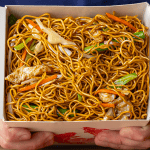
Chinese Takeout Chow Mein
Classic takeout-style chow mein built the way Chinese-American restaurants actually make it. Thin egg noodles prepped to prevent sticking, baking soda-tenderized chicken, and a balanced sauce of light soy, dark soy, oyster sauce, and Shaoxing wine calibrated to coat without pooling. Everything cooks in small batches to get real char on the noodles instead of steamed mush. Adapted for standard home burners.
Servings 4 servings
Calories 300kcal
Equipment
- 1 14-inch Mandarin Wok for stir-frying
- 1 All-Clad Pot for boiling noodles
- 1 Colander Strainer for straining and rinsing noodles
- 1 Tongs for handling noodles
- 1 Whisk for the sauce
- 1 Mixing Bowls for marinade and sauce
- 1 Deli Containers for sauce storage
- 1 Baking Sheet for butane torch technique
- 1 Squeeze Bottles for oil
- 1 Handheld Butane Torch optional, for wok hei technique
Ingredients
Chow Mein
- 8 oz fresh thin egg noodles or 4 oz dried thin egg noodles
- 4 oz prepared protein chicken, beef, pork, or shrimp
- ¼ cup white onion sliced with the grain
- ¼ cup scallion whites cut into 2-inch sections, halved lengthwise
- ½ cup cabbage sliced into thin ribbons
- ¼ cup carrot julienned, or use matchstick carrots
- 2 teaspoon garlic minced
- 2 teaspoon ginger minced
- ½ cup mung bean sprouts not soybean sprouts
- ¼ cup green onion tops cut into 2-inch sections
- neutral oil vegetable, canola, or peanut
Chow Mein Sauce
- 2 teaspoon sugar balances the saltiness
- ¼ teaspoon MSG optional
- ½ teaspoon table salt
- 1 pinch white pepper
- 1 tablespoon chicken broth or water
- 1 tablespoon Shaoxing rice cooking wine or dry sherry
- 1 tablespoon light soy sauce Chinese light soy sauce
- 2 teaspoon dark soy sauce for color and richness
- 1.5 tablespoon oyster sauce Lee Kum Kee Premium recommended
- ½ teaspoon toasted sesame oil
Chicken Marinade (Method 1: Direct)
- 1 chicken breast makes more than needed for 1 recipe
- ¼ teaspoon baking soda for tenderizing
- ¼ teaspoon cornstarch
- ¼ teaspoon sugar
- 1 pinch table salt
- ¼ teaspoon light soy sauce
- ½ teaspoon Shaoxing wine
- ½ teaspoon neutral oil
Chicken Marinade (Method 2: Alkaline Brine)
- 1 chicken breast makes more than needed for 1 recipe
- ½ teaspoon baking soda dissolved in water
- 1 cup water for alkaline brine
- ¼ teaspoon cornstarch
- ¼ teaspoon sugar
- 1 pinch table salt
- ¼ teaspoon light soy sauce Chinese light soy sauce
- ½ teaspoon Shaoxing wine
- ½ teaspoon neutral oil
Instructions
Prep the Noodles
- Bring a large pot of water to a boil. For fresh noodles, add 8 oz and loosen until unraveled, about 15-20 seconds. For dried noodles, add 4 oz and cook 2-3 minutes, about 1 minute less than package instructions. Dried noodles double in weight during cooking.
- Strain noodles and immediately rinse under cold running water. This stops the cooking and removes surface starch that causes clumping.
- Dry the noodles on a clean kitchen towel by blotting them. Transfer to a bowl and toss with a small amount of oil. Noodles can be prepared up to several hours before the final stir-fry.
Prep the Chicken (Method 1: Direct Baking Soda)
- Slice chicken breast against the grain into ¼-inch slices, then cut into ¼-inch strips.
- Wash cut chicken under cold running water for 1-2 minutes and squeeze dry.
- Sprinkle ¼ teaspoon baking soda over the chicken and massage forcefully for 1-2 minutes. Add cornstarch, sugar, salt, light soy sauce, Shaoxing wine, and neutral oil. Mix well. Refrigerate at least 30 minutes or up to overnight.
Prep the Chicken (Method 2: Alkaline Brine)
- Slice and wash chicken as in Method 1.
- Dissolve ½ teaspoon baking soda in 1 cup water. Pour over chicken. Refrigerate at least 2 hours or up to 24 hours.
- Drain chicken, rinse under cold water, and squeeze dry. Add cornstarch, sugar, salt, light soy sauce, Shaoxing wine, and neutral oil. Mix well. Refrigerate at least 30 minutes.
Make the Sauce
- Mix sugar, MSG, salt, and white pepper in a small bowl. Add chicken broth, Shaoxing wine, light soy sauce, and dark soy sauce. Whisk until dry ingredients dissolve. Add oyster sauce and sesame oil. Whisk until incorporated.
Stir-Fry
- Heat wok over medium-high until you see light wisps of smoke. Add 1 tablespoon neutral oil and swirl to coat. Add 4 oz prepared protein in a single layer and cook until browned and done. Transfer to a bowl.
- Return wok to medium-high heat with 1 tablespoon oil. Add onion, scallion whites, cabbage, and carrot. Cook 1-2 minutes until crisp-tender. Transfer to the bowl with the protein.
- Return wok to medium-high heat with 1 tablespoon oil. Add garlic and ginger, cook 10-15 seconds. Immediately add prepared noodles and toss quickly with the aromatics. Cook for several minutes until charred bits appear on the noodles. Regulate heat to get char without burning.
- Push noodles to one side and pour sauce directly onto the wok surface. Work the noodles into the sauce until evenly colored. Lower the heat after this step to prevent burning.
- Add the cooked protein and vegetables back to the wok and toss together. Add mung bean sprouts and scallion greens, mix in, and turn off the heat. Serve immediately.
Video
Notes
Noodle prep is non-negotiable. If your noodles come out soggy or sticky, the problem is almost always in the prep: overboiled, not rinsed in cold water, not dried enough, or not tossed in oil. Each step solves a specific problem. Skip any of them and it compounds.
One chicken breast makes more protein than you need. You'll only use about 4 oz for a single chow mein recipe. Use the extra tenderized chicken for another stir-fry dish.
Mung bean sprouts, not soybean sprouts. Asian grocery stores carry both. For takeout-style dishes, you want mung bean sprouts. They're smaller and more delicate with a small yellow head. Soybean sprouts are larger and thicker.
Sauce on the wok, not the noodles. Pouring the sauce directly onto the hot wok surface (not on the noodles) caramelizes it slightly before it contacts the noodles. This adds depth of flavor and helps the sauce coat more evenly.
For wok hei (optional). After boiling and oiling the noodles, spread them on a sheet pan and hit them with a butane torch until you see blackened spots. Do the same with the cooked vegetables before adding them back to the wok. This technique is from Kenji Lopez-Alt's book The Wok and genuinely replicates the smoky flavor from restaurant burners.
Soy sauce substitutions. If you can only find Kikkoman (Japanese dark soy), use it in place of the Chinese light soy sauce. Chinese dark soy sauce is harder to substitute since its purpose is color, but in a pinch you can omit it and the dish will be lighter in color but still taste good.
Nutrition
Calories: 300kcal