Every Chipotle burrito bowl recipe on the internet tells you to use canned chipotle peppers in adobo sauce. They’re all wrong. The original Chipotle flavor comes from a homemade adobo paste made with dried Chipotle Morita peppers, roasted garlic, cumin, and oregano. That paste is the foundation for everything: the chicken, the beans, and even the vinaigrette. Once you make it from scratch, you’ll understand why the canned stuff never tasted right.
If you’ve tried making a Chipotle burrito bowl at home and it tasted off, it wasn’t your cooking. The recipe was broken. I cross-referenced Chipotle’s published ingredient lists against what six former employees described seeing in their kitchens, then tested each component until it matched. This post covers all 10 original components, including two ingredients in the chicken marinade that nearly every online recipe leaves out: distilled white vinegar and honey.
This post contains affiliate links, which means I may earn a small commission if you make a purchase. It doesn’t cost you anything extra.Full disclosure.
Why This Chipotle Burrito Bowl Recipe Works
Homemade adobo paste from dried Morita peppers, not canned chipotle in adobo. Moritas are smoked jalapenos picked earlier and smoked shorter than Mecos. Shorter smoke time means a sweeter, less aggressive flavor, which is exactly why Chipotle uses them. Canned chipotles give you a different dish entirely.
The original chicken marinade includes vinegar and honey, not just adobo. Chipotle removed honey from their current recipe, but it was in the original. The vinegar brightens the marinade and acts as a brine that keeps thighs juicy at high heat. These two ingredients are missing from nearly every recipe online.
A 2:1 lime-to-lemon citrus juice ratio across four components. Chipotle doesn’t use straight lime juice. Their citrus blend is roughly 2 small limes to 1 large lemon, and that ratio shows up in the rice, the beans, the corn salsa, and the guacamole. One batch of citrus juice seasons the entire bowl.
Pinto beans cooked with bacon and adobo sauce. Chipotle went vegan on their beans several years ago, but the original recipe included a strip of bacon in the cooking liquid. That’s what gave them the smoky depth everyone remembers. The bacon is optional, but it’s the original.
All 10 components from scratch, in a buildable order. Adobo paste, chicken, citrus juice, pinto beans, cilantro-lime rice, roasted chili-corn salsa, fajita veggies, guacamole, the original cheese blend, and the Chipotle-Honey Vinaigrette. Most can be made days ahead, and I’ve arranged the steps so nothing sits around waiting.
Ingredients You’ll Need
Dried Chipotle Morita Peppers. These are the backbone of the entire recipe, and the ingredient most recipes get wrong. When buying dried chiles, bend them. If they’re pliable, they’re good. If they crumble or snap, the flavor will be dull and bitter. Toss them and find a better source.
McCormick’s Mediterranean Oregano. Despite what you’ll read online, Chipotle does not use Mexican oregano. Multiple former employees confirmed McCormick’s Mediterranean oregano across all their recipes. Mexican oregano is a completely different plant. It’s citrusy, almost licorice-like. Mediterranean is earthier. Use the wrong one and the whole adobo paste tastes off.
Morton’s Kosher Salt. Chipotle uses Morton’s coarse Kosher salt across the board. Different kosher salt brands have different crystal sizes, which means a tablespoon of Morton’s weighs differently than a tablespoon of Diamond Crystal. If you’re using Diamond Crystal, you’ll need roughly 1.5x the volume to match.
Long-Grain White Rice. Chipotle uses 50 lb. bags of Producer’s Brand extra fancy long grain, which isn’t sold at retail. Several former employees confirmed seeing Riceland Brand enriched long grain white rice at their locations. Any long-grain white rice will work, but avoid jasmine or basmati. The starch content is different and you’ll get a different texture.
Dried Pinto Beans. Not canned. Chipotle soaks their beans overnight and cooks them from scratch. Dried beans hold their shape and have a creamier interior. Canned beans are softer and mushier, and no amount of seasoning fixes that. A pressure cooker cuts the cook time to about 15 minutes.
Red Wine Vinegar. For the Chipotle-Honey Vinaigrette. This is the dressing that half the internet is trying to reverse-engineer, and it’s four ingredients: red wine vinegar, honey, adobo paste, and neutral oil. The full recipe is in the card below.
How to Make a Chipotle Burrito Bowl
This recipe has 10 components. That’s a lot, but most of them are simple, and the adobo paste, beans, and citrus juice can all be made days in advance. Here’s the order I recommend:
Step 1: Make the Adobo Paste. Cut the dried Morita peppers in half lengthwise and remove the seeds and stems. Toast them in a dry pan over medium heat for 4 to 5 minutes, stirring constantly, until fragrant. Transfer the toasted chiles to a bowl, cover with hot water and plastic wrap, and rehydrate for 15 to 20 minutes. While the peppers soak, roast whole garlic cloves (skin on) in a dry pan over medium heat, turning every few minutes, until the skin is blackened all over. Blend the rehydrated chiles, roasted garlic, water, cumin, black pepper, oregano, and salt until you get a thick paste slightly looser than tomato paste. This makes about 3 1/2 cups. You’ll use a portion for the chicken and the rest freezes for up to a year.
Step 2: Marinate the Chicken. Trim any excess fat from 2 lbs of boneless, skinless chicken thighs. Mix 1/4 to 1/2 cup of adobo paste with 2 tablespoons of distilled white vinegar and 1 tablespoon of honey. Pour the marinade over the chicken in a Ziploc bag and refrigerate for 8 to 12 hours.
Step 3: Make the Citrus Juice. Juice 2 small limes and 1 large lemon. Strain out the pulp and seeds. This is a ratio, not a recipe. Scale it up as needed. You’ll use it in the rice, the beans, the corn salsa, and the guacamole.
Step 4: Soak and Cook the Pinto Beans. Dissolve 1 to 2 tablespoons of kosher salt in enough water to cover 1 lb of dried pinto beans. Soak overnight. The next day, drain and rinse the beans, sweat 1/2 cup of diced yellow onion, and add everything to a pressure cooker with the adobo sauce, bay leaves, salt, and a strip of bacon if you want the original flavor. Cook on high for 15 minutes. Season the finished beans with citrus juice and salt.
Step 5: Cook the Cilantro-Lime Rice. Wash 2 cups of long-grain white rice until the water runs clear. Cook with 1 tablespoon of neutral oil and 2 bay leaves according to package instructions. When done, transfer to a large bowl, toss with 2 tablespoons of oil, then stir in the citrus-salt-cilantro mixture.
Step 6: Make the Roasted Chili-Corn Salsa. If using fresh corn, broil oiled corn cobs on high, turning frequently, until blackened all over (about 25 to 30 minutes). Cut the kernels off and toss them with roasted poblano pepper, red onion, jalapeno, cilantro, citrus juice, and salt. Frozen fire-roasted corn works here and saves you about 30 minutes.
Step 7: Cook the Fajita Veggies. Slice 2 green bell peppers and 1 small red onion into 1/4-inch strips. The ratio is 3 parts bell pepper to 2 parts red onion by weight. Cook in neutral oil over medium-high heat, leaving undisturbed for 2 minutes at a time to build color. Season with salt and oregano when done. You want them cooked through but not limp.
Step 8: Make the Guacamole. Scoop 2 small ripe Hass avocados into a bowl. Add cilantro, diced red onion, jalapeno, citrus juice, and salt. Mash with a fork until smooth. Adjust with more citrus and salt to taste.
Step 9: Grill the Chicken. Heat your cooking surface (a flat-top griddle is ideal) to 350 to 400 degrees. Add the marinated chicken thighs smooth side down and sprinkle salt on top. Cook until you see a deep mahogany color with blackened spots on the bottom, then flip and cook until the internal temperature reads 175 to 185 degrees. Chicken thighs handle higher temps than breasts because the extra heat breaks down collagen and makes the meat more tender, not drier. Don’t go past 210 degrees. Rest for 10 minutes, then slice into 3/4-inch strips and cut into cubes.
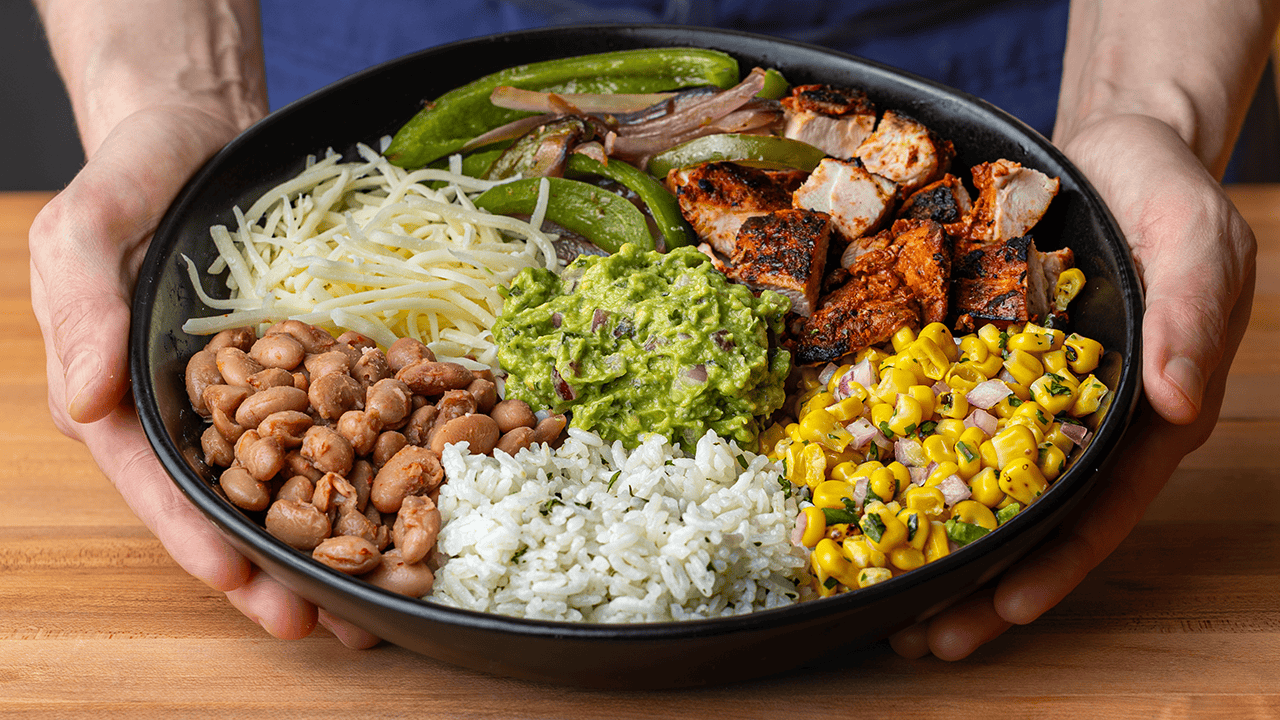
Step 10: Assemble the Bowl. Layer cilantro-lime rice on the bottom, then add fajita veggies, pinto beans, corn salsa, chicken, shredded cheese, and guacamole. If you want the authentic restaurant experience, scowl at anyone who asks for extra.
Tips for the Best Chipotle Burrito Bowl
Make a big batch of adobo paste. Toasting, rehydrating, and blending takes about 30 minutes, so it’s always smarter to make more than you need. The paste freezes for up to a year and keeps in the fridge for about a month. Portion it into small containers before freezing so you can thaw only what you need for the next batch of chicken, beans, or vinaigrette.
Grate your own cheese from blocks. Chipotle currently uses shredded Monterey Jack, but the original blend was half white cheddar, half Monterey Jack. Pre-shredded bags contain anti-caking starches (usually potato starch or cellulose) that make the cheese gritty and dilute the flavor. Block cheese melts cleaner and tastes sharper.
Storage and Reheating
Adobo paste keeps in the fridge for about a month and freezes for up to a year.
Cooked chicken stores in a covered container in the fridge for 3 to 5 days. Reheat in a hot pan to restore the char.
Pinto beans keep in the fridge for 5 to 7 days. Reheat gently on the stovetop with a splash of water to loosen them up.
Cilantro-lime rice stores for 3 to 5 days in the fridge. Reheat in the microwave with a damp paper towel over the bowl.
Corn salsa, fajita veggies, and guacamole all store for 2 to 5 days depending on the component. The guacamole will brown fastest. Press plastic wrap directly against the surface to slow oxidation.
Chipotle-Honey Vinaigrette keeps for about 2 weeks in the fridge. Shake well before using because oil-based vinaigrettes will separate.
Frequently Asked Questions
Can I use canned chipotle peppers instead of dried Moritas?
You can, but it’ll taste different. Canned chipotle peppers in adobo have a sharper, more vinegary bite. Dried Moritas are sweeter and less aggressive, which is closer to what Chipotle actually uses. If you’re putting in the effort to make everything from scratch, the dried peppers are worth tracking down.
Does Chipotle use Mexican oregano?
No. Despite what a lot of recipes claim, Chipotle uses McCormick’s Mediterranean oregano. Mexican oregano is a different plant entirely, closer to citrus and licorice than the earthy, floral Mediterranean variety. This was confirmed by multiple former employees and matches Chipotle’s official ingredient disclosures.
Can I make the chicken with breasts instead of thighs?
You can, but pull them at 165 degrees instead of 175 to 185. Thighs handle higher temperatures because the collagen in dark meat breaks down and becomes more tender with extra heat. Thighs are also more forgiving if you overshoot by a few degrees, which is why Chipotle uses them.
Do I have to soak the beans overnight?
Soaking in salted water helps them absorb water evenly and prevents bursting during cooking. You can skip the soak and pressure cook unsoaked beans for about 25 to 30 minutes, but the texture won’t be as consistent.
What’s the Chipotle-Honey Vinaigrette?
An oil-based vinaigrette made with red wine vinegar, honey, adobo paste, and neutral oil. The full recipe is in the recipe card below.
The original Chipotle burrito bowl with all 10 components made completely from scratch. Built around a homemade adobo paste from dried Chipotle Morita peppers, roasted garlic, cumin, and Mediterranean oregano. Includes the original chicken marinade with distilled white vinegar and honey, cilantro-lime rice with the exact 2:1 lime-to-lemon citrus juice ratio, adobo pinto beans with bacon, roasted chili-corn salsa, fajita veggies, guacamole, and the Chipotle-Honey Vinaigrette. Reverse-engineered from Chipotle's official ingredient lists and confirmed by former employees.
Cut the dried Morita peppers in half lengthwise, remove the seeds, stems, and ribs. You don’t need to get every last seed, but remove as many as possible. The seeds don’t blend well and can taste bitter.
Heat a large pan over medium heat. Add the dried chiles and stir continuously for 4 to 5 minutes until they’re fragrant. Do not burn them. Toasting activates the essential oils and develops complex flavors.
Transfer the toasted chiles to a large bowl, cover with hot water, and seal with plastic wrap. Rehydrate for 15 to 20 minutes until the peppers are plump and soft.
While the peppers soak, heat a dry pan over medium heat. Add the garlic cloves with their skin on and char them, turning every few minutes, until the skin is blackened all over. This takes about 10 to 15 minutes. Remove, cool, and peel.
Add the water, rehydrated chiles, roasted garlic, cumin, black pepper, oregano, and salt to a blender. Blend on medium speed until you achieve a thick paste slightly looser than tomato paste. Add more water a little at a time if needed. Scrape down the sides to ensure everything is incorporated.
Taste the adobo and adjust seasoning with extra salt, black pepper, or cumin. This recipe makes about 3 1/2 cups. Store unused paste in covered containers in the fridge for up to a month, or freeze for up to a year.
Marinate the Chicken
Trim any excess fat or gristle from the chicken thighs. Place them in a large Ziploc bag.
In a small bowl, whisk together the adobo paste, distilled white vinegar, and honey. Pour the marinade over the chicken, seal the bag, and shake until all pieces are coated. Refrigerate for 8 to 12 hours.
Make the Citrus Juice
Juice 2 small limes and 1 large lemon. Strain out all pulp and seeds. This is a ratio, not a fixed quantity. Scale up as needed for the rice, beans, corn salsa, and guacamole. Store in the fridge for up to a month.
Cook the Pinto Beans
Pick through the dried beans, removing any broken beans or small stones. Dissolve 1 to 2 tablespoons of kosher salt in water and pour it over the beans. Add more water until the beans are covered by about 2 inches. Soak for 8 to 12 hours. No need to refrigerate.
Drain and rinse the soaked beans. Heat oil in a small pan over medium heat and sweat the diced yellow onion until translucent, about 2 to 3 minutes.
Add the soaked beans to a pressure cooker or large pot with the sweated onion, adobo sauce, bay leaves, 1 tsp of salt, and the bacon strip if using. Add 6 cups of water (more for stovetop). Pressure cook on high for 15 minutes, or simmer on the stovetop for 1 to 2 hours until tender.
Test the beans for tenderness. Remove the bay leaves. Season with 2 tablespoons of citrus juice and 5 teaspoons of kosher salt, or to taste.
Cook the Cilantro-Lime Rice
Wash the rice under several changes of running water until the water runs clear. This removes surface starch that causes clumping.
Add the washed rice to a rice cooker or large pot with 1 tablespoon of neutral oil, 2 bay leaves, and water per package instructions. Cook until done, then let steam for 10 minutes before removing the lid.
Transfer the cooked rice to a large bowl. Pour 2 tablespoons of neutral oil over the rice and stir until coated. In a small bowl, whisk together the salt, cilantro, and citrus juice until the salt dissolves. Pour this over the rice and stir until well incorporated. Adjust seasoning with extra salt and citrus juice.
Make the Roasted Chili-Corn Salsa
For fresh corn: heat the broiler on high. Oil four corn cobs, place on a foil-lined baking sheet, and broil, rotating frequently, until blackened all over (about 25 to 30 minutes). Cool and cut the kernels off. For frozen or canned fire-roasted corn, prepare according to package instructions.
For the roasted poblano: oil the pepper, broil until the skin is blackened all over (10 to 15 minutes), then place in a covered container to steam for 10 minutes. Peel off the blackened skin, remove the stem and seeds, and roughly chop the flesh.
Combine the corn, roasted poblano, red onion, jalapeno, cilantro, citrus juice, and salt in a large bowl. Stir well and adjust seasoning.
Cook the Fajita Veggies
Slice the bell peppers and red onion into 1/4-inch strips. The Chipotle ratio is 3 parts bell pepper to 2 parts red onion by weight.
Heat neutral oil in a large pan over medium-high heat. Add the pepper and onion slices and leave undisturbed for about 2 minutes to let them caramelize. Stir, then leave for another 2 minutes. Continue cooking until they have color but still have some crunch. Season with salt and oregano off the heat.
Make the Guacamole
Cut avocados in half, remove the pit, and scoop the flesh into a bowl. Add the cilantro, red onion, jalapeno, citrus juice, and salt. Mash with a fork or potato masher until smooth. Adjust seasoning with extra citrus juice and salt.
Grill the Chicken
Heat your cooking surface to 350 to 400 degrees. Add a thin layer of neutral oil. Place the marinated chicken thighs smooth side down and sprinkle kosher salt on top. Cook until you see a deep mahogany color with blackened spots on the bottom. Flip and continue cooking until the internal temperature reads at least 175 degrees (up to 185 is ideal for thighs). Do not exceed 210 degrees.
Remove the chicken from the heat and rest for 10 minutes. Place smooth side down for cutting. Slice into 3/4-inch strips, then turn the strips perpendicular and cut into 3/4-inch cubes.
Make the Chipotle-Honey Vinaigrette
Add the red wine vinegar, honey, water, salt, and adobo paste to a blender. Blend for 20 seconds on medium speed. While blending, slowly drizzle in the neutral oil until the mixture is emulsified.
Pour into a small bowl and whisk in the black pepper and oregano. Adjust seasoning with more vinegar, honey, salt, adobo, or black pepper. Store in a covered container in the fridge for up to 2 weeks. Shake well before using.
Assemble the Bowl
Layer cilantro-lime rice on the bottom of a large bowl. Add fajita veggies, pinto beans, roasted chili-corn salsa, adobo-marinated chicken, shredded cheese, and guacamole. Drizzle with Chipotle-Honey Vinaigrette if desired.
Video
Notes
On the Adobo Paste: This recipe makes roughly 3 1/2 cups of adobo paste. You’ll only use 1/4 to 1/2 cup for the chicken and 2 tablespoons for the beans. Freeze the rest in small portions for future use. The paste freezes well for up to a year and keeps in the fridge for about a month.On the Dried Peppers: Make sure your dried Morita peppers are pliable when you buy them. If they crumble or snap when bent, they’re too dehydrated and the flavor will be dull. Chipotle Moritas are sweeter and less smoky than Chipotle Mecos, which is important for matching the original flavor.On the Oregano: Chipotle uses McCormick’s Mediterranean oregano, not Mexican oregano. The two have completely different flavor profiles, so this distinction matters across all the recipes.On the Vinegar and Honey in the Chicken: These are the two secret ingredients almost every online Chipotle chicken recipe misses. The vinegar adds brightness and acts as a brine, and the honey makes the chicken slightly sweeter than the steak. Chipotle removed honey from their current recipe, but it was in the original.On the Citrus Juice: Chipotle doesn’t use straight lime juice. Their website states that 1 gallon of citrus juice is made with about 63 limes and 25 lemons. The 2:1 lime-to-lemon ratio used here replicates that blend.On the Beans: The bacon is optional but was part of Chipotle’s original recipe before they went vegan. It adds a smoky depth that’s hard to replicate without it. Soaking the beans overnight in salted water helps them cook more evenly.On the Cheese: Chipotle currently uses straight Monterey Jack. The original blend was half white cheddar, half Monterey Jack. Always grate from blocks. Pre-shredded cheese contains anti-caking starches that affect flavor and melting.On Chicken Temperature: Pull thighs at 175 to 185 degrees. This is hotter than the standard 165 for poultry, but chicken thighs have more collagen than breasts. Higher temperatures break that collagen down and make the meat more tender. Do not exceed 210 degrees.
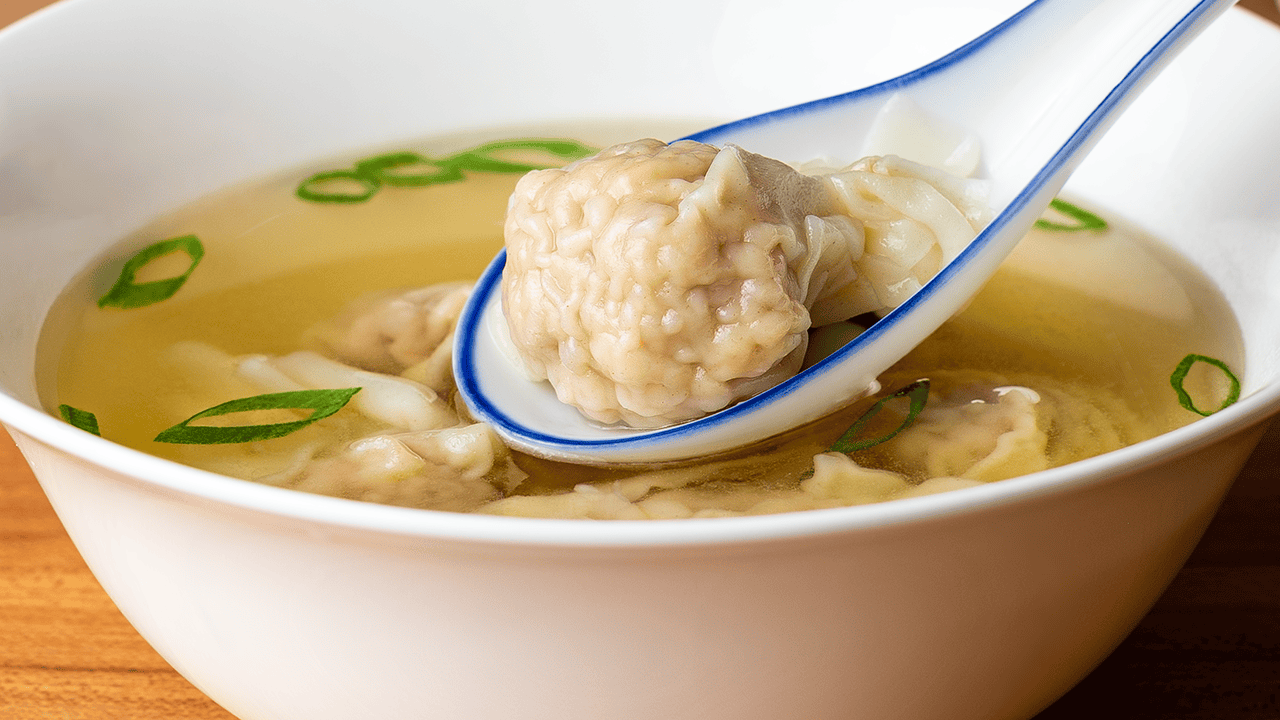
If your homemade wonton soup broth doesn’t taste like takeout, you’re probably using the wrong chicken broth. Western-style stock uses mirepoix, parsley, and black peppercorns. Asian-style chicken bouillon is a…
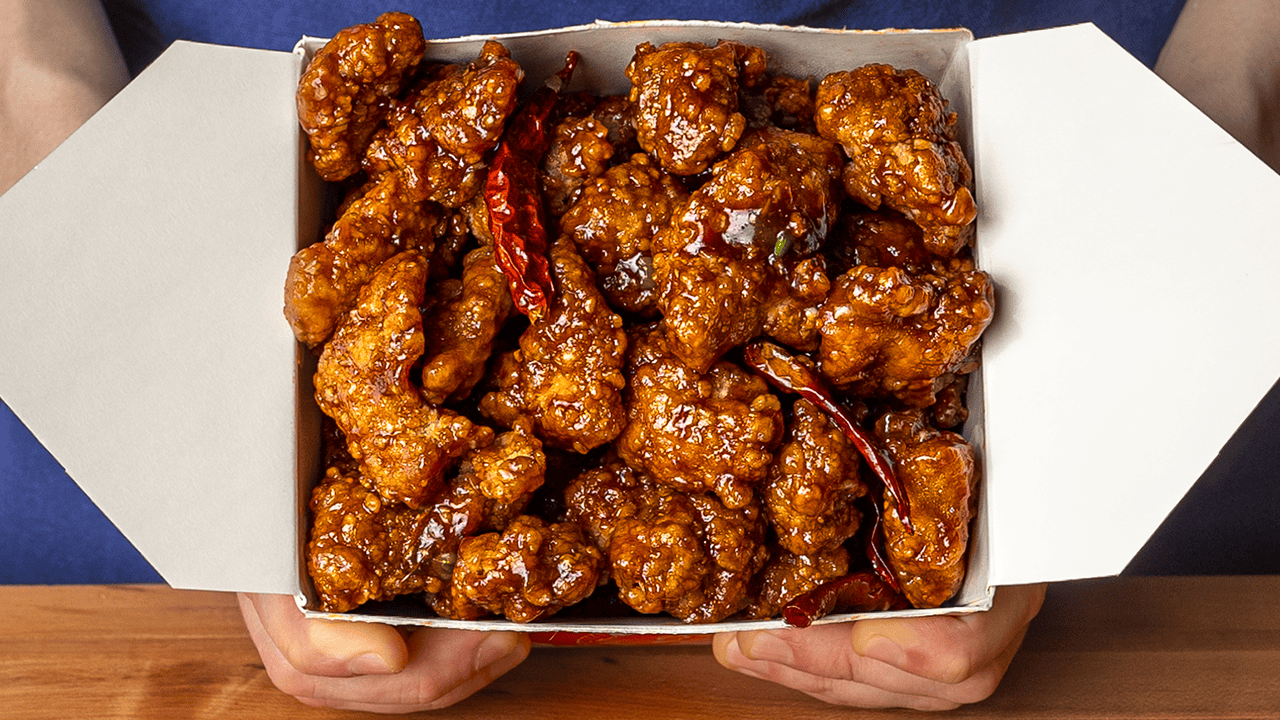
Most General Tso’s chicken you get from a takeout place is too sweet, with soggy chicken and no crunch. The meat is tough, the crust has no texture, and the…
Chinese takeout egg drop soup is one of those dishes that sounds impossible to mess up. It’s broth and eggs. But if you’ve made it at home and ended up…
I hate Spam as much as you do. So, I'll never share your address or send you advertisements. Just the occasional update and the inside scoop on new recipes.
1tspMediterranean oregano (McCormick's brand; not Mexican oregano)
1tbspMorton's Kosher salt
Adobo-Marinated Chicken
2lbschicken thighs (boneless, skinless)
1/4cupchipotle adobo paste (use up to 1/2 cup for more heat)
2tbspdistilled white vinegar
1tbsphoney (optional; part of the original recipe)
neutral oil
Morton's Kosher salt
Citrus Juice
2small limes (this is a ratio; scale up as needed)
1large lemon
Adobo Pinto Beans
1lbdried pinto beans
1tbspMorton's Kosher salt (for soaking water)
neutral oil
1/2cupyellow onion (finely diced)
2tbspchipotle adobo paste
2bay leaves
1tspMorton's Kosher salt (for cooking)
1slicebacon (optional; original recipe included it)
6cupswater (for pressure cooker; add more for stovetop)
2tbspcitrus juice (lemon/lime blend)
5tspMorton's Kosher salt (final seasoning; adjust to taste)
Cilantro-Lime Rice
2cupslong-grain white rice
1tbspneutral oil
2bay leaves
2tbspneutral oil
1 1/4tspMorton's Kosher salt
2tbspcilantro
2tbspcitrus juice
Roasted Chili-Corn Salsa
14ozroasted corn kernels (fresh, frozen fire-roasted, or canned fire-roasted)
1tbsproasted poblano pepper (roughly chopped)
1/4cupred onion (medium diced)
1tbspjalapeno (finely diced)
1tbspcilantro (chopped)
4tspcitrus juice (lemon/lime blend)
1 1/2tspMorton's Kosher salt
Fajita Veggies
2green bell peppers (1/4-inch strips)
1small red onion (1/4-inch strips)
neutral oil
3/4tspMorton's Kosher salt
1/4tspMediterranean oregano
Guacamole
2small ripe Hass avocados
2tbspcilantro (chopped)
1/4cupred onion (medium diced)
1tbspjalapeno (finely diced)
2 1/2tspcitrus juice (lemon/lime blend)
1/2tspMorton's Kosher salt
Cheese
Monterey Jack cheese (current Chipotle recipe; grate from a block)
white cheddar cheese (for the original blend: half cheddar, half Monterey Jack)
Chipotle-Honey Vinaigrette
5tbspred wine vinegar
3tbsphoney
1tbspwater
1tbspMorton's Kosher salt
1 1/2tspchipotle adobo paste
15tbspneutral oil (drizzle in slowly while blending)
3/4tspblack pepper
1/2tspMediterranean oregano
Equipment
1Blender or food processor
1Made-In Carbon Steel Griddle
1Pressure cooker
1Rice Cooker
1Instant-read thermometer
1baking sheet
1Large pot
1Hefty Storage Gallon Bags
1Mixing bowls
1Whisk
1Fine Mesh Strainer
1Measuring Spoons
1measuring cups
1Deli Containers
1Box Grater
1Tongs
1
Cut the dried Morita peppers in half lengthwise, remove the seeds, stems, and ribs. You don't need to get every last seed, but remove as many as possible. The seeds don't blend well and can taste bitter.
2
Heat a large pan over medium heat. Add the dried chiles and stir continuously for 4 to 5 minutes until they're fragrant. Do not burn them. Toasting activates the essential oils and develops complex flavors.
3
Transfer the toasted chiles to a large bowl, cover with hot water, and seal with plastic wrap. Rehydrate for 15 to 20 minutes until the peppers are plump and soft.
4
While the peppers soak, heat a dry pan over medium heat. Add the garlic cloves with their skin on and char them, turning every few minutes, until the skin is blackened all over. This takes about 10 to 15 minutes. Remove, cool, and peel.
5
Add the water, rehydrated chiles, roasted garlic, cumin, black pepper, oregano, and salt to a blender. Blend on medium speed until you achieve a thick paste slightly looser than tomato paste. Add more water a little at a time if needed. Scrape down the sides to ensure everything is incorporated.
6
Taste the adobo and adjust seasoning with extra salt, black pepper, or cumin. This recipe makes about 3 1/2 cups. Store unused paste in covered containers in the fridge for up to a month, or freeze for up to a year.
7
Trim any excess fat or gristle from the chicken thighs. Place them in a large Ziploc bag.
8
In a small bowl, whisk together the adobo paste, distilled white vinegar, and honey. Pour the marinade over the chicken, seal the bag, and shake until all pieces are coated. Refrigerate for 8 to 12 hours.
9
Juice 2 small limes and 1 large lemon. Strain out all pulp and seeds. This is a ratio, not a fixed quantity. Scale up as needed for the rice, beans, corn salsa, and guacamole. Store in the fridge for up to a month.
10
Pick through the dried beans, removing any broken beans or small stones. Dissolve 1 to 2 tablespoons of kosher salt in water and pour it over the beans. Add more water until the beans are covered by about 2 inches. Soak for 8 to 12 hours. No need to refrigerate.
11
Drain and rinse the soaked beans. Heat oil in a small pan over medium heat and sweat the diced yellow onion until translucent, about 2 to 3 minutes.
12
Add the soaked beans to a pressure cooker or large pot with the sweated onion, adobo sauce, bay leaves, 1 tsp of salt, and the bacon strip if using. Add 6 cups of water (more for stovetop). Pressure cook on high for 15 minutes, or simmer on the stovetop for 1 to 2 hours until tender.
13
Test the beans for tenderness. Remove the bay leaves. Season with 2 tablespoons of citrus juice and 5 teaspoons of kosher salt, or to taste.
14
Wash the rice under several changes of running water until the water runs clear. This removes surface starch that causes clumping.
15
Add the washed rice to a rice cooker or large pot with 1 tablespoon of neutral oil, 2 bay leaves, and water per package instructions. Cook until done, then let steam for 10 minutes before removing the lid.
16
Transfer the cooked rice to a large bowl. Pour 2 tablespoons of neutral oil over the rice and stir until coated. In a small bowl, whisk together the salt, cilantro, and citrus juice until the salt dissolves. Pour this over the rice and stir until well incorporated. Adjust seasoning with extra salt and citrus juice.
17
For fresh corn: heat the broiler on high. Oil four corn cobs, place on a foil-lined baking sheet, and broil, rotating frequently, until blackened all over (about 25 to 30 minutes). Cool and cut the kernels off. For frozen or canned fire-roasted corn, prepare according to package instructions.
18
For the roasted poblano: oil the pepper, broil until the skin is blackened all over (10 to 15 minutes), then place in a covered container to steam for 10 minutes. Peel off the blackened skin, remove the stem and seeds, and roughly chop the flesh.
19
Combine the corn, roasted poblano, red onion, jalapeno, cilantro, citrus juice, and salt in a large bowl. Stir well and adjust seasoning.
20
Slice the bell peppers and red onion into 1/4-inch strips. The Chipotle ratio is 3 parts bell pepper to 2 parts red onion by weight.
21
Heat neutral oil in a large pan over medium-high heat. Add the pepper and onion slices and leave undisturbed for about 2 minutes to let them caramelize. Stir, then leave for another 2 minutes. Continue cooking until they have color but still have some crunch. Season with salt and oregano off the heat.
22
Cut avocados in half, remove the pit, and scoop the flesh into a bowl. Add the cilantro, red onion, jalapeno, citrus juice, and salt. Mash with a fork or potato masher until smooth. Adjust seasoning with extra citrus juice and salt.
23
Heat your cooking surface to 350 to 400 degrees. Add a thin layer of neutral oil. Place the marinated chicken thighs smooth side down and sprinkle kosher salt on top. Cook until you see a deep mahogany color with blackened spots on the bottom. Flip and continue cooking until the internal temperature reads at least 175 degrees (up to 185 is ideal for thighs). Do not exceed 210 degrees.
24
Remove the chicken from the heat and rest for 10 minutes. Place smooth side down for cutting. Slice into 3/4-inch strips, then turn the strips perpendicular and cut into 3/4-inch cubes.
25
Add the red wine vinegar, honey, water, salt, and adobo paste to a blender. Blend for 20 seconds on medium speed. While blending, slowly drizzle in the neutral oil until the mixture is emulsified.
26
Pour into a small bowl and whisk in the black pepper and oregano. Adjust seasoning with more vinegar, honey, salt, adobo, or black pepper. Store in a covered container in the fridge for up to 2 weeks. Shake well before using.
27
Layer cilantro-lime rice on the bottom of a large bowl. Add fajita veggies, pinto beans, roasted chili-corn salsa, adobo-marinated chicken, shredded cheese, and guacamole. Drizzle with Chipotle-Honey Vinaigrette if desired.